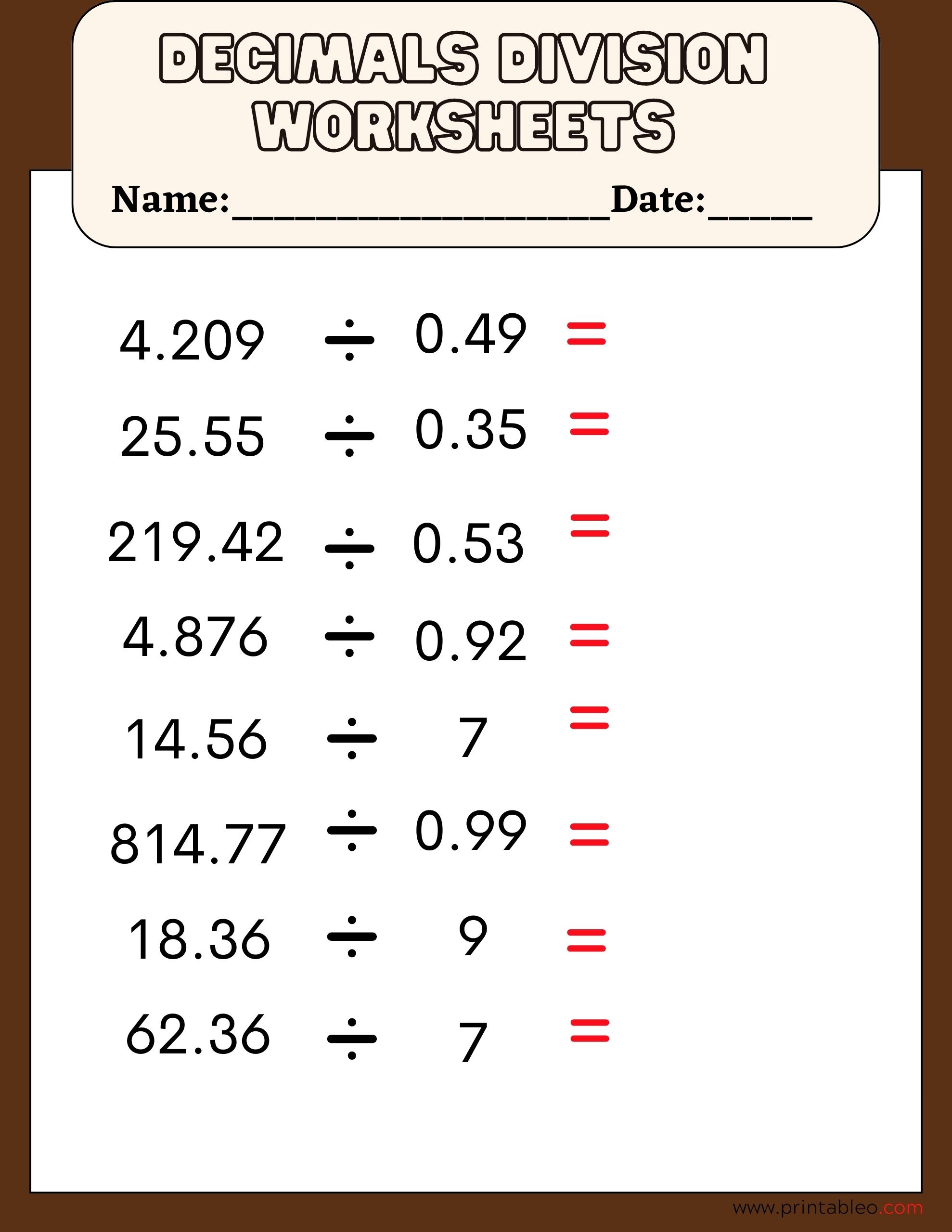
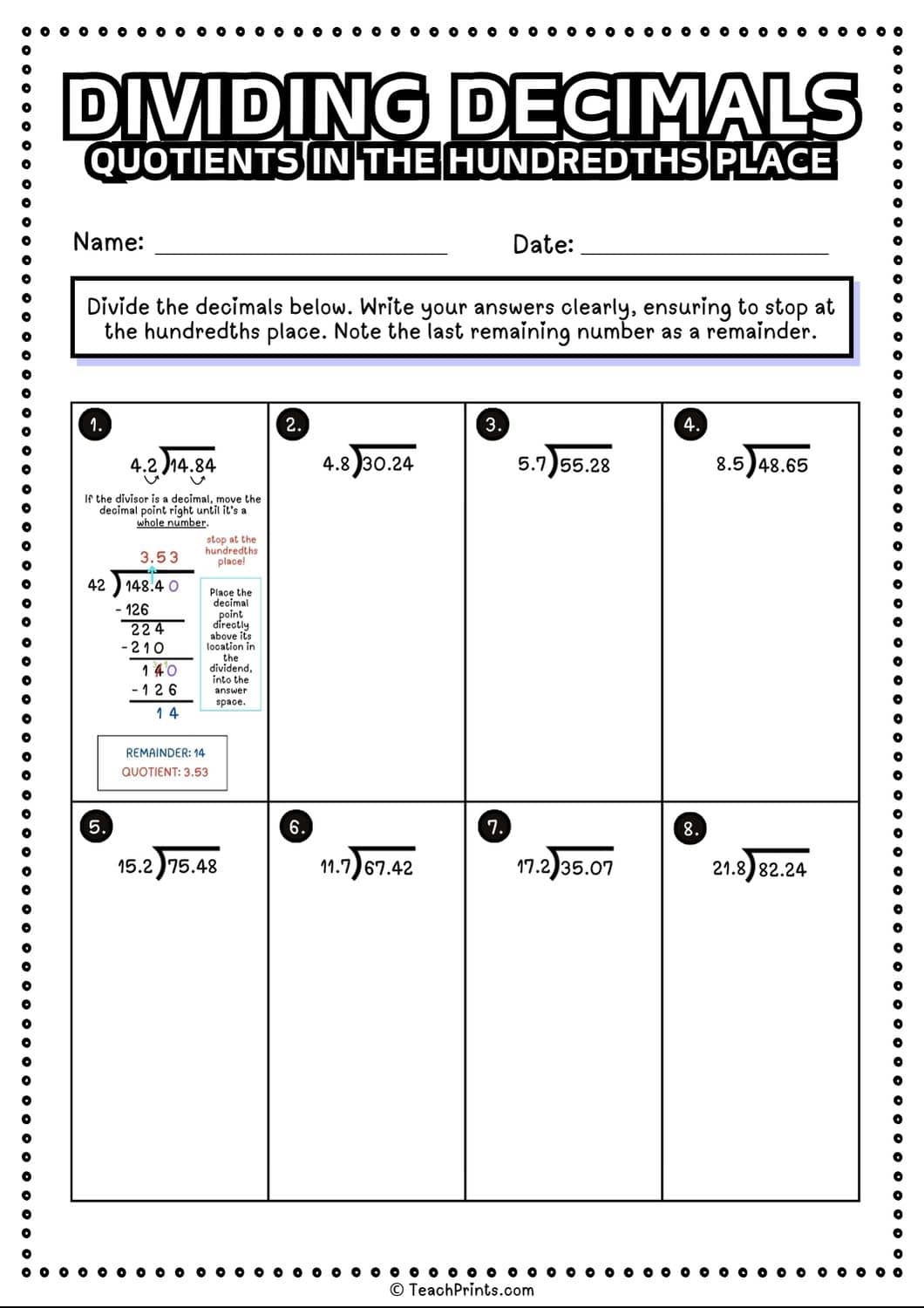
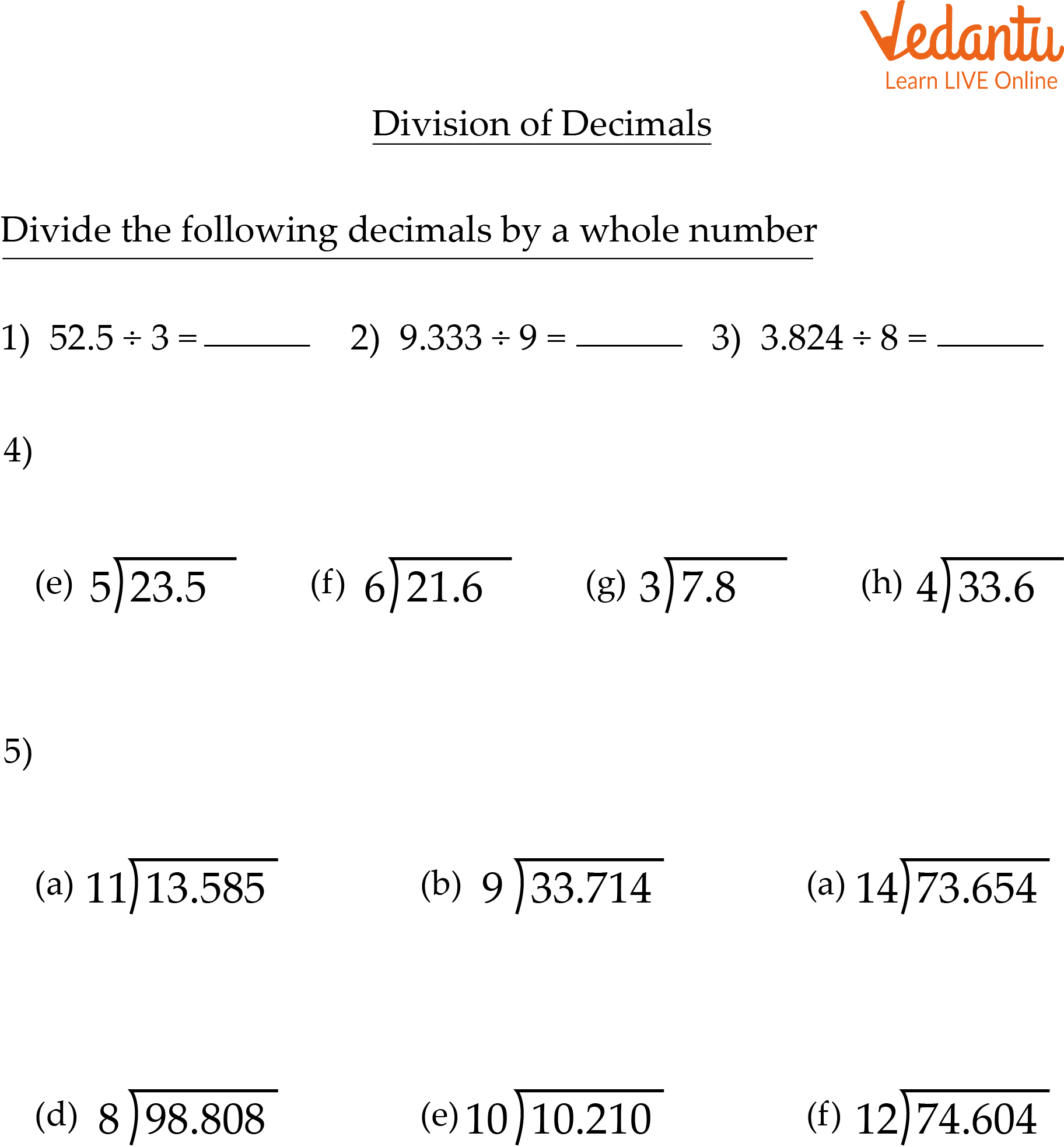
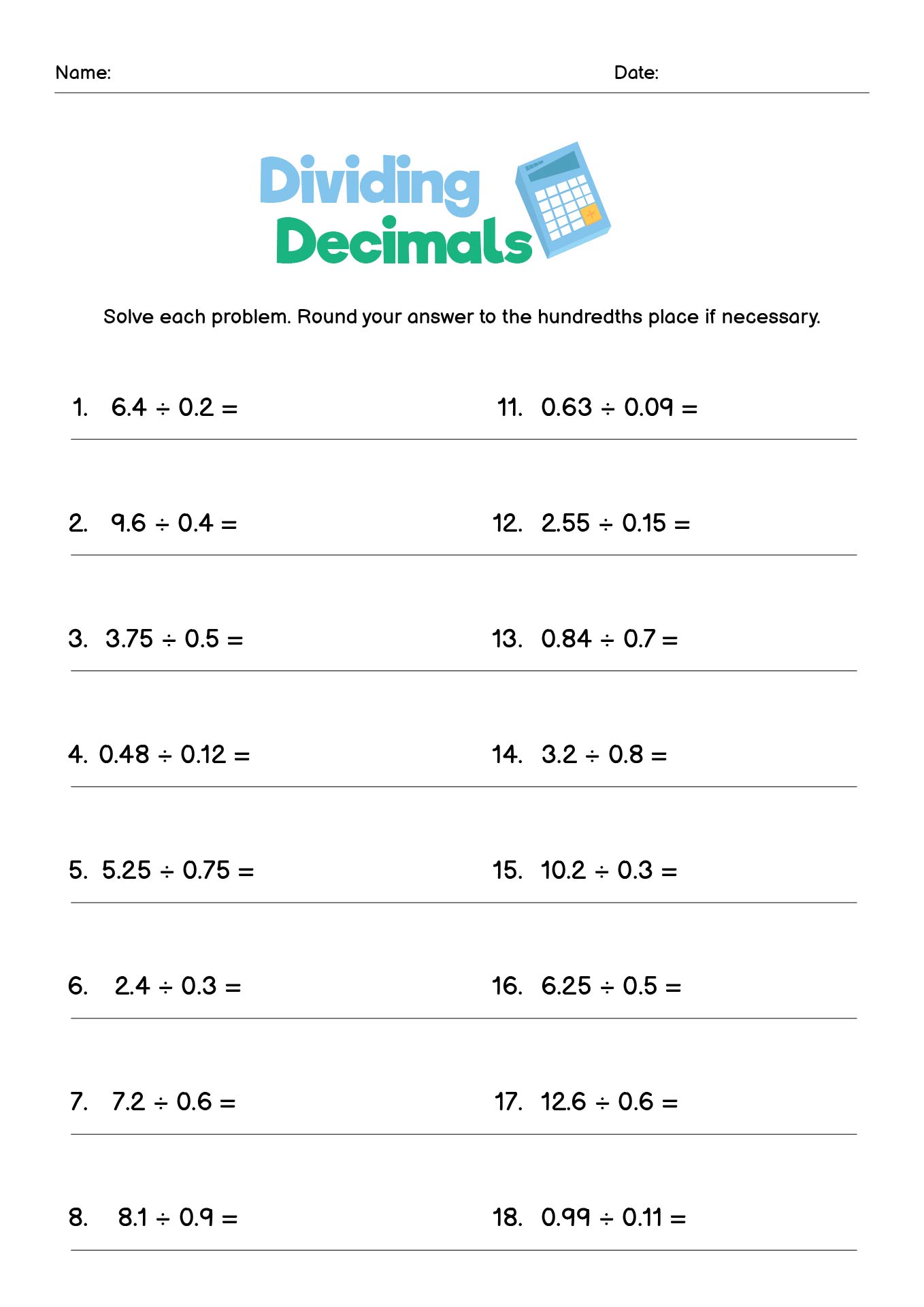
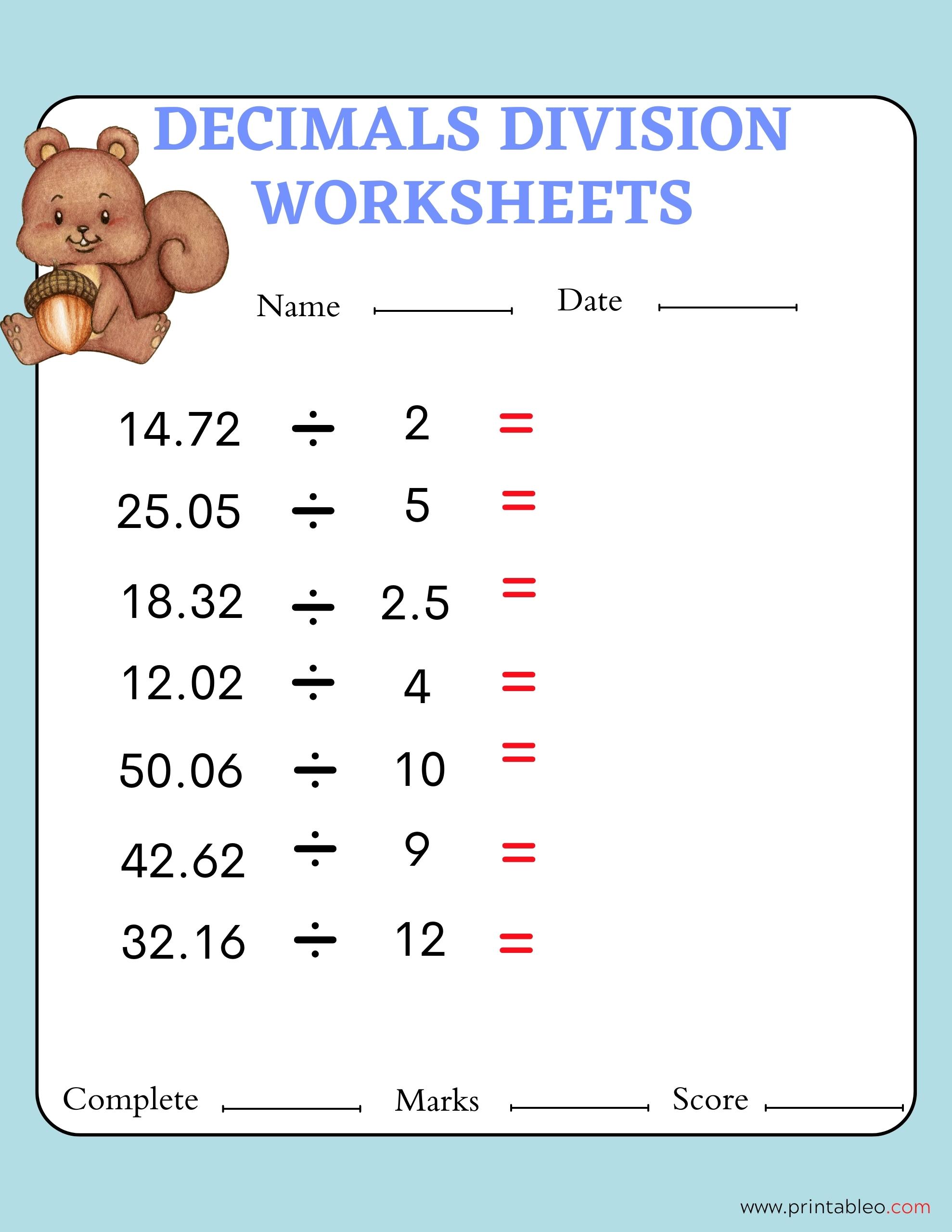
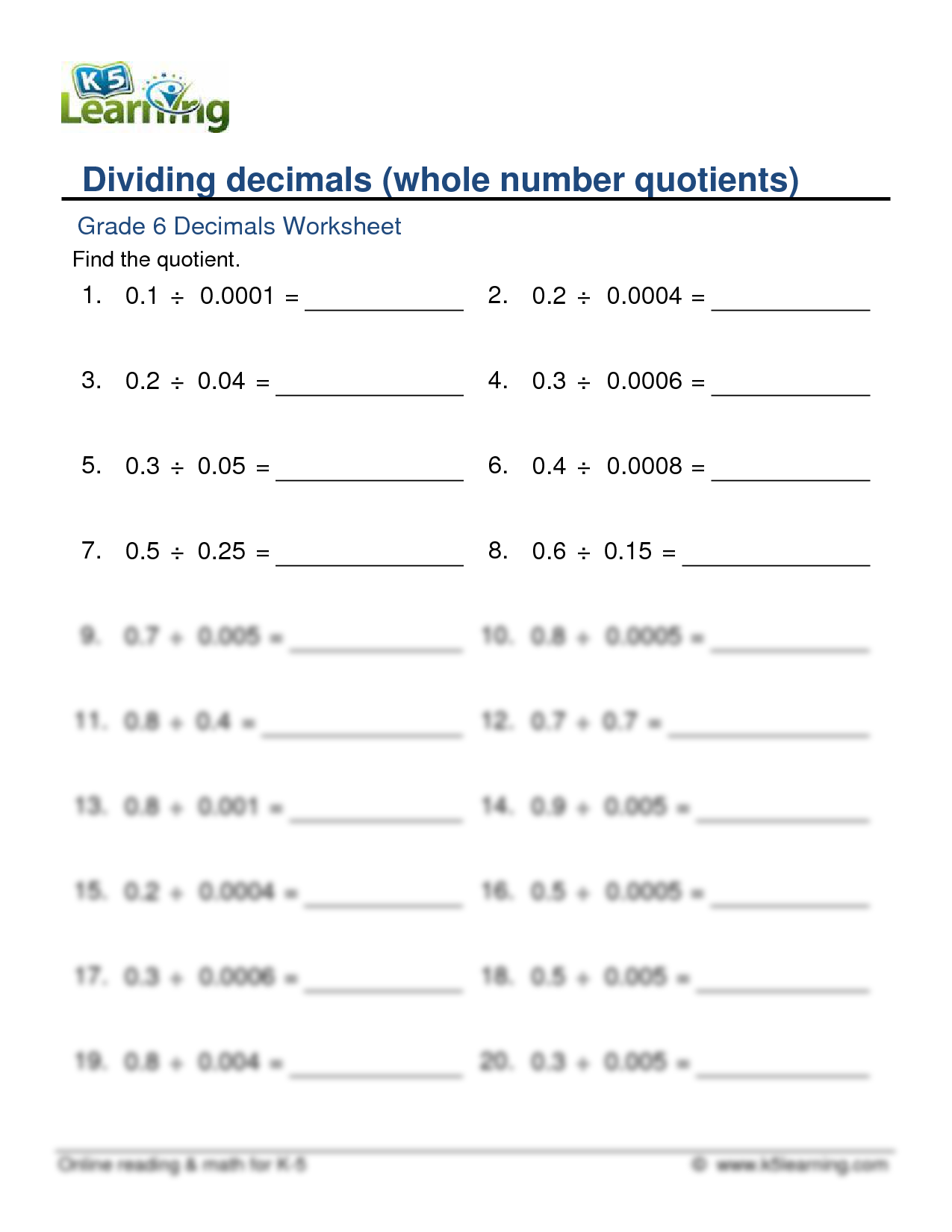
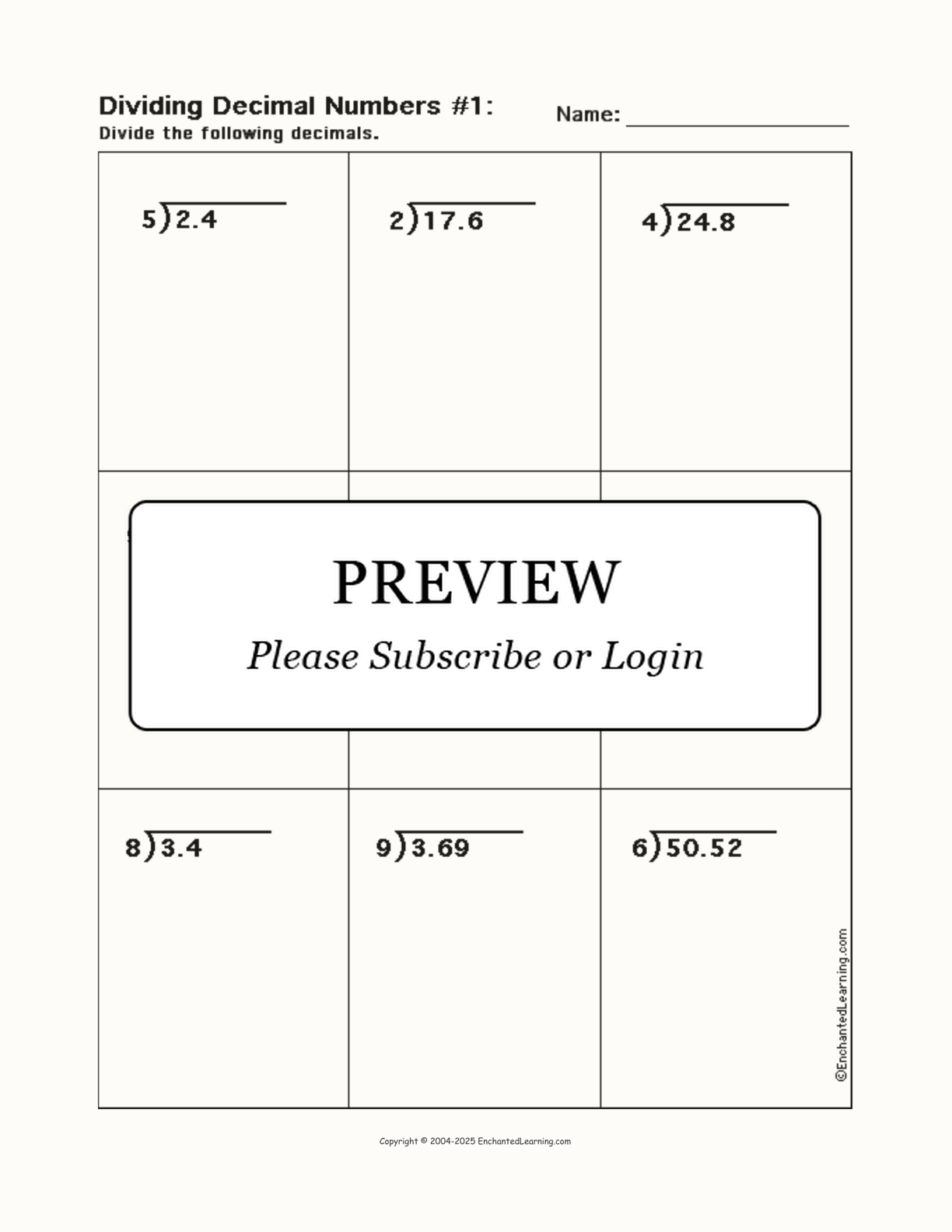
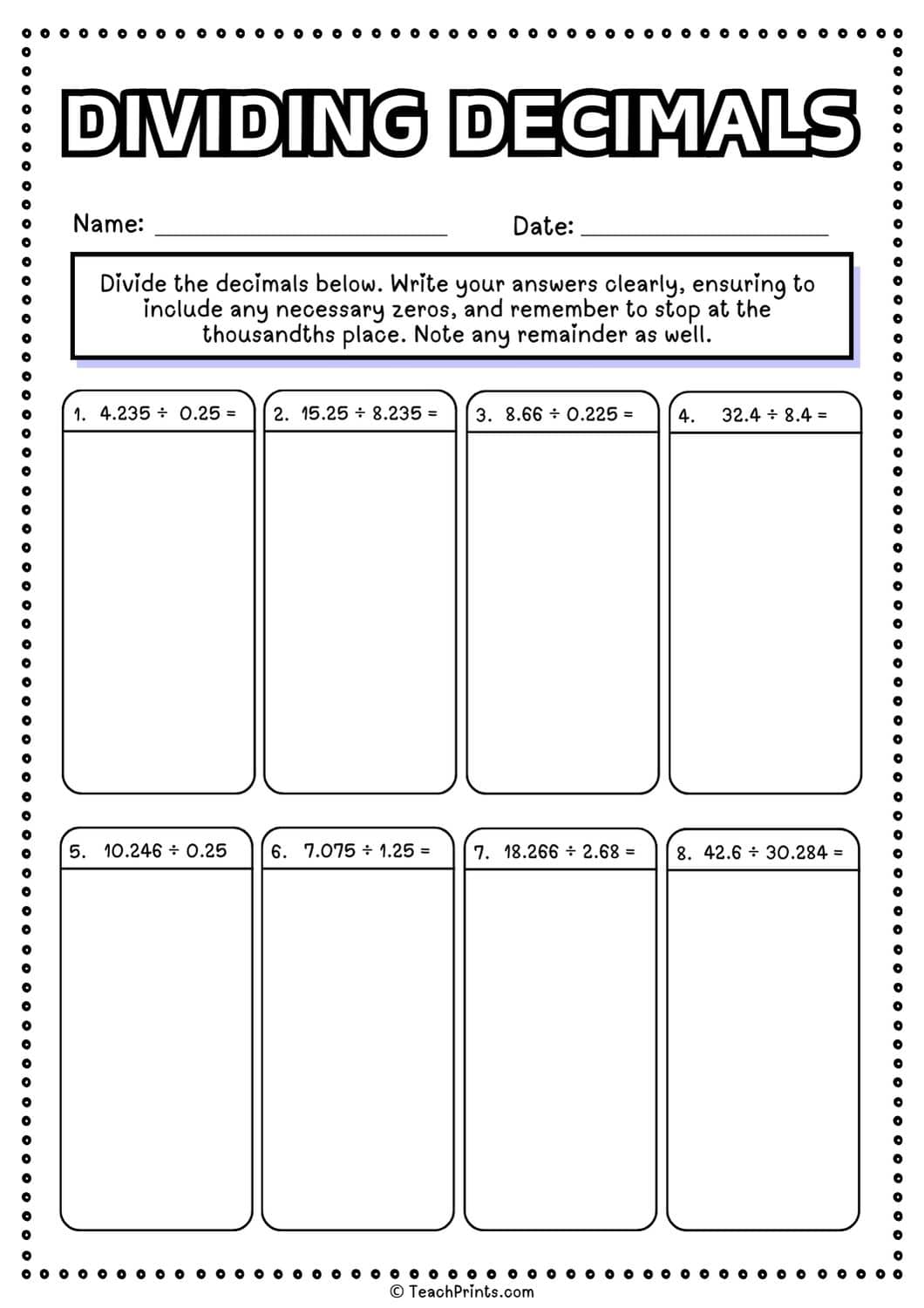
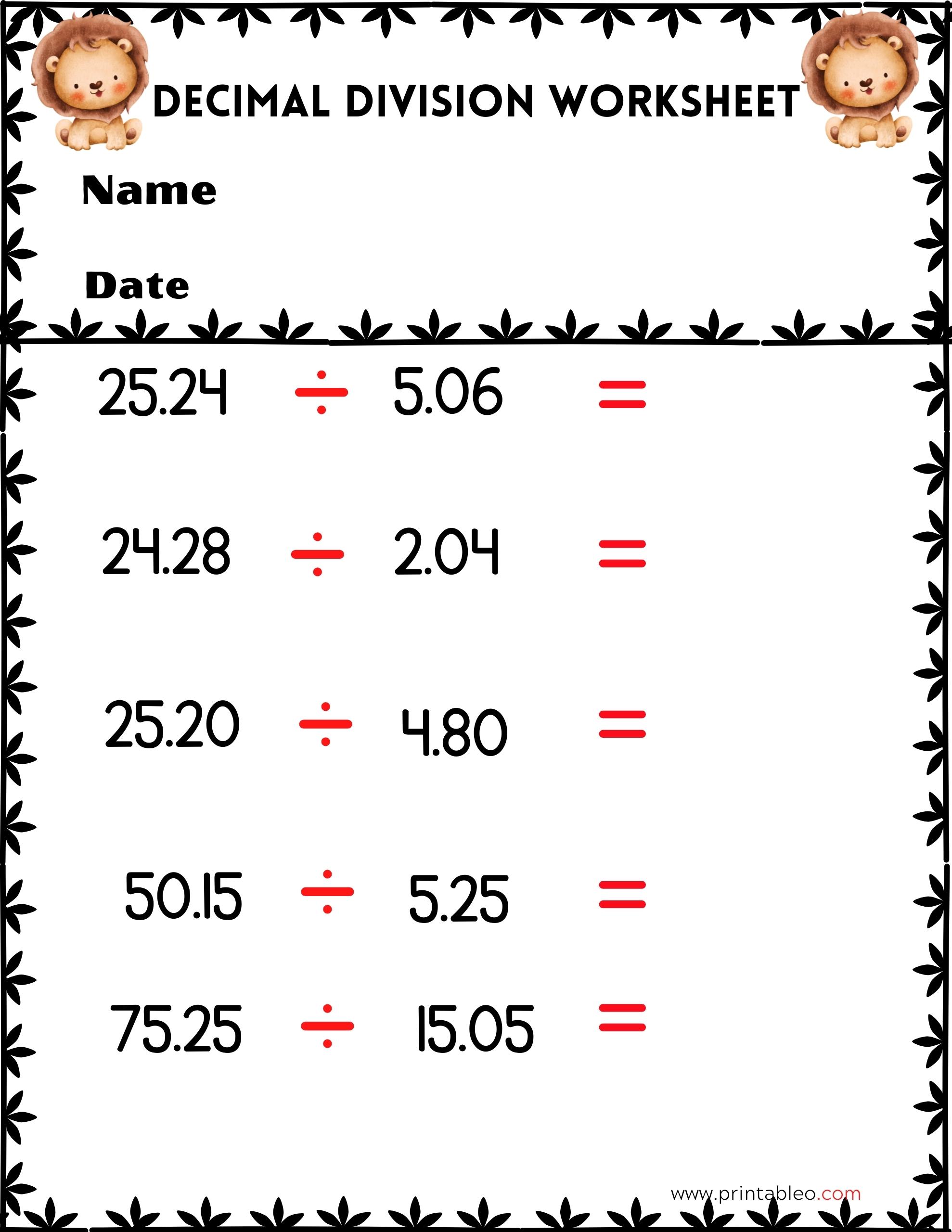
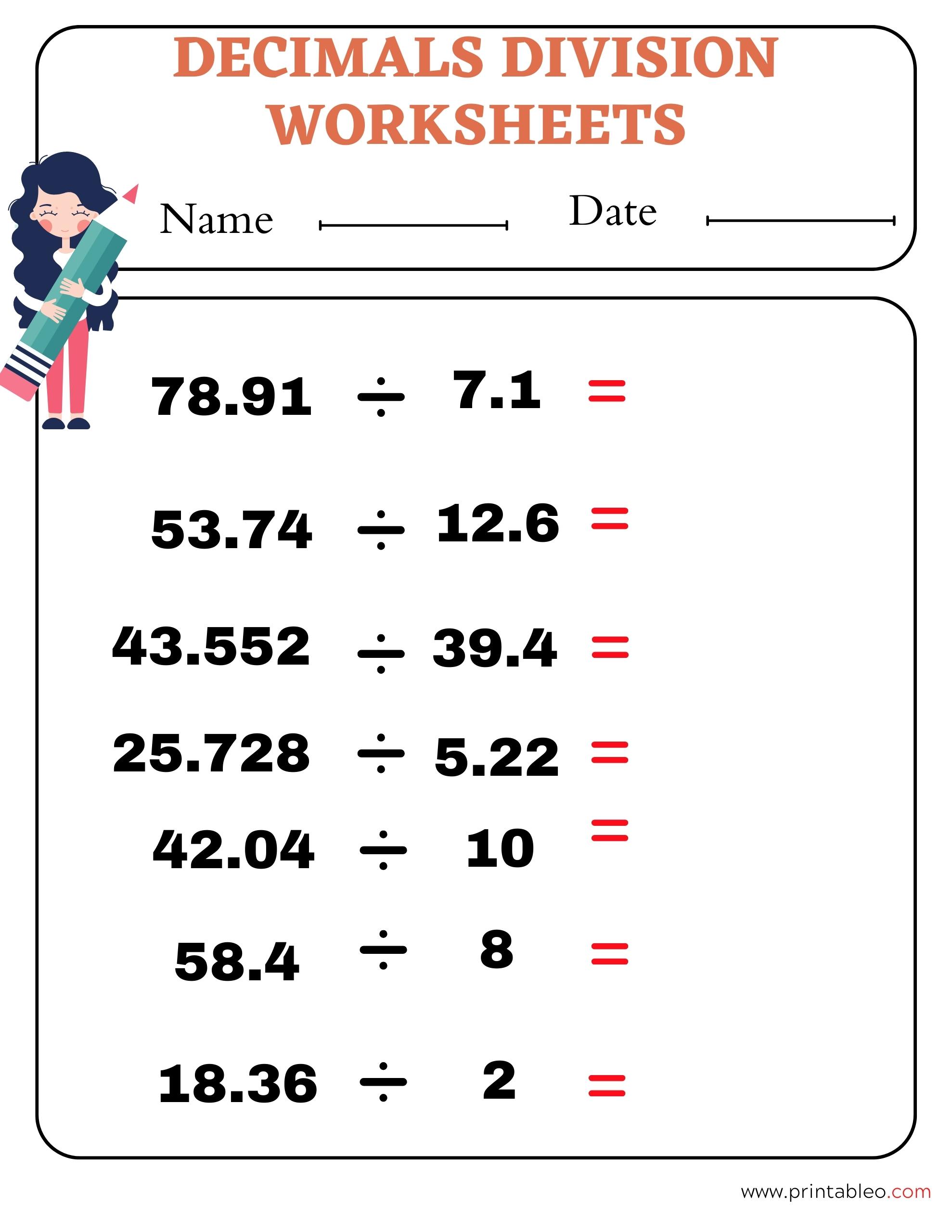
Division Of Decimals Worksheet practice can feel like a puzzle at first, but once you understand the underlying logic, it becomes a powerful tool for boosting confidence in math class and everyday life. Whether you’re a teacher searching for fresh ideas, a parent helping with homework, or a student eager to master the skill, this guide walks you through everything you need to know about creating, using, and mastering decimal division worksheets. We’ll explore why the topic matters, break down the core concepts, provide a step‑by‑step solving method, flag common pitfalls, and show how real‑world scenarios bring the abstract numbers to life. Grab a pencil, settle in, and let’s demystify decimal division together.
Why Decimal Division Matters
Decimal division is more than just a classroom requirement; it reflects everyday financial transactions, scientific calculations, and data analysis. When you split a pizza bill, measure ingredients for a recipe, or calculate interest on a savings account, you are performing decimal division without even realizing it. Mastery of this skill equips students with the confidence to tackle real‑world problems, improves numerical fluency, and lays the groundwork for advanced topics like fractions, percentages, and algebra.
From an educational standpoint, a well‑designed worksheet offers structured repetition, immediate feedback, and the opportunity to diagnose misconceptions early. By practicing with a variety of problem types—simple one‑digit divisors, multi‑digit divisors, and mixed‑operation questions—learners build a flexible mental model that can adapt to any situation.
Understanding the Basics of Decimal Division
Place Value Review
Before diving into division, it’s essential to revisit place value. Decimals extend the base‑10 system to the right of the decimal point, representing tenths, hundredths, thousandths, and so on. A strong grasp of how each digit’s position influences its value makes it easier to align numbers correctly when dividing.
For example, in the number 4.527, the digit 5 represents five tenths (0.5), the digit 2 represents two hundredths (0.02), and the digit 7 represents seven thousandths (0.007). When you move the decimal point during division, you are essentially shifting these values up or down the place‑value scale.
Converting Decimals to Whole Numbers
One common technique for simplifying decimal division is to eliminate the decimal points by multiplying both the divisor and the dividend by the same power of ten. This transformation turns a decimal problem into a whole‑number division, which is often more comfortable for students.
Consider the problem 6.4 ÷ 0.8. Multiplying both numbers by 10 (the smallest power of ten that removes the decimals) yields 64 ÷ 8, which is straightforward to solve. After solving, you place the decimal point back in the answer based on the original numbers’ positions.
Step‑by‑Step Guide to Solving Worksheet Problems
Identify the Divisor and Dividend
The first step is to clearly label the divisor (the number you are dividing by) and the dividend (the number being divided). Misidentifying these can lead to completely incorrect answers, especially when the divisor contains a decimal.
Remove the Decimal from the Divisor
If the divisor is a decimal, determine how many places you need to shift the decimal point to make it a whole number. Multiply both the divisor and the dividend by the same factor of ten. This step ensures the value of the division does not change.
Example: For 5.25 ÷ 0.75, the divisor 0.75 has two decimal places. Multiply both numbers by 100, turning the problem into 525 ÷ 75.
Adjust the Dividend Accordingly
After scaling, the dividend may become a larger number with more digits. Write it out fully before proceeding with long division. This prevents mistakes that arise from skipping zeros or misplacing digits.
Perform the Division
Now you can use the standard long‑division algorithm. Align the numbers, bring down digits as needed, and write each partial product underneath the appropriate segment of the dividend. Keep track of remainders, and if the remainder is non‑zero, you may need to continue the process by adding decimal zeros to the dividend.
Place the Decimal Point in the Answer
Once the whole‑number division is complete, determine where the decimal point belongs in the final answer. Count the total number of decimal places you shifted in the first step (the combined shift for divisor and dividend). Place the decimal point in the quotient so that the answer reflects the same total shift.
Continuing the earlier example, 525 ÷ 75 equals 7. Since we multiplied both original numbers by 100, the decimal point in the answer remains at the end, giving a final result of 7.00, which simplifies to 7.
Common Mistakes and How to Avoid Them
Skipping the Scaling Step – Students often attempt to divide directly when the divisor contains a decimal, leading to misaligned place values. Emphasize the scaling step as non‑negotiable.
Misplacing the Decimal in the Quotient – After division, forgetting to account for the number of decimal places shifted can produce answers that are ten or one‑hundred times too large or too small. Practice with a variety of problems to internalize the rule.
Leaving Remainders Unchecked – When a remainder remains, students sometimes stop instead of extending the division by adding zeros to the dividend. Encourage the habit of continuing until the desired decimal precision is reached.
Incorrectly Aligning Digits in Long Division – A common source of error is writing the partial products under the wrong column, especially when the dividend has many digits. Encourage double‑checking each line before moving on.
Real‑World Applications of Decimal Division
Understanding decimal division opens the door to practical scenarios that students encounter daily.
- Shopping and Discounts: If a $45 item is on sale for 15% off, you calculate the discount by multiplying $45 by 0.15, then subtracting the result. Alternatively, you can divide $45 by 0.85 to find the sale price directly.
- Cooking and Baking: Recipes often require scaling. If a recipe calls for 2.5 cups of flour for 4 servings, how much flour is needed for 10 servings? This is a proportion solved by dividing and multiplying decimals.
- Budgeting: Splitting a monthly utility bill among roommates involves dividing a total amount by the number of people, often resulting in decimal values that must be rounded appropriately.
- Science Experiments: Concentrations, such as milligrams per liter, frequently require division of decimal quantities to determine dosage or solution strength.
Tips for Creating Effective Practice Worksheets
Designing a worksheet that truly reinforces learning involves more than dumping a list of problems. Consider the following strategies:
- Progressive Difficulty – Start with simple one‑digit divisors, then move to two‑digit divisors, and finally introduce mixed operations or word problems.
- Varied Formats – Include vertical long‑division problems, fill‑in‑the‑blank equations, and real‑world scenario questions to keep engagement high.
- Visual Aids – Incorporate number lines or place‑value charts for visual learners. These aids help students see the impact of shifting decimal points.
- Answer Keys with Step‑by‑Step Solutions – Provide detailed solutions so learners can follow the process and identify exactly where they went wrong.
- Space for Working – Leave generous margins or blank lines for students to write out each step, encouraging systematic problem solving rather than guesswork.
How to Use Worksheets for Mastery
Using worksheets effectively requires intentional practice rather than mindless completion.
- Set Clear Goals: Define what skill you are targeting—e.g., “accurately place the decimal point after division.”
- Self‑Check Immediately: After solving each problem, compare the answer with the key before moving on. Immediate feedback solidifies learning.
- Reflect on Errors: Keep an error log noting the type of mistake (scaling, placement, remainder). Review this log regularly to spot patterns.
- Timed Drills: Once accuracy improves, introduce timed sessions to build speed and fluency, which are crucial for standardized tests.
- Teach the Concept: Encourage students to explain the steps out loud or teach a peer. Teaching reinforces mastery.
Conclusion
Mastering the Division Of Decimals Worksheet process empowers learners to tackle both classroom challenges and everyday math tasks with confidence. By reviewing place value, applying the scaling technique, following a systematic step‑by‑step method, and avoiding common pitfalls, students develop a robust mental framework for decimal division. Real‑world applications demonstrate the relevance of the skill, while thoughtfully designed worksheets provide the practice needed for lasting mastery. Implement the tips and strategies outlined here, and watch your proficiency—and enjoyment—of decimal division grow.