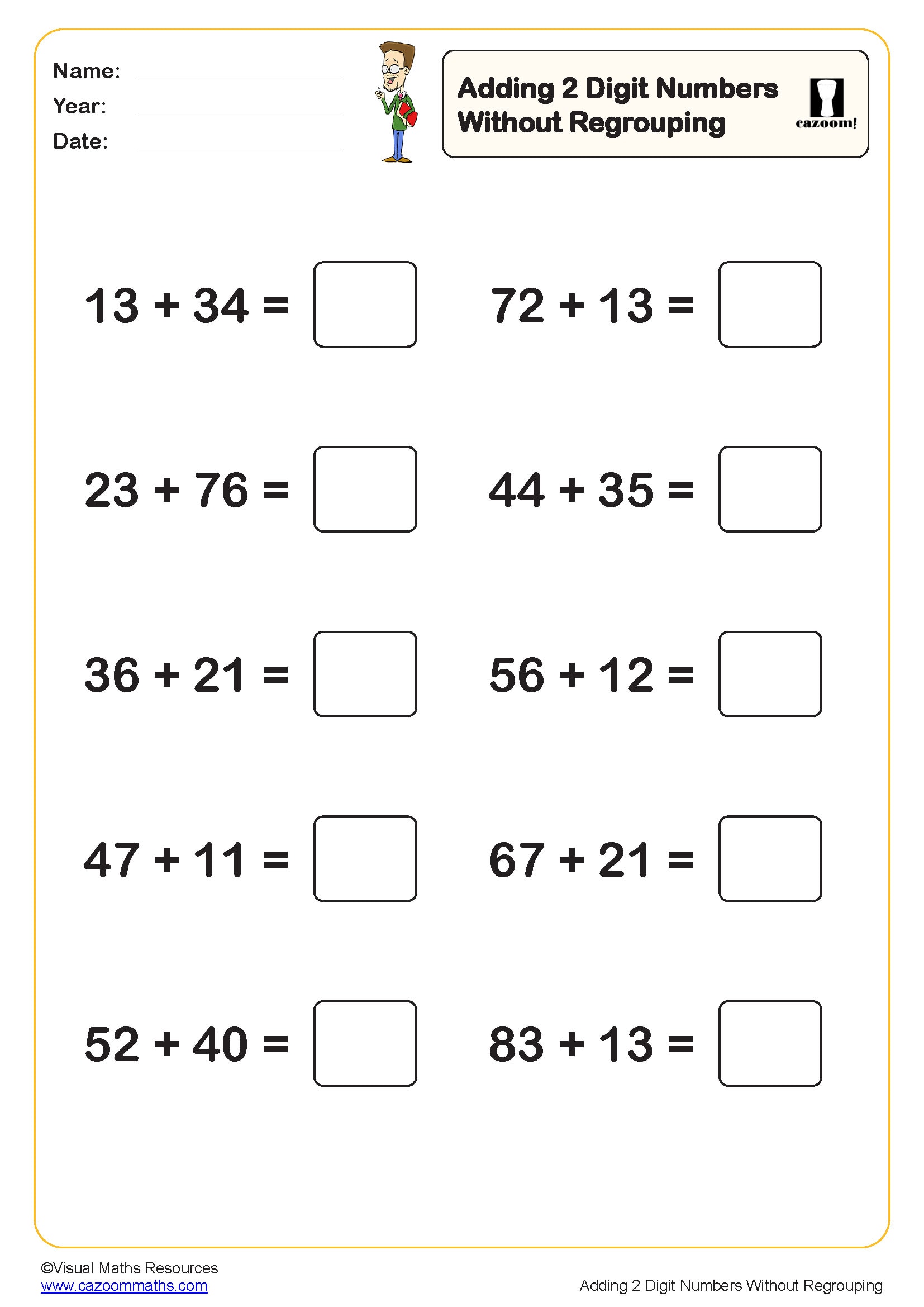
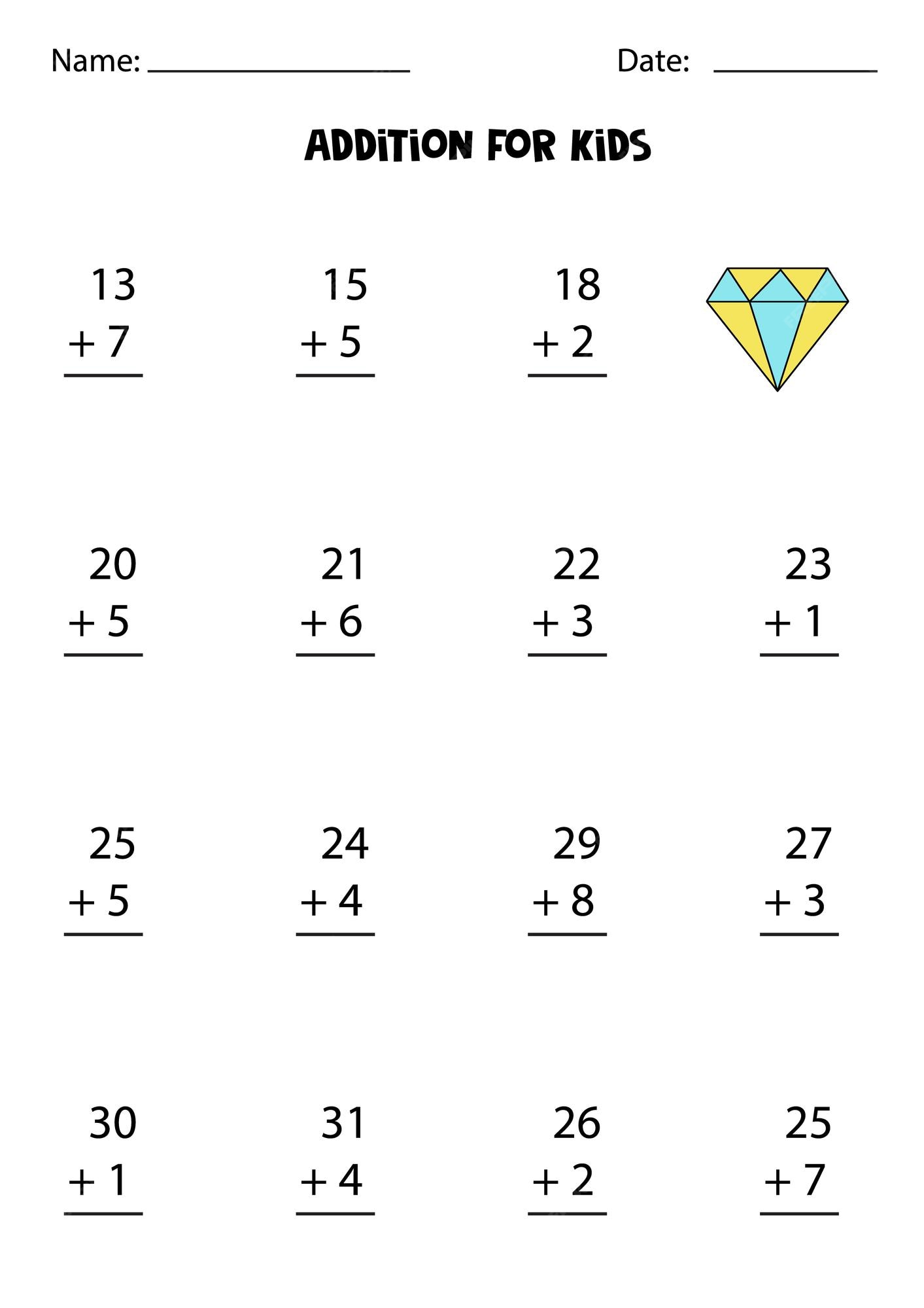
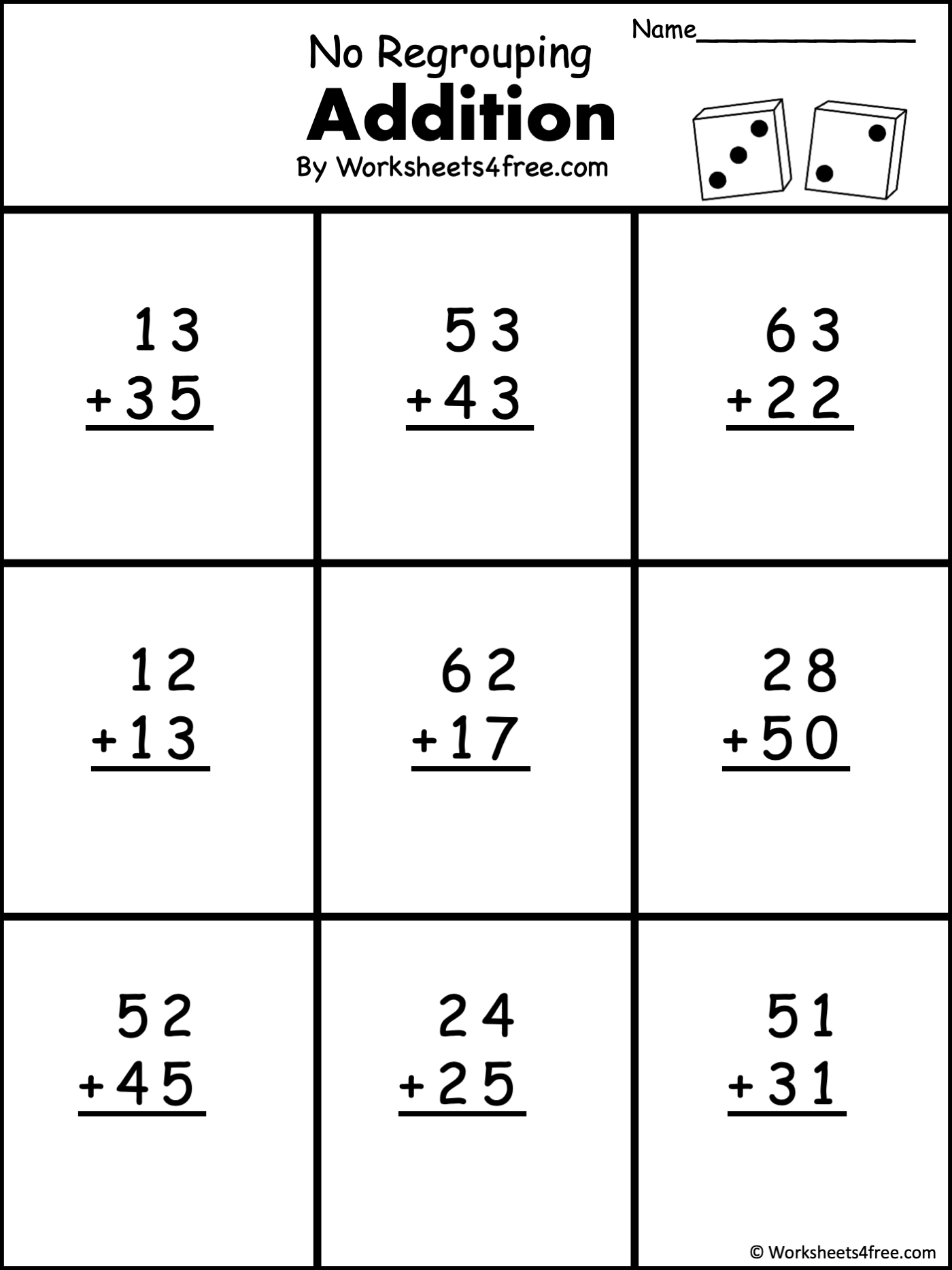
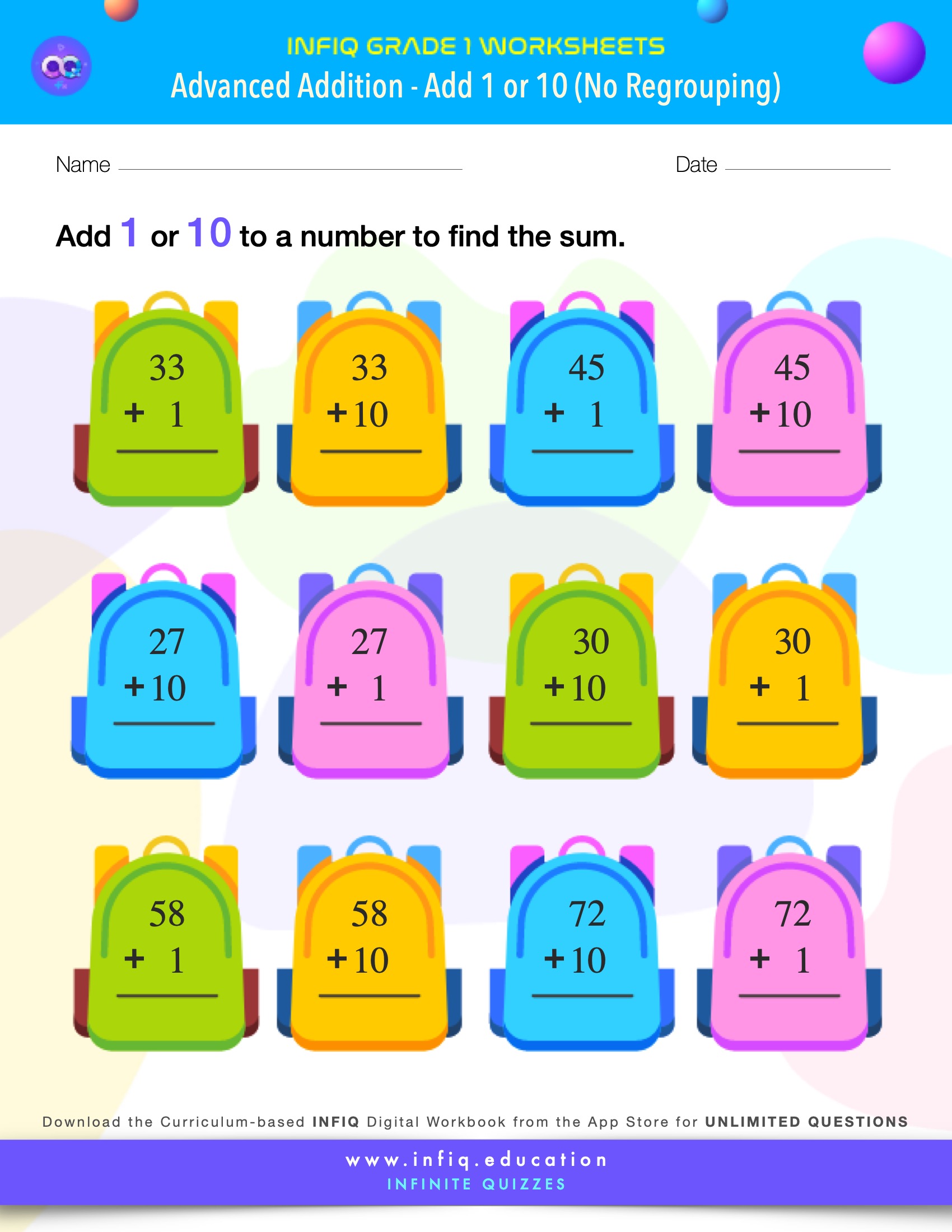
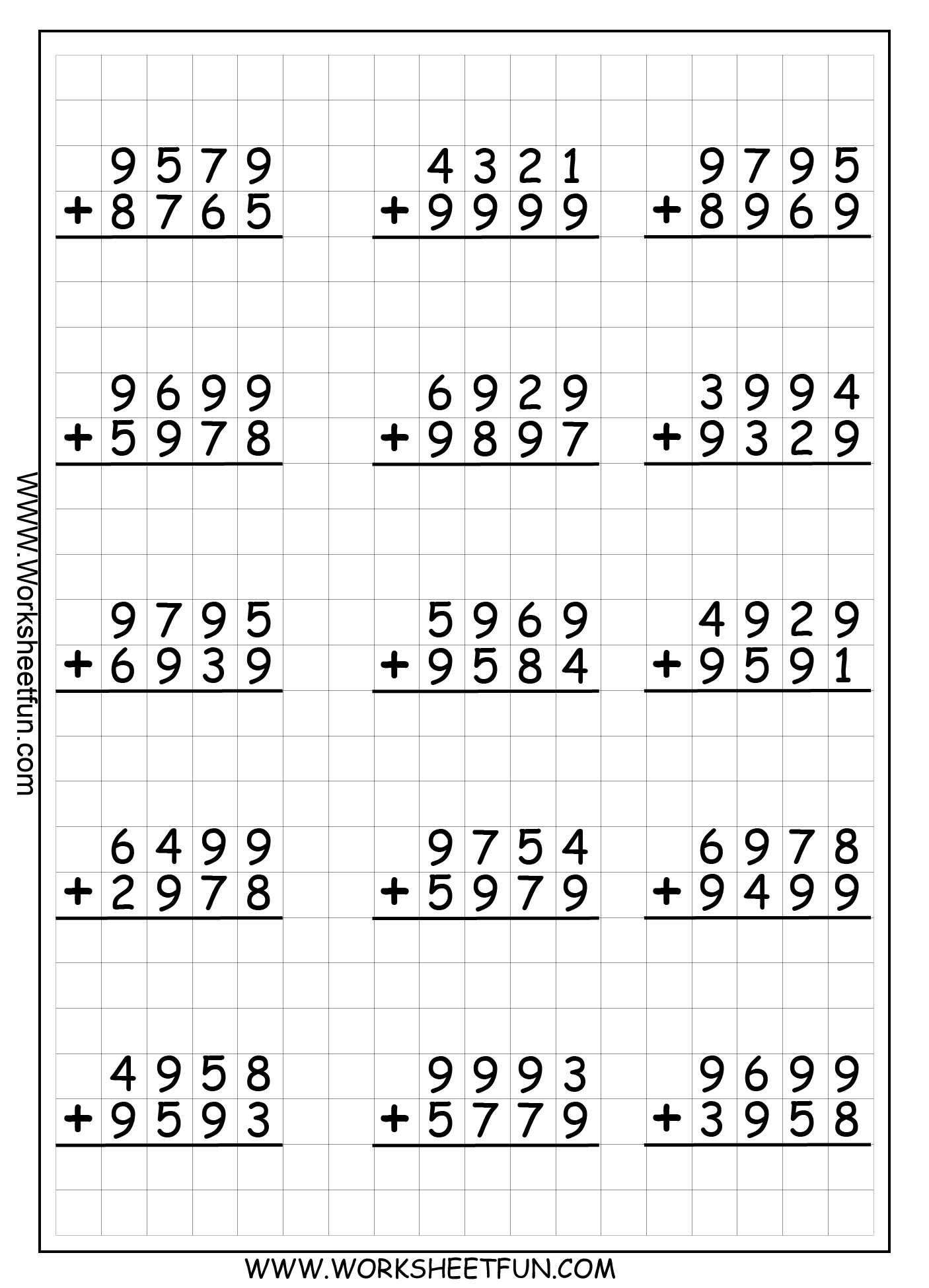
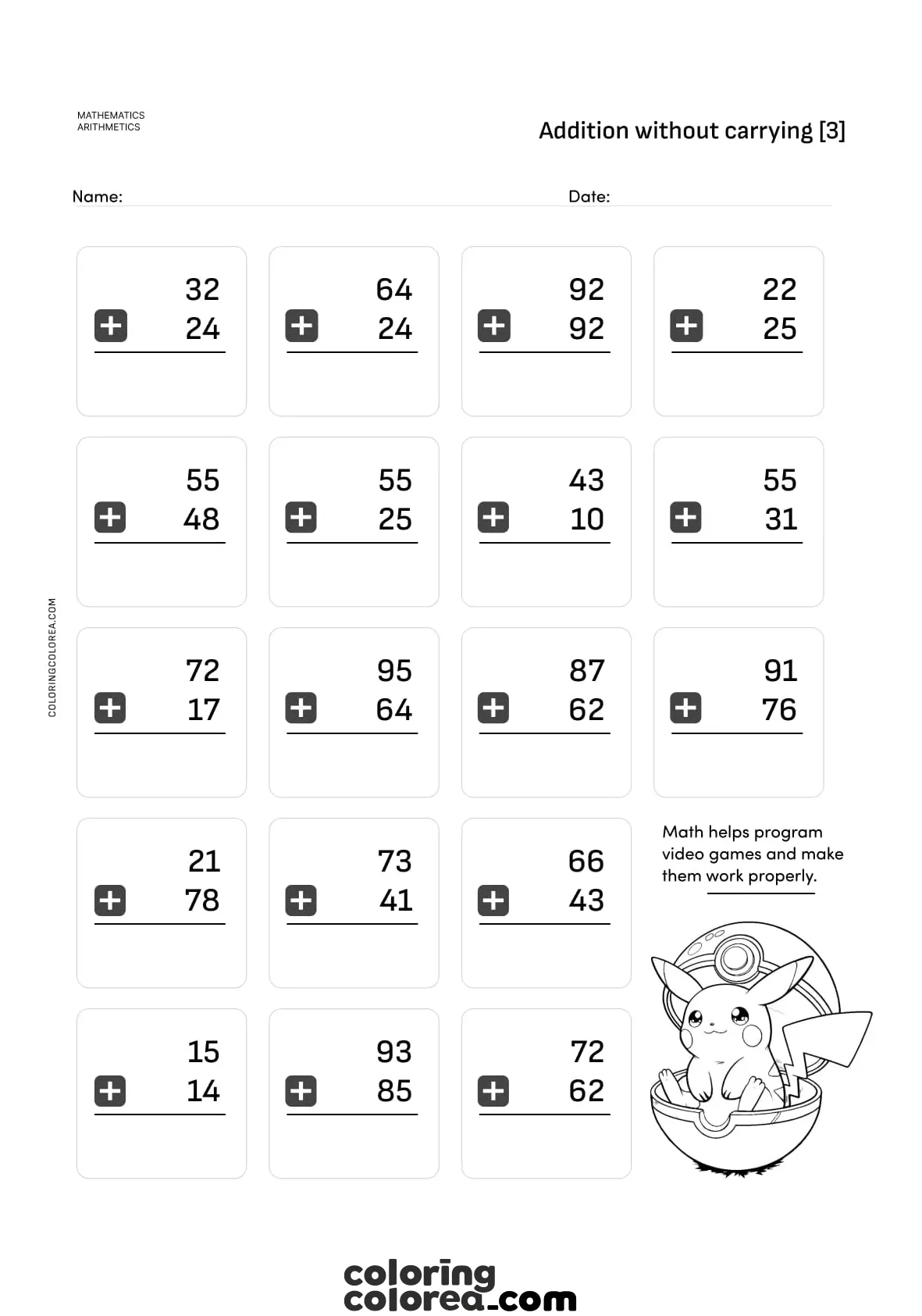
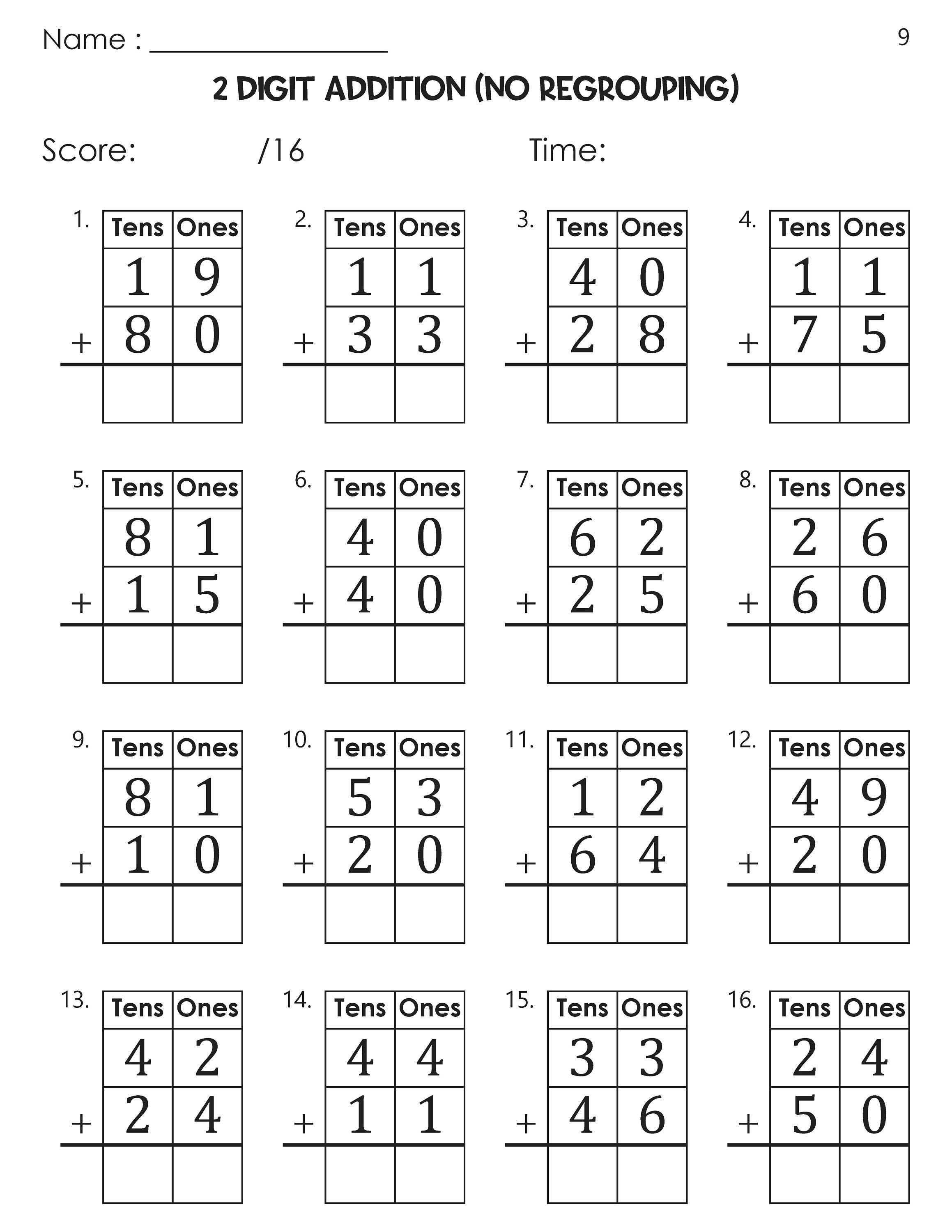
Addition Worksheets Without Carrying provide a foundational stepping stone for young learners to develop fluency in basic arithmetic before tackling more complex concepts like regrouping, and they serve as an essential tool for building confidence in early mathematics education.
Why Focus on Addition Without Carrying?
Introducing addition problems that do not require carrying allows children to concentrate on the core operation of combining numbers without the added cognitive load of managing place value transitions. When students work with sums such as 23 + 14 or 45 + 32, they can practice aligning digits, counting on fingers, or using mental strategies without the distraction of a carry‑over. This focus accelerates the development of number sense, a critical component of mathematical proficiency.
Key Benefits for Early Learners
Strengthening Number Sense
Number sense involves an intuitive understanding of numbers, their magnitude, and relationships. By solving addition problems that stay within a single digit column, learners reinforce the idea that ten units make a ten, and they can visually see how numbers combine. This visual‑mental link is essential before they encounter the abstraction of regrouping.
Building Confidence and Reducing Anxiety
Many children experience math anxiety when faced with multi‑step calculations. Worksheets that omit carrying eliminate the fear of making “mistakes” on the more difficult part of the problem, allowing students to experience success repeatedly. Repeated success fosters a growth mindset and encourages perseverance in later, more challenging topics.
Facilitating Mastery of Basic Strategies
Without the need to manage carries, teachers can emphasize strategies such as counting on, making ten, and using number lines. These strategies become automatic when practiced consistently, and they serve as building blocks for advanced mental math techniques.
Designing Effective Worksheets
Choosing Appropriate Number Ranges
For first‑ and second‑grade learners, numbers ranging from 0 to 99 are ideal. Begin with single‑digit sums (e.g., 4 + 3) and progress to two‑digit sums where each column adds to nine or less (e.g., 27 + 41). This gradual increase ensures that students are not overwhelmed while still being challenged.
Incorporating Visual Aids
Visual supports like ten frames, base‑ten blocks, or simple drawings can make abstract addition concrete. Place a ten frame beside each problem, prompting students to fill in the correct number of squares before writing the answer. Visuals also cater to diverse learning styles, especially for visual learners.
Balancing Repetition and Variety
While repetition is essential for fluency, variety maintains engagement. Alternate rows of straightforward column addition with rows that include word problems or contextual scenarios (e.g., “Sam has 23 apples and finds 15 more”). This approach reinforces the same skill set while keeping the worksheet interesting.
Step‑by‑Step Guide to Create Your Own
Step 1: Define the Learning Objective
Clarify whether the worksheet aims to practice single‑digit addition, two‑digit addition without carrying, or both. A clear objective guides the selection of problem types and difficulty level.
Step 2: Generate Problem Sets
Use a simple spreadsheet or an online generator to create random addition pairs that meet the no‑carry criterion. For two‑digit problems, ensure that the sum of the units column does not exceed nine, and the same for the tens column if you wish to avoid carrying in both places.
Step 3: Add Instructional Prompts
Include brief, direct instructions at the top of the worksheet, such as “Add the numbers below. Write the answer in the box.” Clear instructions reduce confusion and keep the focus on the skill.
Step 4: Incorporate Answer Boxes
Design each problem with a clearly defined answer box or line. This format encourages neatness and makes grading easier for teachers and parents.
Step 5: Provide Space for Self‑Checking
At the bottom of the page, include a “Check Your Work” section with a few sample problems and step‑by‑step solutions. This self‑assessment reinforces learning and promotes independence.
Step 6: Review for Accuracy
Before printing or sharing, double‑check each problem to confirm that no carries are required. A single oversight can undermine the worksheet’s purpose and confuse students.
Integrating Worksheets into Daily Practice
Consistency is key for mastery. Incorporate short, focused worksheet sessions into daily routines—whether as a morning warm‑up, a post‑lunch activity, or a homework assignment. Pair the worksheets with brief oral drills to reinforce mental calculation, and use positive reinforcement to celebrate correct answers.
Morning Warm‑Up Routine
Start each school day with a five‑minute “addition sprint.” Hand out a mini‑worksheet with three to five no‑carry problems. Students solve them independently, then check answers as a class. This routine activates prior knowledge and sets a productive tone for the day.
Homework and Parental Involvement
Send home a printable worksheet each week with clear expectations. Encourage parents to sit with their child, use manipulatives like counters, and ask probing questions (“What happens when you add 6 and 2? Can you show it with blocks?”). This collaboration deepens understanding and extends learning beyond the classroom.
Common Mistakes and How to Avoid Them
Overlooking the No‑Carry Rule
Students sometimes mistakenly add numbers that exceed nine in a column, leading to an unintended carry. To prevent this, emphasize checking each column before writing the answer. Teachers can model a “double‑check” routine: “First add the ones, then the tens, and make sure each sum stays under ten.”
Misalignment of Digits
When writing the numbers vertically, aligning the tens and ones columns is crucial. Misalignment causes errors in addition and can be especially confusing for early learners. Provide lined worksheets with clear column headings or use a grid format to enforce proper placement.
Skipping the Visual Representation
Some students try to compute mentally without using visual aids, which can lead to mistakes. Encourage the use of ten frames or base‑ten blocks for at least the first few problems, gradually fading the support as fluency increases.
Digital Resources and Printable Options
Modern education technology offers a wealth of tools to generate, customize, and distribute addition worksheets without carrying. Teachers can use interactive platforms that allow students to drag and drop numbers into place, receive instant feedback, and track progress over time. Printable PDFs remain popular for offline practice, especially in homes with limited internet access.
Interactive Worksheets
Platforms that simulate virtual manipulatives let students practice adding with visual cues while receiving automatic correctness checks. These tools keep learners engaged and provide data for teachers to identify areas needing reinforcement.
Customizable Printable Templates
Editable templates in word processors or spreadsheet programs enable educators to quickly adjust number ranges, add themed graphics, or insert school logos. Customization maintains relevance and can tie the worksheet to current classroom topics or holidays.
Assessing Student Progress
Effective assessment goes beyond checking whether an answer is correct; it examines the process used. Observe students as they work through problems, noting whether they use counting on fingers, mental strategies, or manipulatives. Record observations in anecdotal notes or use simple rubrics that assess accuracy, strategy use, and self‑checking habits.
Formative Checks
During worksheet activities, pause to ask “What did you notice about the numbers in this column?” This prompts metacognition and helps teachers gauge understanding in real time.
Summative Evaluation
At the end of a unit, administer a timed, no‑carry addition test. Compare results with earlier performance to measure growth in speed and accuracy. Use the data to inform future instruction, perhaps revisiting areas where many students struggled.
Conclusion
By centering instruction around Addition Worksheets Without Carrying, educators provide a clear, confidence‑building pathway for students to master basic addition before confronting the complexity of regrouping. Thoughtfully designed worksheets, consistent practice routines, supportive visual aids, and purposeful assessment together create an environment where young learners can develop strong number sense, fluency, and a lasting love for mathematics. Implementing these strategies today lays a solid foundation for tomorrow’s more advanced mathematical challenges.