Worksheet On Roman Numerals provides a structured path for students and language enthusiasts alike to master this timeless number system, bridging ancient numeration with contemporary educational tools. By blending traditional practice with culturally resonant themes, these worksheets become a vibrant resource that appeals to learners in Asia and beyond.
Understanding the Basics
Roman numerals—written as I, V, X, L, C, D, and M—rely on additive and subtractive principles. Students often first encounter them in historical contexts, such as dates on clocks or book chapter headings. A solid foundation involves mastering the value of each symbol and recognizing common combinations like IV (4) or IX (9).
Core Symbol Breakdown
- I = 1
- V = 5
- X = 10
- L = 50
- C = 100
- D = 500
- M = 1,000
Additive vs Subtractive Notation
In additive notation, symbols combine from left to right—e.g., VIII equals 8. In subtractive notation, a smaller value preceding a larger one indicates subtraction—IV equals 4. Worksheets that illustrate both approaches reinforce pattern recognition and computational accuracy.
Why Roman Numeral Worksheets Are Essential
Learning Roman numerals extends beyond simple number conversion. It sharpens mathematical intuition, enhances historical literacy, and nurtures cultural appreciation. For Asian learners, who often study East Asian numeral systems, Roman numerals offer a comparative perspective that enriches numeracy skills.
Developing Pattern Recognition
Regular practice with worksheets forces students to spot regularities—such as how hundreds and thousands repeat as C and M. This pattern recognition translates into broader problem‑solving abilities across mathematics and coding.
Strengthening Memory Through Repetition
Repetitive, scaffolded exercises on worksheets enable spaced repetition, a proven mnemonic technique that improves long‑term retention of complex symbols.
Choosing the Right Worksheet Style
Not all worksheets are created equal. Depending on your goals—whether reinforcing basics or preparing for competitive exams—you may select from a range of formats:
Fill‑in‑the‑Blank Templates
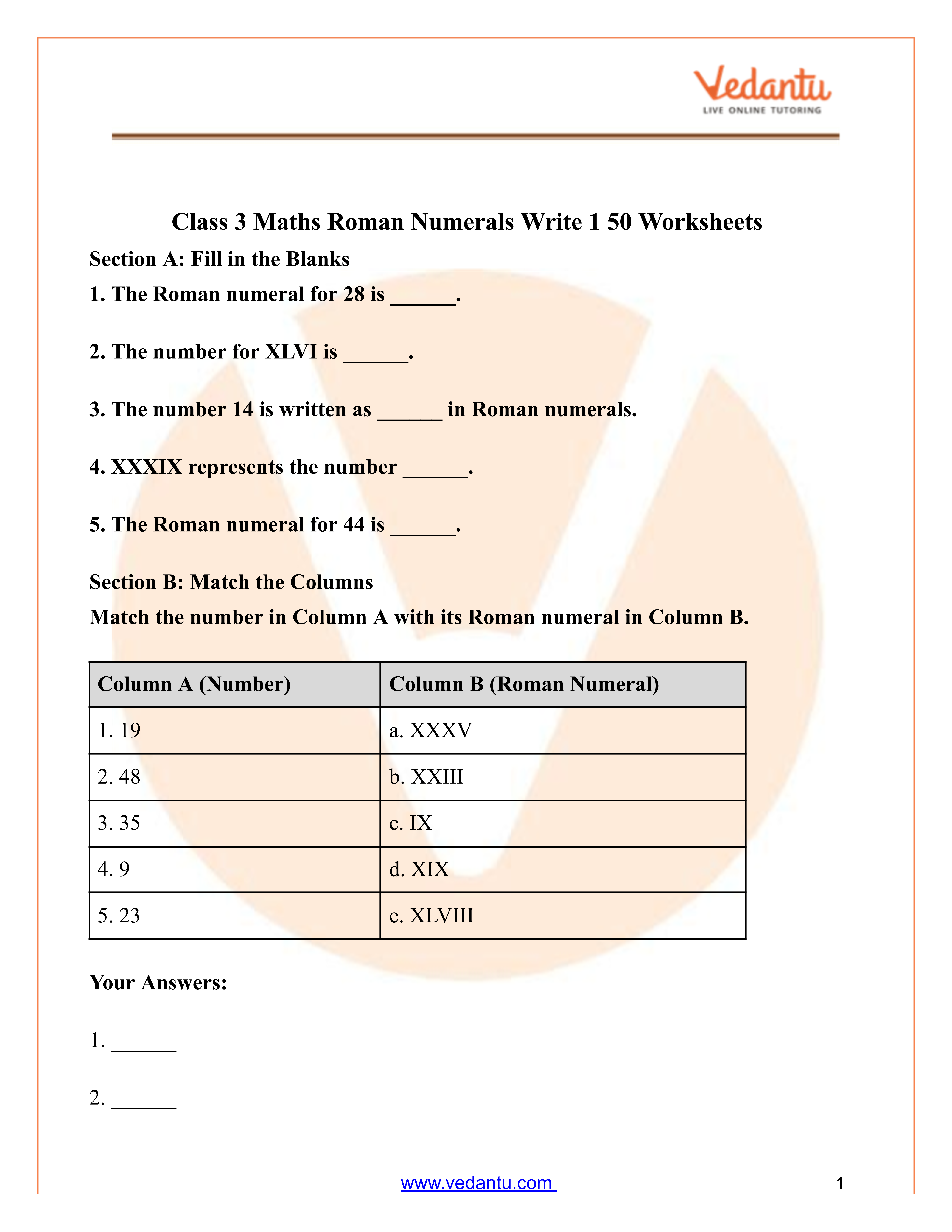
These prompt students to convert Arabic numerals into Roman equivalents or vice versa, fostering active engagement.
Matching Games
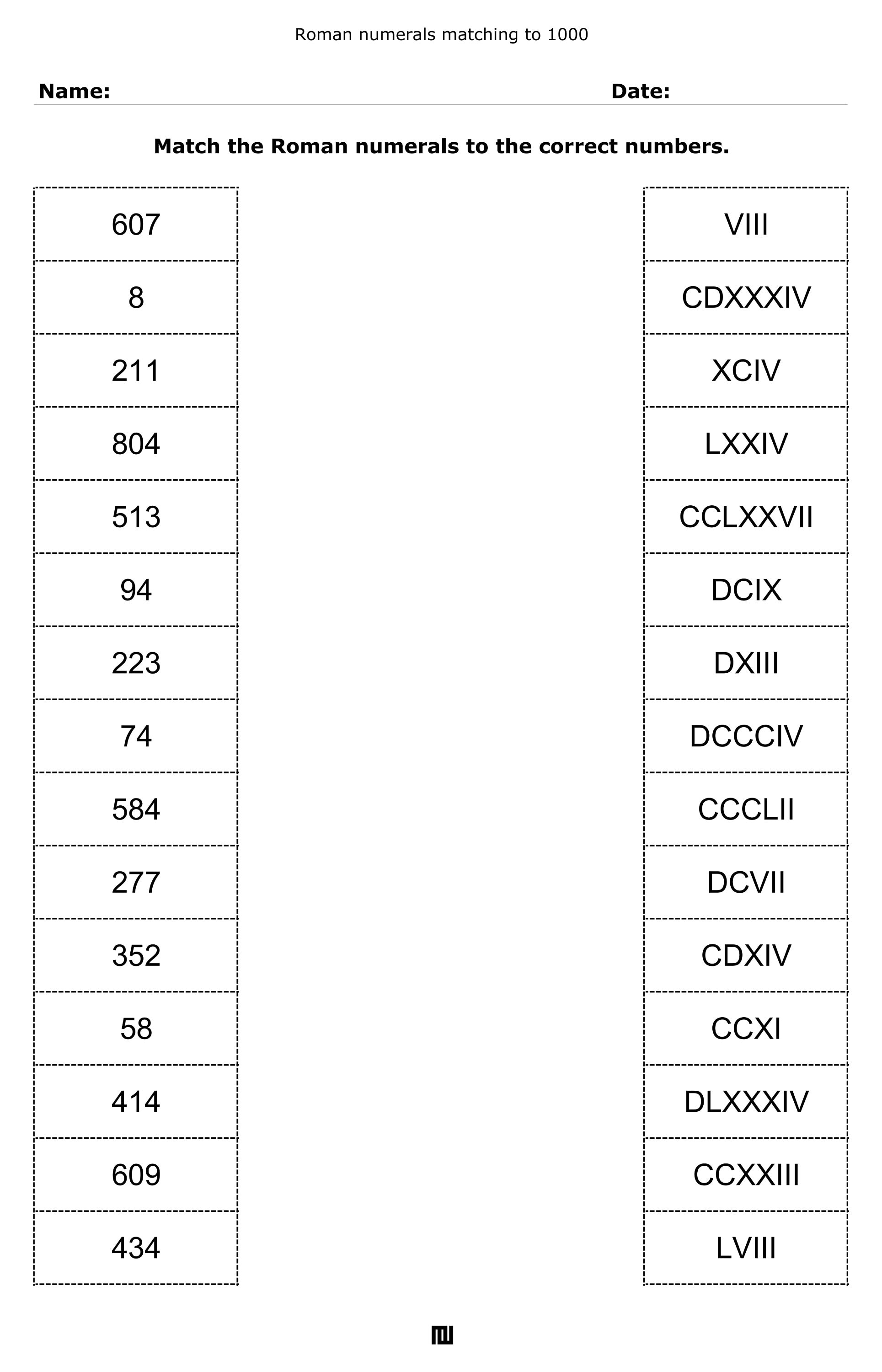
Pairs of symbols and values help learners quickly associate representations, ideal for early‑stage learners.
Creative Storyboards
Integrating Roman numerals into narrative contexts—such as labeling chapters in a fable—adds relevance and reduces rote memorization.
Integrating Roman Numeral Worksheets into Classroom Activities
Effective integration transforms worksheets from static exercises into dynamic learning moments. Below are structured strategies that align with pedagogical best practices.
Pre‑Lesson Warm‑Ups
Start each session with a quick 3‑minute quiz—students write the Roman numeral for a given Arabic number. This primes the mind for deeper practice.
Collaborative Peer Review
Pair students to exchange completed worksheets, then discuss discrepancies. Peer teaching reinforces accuracy and builds communication skills.
Multimedia Integration
Pair a worksheet with a short animation showing the history of Roman numerals, then ask students to label the timeline using Roman digits. Visual context amplifies memory.
Creative Ways to Use Worksheets at Home
Parents and tutors can adapt classroom strategies for home learning environments. The following ideas create engaging, family‑friendly practice sessions.
Number Clock Projects
Print a blank clock face and ask children to write Roman numerals on each hour. This hands‑on activity merges geometry with numerals.
Daily Date Tracker
Encourage children to record the day of the month using Roman numerals. Over time, they internalize the system naturally.
Board Game Design
Create a simple board game where moves are determined by rolling a die and then translating the result into Roman numerals to advance. This adds fun to learning.
Common Mistakes and How to Avoid Them
Even seasoned learners sometimes stumble on subtle errors. Highlighting these pitfalls can streamline progress.
Overlooking Subtraction Rules
Students often forget that only one smaller value can precede a larger one to indicate subtraction. Worksheets that isolate subtractive patterns reduce this mistake.
Misplacing Symbol Order
Wrong ordering—e.g., writing VI for 6 as IV—distorts value. Sequencing drills reinforce proper arrangement.
Ignoring Repetition Limits
In Roman numerals, a symbol cannot repeat more than three times consecutively. Worksheets that ask students to write 4,000 (MMMM) help clarify this limit.
Assessment and Feedback Techniques
Objective assessment ensures that worksheets meet learning objectives. Combine quantitative scoring with qualitative insights for balanced evaluation.
Instant Grading Tools
Digital worksheets often come with auto‑grade functions that compare entries against correct answers, allowing immediate feedback.
Self‑Reflection Prompts
After each worksheet, ask students to list three new symbols they learned or any patterns they noticed. This promotes metacognition.
Progress Dashboards
Track scores over time, displaying visual charts that illustrate mastery levels. This data can guide targeted interventions.
Digital vs Printable Worksheets
Choosing between digital and printable formats depends on context, resources, and student preferences.
Digital Advantages
Interactive drag‑and‑drop activities, instant grading, and the ability to embed multimedia resources enhance engagement.
Printables Benefits
Paper worksheets encourage tactile learning and are ideal for settings with limited internet access.
Hybrid Approach
Combining a printable “starter” worksheet with a digital “challenge” version offers a balanced learning journey.
Final Thoughts
Mastery of Roman numerals through thoughtfully designed worksheets equips learners with analytical skills, cultural awareness, and a lifelong appreciation for numerical artistry. By selecting appropriate formats, embedding lessons in interactive contexts, and providing continuous feedback, educators and parents can ensure that each child not only understands Roman numerals but also enjoys the process of learning them. Embracing this timeless system in modern classrooms transforms a simple number set into a bridge between past and present, resonating across Asian educational landscapes and beyond.



Related posts of "Worksheet On Roman Numerals"
