Worksheet On Projectile Motion serves as a powerful bridge between theoretical physics concepts and hands‑on practice, allowing students to visualize, calculate, and internalize the dynamics of objects traveling through the air. By presenting clear problems, step‑by‑step solutions, and real‑world contexts, a well‑crafted worksheet can transform abstract equations into intuitive understanding, preparing learners for both classroom assessments and everyday applications such as sports, engineering, and safety analysis.
Understanding Projectile Motion Basics
Definition and Key Concepts
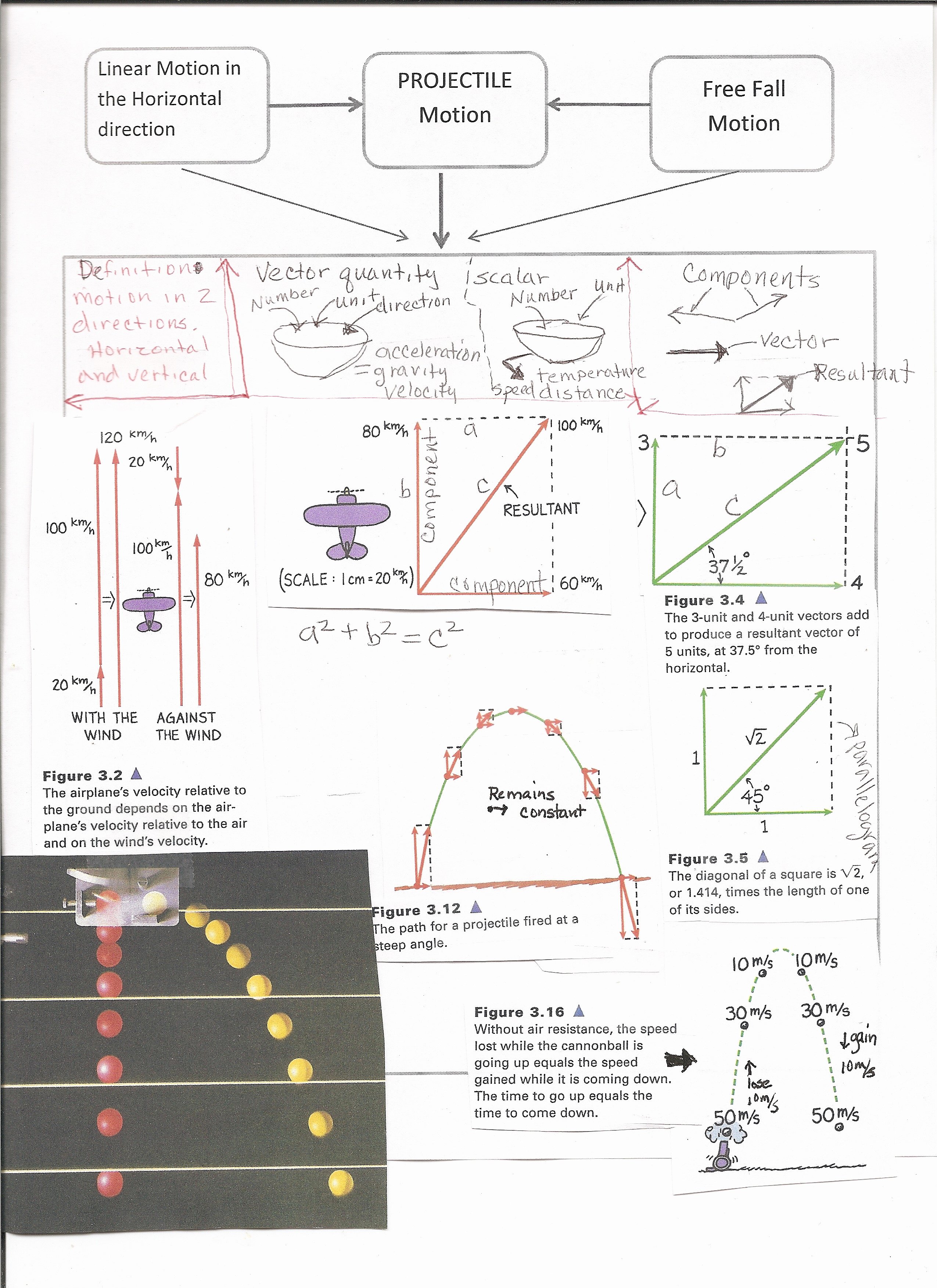
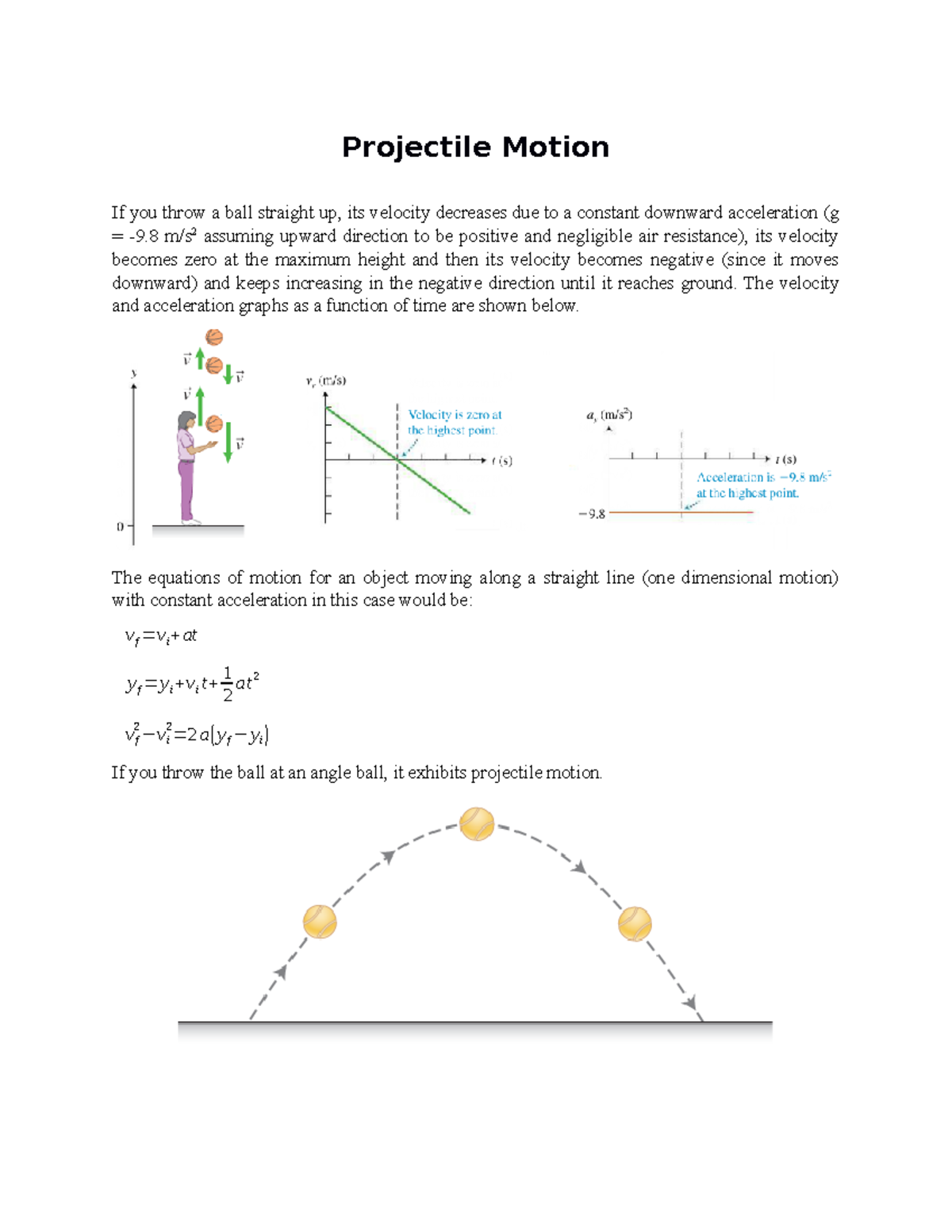
Projectile motion describes the trajectory of an object that is launched into the air and moves under the sole influence of gravity, neglecting air resistance. The motion is inherently two‑dimensional, combining independent horizontal and vertical components. Key concepts include initial velocity, launch angle, acceleration due to gravity (≈ 9.81 m/s² downward), and the distinction between the path (trajectory) and the underlying kinematic equations.
The Two‑Dimensional Nature
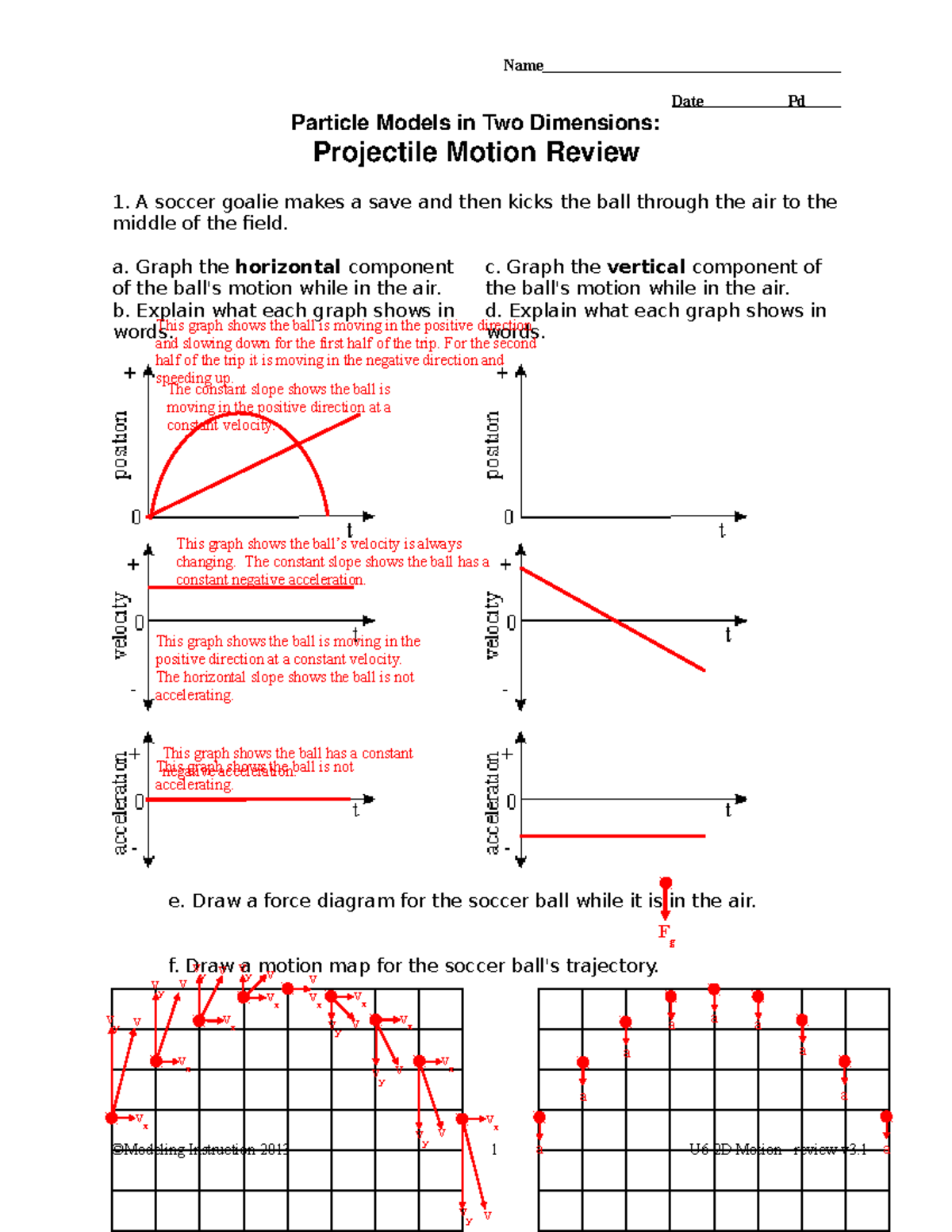
Because the horizontal and vertical motions are independent, students can analyze each axis separately. Horizontally, the object experiences constant velocity because no horizontal force acts (in the idealized model). Vertically, the object experiences constant acceleration due to gravity, which changes its vertical speed over time. This separation simplifies problem solving and is a cornerstone of any worksheet on projectile motion.
Core Equations and Variables
Horizontal Motion
The horizontal displacement (range) at any time t is given by:
x = v₀ cos(θ) · t, wherev₀is the initial speed andθis the launch angle.
Since there is no horizontal acceleration, the horizontal velocity remains constant throughout the flight.
Vertical Motion
The vertical position and velocity evolve according to:
y = v₀ sin(θ) · t – ½ g t²v_y = v₀ sin(θ) – g t
Here, g denotes the acceleration due to gravity, and the negative sign reflects the downward direction.
Time of Flight, Range, and Maximum Height
By solving the vertical equation for the moment when y = 0 (the projectile returns to its launch height), we obtain the total time of flight:
t_f = (2 v₀ sin(θ)) / g
The horizontal range follows directly:
R = v₀ cos(θ) · t_f = (v₀² sin(2θ)) / g
Maximum height occurs at the apex of the trajectory, when vertical velocity becomes zero:
H_max = (v₀² sin²(θ)) / (2g)
Designing an Effective Worksheet
Aligning Learning Objectives
Each problem should map to a clear objective, such as “apply the range formula” or “interpret the effect of launch angle on flight time.” Explicit objectives help students focus on the skill being practiced and give teachers a rubric for assessment.
Types of Questions
A balanced worksheet blends conceptual, computational, and applied questions. Consider the following categories:
- Conceptual prompts that ask students to predict how changing one variable influences another without calculation.
- Numerical calculations that require plugging values into the core equations.
- Graphical analysis where students sketch trajectories or interpret plotted data.
- Real‑world scenarios that connect physics to sports, engineering, or safety contexts.
Incorporating Real‑World Scenarios
Examples such as a soccer ball kicked at a certain angle, a water cannon in a fire‑fighting drill, or a basketball shot from the free‑throw line make the abstract mathematics relevant. Students gain a sense of why precision matters, and they can better visualize the problem before diving into equations.
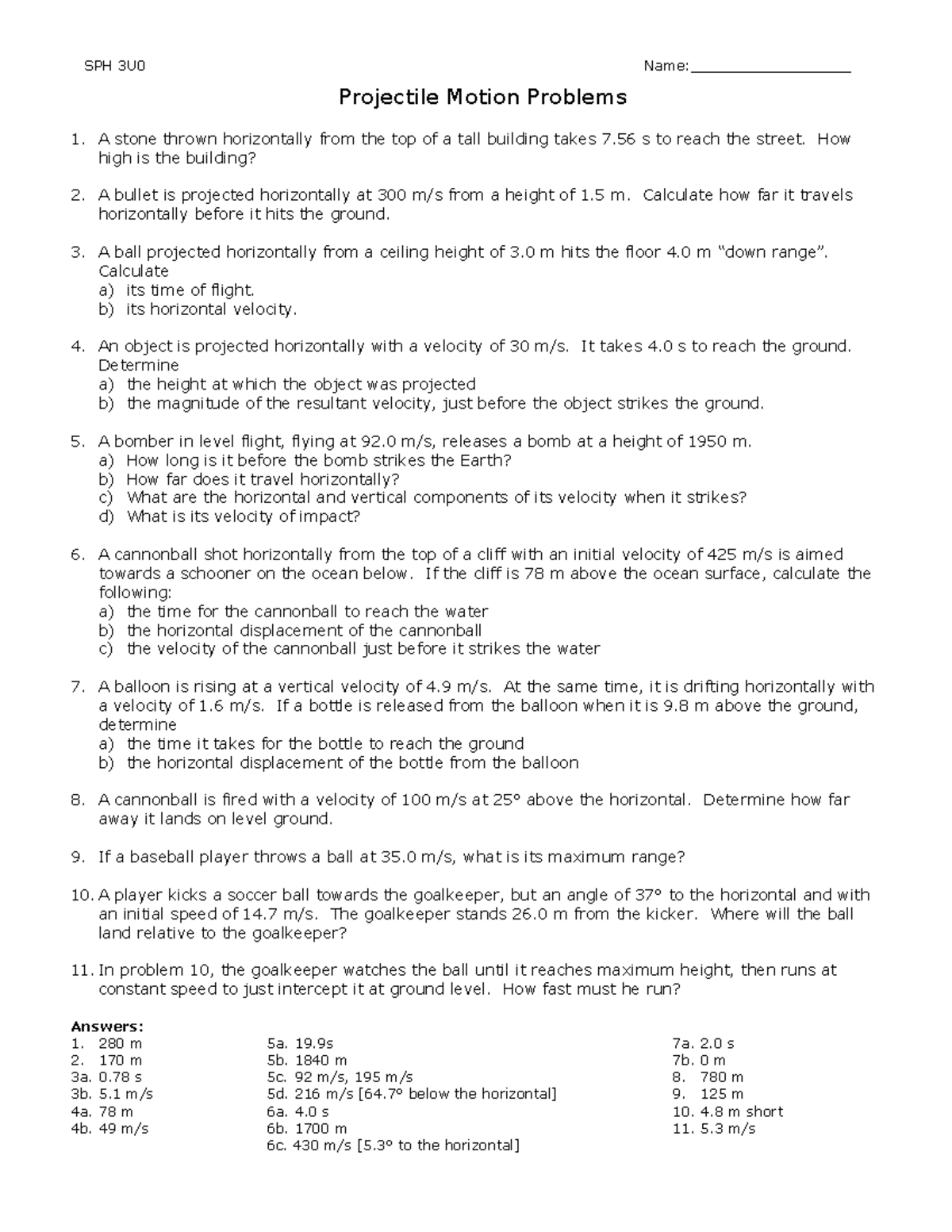
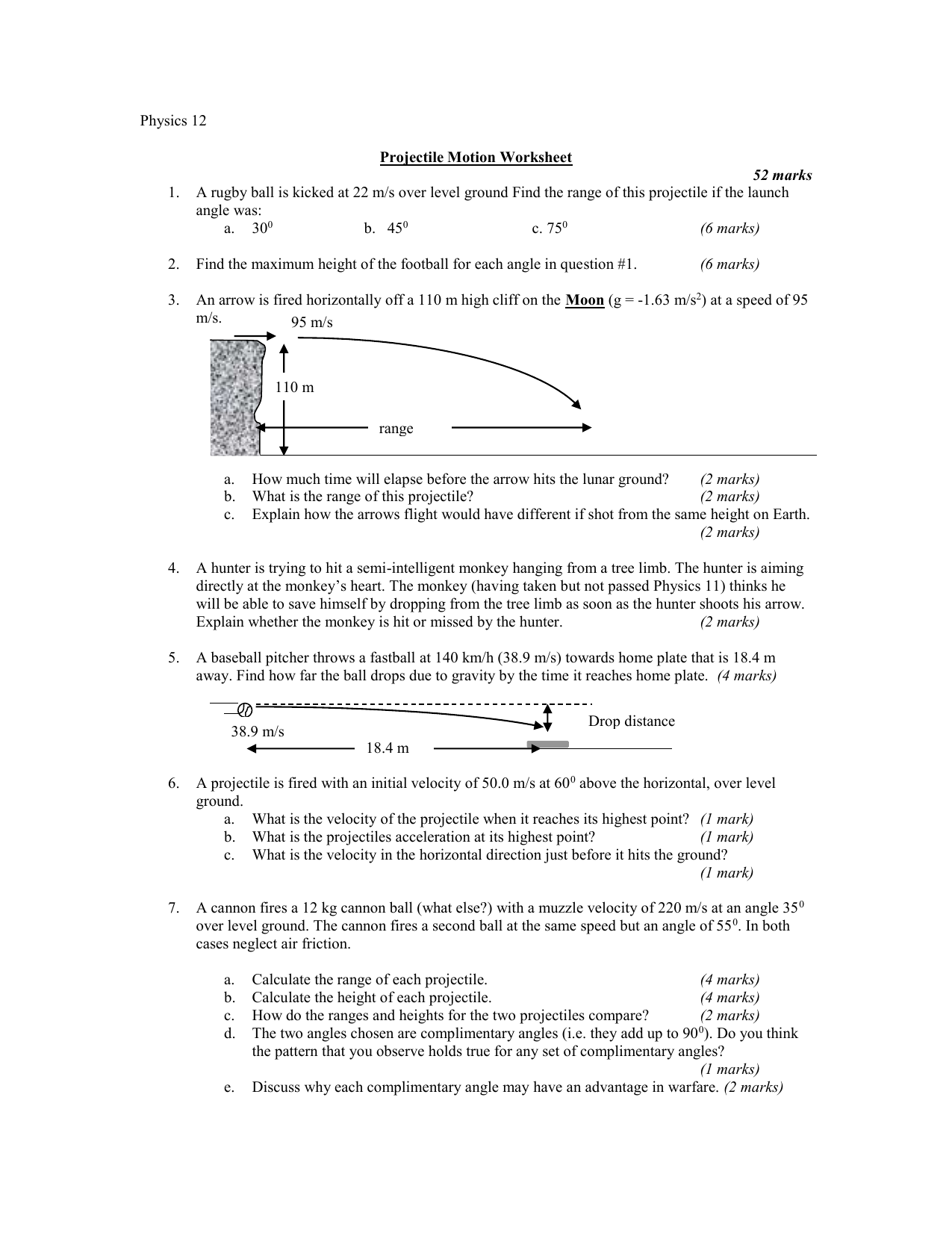
Sample Worksheet Problems with Solutions
Problem 1: Simple Launch
Prompt: A ball is thrown with an initial speed of 15 m/s at a 30° angle above the horizontal. Determine the time of flight, maximum height, and horizontal range.
Solution:
- Horizontal component:
vₓ = 15 cos 30° ≈ 13.0 m/s - Vertical component:
v_y = 15 sin 30° = 7.5 m/s - Time of flight:
t_f = (2 · 7.5) / 9.81 ≈ 1.53 s - Maximum height:
H_max = (7.5²) / (2 · 9.81) ≈ 2.87 m - Range:
R = 13.0 · 1.53 ≈ 19.9 m
Problem 2: Angle Optimization
Prompt: For a fixed launch speed of 20 m/s, at which angle will the projectile travel the greatest horizontal distance? Calculate that distance.
Solution: The range equation R = (v₀² sin 2θ) / g is maximized when sin 2θ = 1, i.e., 2θ = 90° → θ = 45°. Substituting:
R_max = (20² · 1) / 9.81 ≈ 40.8 m
Problem 3: Launch from Height
Prompt: A stone is thrown from the top of a 10‑meter‑high cliff with an initial speed of 12 m/s at a 60° angle upward. Determine the total time the stone remains in the air before hitting the ground.
Solution: Use the vertical position equation with initial height y₀ = 10 m:
- Vertical component:
v_y = 12 sin 60° ≈ 10.39 m/s - Set
y = -10 m(ground level relative to launch point):
-10 = 10.39 t – ½ · 9.81 t² - Rearrange to quadratic form:
4.905 t² – 10.39 t – 10 = 0 - Solve using the quadratic formula:
t = [10.39 ± √(10.39² + 4·4.905·10)] / (2·4.905) - Positive root yields
t ≈ 2.73 s.
Tips for Teachers to Facilitate Learning
Guided Inquiry
Instead of presenting formulas outright, pose a series of questions that lead students to derive the equations themselves. For instance, ask how horizontal distance changes if the launch angle is altered while keeping speed constant. This approach deepens conceptual grasp.
Visual Aids and Simulations
Interactive simulations (such as PhET) allow learners to manipulate speed, angle, and height, instantly observing the impact on trajectory. Pairing a worksheet with a short simulation session reinforces the link between algebraic solutions and visual motion.
Addressing Common Misconceptions
Students often assume that the projectile reaches its highest point halfway through the horizontal range. Clarify that this is only true when the launch and landing heights are equal and the launch angle is 45°. Highlight the role of initial height in shifting the apex.
Extending Learning Beyond the Worksheet
Lab Activities
Organize a simple lab where students launch small objects using a calibrated ramp. They record launch angles, measure distances, and compare empirical results with worksheet calculations. This hands‑on verification cements the theoretical framework.
Cross‑Curricular Connections
Integrate mathematics by exploring trigonometric identities within the range formula, or link to computer science by programming a basic projectile simulator. Such interdisciplinary ties showcase the relevance of physics across subjects.
Key Takeaways
Effective worksheets on projectile motion blend clear objectives, varied question types, and relatable contexts, while reinforcing core equations through step‑by‑step solutions. By incorporating visual tools, guided inquiry, and real‑world examples, educators can transform a simple set of problems into a dynamic learning experience that prepares students for both academic success and practical problem solving. The combination of conceptual insight, computational practice, and hands‑on experimentation ensures that learners not only memorize formulas but also understand the physics that govern every arc, from a basketball shot to a satellite launch.







Related posts of "Worksheet On Projectile Motion"
