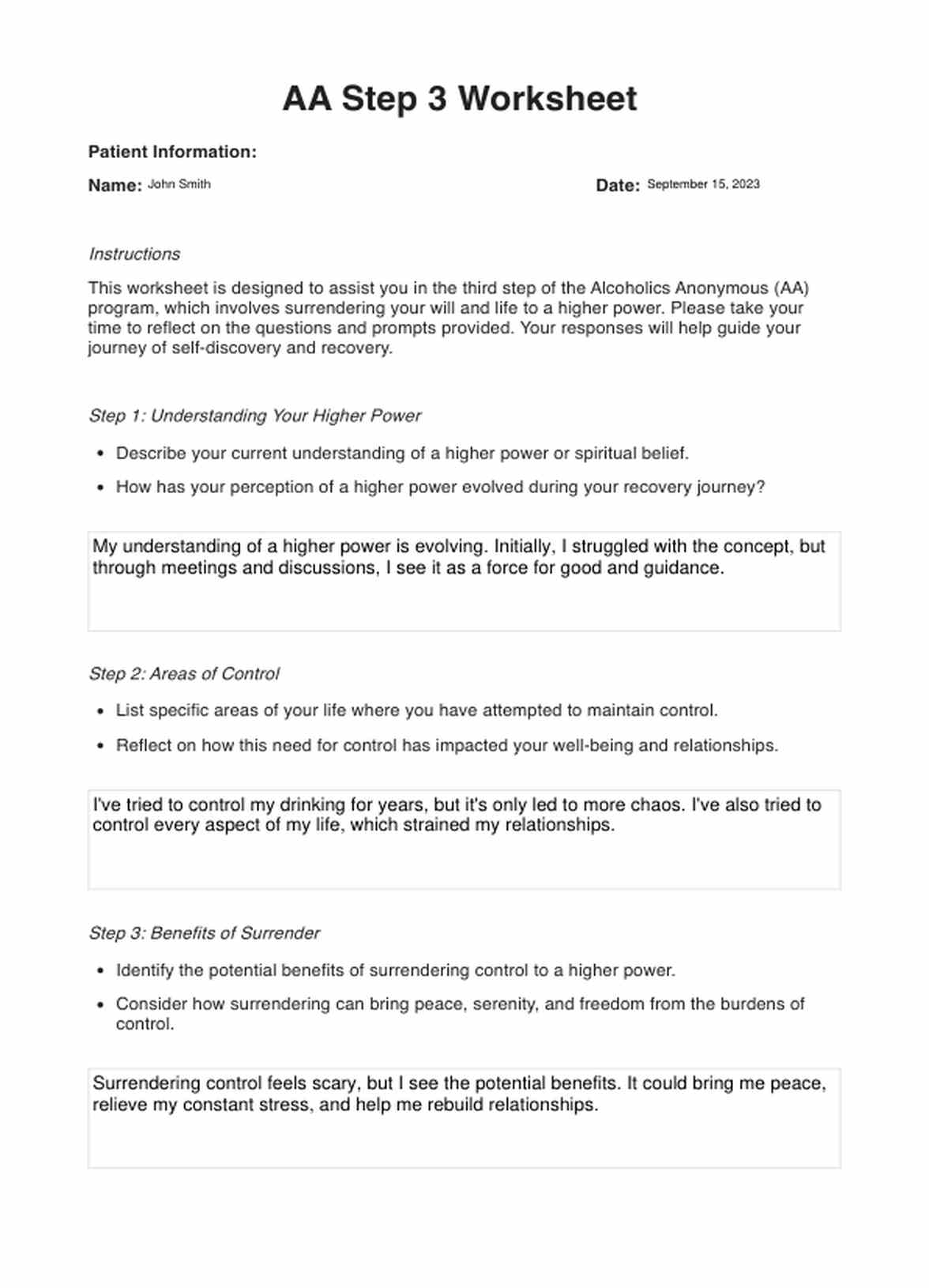
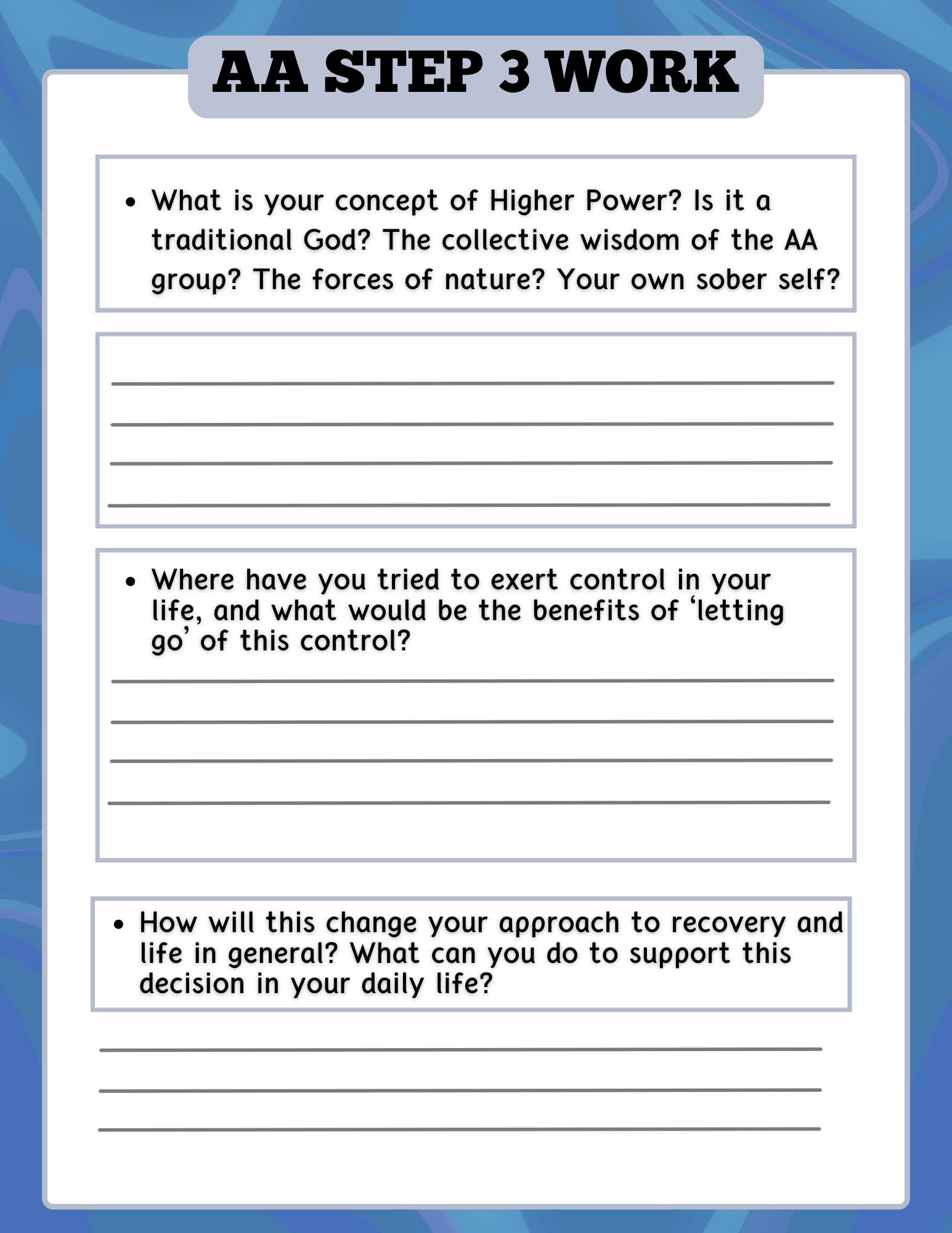
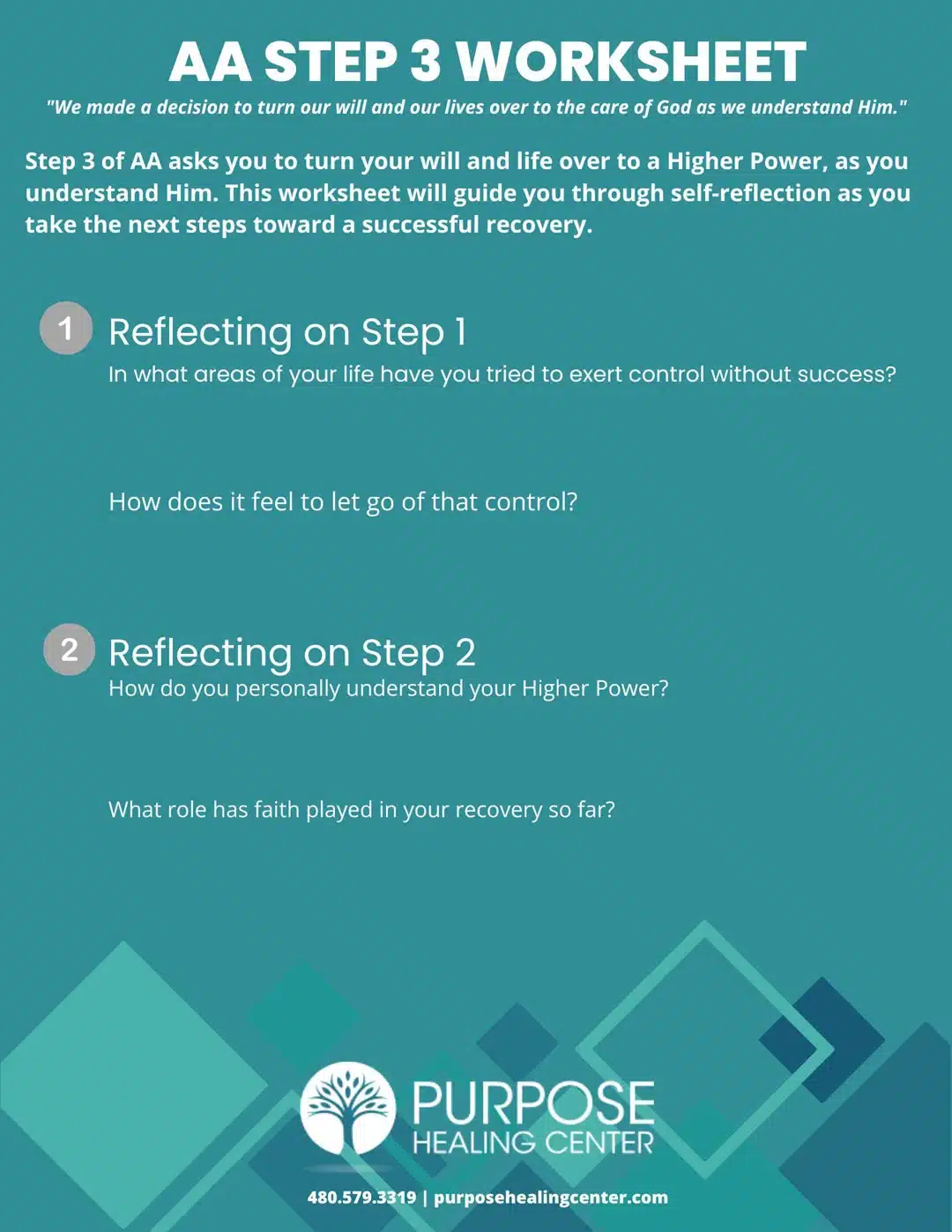
Step Three Aa Worksheet is a pivotal tool that guides newcomers and seasoned members alike through the transformative journey of embracing a higher power, a core tenet of the Alcoholics Anonymous program.
Why Step Three Matters in Recovery
Step Three asks individuals to “Made a decision to turn our will and our lives over to the care of God as we understand Him.” This step bridges the gap between personal effort and spiritual surrender, fostering humility, trust, and a sense of purpose. Without a concrete method to explore these concepts, many struggle to internalize the shift from self‑reliance to reliance on a higher power. The Step Three Aa Worksheet fills that gap by providing structured prompts, reflective questions, and practical exercises that demystify the abstract language of the step.
Building Spiritual Awareness
The worksheet begins with a series of short-answer prompts that ask readers to define what “God” means to them. By encouraging honest, personal definitions—whether God is a deity, the universe, nature, or an inner moral compass—the worksheet validates diverse spiritual perspectives. This early clarity prevents the common misconception that AA imposes a single religious view, thereby reducing resistance and fostering openness.
Connecting Will and Action
Another essential component asks participants to list moments when they felt powerless and moments when they exercised control. By juxtaposing these experiences, the worksheet highlights the natural tension between willful action and surrender, helping individuals see where surrender could alleviate stress and improve decision‑making. This reflective exercise often leads to “aha” moments that accelerate the acceptance of Step Three.
How to Use the Worksheet Effectively
Using the Step Three Aa Worksheet isn’t a one‑size‑fits‑all approach; it requires intentional engagement, a quiet environment, and a willingness to confront uncomfortable thoughts. Below are proven strategies to maximize its impact.
Set Aside Dedicated Time
Schedule a specific block—ideally 30‑45 minutes—when you are unlikely to be interrupted. Treat this time as a sacred appointment with yourself, just as you would a meeting or therapy session. Consistency builds momentum; even a brief daily review can reinforce the principles of Step Three.
Create a Safe Space
Choose a comfortable setting where you feel secure, whether it’s a favorite armchair, a park bench, or a quiet corner of a coffee shop. Having a journal or the printed worksheet at hand allows you to capture thoughts without distraction. Some people find soft background music or nature sounds helpful, but ensure the audio doesn’t become a distraction.
Answer Honestly, Not Perfectly
The worksheet’s power lies in raw honesty. When a prompt asks, “What does surrender look like for me?” resist the urge to write an idealized answer. Instead, describe real moments of struggle, fear, or doubt. Authentic responses create a roadmap for growth; polished answers often mask underlying resistance.
Review and Reflect Regularly
After completing the worksheet, revisit it weekly. Note any changes in language, tone, or perspective. This iterative process reveals subtle shifts in belief and behavior, reinforcing the notion that spiritual growth is a journey, not a destination.
Key Sections of the Step Three Worksheet
The worksheet is divided into four main sections, each designed to guide you through a specific aspect of Step Three. Understanding the purpose of each segment helps you stay focused and extract maximum value.
Defining Your Higher Power
This section starts with prompts such as “Describe the qualities you associate with a higher power.” Followed by “List three ways you have felt guided or supported by something greater than yourself.” These questions encourage you to move beyond abstract concepts and anchor your spirituality in tangible experiences.
Assessing Control and Surrender
Here you compare scenarios where you felt in control with those where you felt powerless. For example, “When did trying to control a situation lead to negative outcomes?” and “When did letting go result in a positive surprise?” By mapping these experiences, you can see patterns that illustrate the benefits of surrender.
Creating a Personal Commitment
After reflection, the worksheet asks you to write a personal pledge, such as “I commit to seeking guidance from my higher power before making major decisions.” This commitment is not a legal contract but a mental anchor that reminds you of the decision made in Step Three.
Action Plan and Accountability
The final portion outlines concrete steps, like “Attend a meditation group twice a month” or “Share my surrender experience in a sponsor meeting.” It also includes a space for identifying an accountability partner—often a sponsor or trusted peer—who can provide feedback and encouragement.
Real‑World Examples of Success
To illustrate how the Step Three Aa Worksheet can transform lives, consider the following anonymized case studies that highlight diverse paths to spiritual integration.
Case Study: Emma’s Journey from Skepticism to Trust
Emma entered AA after a series of failed rehab attempts. She identified as agnostic and was skeptical of the “higher power” language. Using the worksheet, she defined her higher power as “the collective wisdom of the recovery community.” Through the “Assessing Control and Surrender” section, she realized that trying to control every craving led to relapse, while moments of trust in group support resulted in sobriety spikes. Emma’s personal commitment read, “I will ask the group for guidance before using my coping mechanisms.” Six months later, she reported a 70% reduction in cravings and credited the worksheet for giving her a concrete framework.
Case Study: Marcus’ Integration of Faith and Recovery
Marcus, a lifelong churchgoer, struggled to reconcile his religious beliefs with the AA fellowship’s inclusive approach. The worksheet’s “Defining Your Higher Power” section allowed him to merge his Christian faith with AA’s principles, writing, “God is love, compassion, and the community that reflects those virtues.” By listing instances where prayer and AA meetings overlapped, he built an action plan that included daily scripture reading followed by a brief meditation. Over a year, Marcus maintained sobriety and reported deeper spiritual fulfillment.
Case Study: Lisa’s Use of the Worksheet in a Dual Diagnosis Setting
Lisa, diagnosed with bipolar disorder, found that mood swings often disrupted her recovery. The worksheet’s “Action Plan and Accountability” prompted her to schedule regular check‑ins with both her psychiatrist and AA sponsor. She wrote, “If my mood destabilizes, I will call my sponsor before reaching for substances.” This dual‑track approach reduced her hospitalization rate by 40% within nine months.
Integrating the Worksheet with Other AA Tools
The Step Three Aa Worksheet works best when combined with additional AA resources, creating a holistic recovery ecosystem.
Meeting Discussions
Bring insights from the worksheet to group meetings. Sharing personal definitions of a higher power or moments of surrender can inspire others and foster a supportive environment. Many groups allocate a “share” portion where members discuss recent breakthroughs; this is an ideal time to reference worksheet findings.
Sponsorship Sessions
Use the worksheet as a discussion guide with your sponsor. Review each section together, allowing the sponsor to ask probing questions and offer perspective. This collaborative review deepens accountability and ensures that the insights translate into real‑world actions.
Journaling and Reflection
Maintain a recovery journal alongside the worksheet. Each day, jot down moments when you felt guided by your higher power or when you resisted surrender. Over weeks, these entries can be synthesized into updated worksheet sections, keeping the tool dynamic and responsive to growth.
Digital Apps and Tools
Many recovery apps now offer printable templates or interactive versions of the Step Three worksheet. If you prefer digital note‑taking, consider using a secure app that allows you to tag entries, set reminders for review, and export the content for offline reflection.
Common Pitfalls and How to Avoid Them
Even the most well‑designed worksheet can be misused if common mistakes go unchecked. Recognizing these pitfalls early ensures sustained progress.
Rushing Through Prompts
Skimming answers undermines the worksheet’s purpose. Allocate sufficient time to contemplate each question, and don’t hesitate to revisit prompts after a few days when new insights emerge.
Over‑Intellectualizing Spiritual Concepts
While it’s tempting to analyze every nuance, spiritual surrender often thrives on feeling rather than logic. Balance intellectual reflection with emotional honesty; if a prompt feels “right” in your gut, give it weight.
Neglecting the Action Plan
Without concrete steps, the worksheet risks becoming a purely theoretical exercise. Ensure that the “Action Plan and Accountability” section includes specific, measurable actions—such as “Attend a mindfulness session every Monday at 7 p.m.”—and set deadlines.
Isolating the Worksheet
The worksheet is a tool, not a solitary solution. Integrate it with AA meetings, sponsor guidance, and personal support networks. Sharing progress prevents isolation and encourages community reinforcement.
Tips for Long‑Term Maintenance
Recovery is a marathon, not a sprint. Here are practical strategies to keep the insights from the Step Three Aa Worksheet alive throughout the journey.
Quarterly Review Sessions
Every three months, schedule a dedicated review. Re‑answer the prompts, note shifts in language, and update your action plan. This periodic audit ensures that spiritual growth remains aligned with evolving life circumstances.
Celebrate Milestones
When you achieve a goal—such as consistently attending a meditation group—mark it in your journal. Celebrating small victories reinforces the positive feedback loop of surrender and trust.
Adapt the Worksheet as Needed
If you find certain prompts no longer resonate, modify them. For instance, if “God” feels limiting, replace it with “the guiding force of the universe.” The worksheet is a living document, meant to evolve with you.
Share Your Journey
Consider mentoring newer members by sharing how the worksheet helped you. Teaching others not only solidifies your own understanding but also expands the supportive network around you.
Conclusion
The Step Three Aa Worksheet transforms the abstract concept of surrender into a tangible, actionable process that empowers individuals to turn their will over to a caring higher power. By defining personal spirituality, contrasting control with surrender, committing to a tailored pledge, and crafting an actionable plan, the worksheet provides a roadmap that integrates seamlessly with meetings, sponsorship, and daily life. Real‑world examples demonstrate its adaptability across faith backgrounds, mental health challenges, and varying levels of experience. When used thoughtfully—avoiding common pitfalls, regularly reviewing progress, and sharing insights—the worksheet becomes a lasting companion on the path to lasting sobriety and spiritual fulfillment.







Related posts of "Step Three Aa Worksheet"
