Step 6 Aa Worksheet is the pivotal tool that bridges theory and practice for students navigating the fifth and sixth steps of the Alcoholics Anonymous recovery journey. By focusing on the “Service” aspect of sobriety, this worksheet encourages participants to reflect deeply, set meaningful service goals, and translate personal insights into concrete actions that benefit both themselves and the broader community. Whether you are a seasoned member looking to refine your service mindset or a newcomer eager to understand the practical side of Step 6, this guide will help you harness the worksheet’s full potential.
Step 6 Overview: Why Service Matters
Step 6, often called the “Service” step, invites participants to move beyond self‑repair and toward contributing positively to the lives of others. It emphasizes humility, responsibility, and a sustained commitment to helping those who still struggle with addiction. The worksheet serves as a structured platform for this transformation, allowing users to:
- Identify areas where they can make a tangible difference.
- Plan concrete actions aligned with their strengths and experiences.
- Track progress and reflect on the impact of their service.
In essence, it turns abstract principles into actionable, measurable steps.
Understanding the Purpose
The worksheet is designed to guide users through a reflective and intentional process. Its core purpose is to:
- Encourage mindful contemplation of one’s values and how they intersect with community needs.
- Create a roadmap for service that aligns with the principles of the twelve‑step program.
- Provide a tangible record of progress that can be revisited for motivation and accountability.
Key Components of the Worksheet
While the layout may vary slightly across different providers, a typical Step 6 worksheet includes several essential elements:
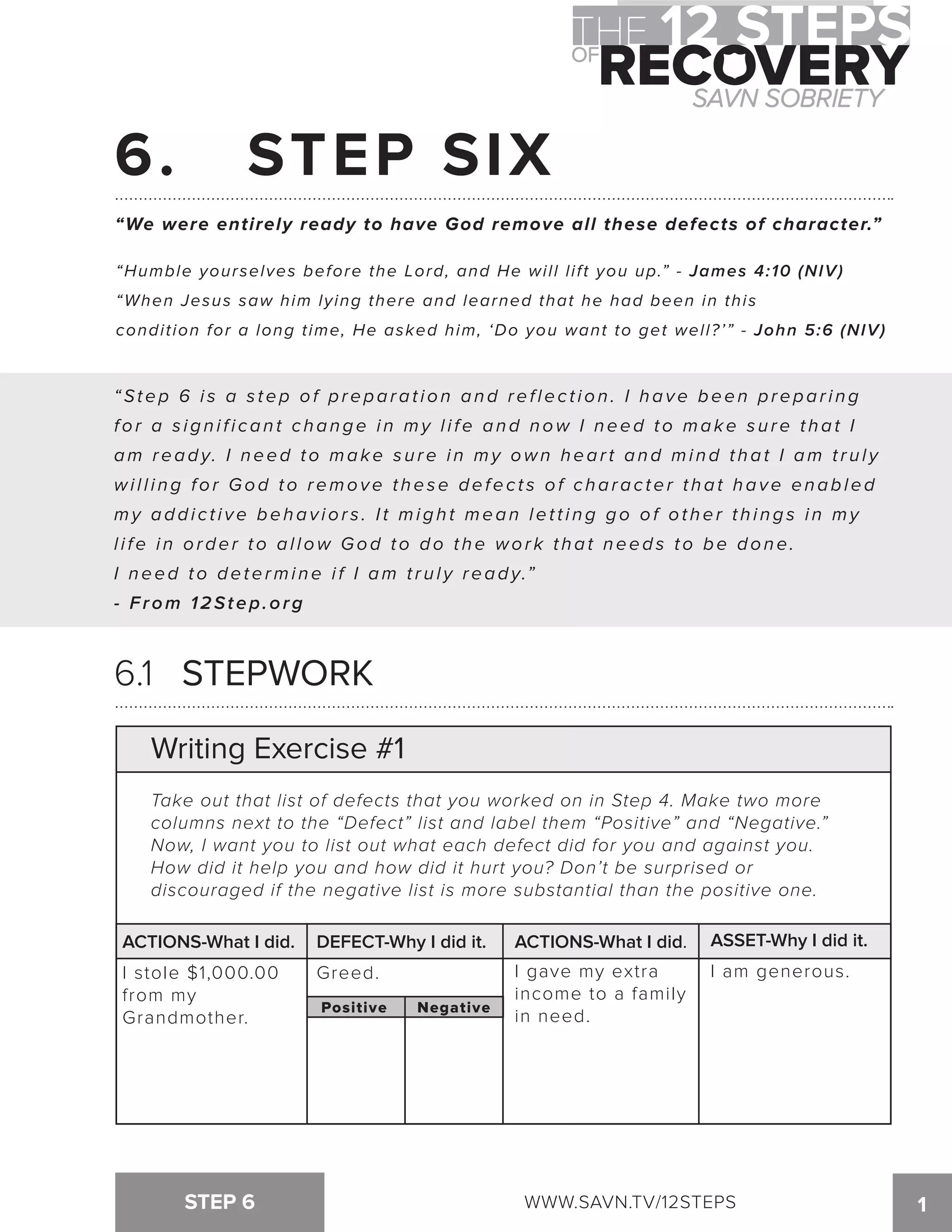
- Self‑Assessment Section – Questions that prompt users to evaluate their personal strengths, limitations, and past service experiences.
- Service Goal Setting – Space to define short‑term and long‑term objectives, ensuring they are specific, measurable, attainable, relevant, and time‑bound (SMART).
- Action Plan Grid – A table where participants can outline actions, resources required, timelines, and potential obstacles.
- Reflection Log – A section for weekly or monthly entries, noting successes, challenges, and lessons learned.
- Feedback Loop – An area to capture input from peers, sponsors, or mentors, fostering continuous improvement.
Step‑by‑Step Guide to Using the Worksheet
Preparing Your Materials
Before diving into the worksheet, gather the following items:
- Reliable pen or pencil.
- High‑quality notebook or the printable worksheet itself.
- Comfortable, distraction‑free environment.
- A list of personal achievements and past service experiences.
Step 1: Review the Prompt
Open the worksheet and read the initial prompts carefully. These prompts often ask you to consider:
- How has your sobriety changed your view of helping others?
- What specific skills or insights can you bring to a service role?
- What does meaningful service look like to you?
Take a few minutes to answer these questions briefly; they will serve as a foundation for deeper reflection later.
Step 2: Organize Your Thoughts
Use the self‑assessment section to sort your thoughts into categories:
- Strengths – e.g., active listening, empathy, organizational skills.
- Limitations – e.g., fear of judgment, time constraints, physical stamina.
- Past Service – Any volunteering, mentoring, or community engagement experiences.
Write each category on a separate line or use bullet points to keep the information clear and accessible.
Step 3: Draft Your Response
Now it’s time to translate these insights into service goals. The worksheet’s goal‑setting section typically asks:
- What do you want to achieve through service?
- Who will benefit from your involvement?
- What resources are required?
Draft at least one short‑term goal (e.g., “Attend a local recovery meeting weekly for the next month”) and one long‑term goal (e.g., “Become a peer mentor for at least two new members in the next six months”). Make sure each goal is SMART; for instance, “Help 10 new members integrate into the program within a year.”
Step 4: Peer Review
After completing your initial draft, share your goals and action plan with a sponsor, a close friend, or a peer from your recovery group. Encourage them to provide candid feedback:
- Is your goal realistic?
- Do you have the necessary resources?
- What potential barriers might arise?
Use the feedback loop section to document their suggestions and revise your plan accordingly.
Step 5: Final Editing
With feedback integrated, review the entire worksheet. Check for:
- Clarity: Ensure each goal and action is articulated in a way that is easy to understand.
- Specificity: Remove vague terms and replace them with concrete descriptors.
- Feasibility: Confirm that timelines align with your schedule and available resources.
Once satisfied, treat the worksheet as a living document: revisit it weekly, update progress, and adjust goals as needed.
Common Challenges and How to Overcome Them
Struggling with Time Management
Many participants find it hard to carve out service time while balancing work, family, or other obligations. To address this:
- Schedule service tasks during times when you’re least busy, such as lunch breaks or weekends.
- Break large tasks into smaller, manageable steps that can be completed in short bursts.
- Use a planner or digital calendar to block out dedicated service hours.
Facing Writer’s Block
If you find yourself stuck when drafting goals or actions:
- Write freely for five minutes without worrying about structure; then refine.
- Use prompts such as “What would I do if I had no limitations?” to stimulate creativity.
- Collaborate with a peer who can help brainstorm alternative approaches.
Ensuring Accurate Content
Accuracy is vital, especially if you plan to share your service activities with a group. Ensure that:
- Your service description aligns with the actual responsibilities.
- You verify any claims about your qualifications or experiences.
- You keep a record of the dates and outcomes of your service activities.
Real‑World Applications
In Academic Settings
Students can use the Step 6 worksheet to design service projects tied to their majors. For example:
- An accounting student might volunteer to offer financial literacy workshops to fellow students.
- A psychology student could develop peer‑support groups focusing on coping strategies.
Such projects not only benefit the community but also enrich academic portfolios, illustrating practical application of theoretical knowledge.
In Professional Development
Professionals in any field can apply the worksheet’s principles to enhance workplace culture:
- Organize a “Lunch & Learn” session where employees share recovery insights.
- Create mentorship programs pairing experienced employees with newer hires.
- Collaborate with local nonprofits to provide pro‑bono consulting services.
By integrating service into the workplace, individuals demonstrate leadership, empathy, and a commitment to holistic growth.
Tips to Maximize Effectiveness
Use Visual Aids
Incorporate charts, timelines, or mind maps to visualize progress. Visual representation can:
- Highlight milestones that might otherwise be overlooked.
- Encourage accountability by making achievements visible.
- Serve as a motivational tool when reviewing past successes.
Set Clear Objectives
Be explicit about what you intend to achieve. Avoid broad statements like “help people.” Instead, specify the population, the nature of help, and the desired impact. For example, “Assist 15 new members in setting up their first recovery plan within two months.”
Encourage Collaboration
Service often thrives in collaborative environments. Pair up with peers, sponsors, or community leaders to:
- Share resources and responsibilities.
- Gain diverse perspectives that enhance project design.
- Create a support network that sustains momentum.
Frequently Asked Questions
How often should I use this worksheet?
It’s ideal to revisit the worksheet at least once a month. Regular reviews keep goals relevant, allow you to celebrate wins, and prompt timely adjustments if obstacles emerge.
Can it be adapted for group work?
Absolutely. The worksheet can be shared among a group, with each member filling their own section. Afterwards, hold a group session to consolidate individual service plans into a collective strategy, ensuring alignment with shared values.
Conclusion
By engaging with the Step 6 Aa Worksheet, you transform abstract concepts of service into actionable, measurable plans that enrich both your personal recovery journey and the lives of others. This structured approach empowers you to identify strengths, set realistic goals, and track progress in a way that is both meaningful and sustainable. As you continue to refine your service roadmap, remember that each small step not only strengthens your own sobriety but also weaves a stronger fabric of community resilience. Keep the worksheet alive, revisit it regularly, and let each entry be a testament to the ongoing commitment that Step 6 demands. Your dedication to service not only honors your own recovery but also lights a path for others to follow.





Related posts of "Step 6 Aa Worksheet"
