Soil Formation Worksheet Answer Key is an essential tool that unlocks deeper understanding for students and educators alike, offering a clear path from theoretical concepts to tangible outcomes. This article delves into every aspect of creating, using, and mastering such a key, blending scientific precision with a gentle, Asian-inspired appreciation for the land’s rhythm and harmony.
Why a Soil Formation Worksheet Answer Key Matters
In the study of pedology, the soil’s journey from parent material to mature horizon is intricate and layered. A well-crafted answer key:
- Provides instant validation of student responses, encouraging self‑assessment.
- Highlights common misconceptions, guiding teachers toward targeted feedback.
- Acts as a bridge between laboratory observations and real‑world fieldwork.
- Fosters confidence in learners who can see the logical progression from one horizon to the next.
Without it, students may feel adrift, and educators may find grading laborious and inconsistent. The key’s clarity mirrors the orderly patterns found in rice paddy terraces or the precision of bamboo craft—an aesthetic that resonates with many learners across the globe.
Key Components of a Comprehensive Soil Formation Worksheet
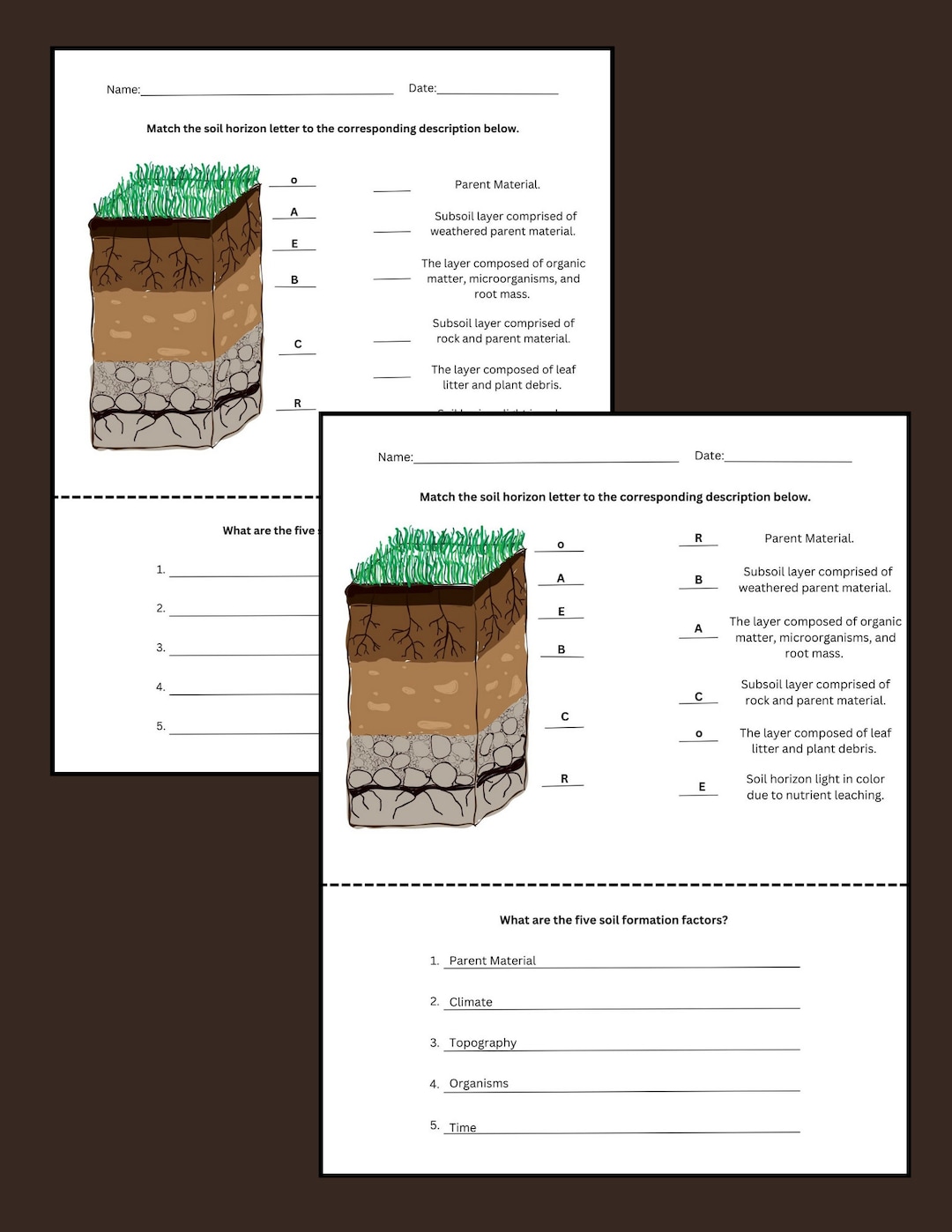
1. Soil Horizons Identification
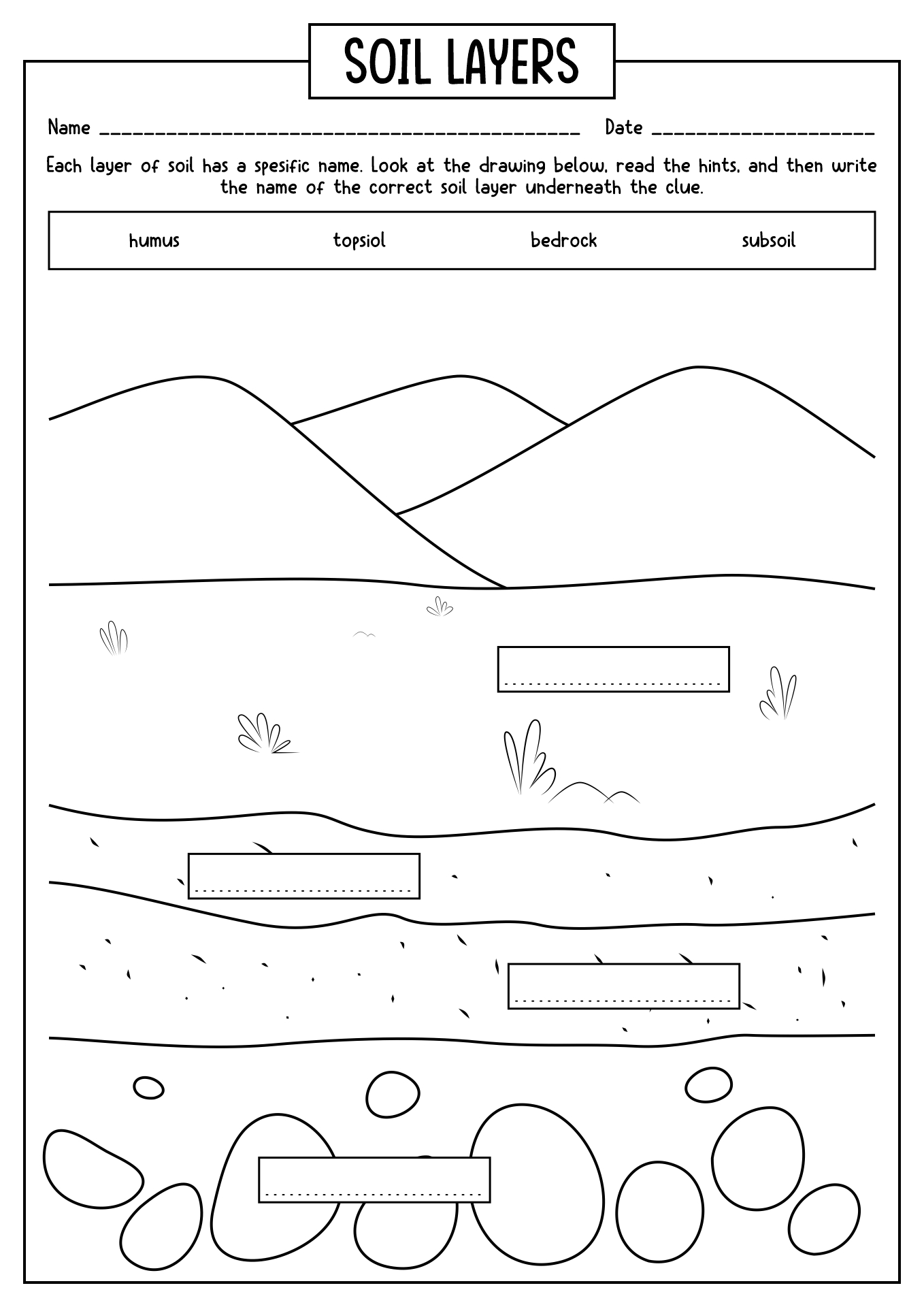
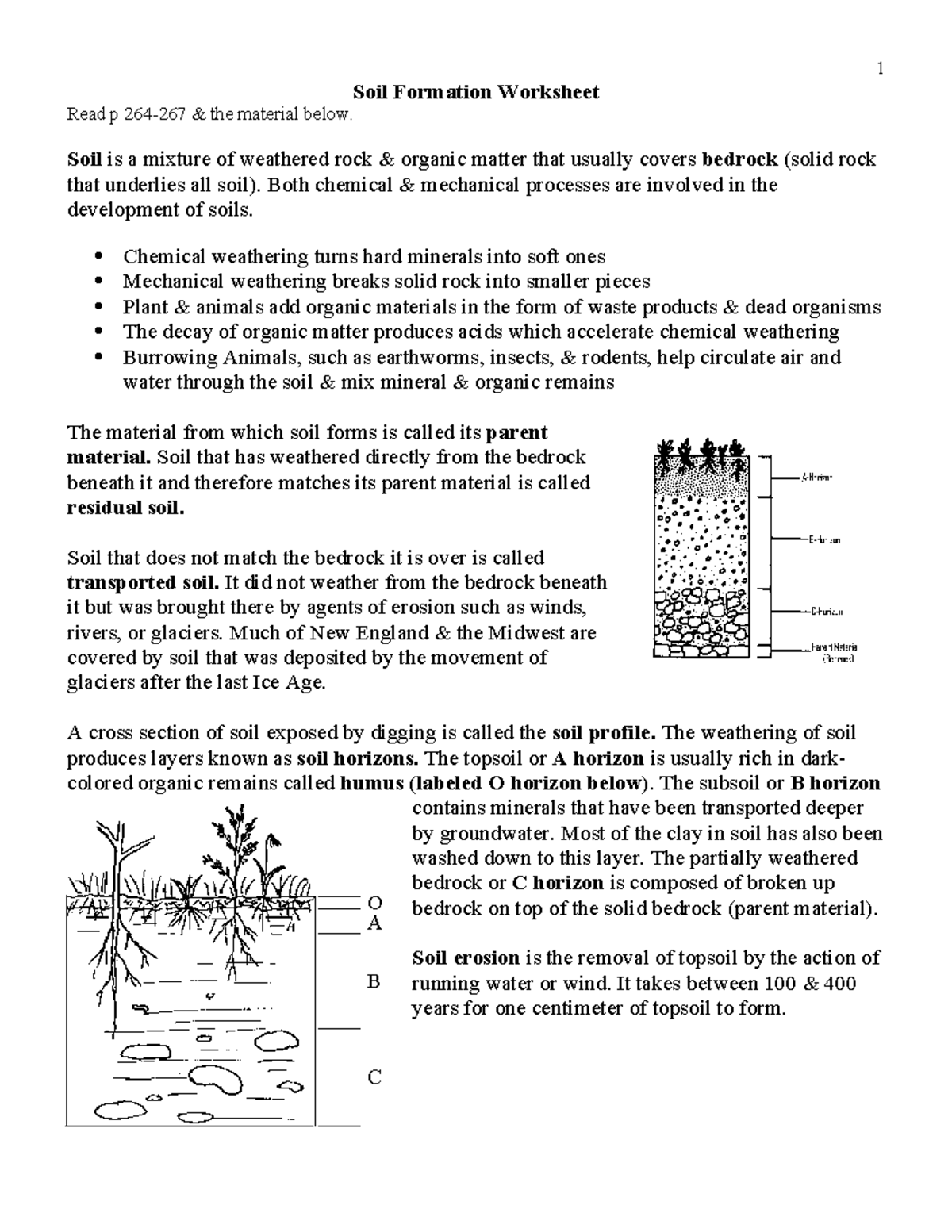
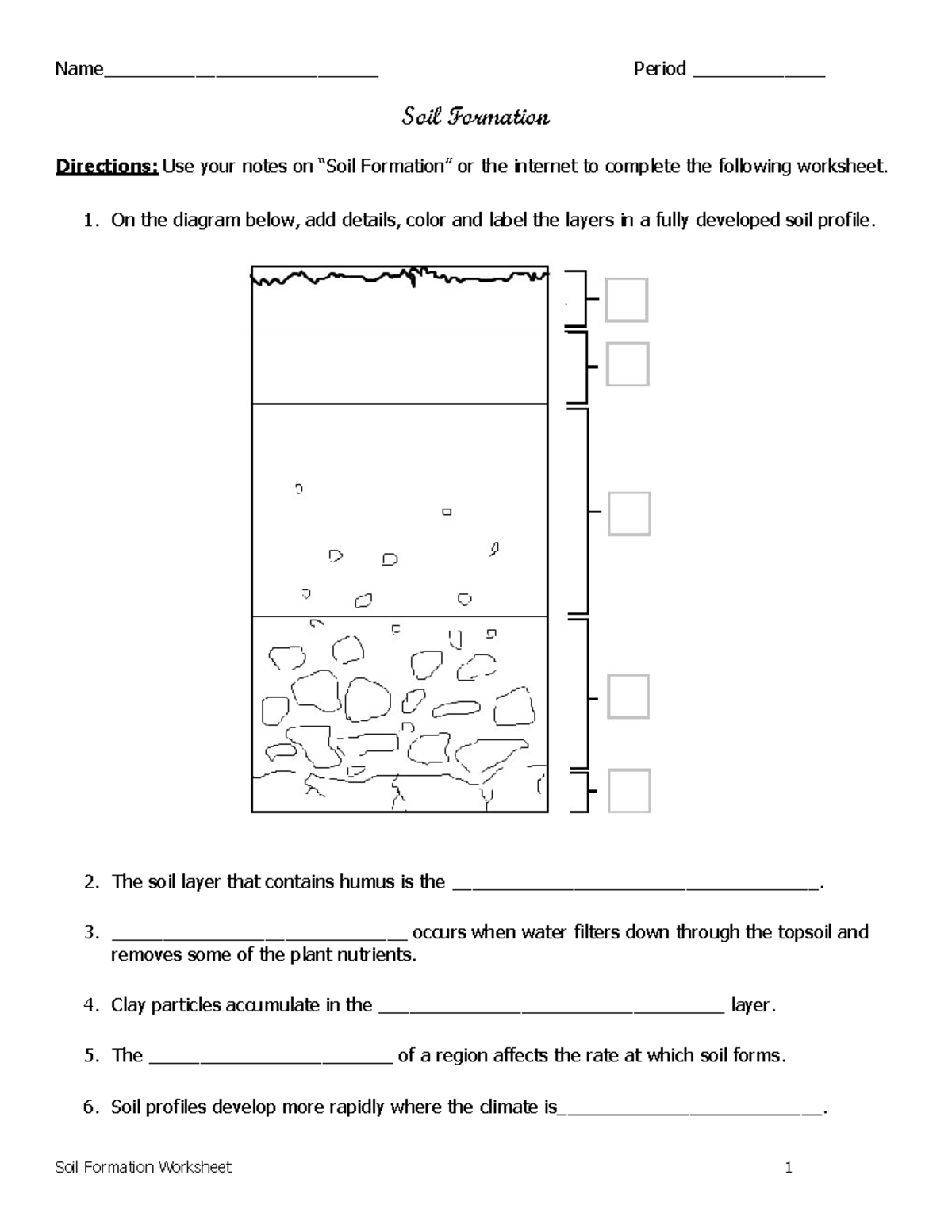
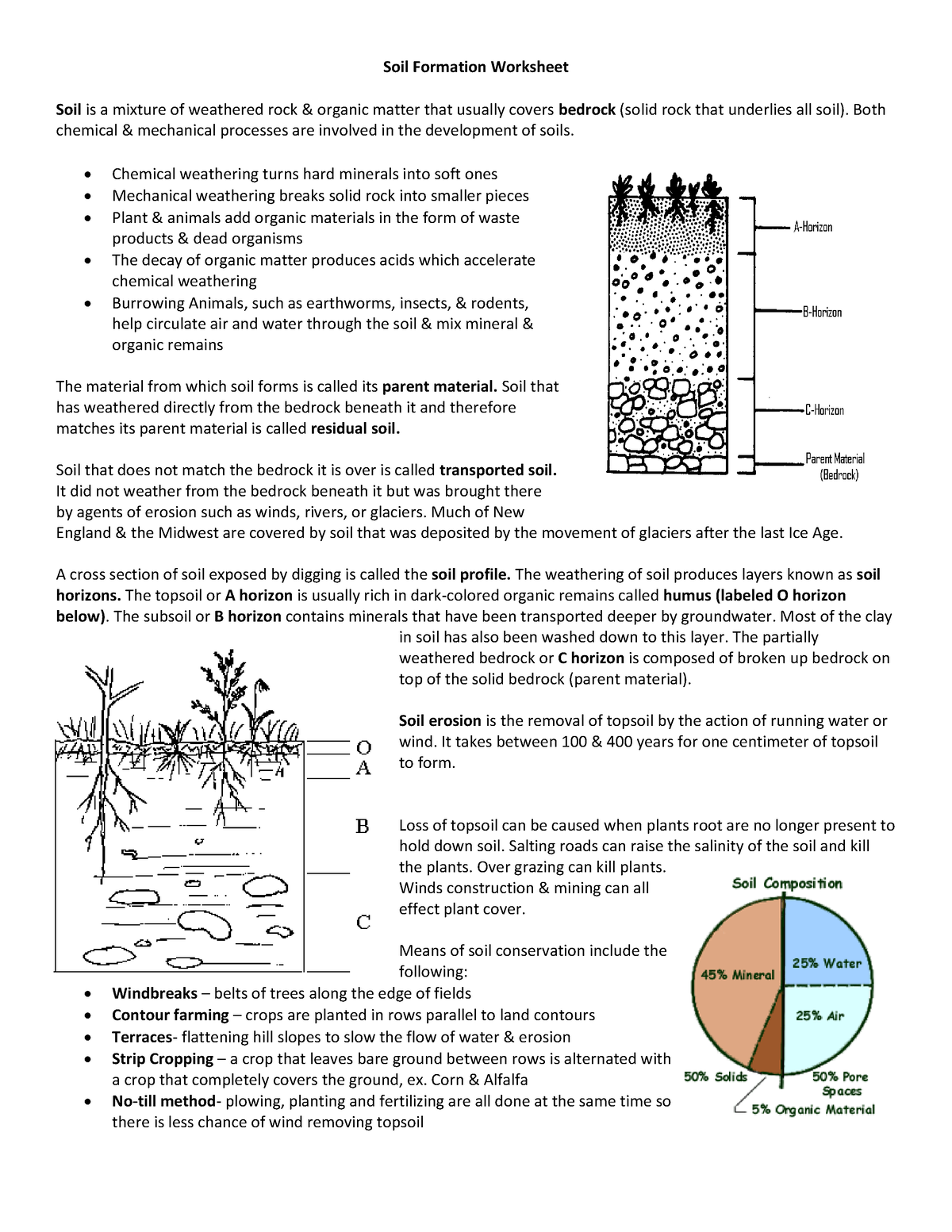
Each soil profile is a layered story. The answer key should define:
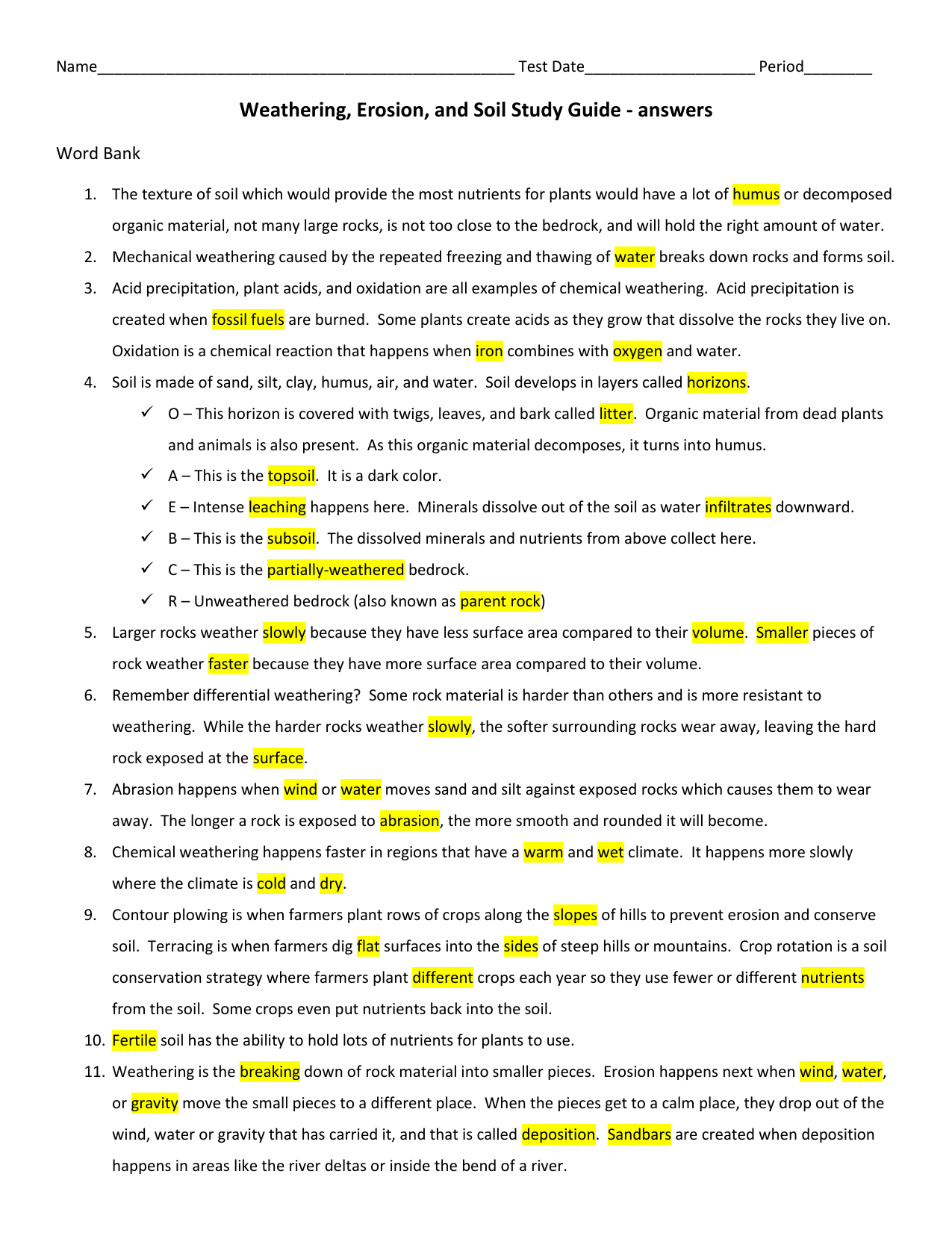
- O Horizon – organic-rich layer, often found in forested or wetland areas.
- A Horizon – topsoil, a mix of minerals and decomposing matter.
- E Horizon – eluviation zone where leaching occurs.
- B Horizon – accumulation of clay, iron, or organic compounds.
- C Horizon – weathered parent material, minimal alteration.
- R Horizon – unaltered bedrock.
Providing visual examples, such as a schematic cross‑section, helps solidify these concepts. A succinct explanation of the physical characteristics—color, texture, and structure—further grounds the key’s educational value.
2. Weathering Processes Explanation
Soil formation is driven by chemical, biological, and physical forces:
- Mechanical weathering – rock fragmentation due to temperature shifts.
- Chemical weathering – dissolution of minerals, formation of clays.
- Biological weathering – root growth, microbial action.
- Hydrologic influences – drainage patterns affecting leaching and deposition.
Each process should be paired with an example from an Asian context—think of the monsoon’s impact on tropical soils or the slow weathering of granite in Himalayan foothills. This contextualization strengthens students’ ability to transfer knowledge to varied environments.
3. Soil Classification Criteria
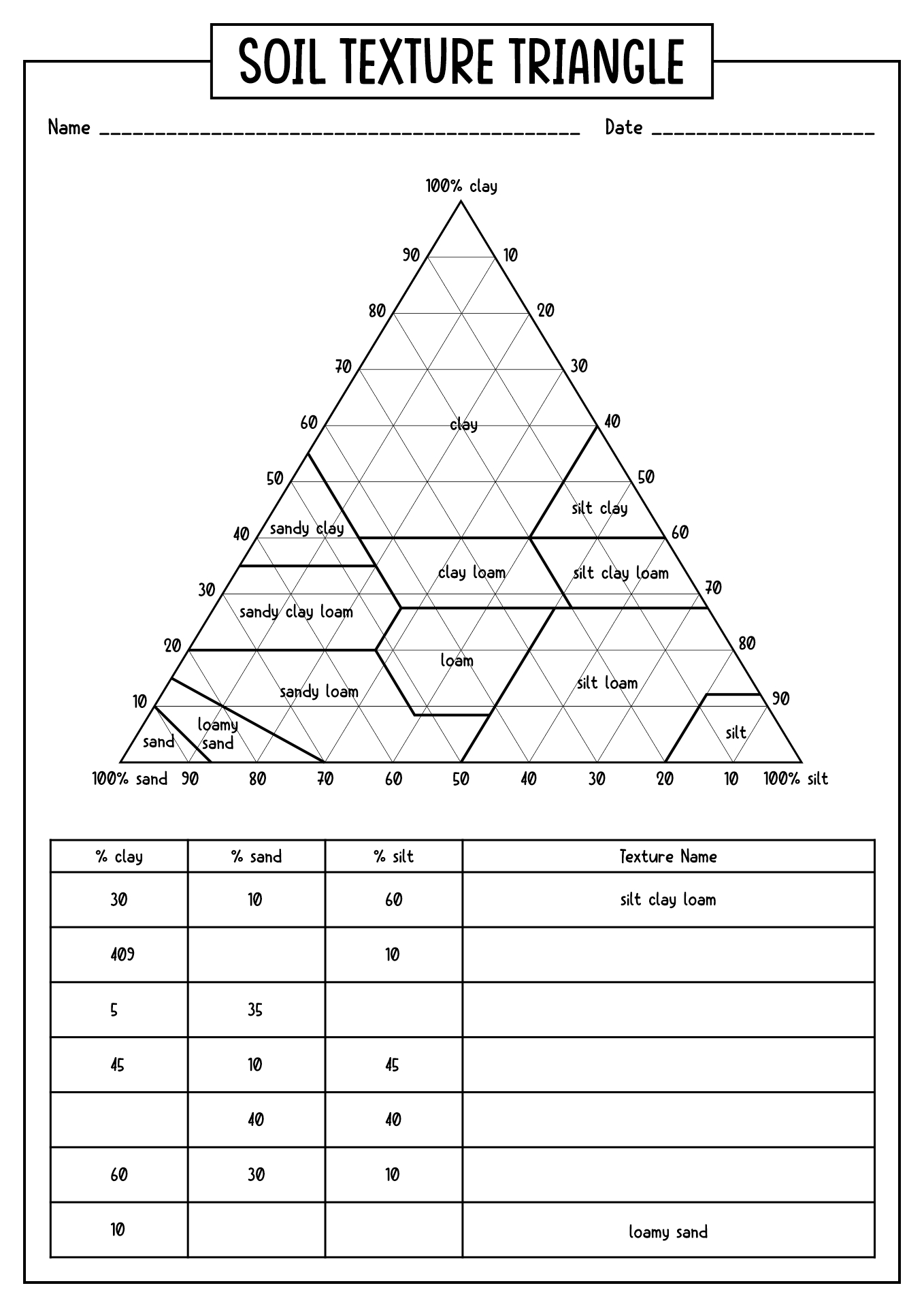
Classifying soils through systems such as the USDA or FAO involves:
- Texture assessment (sand, silt, clay proportions).
- Structure and aggregate stability.
- Organic matter content.
- Mineral composition.
In the answer key, include a concise rubric for each classification, with threshold values and sample profiles. This systematic approach demystifies seemingly complex criteria.
4. Environmental Factors and Land Use Impact
The key should link soil characteristics to land use practices:
- Urbanization and soil compaction.
- Agricultural cropping cycles and residue management.
- Water irrigation regimes.
- Reforestation and soil conservation techniques.
Highlighting sustainable practices—such as no‑till farming or mulching—provides a cultural touchstone, reflecting practices seen in Japanese terraced rice paddies or Indonesian subak systems.
Step‑by‑Step Guide to Using the Answer Key
1. Pre‑Class Preparation
Before the session, teachers should:
- Review the key to align it with lesson objectives.
- Prepare a sample soil profile to model during class.
- Distribute worksheets with clear spaces for answers, ensuring each section aligns with the key’s structure.
2. Guided Practice During the Lesson
Facilitate active learning by letting students fill the worksheet first. Then, walk through each question, referencing the key to confirm or correct responses. This dialogue promotes critical thinking and mirrors the collaborative learning found in traditional Asian study circles.
3. Independent Assessment
After the guided session, assign the same worksheet as a take‑home quiz. Students can compare their answers to the key, fostering autonomy and self‑evaluation. Encourage peer discussion: “What did you notice about the E horizon’s color variations?” This mimics group problem‑solving in many Asian classrooms, where collective insight enhances individual understanding.
4. Post‑Assessment Reflection
Have students write a brief reflection: “Which soil process surprised me the most, and why?” This reflective practice deepens learning and encourages students to connect theory with the soil’s living context.
Common Mistakes and How to Avoid Them
Mislabeling Horizons
Students often confuse E and B horizons. A quick mnemonic—“E stands for eluviation, B for build‑up”—can aid retention. The key should illustrate both horizons side‑by‑side with distinct color codes.
Ignoring Organic Matter Role
Organic matter is the lifeblood of soil. The key must emphasize its influence on texture, nutrient availability, and microbial activity. Providing a quick calculation of organic matter percentage from bulk density data can clarify its significance.
Overlooking Climate Effects
Climate dictates weathering rates. Incorporate climate data in the key: average annual rainfall, temperature ranges, and their correlation with soil depth. This contextual layer aligns with the holistic view prevalent in many Asian ecosystems.
Practical Applications in Classroom and Field Work
Lab Experiments
Use the key to evaluate small-scale soil samples. Students can isolate different horizons, test pH, texture, and organic content, then match results to the answer key’s expectations. This hands‑on approach bridges theory and laboratory evidence.
Field Surveys
When conducting a field survey, have students sketch a soil profile and annotate each horizon using the answer key. This activity enhances observational skills and connects classroom learning with real terrain. In rural villages, this could be part of a community science project, reinforcing local stewardship.
Digital Integration
Incorporate QR codes that link to interactive soil maps. While the article forbids URL inclusion, educators can embed such resources in their own materials, allowing students to explore soil types across different Asian regions—like the black soils of Japan or the red loams of the Philippines—directly from their devices.
Integrating Cultural Insights into Soil Study
Respect for the Earth in Asian Traditions
Many Asian cultures view soil as a living, sacred entity. For instance, in Buddhism, the concept of “Kama” encourages harmony between humans and the environment. By framing soil questions within this philosophical backdrop, students appreciate soil not only as a substrate but as a nurturing partner in agriculture and culture.
Traditional Agricultural Techniques
Highlight how ancient practices—such as Japanese composting “kompost” or Chinese “wu‑tu” mulching—directly influence soil health. The answer key can list the outcomes of these methods, such as increased humus content or reduced erosion, providing tangible evidence of cultural wisdom.
Seasonal Rhythms and Soil Management
Explain how monsoon cycles dictate soil moisture patterns, affecting nutrient leaching. Use the key to showcase how seasonal variations alter horizon development over decades, encouraging students to observe and document changes in local fields.
Future Trends and Resources for Soil Education
Remote Sensing and GIS
Introduce students to satellite imagery and GIS mapping for large‑scale soil classification. The answer key should include a simple interpretation guide: “Red indicates high iron oxide content; green points to fertile loam.” This prepares learners for modern earth science careers.
Citizen Science Initiatives
Encourage participation in global soil projects like the Global Soil Map. Even though direct URLs cannot be provided, teachers can outline how students can upload local soil data, fostering a sense of global responsibility.
Interdisciplinary Connections
Link soil science with climate change, food security, and health. The answer key can prompt students to consider how soil degradation affects crop yield, leading to discussions on sustainable practices. This multidisciplinary approach mirrors the integrated learning seen in many Asian universities, where environmental studies blend with agriculture and sociology.
Conclusion: From Worksheet to Wisdom
A well‑structured Soil Formation Worksheet Answer Key is more than a grading tool; it is a portal into the intricate dance between rocks, water, organisms, and human culture. By dissecting horizons, unraveling weathering processes, and contextualizing findings within Asian traditions, learners gain a holistic perspective that transcends simple memorization.
When educators embed this key into lesson plans, students do not merely answer questions—they cultivate an appreciation for the earth’s layered stories and the delicate balance sustaining life. As we look toward a future where soil health is paramount, mastering the worksheet’s insights equips the next generation with the knowledge to protect and nurture the planet’s most vital resource.








Related posts of "Soil Formation Worksheet Answer Key"
