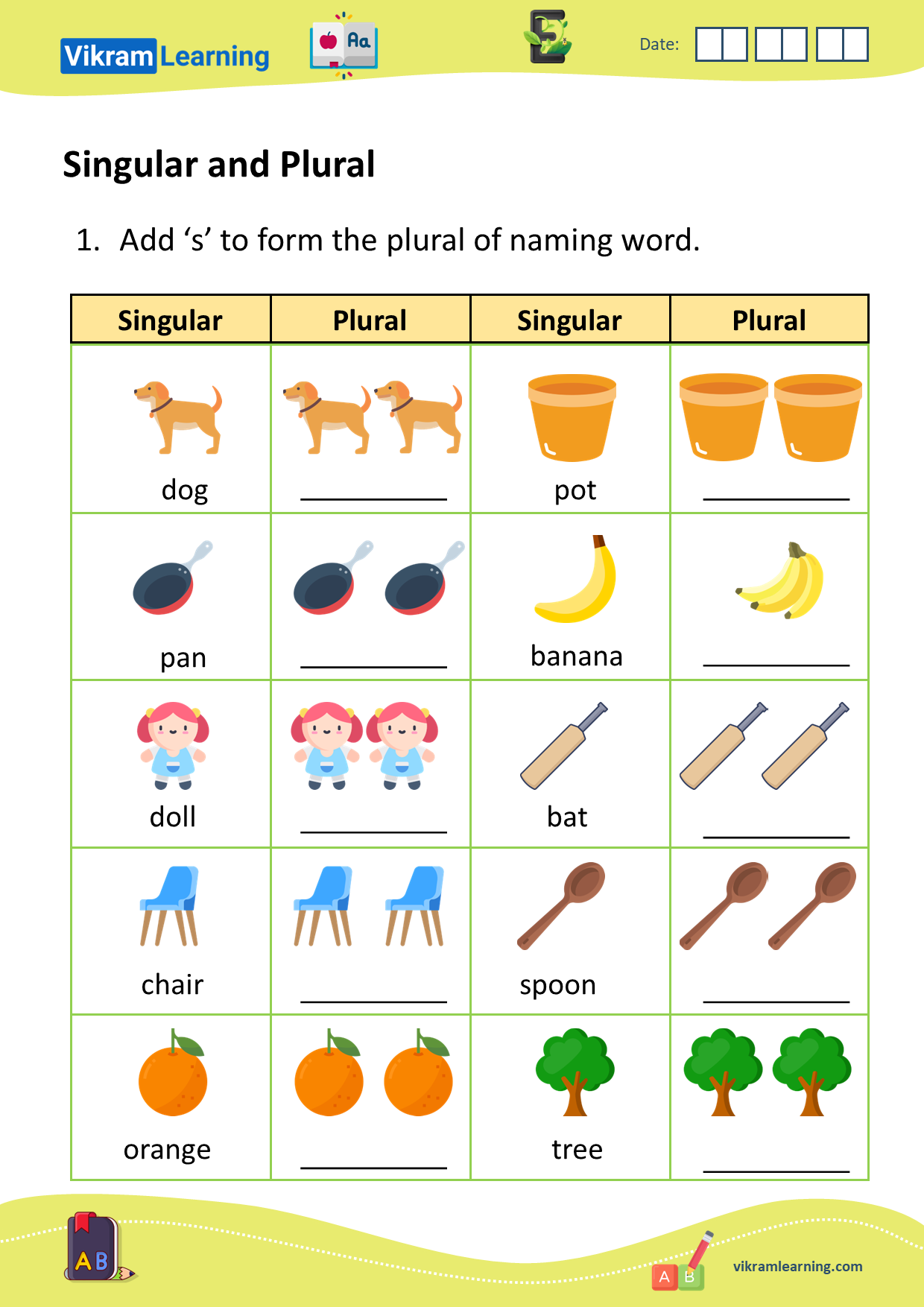
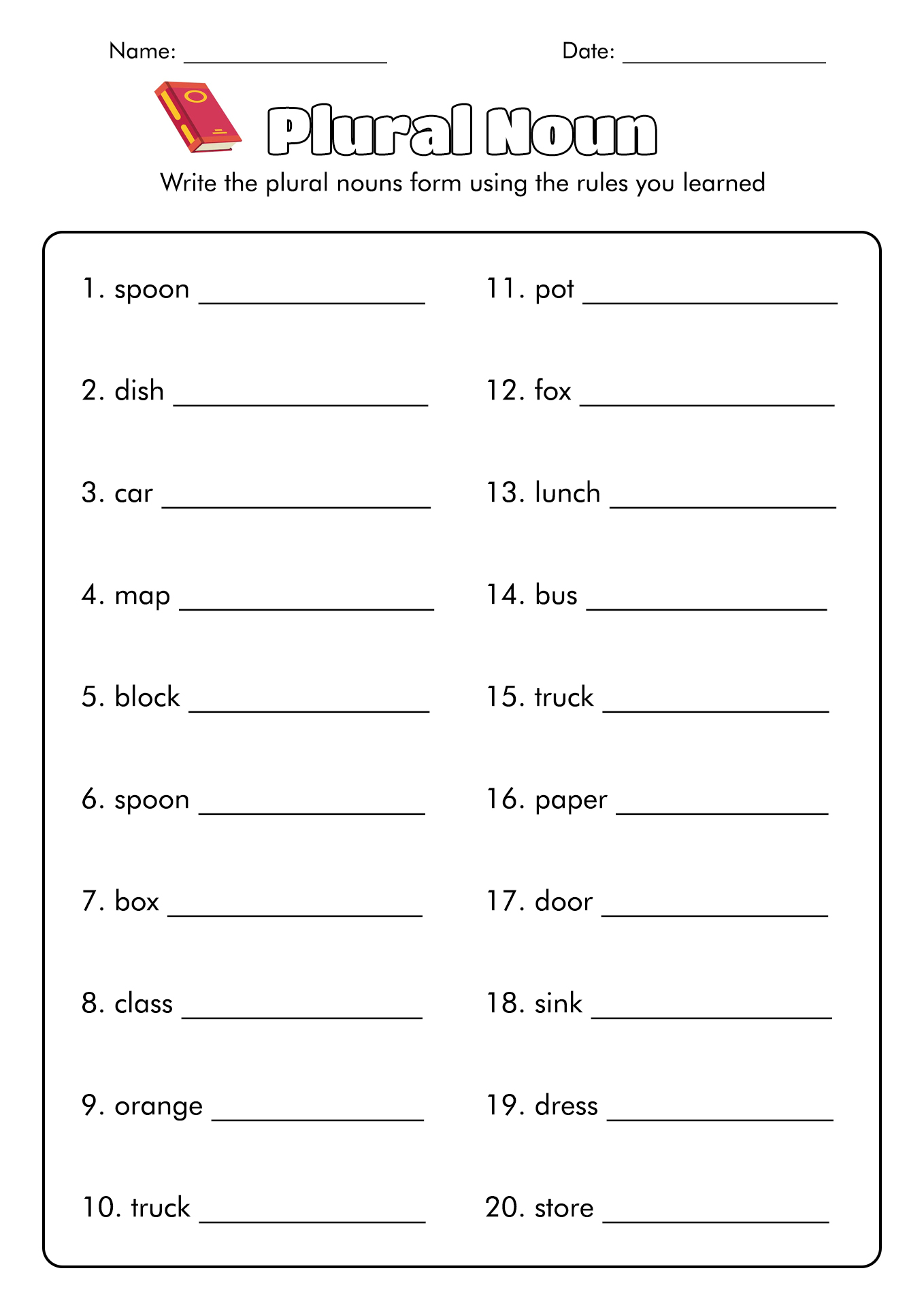
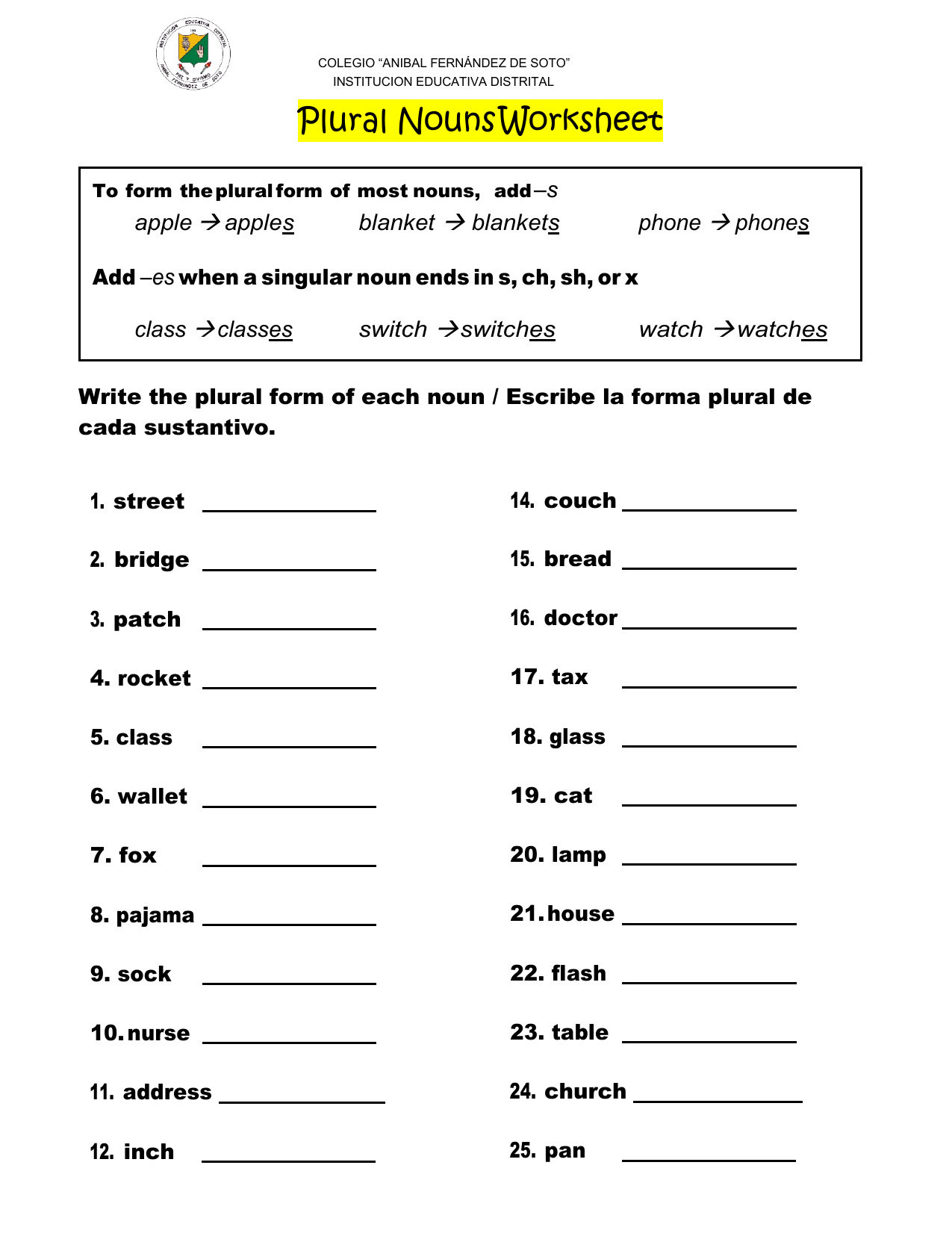
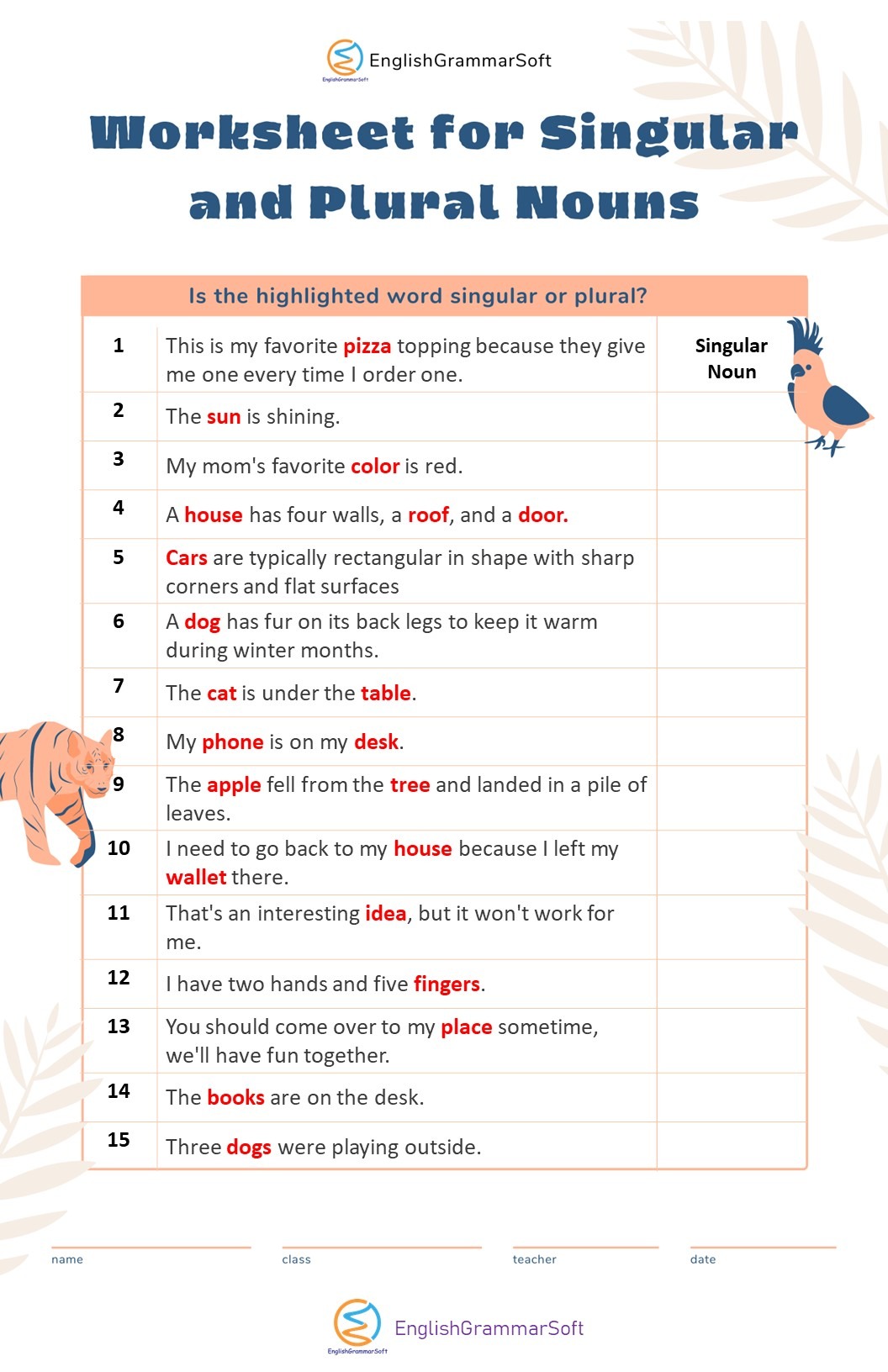
Singular To Plural Nouns Worksheet is an essential tool that brings clarity to the often confusing process of turning single nouns into their plural counterparts. By engaging students with practical exercises, the worksheet provides a structured way to reinforce grammar rules and build confidence in writing and speaking.
Why Singular To Plural Nouns Worksheet Matters
Mastering plural forms is foundational for any language learner. The ability to accurately convert singular nouns to plurals impacts reading comprehension, writing accuracy, and everyday communication. When students consistently practice with a well-designed worksheet, they develop muscle memory for common patterns and exceptions, enabling smoother language use in real‑world scenarios.
Key Benefits for Learners
- Reinforcement of Rules: The worksheet emphasizes standard pluralization rules such as adding -s or -es, changing y to ies, and handling irregular forms.
- Immediate Feedback: Self‑graded sections allow learners to recognize mistakes instantly and correct them, fostering a deeper understanding.
- Confidence Building: Repeated exposure to varied examples reduces hesitation when encountering plural nouns in conversation or text.
- Adaptability: Worksheets can be tailored to different grade levels, from elementary to high school, ensuring relevance across learning stages.
How It Supports Language Development
Effective pluralization is more than a mechanical skill; it is a gateway to more advanced grammatical concepts. By solidifying singular‑to‑plural conversions, learners are better positioned to tackle subject‑verb agreement, possessive forms, and compound noun structures. The worksheet becomes a stepping stone toward mastering English syntax as a whole.
Designing a Powerful Worksheet
Creating a singular‑to‑plural worksheet that captivates and educates involves careful planning. Below is a detailed guide that outlines the essential components and best practices for building an effective resource.
1. Clear Objective Statement
Start each worksheet with a concise goal. For example, “Transform the following singular nouns into their correct plural forms.” This immediately sets learner expectations and provides focus.
2. Structured Sections
Organize the worksheet into logical segments that gradually increase in complexity:
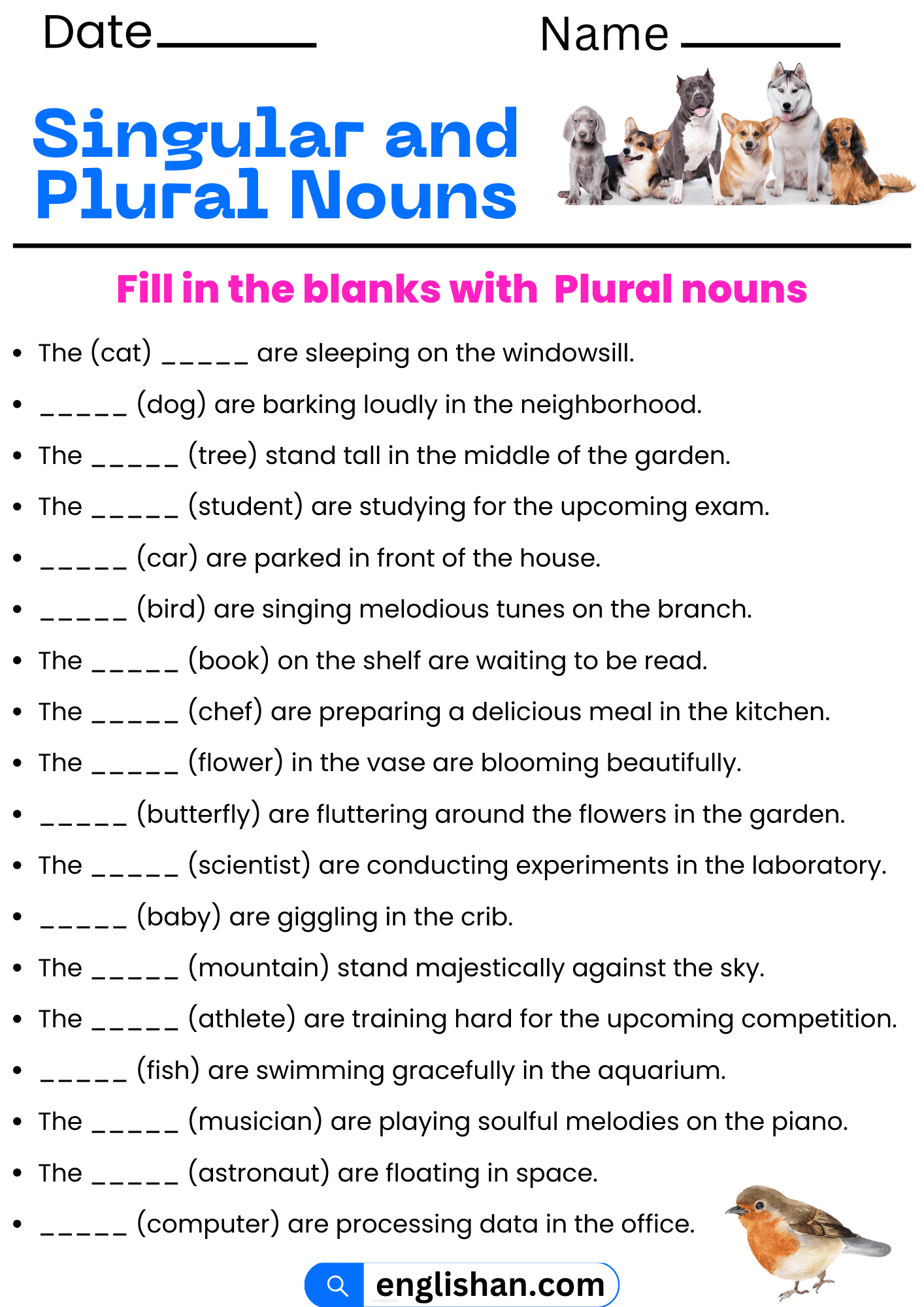
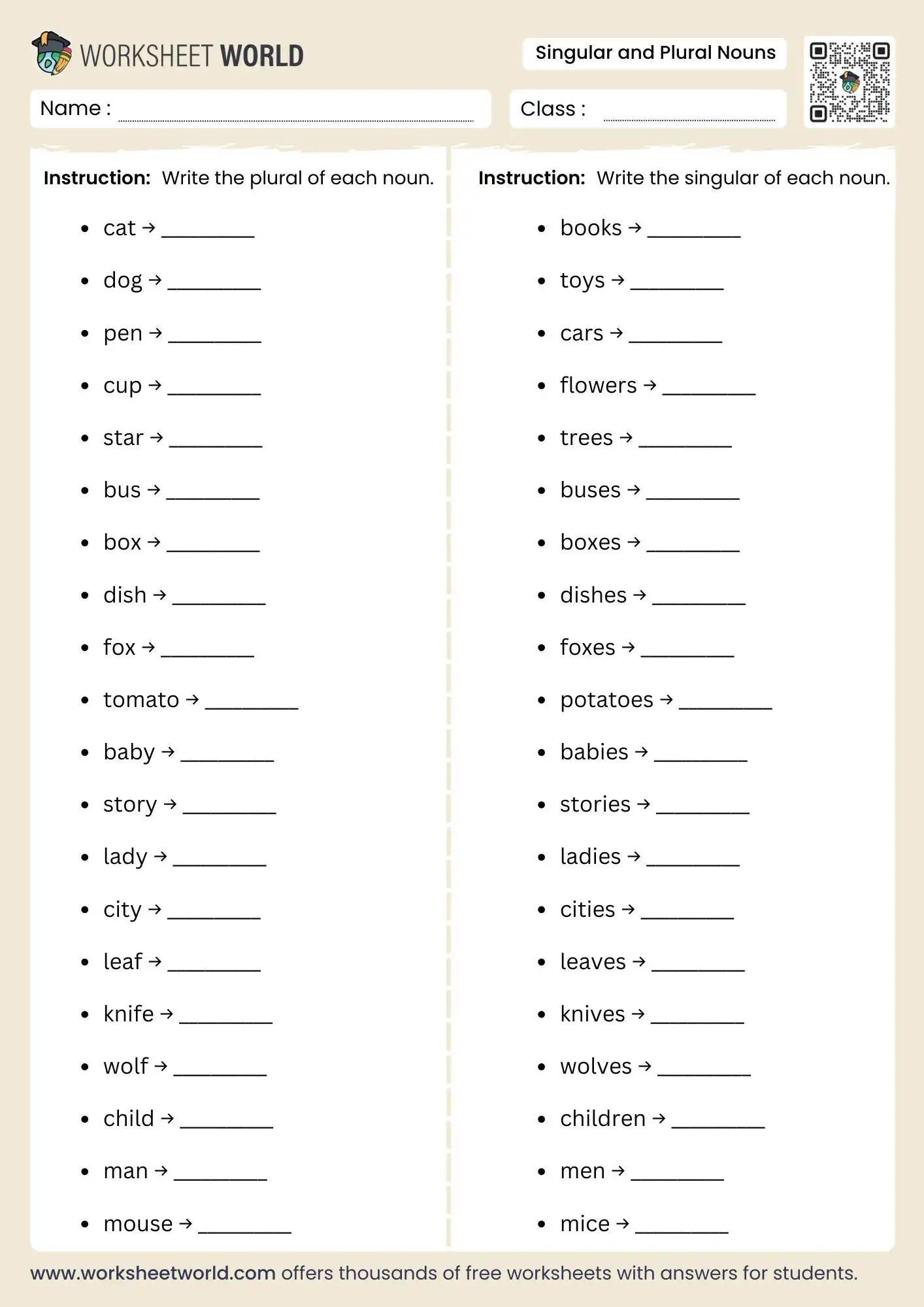
- Section A – Simple Additions: Nouns that simply add -s (e.g., cat → cats). This reinforces basic rules.
- Section B – Additions with -es: Nouns ending in ch, sh, ss, x, or z (e.g., match → matches).
- Section C – y to ies: Words ending in a consonant + y (e.g., baby → babies).
- Section D – Irregular Forms: Words that do not follow standard patterns (e.g., child → children).
- Section E – Mixed Practice: A blend of all rule types to test retention.
3. Incorporate Real‑World Context
Include sentences or short paragraphs where students must identify plural nouns within context. This ties grammar to reading comprehension and encourages analytical thinking.
4. Use Visual Aids and Color Coding
Assign colors to each rule type (e.g., blue for simple additions, green for -es, yellow for ies). Color coding helps visual learners quickly recognize patterns and improves recall.
5. Include a Self‑Check Section
After the conversion tasks, provide a multiple‑choice or true/false section that lets learners verify their answers. This reinforces learning without requiring instructor intervention.
6. Offer Extensions for Advanced Students
For higher‑level learners, add optional challenges such as:
- Transforming plural nouns back into singular.
- Writing original sentences using the plural nouns.
- Creating a short story that incorporates at least ten plural nouns from the worksheet.
Step‑by‑Step: How to Use the Worksheet Effectively
Teachers and parents can maximize the worksheet’s impact by following a structured approach.
Step 1 – Pre‑Activity Warm‑Up
Begin with a brief discussion about why plural forms matter. Ask learners to recall examples of plural nouns they encounter daily, such as “books,” “cars,” or “students.” This primes their minds for the upcoming tasks.
Step 2 – Guided Practice
Walk through the first few items together, demonstrating the rule and having students verbalize the logic behind each transformation. For instance, highlight that “box” ends with an x, so we add -es to make “boxes.”
Step 3 – Independent Work
Allow learners to complete the worksheet individually. Encourage them to write down the rule they used before finalizing the plural form. This metacognitive step strengthens rule retention.
Step 4 – Peer Review
Pair students and have them check each other’s answers. During this exchange, they should discuss any disagreements, reinforcing collaborative learning.
Step 5 – Class Review and Feedback
Go over the answers collectively, addressing common misconceptions. Use the self‑check section to reinforce correct usage and explain errors in detail.
Step 6 – Extension Activities
Conclude with creative assignments, such as writing a short poem that uses a variety of plural nouns or creating a comic strip that showcases the plural forms in action. These activities solidify the learning in memorable ways.
Common Mistakes and How to Avoid Them
Even the most diligent students can stumble on certain patterns. Below are frequent pitfalls and corrective strategies.
1. Confusing y Changes with Simple Additions
Some learners add -s instead of switching y to ies for words like “party.” Reinforce the rule by comparing examples that end in a vowel + y versus a consonant + y.
2. Overlooking Irregular Forms
Words such as “mouse,” “goose,” and “man” have unique plurals. Provide a mnemonic or a visual cue to help students remember them. For instance, “mouse” + “es” can be remembered as “mouse” + “es” = “mouses,” but the correct form is “mice.”
3. Mixing up -es and -s Rules
Explain the pronunciation cues: words ending in a harsh consonant sound (like ch or sh) require -es to keep the word sounding smooth. Use audio examples if possible.
4. Neglecting Contextual Cues
Encourage learners to look at surrounding words for clues. For example, “The students attended the lecture,” where the plural form is implied by the verb agreement.
Integrating Technology into Singular To Plural Nouns Worksheet
Technology can elevate the worksheet experience, making practice more engaging and accessible.
Digital Worksheets with Instant Grading
Online platforms allow students to type responses and receive automatic feedback. This immediate reinforcement speeds up learning and keeps students motivated.
Interactive Games
Create matching games where learners drag singular nouns to the correct plural form. Games add an element of play while reinforcing grammatical rules.
Speech Recognition Practice
Using voice‑to‑text tools, learners can speak the plural form and see if the system captures it correctly. This practice aids pronunciation and listening skills.
Tips for Parents to Support At‑Home Practice
Parents can play an active role in reinforcing pluralization through everyday activities.
Reading Together
Choose books with clear plural nouns and ask children to spot and underline them. Discuss why each plural form is used.
Shopping List Games
While grocery shopping, ask children to count items (e.g., “We need 3 apples,” “We found 2 bananas”) and write down the plural forms. This links grammar with practical counting skills.
Creative Writing Journals
Encourage children to keep a daily journal where they describe their day using plural nouns. Prompt them with questions that naturally lead to plural usage.
Final Thoughts and Conclusion
Mastering singular‑to‑plural conversions is a cornerstone of English fluency, and a thoughtfully crafted worksheet serves as a powerful catalyst for that mastery. By combining clear objectives, structured progression, real‑world relevance, and engaging visuals, educators can deliver an experience that not only teaches grammar but also instills lasting confidence in language use. When learners repeatedly practice with these tools, they move beyond rote memorization to genuine understanding, setting a solid foundation for all future writing and communication endeavors.








Related posts of "Singular To Plural Nouns Worksheet"
