Simile And Metaphor Worksheets serve as dynamic tools for unlocking students’ creative language skills, enabling them to understand and produce figurative expressions with confidence. By integrating these worksheets into daily lessons, teachers can foster deeper literary analysis, sharpen critical thinking, and nurture a love for expressive writing that resonates across all subjects.
Understanding the Core Concepts
Defining Similes and Metaphors
Similes use the words “like” or “as” to compare two distinct ideas, such as “her smile was as bright as sunshine.” Metaphors, on the other hand, assert a direct equivalence, for example, “time is a thief.” While both devices enrich language, worksheets help students identify, classify, and creatively employ them.
Common Mistakes to Watch For
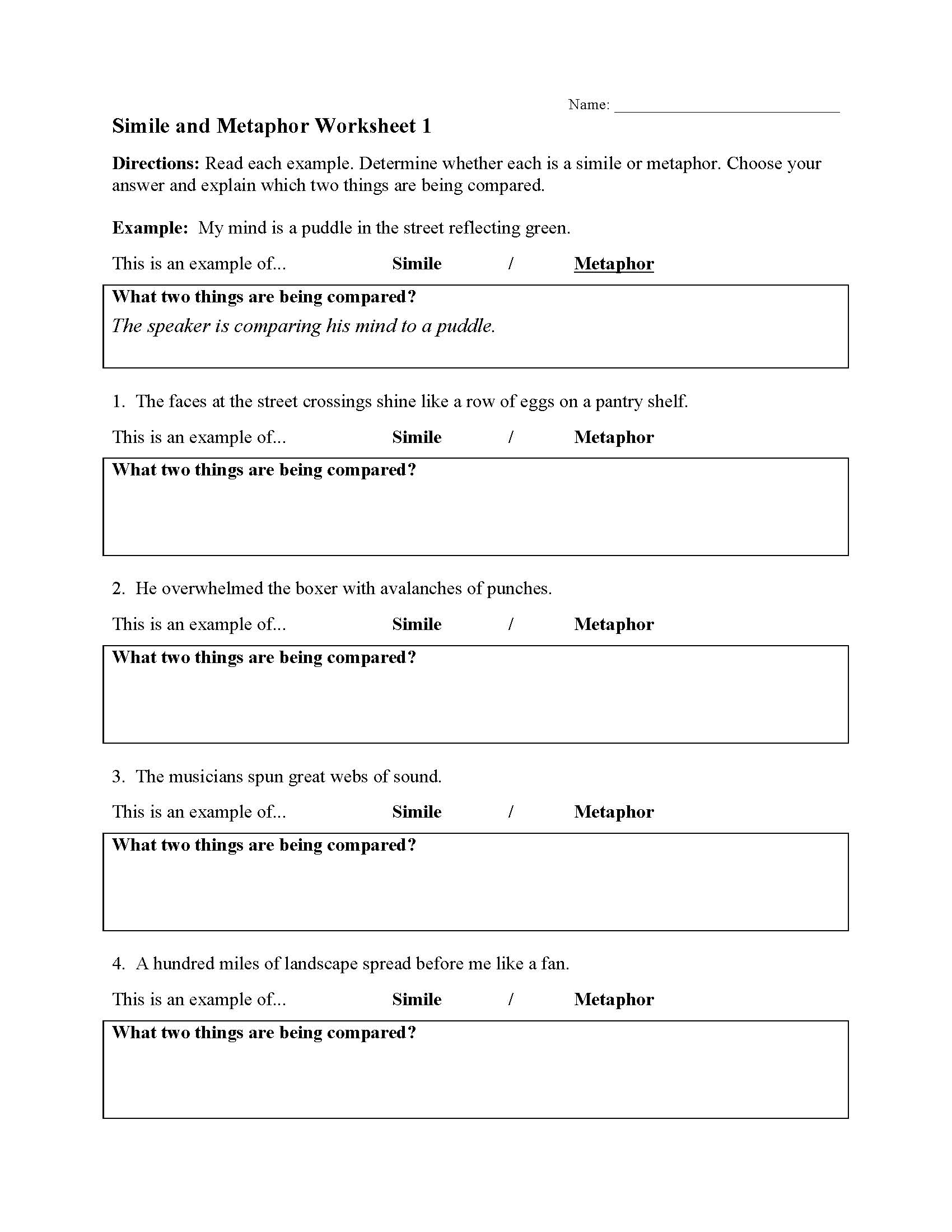
Many learners conflate similes with metaphors or overlook the subtle differences in their structure. Worksheets can pinpoint these errors by presenting mixed examples where students must categorize each statement correctly. This targeted practice reduces confusion and builds conceptual clarity.
Benefits of Using Simile And Metaphor Worksheets
Promotes Critical Thinking
When students analyze figurative language, they must infer underlying meanings, question assumptions, and evaluate the effectiveness of comparisons. Worksheets that ask students to rewrite sentences with stronger or weaker similes compel them to think critically about word choice and impact.
Enhances Vocabulary Acquisition
Similes and metaphors naturally introduce new adjectives, verbs, and nouns. By highlighting the comparative terms in worksheets, teachers can reinforce new vocabulary in context, making retention more likely.
Builds Writing Confidence
Students often fear that their writing will feel “unreal” or “too poetic.” Guided practice through structured worksheets demonstrates how to blend figurative language seamlessly, building confidence in their expressive writing.
Supports Differentiated Instruction
Worksheets can be tailored for varying proficiency levels—simple fill-in-the-blank activities for beginners and open-ended creative prompts for advanced learners. This flexibility allows teachers to meet diverse classroom needs without sacrificing depth.
Designing Effective Worksheets
Start with Clear Objectives
Each worksheet should have a singular, measurable goal, such as “identify the simile” or “create a metaphor that captures an emotion.” Clear objectives guide both instruction and assessment.
Incorporate a Variety of Formats
- Multiple Choice: Identify whether a sentence is a simile, metaphor, or literal statement.
- Matching: Pair similes with their corresponding metaphors.
- Rewrite: Transform literal sentences into similes or metaphors.
- Creative Writing: Prompt students to write their own figurative expressions based on a given theme.
Use Real-World Contexts
Embedding cultural references, popular media, or current events makes figurative language feel relevant. For instance, a worksheet might ask students to compare a superhero’s bravery to a “lion in battle” simile, encouraging connections between literature and everyday life.
Provide Immediate Feedback
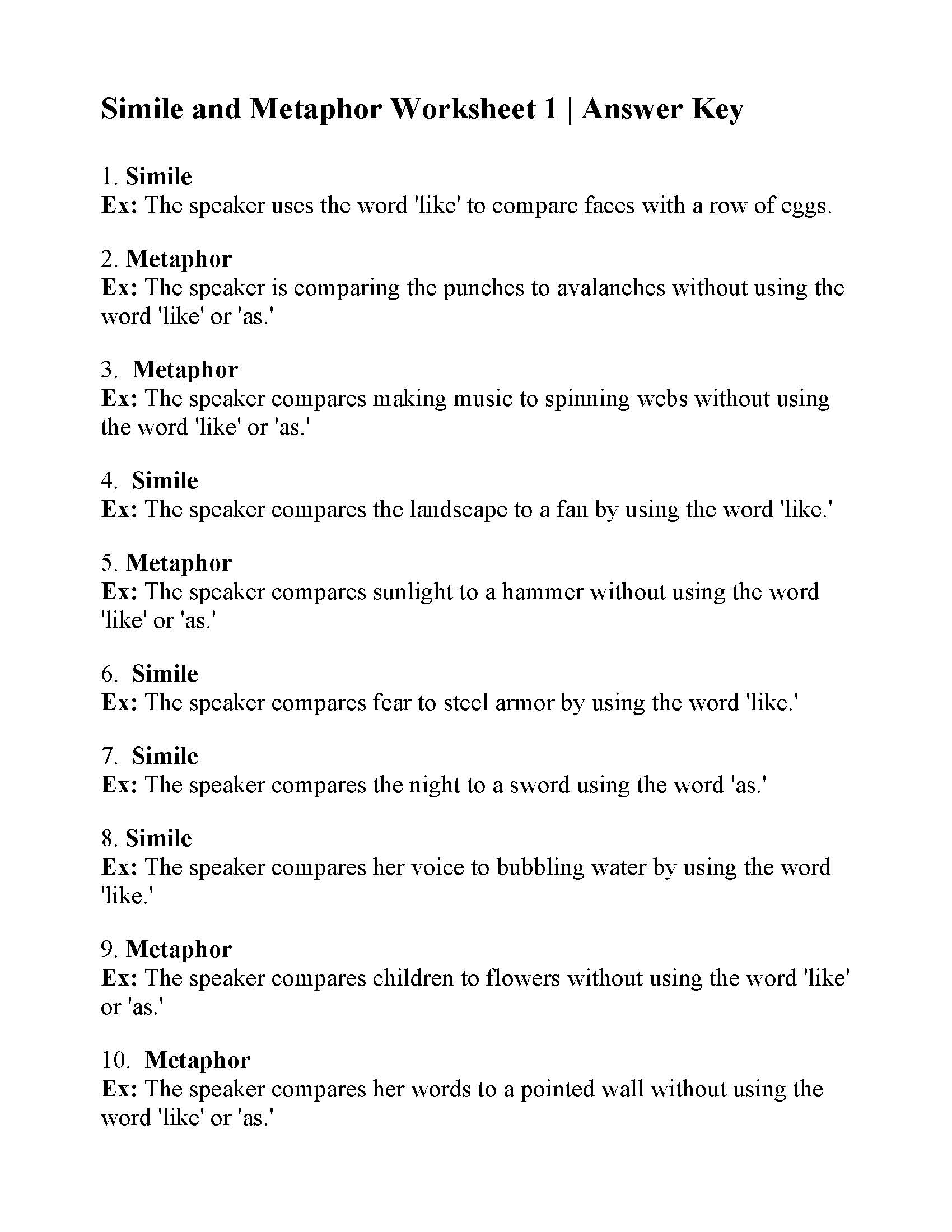
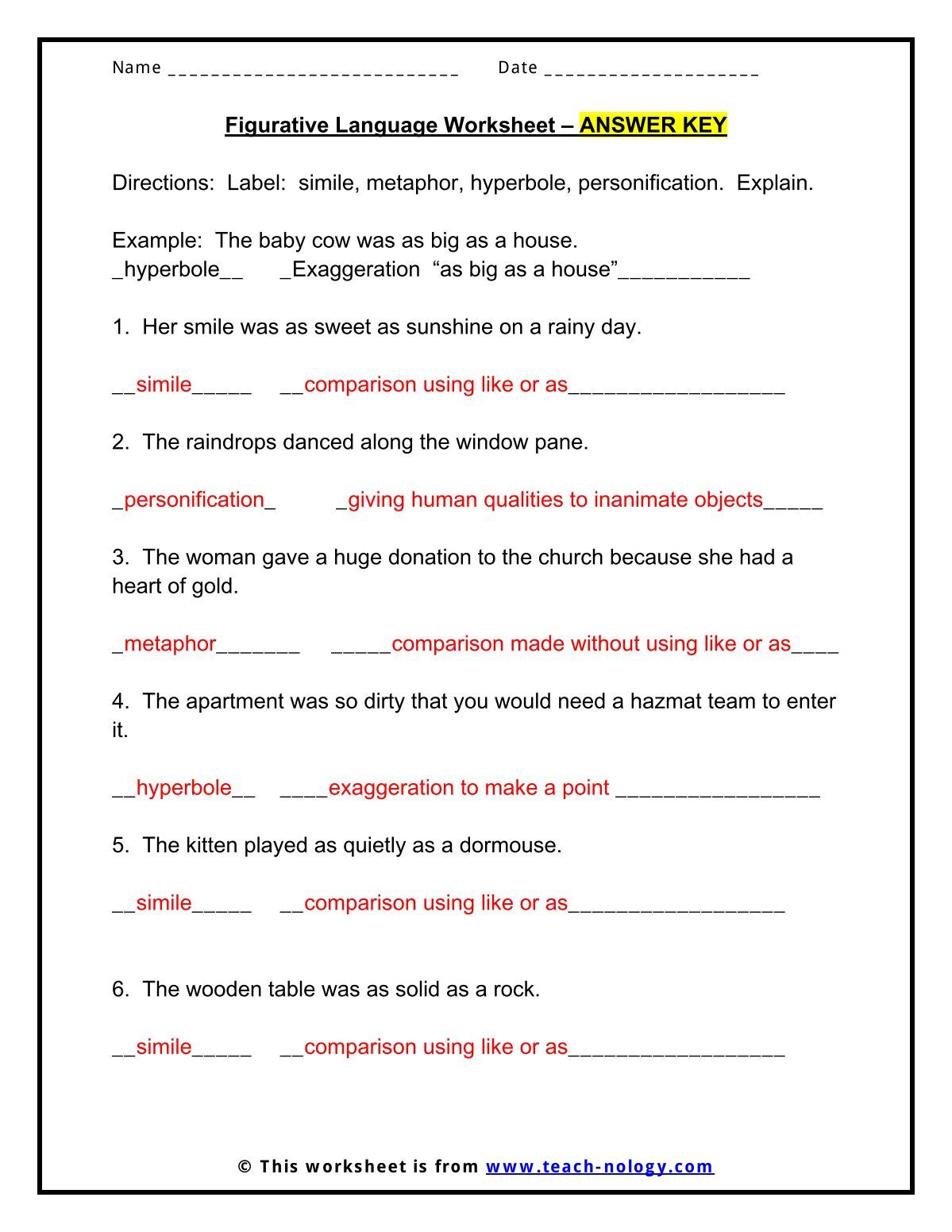
Include answer keys or interactive digital responses so students can see correct classifications or suggested improvements right away. Prompt feedback helps solidify understanding and correct misconceptions before they become ingrained.
Sample Activity Sets
Set 1: Simile Identification
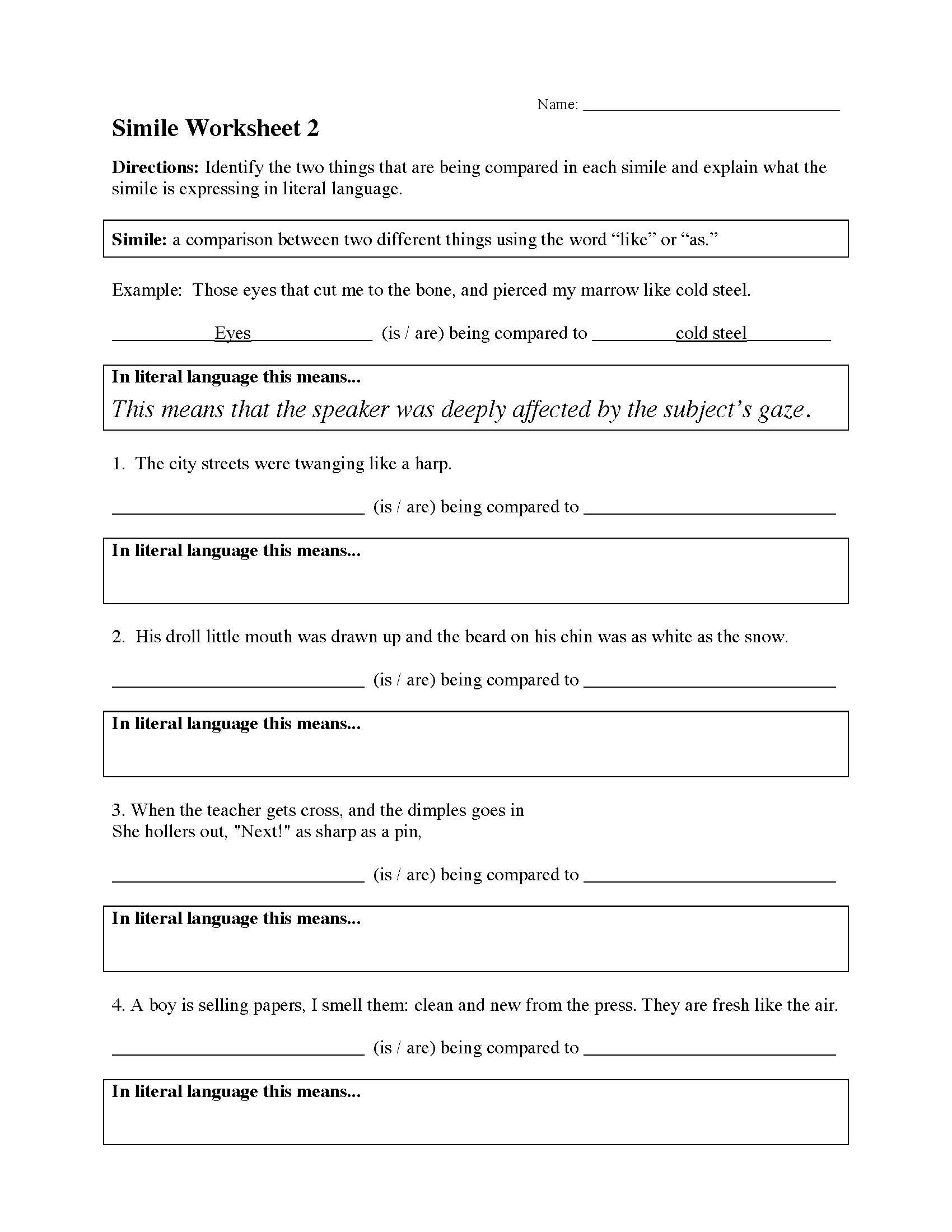
Students read a paragraph containing multiple similes. They circle each simile and write what the comparison conveys about the subject. This activity trains quick recognition and deeper interpretation.
Set 2: Metaphor Creation Challenge
After reviewing classic metaphors (e.g., “life is a rollercoaster”), students work in pairs to craft metaphors for abstract feelings like hope or fear. They then share their creations, explaining the imagery they intended.
Set 3: Figurative Language in Poetry
Students analyze a short poem, highlighting all figurative language. They then rewrite the poem, substituting each metaphor with a simile, and compare the emotional effect of both versions.
Set 4: Cross-Curricular Connections
In a science unit, students describe the growth of a plant using similes (“the stem grew as tall as a skyscraper”) or metaphors (“the seed is a silent promise”). This cross-disciplinary practice reinforces the universality of figurative language.
Digital vs. Print Worksheets
Advantages of Digital Worksheets
Digital tools enable instant grading, multimedia integration (audio recordings of student responses), and adaptive difficulty based on student performance. Interactive elements like drag-and-drop matching increase engagement.
Benefits of Print Worksheets
Printed worksheets foster a focused, distraction-free environment. They are also ideal for hands-on activities such as creating flashcards or collaborative board work.
Blending Both Formats
A hybrid approach—starting with a printed warm-up, moving to digital analysis, and concluding with a printable reflection sheet—can harness the strengths of each medium while maintaining student momentum.
Strategies for Teacher Implementation
Integrate Early and Often
Introduce similes and metaphors in the first year of elementary schooling, revisiting them across grades with increasing complexity. Consistent exposure ensures mastery over time.
Model Figurative Language Use
While delivering lessons, the teacher should read aloud sentences that contain figurative language, explicitly dissecting the comparison. Modeling demystifies the creative process.
Encourage Peer Review
After completing a creative writing prompt, students exchange drafts, highlighting effective figurative language and offering constructive suggestions. Peer feedback nurtures collaboration and critical analysis.
Link to Assessment Rubrics
Clear rubrics that weigh originality, clarity, and appropriate use of figurative devices help students understand expectations and self-assess before submission.
Troubleshooting Common Challenges
Overuse of Clichés
Students sometimes fall back on overused comparisons (“as brave as a lion”). Worksheets can include a “Cliché Detective” section where learners identify and replace familiar phrases with fresh imagery.
Misinterpreting Literal vs. Figurative Language
When students misclassify literal statements as figurative, worksheets that present side-by-side comparisons reinforce the distinction. Example: “The sky was blue” (literal) vs. “The sky was a blanket of blue” (metaphor).
Difficulty with Abstract Concepts
Creating similes for emotions can be challenging. Provide concrete anchors, such as “anger is like a storm” or “joy is as bright as a sunrise,” to help students build their own images.
Assessing Progress Effectively
Formative Assessments
Short quizzes after each worksheet set track immediate understanding. Teachers can quickly adjust instruction based on results.
Summative Projects
A portfolio project where students compile a “Figurative Language Journal” over a term demonstrates long-term growth. This portfolio can include original poems, short stories, and reflective commentary on the use of similes and metaphors.
Self-Assessment Checklists
Students evaluate their own work against criteria such as “Does the simile enhance meaning?” or “Is the metaphor vivid and appropriate?” This practice promotes metacognition.
Conclusion
From Skill Acquisition to Creative Expression
Simile And Metaphor Worksheets are more than rote practice; they are gateways to expressive language that enriches every subject area. By thoughtfully designing worksheets, integrating them into varied lesson plans, and assessing progress with clarity, educators empower students to navigate the world of figurative language confidently. As learners grow increasingly adept at spotting, crafting, and refining similes and metaphors, they develop not only linguistic fluency but also the imaginative power that fuels effective communication in both academic and real-world contexts.







Related posts of "Simile And Metaphor Worksheets"
