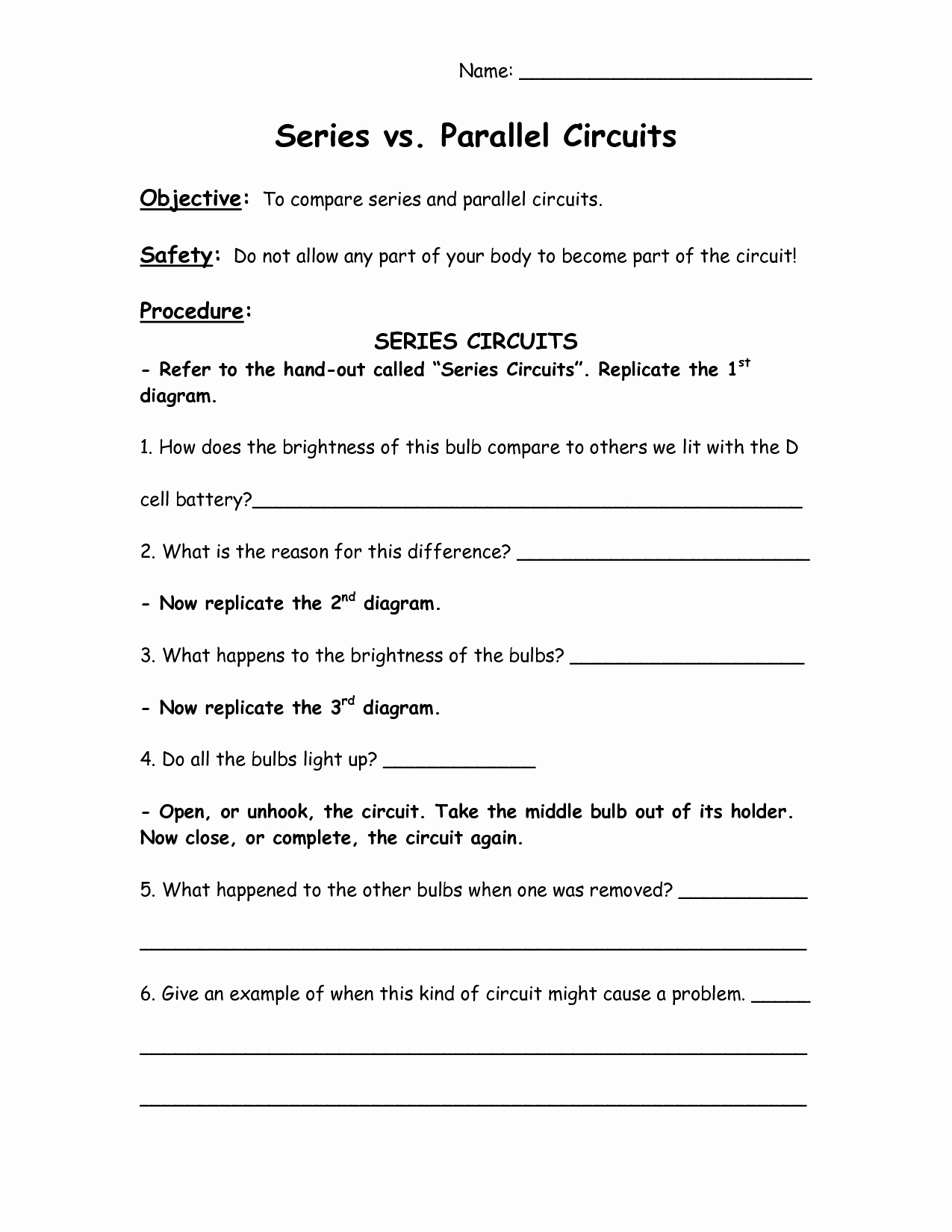
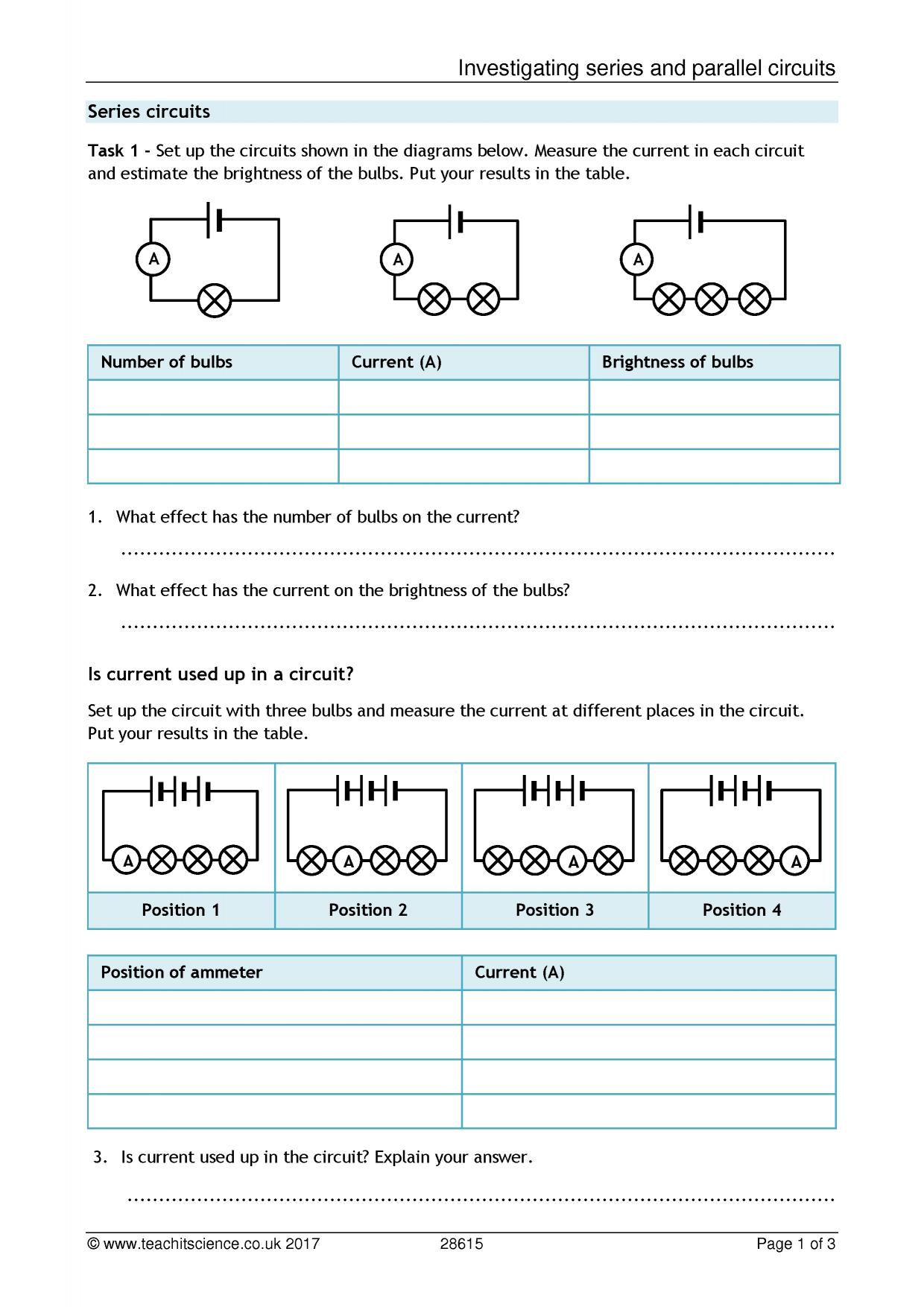
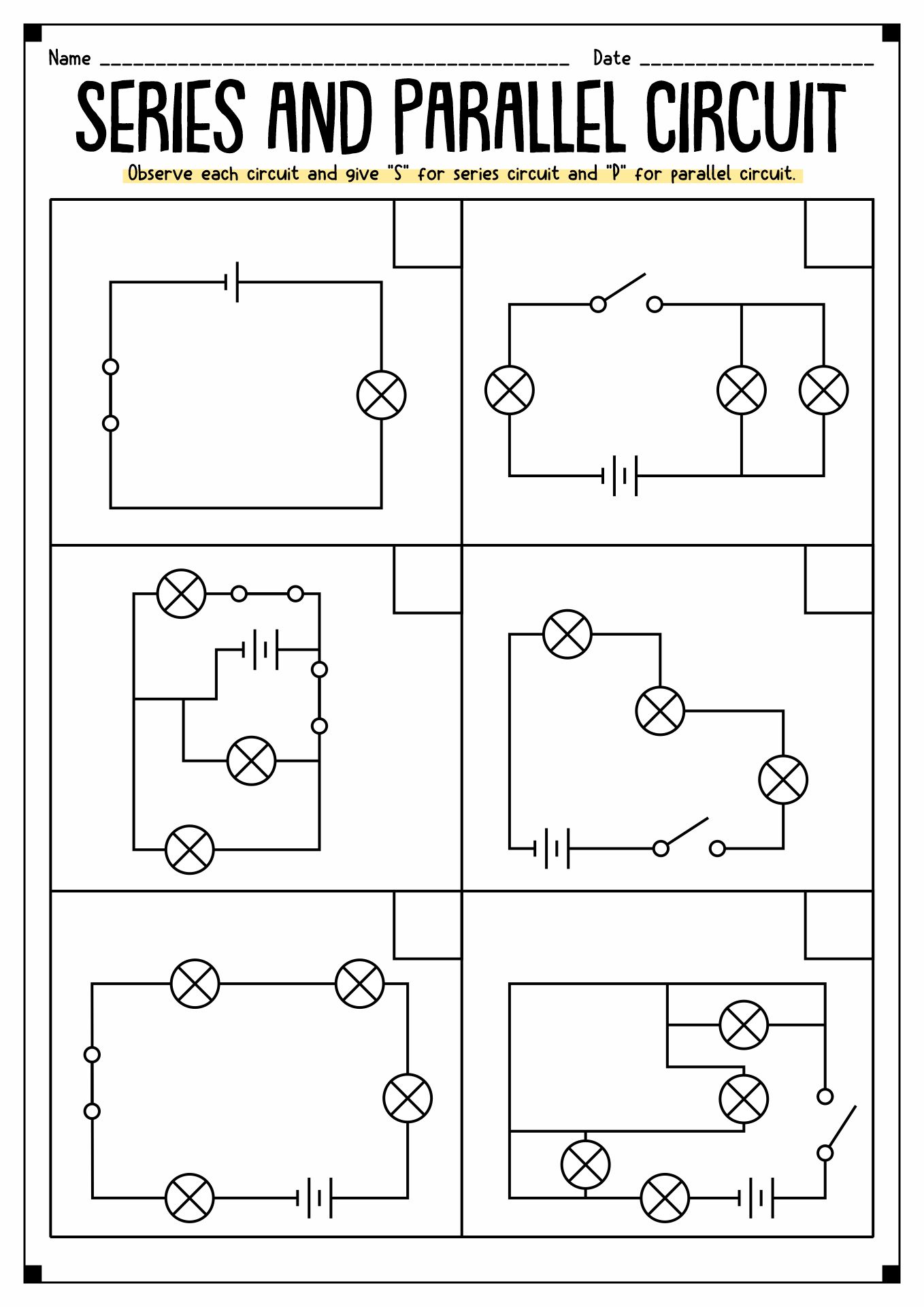
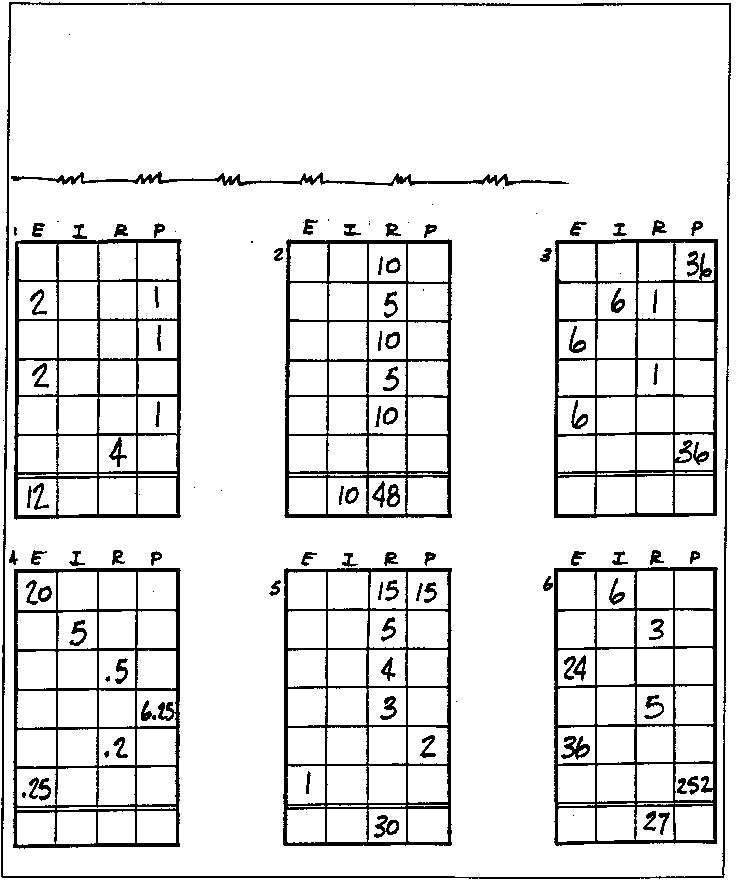
Series Or Parallel Worksheet is a powerful educational tool that helps students grasp the nuances of electrical circuits in a hands‑on way. By working through a variety of problem sets that feature series, parallel, or mixed configurations, learners can see how resistance, current, and voltage behave in real circuits—making abstract concepts tangible and memorable.
Understanding Series vs Parallel Circuits
What Is a Series Circuit?
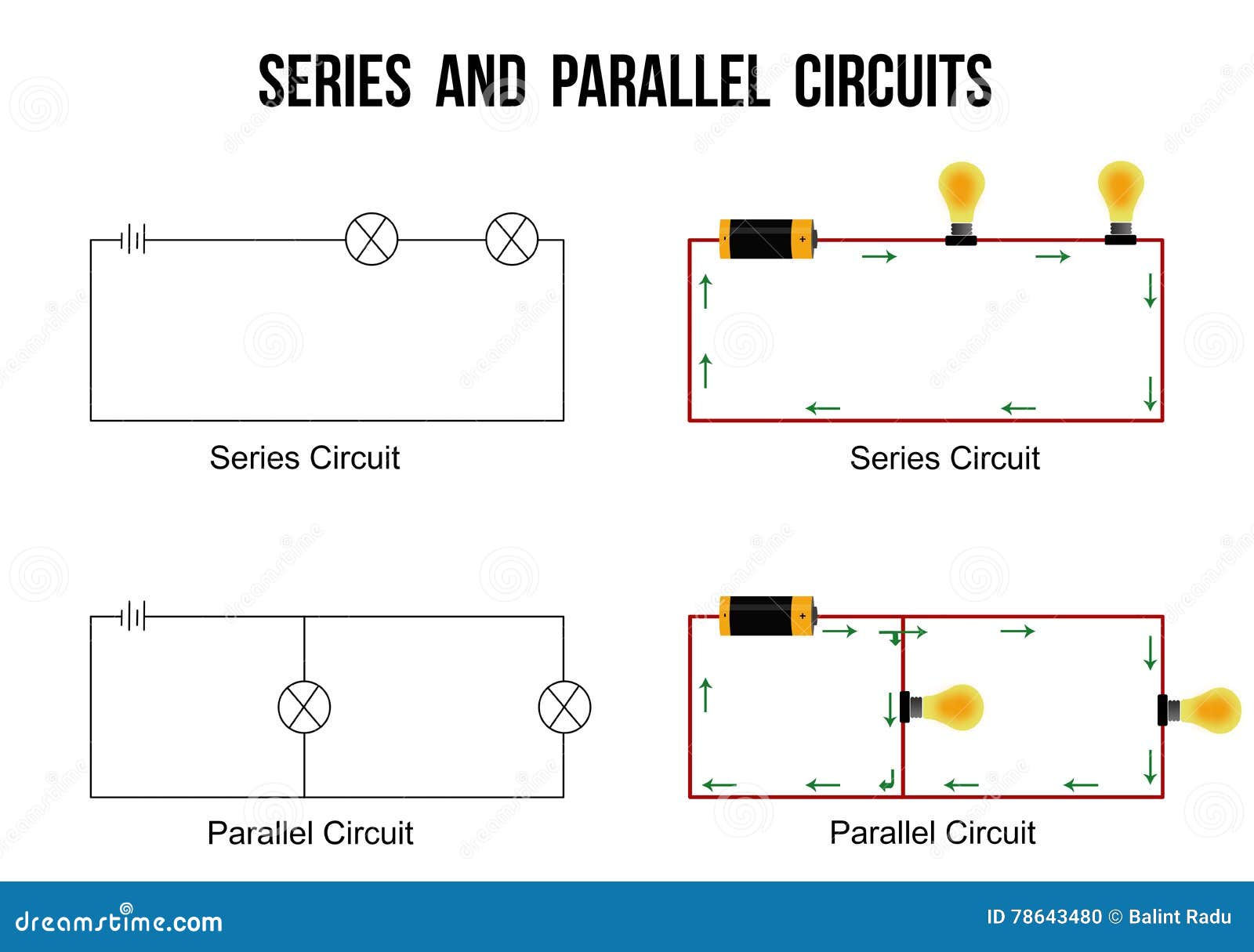
A series circuit connects components end‑to‑end, so the same current flows through each element. Think of a string of holiday lights: if one bulb burns out, the entire string goes dark because the current path is broken. In a series layout, total resistance is the sum of individual resistances, and voltage divides across components in proportion to their resistance.
What Is a Parallel Circuit?
In contrast, a parallel circuit branches components so each is connected directly to the same two nodes. The current splits, providing independent paths for each component. The total current is the sum of currents through each branch, while voltage remains constant across all branches. Parallel circuits are commonly found in home wiring, ensuring each device receives the full supply voltage.
Key Differences
• Current: Series—identical through all; Parallel—divides among branches.
• Voltage: Series—drops across each component; Parallel—equal across components.
• Resistance: Series—adds up; Parallel—decreases overall resistance.
• • •
Why Worksheets Are Essential
Building Problem‑Solving Skills
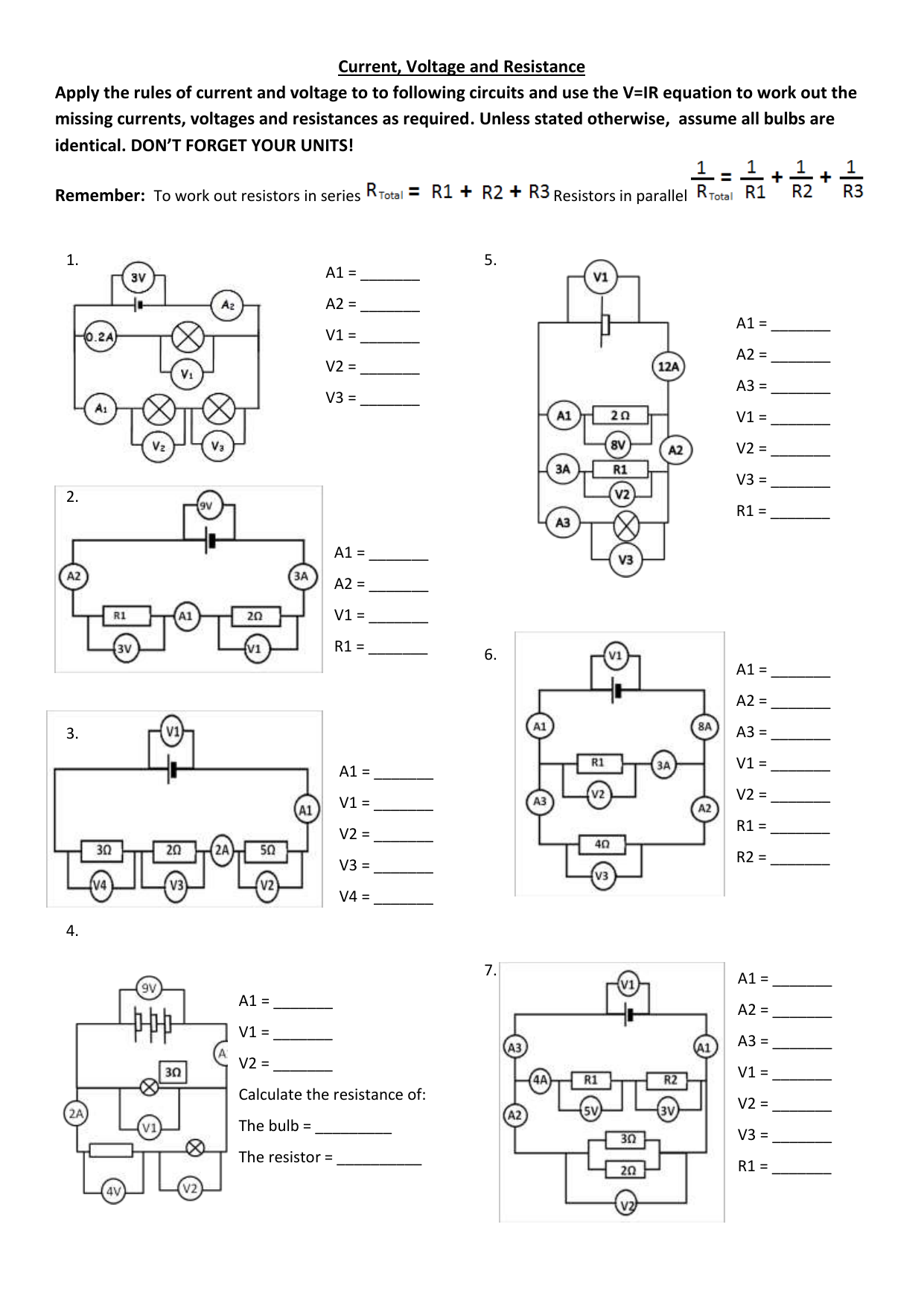
Worksheets require students to analyze circuit diagrams, identify known quantities, and systematically apply formulas. This iterative process trains critical thinking, as learners must decide whether a problem is purely series, purely parallel, or a mixture of both.
Reinforcing Conceptual Knowledge
Repetition solidifies understanding. By repeatedly calculating total resistance, current, or voltage across different arrangements, students move from rote memorization to conceptual mastery.
Preparing for Exams
Many high‑school physics exams and standardized tests feature circuit problems. Familiarity with worksheet formats and common question patterns reduces test anxiety and boosts performance.
Types of Series and Parallel Worksheets
Basic Practice Worksheets
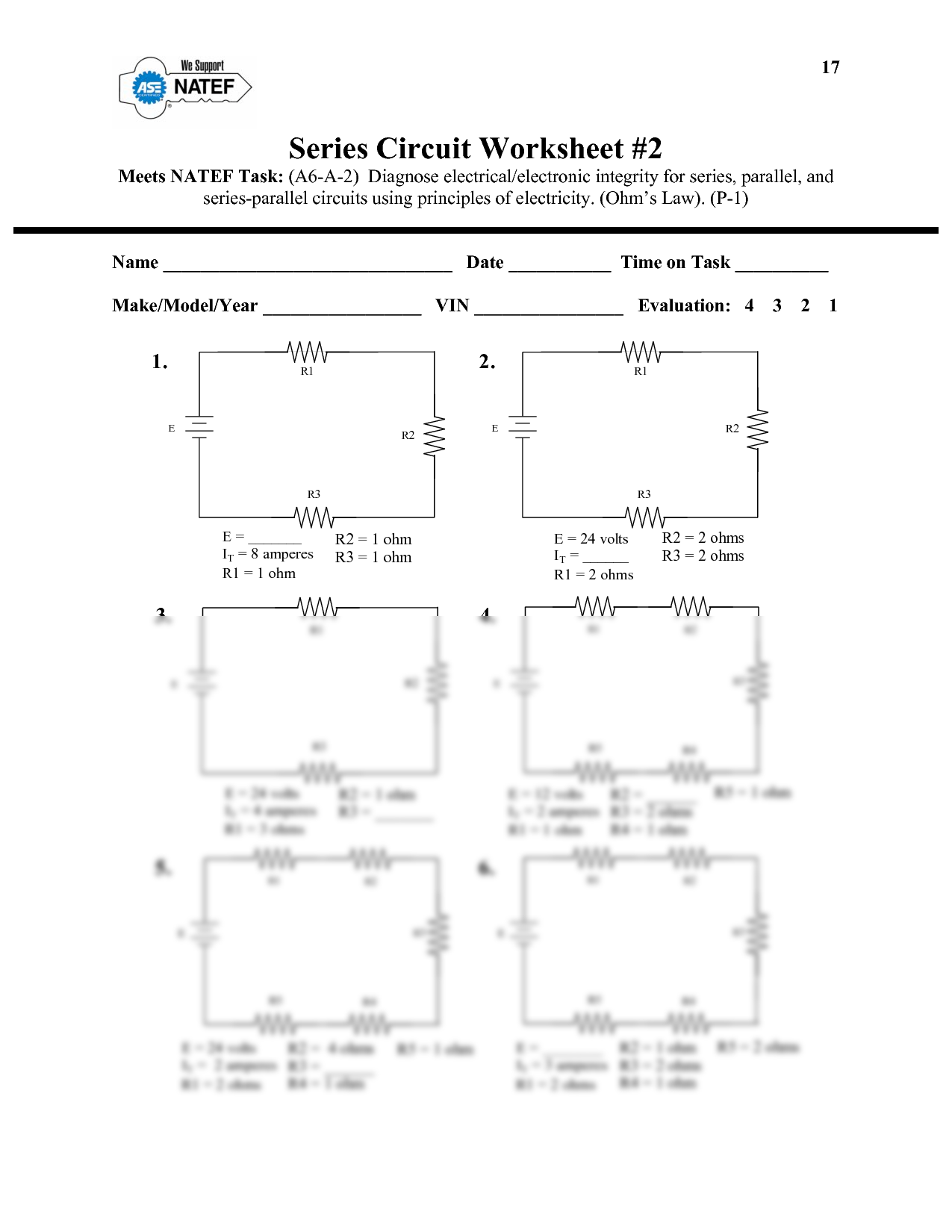
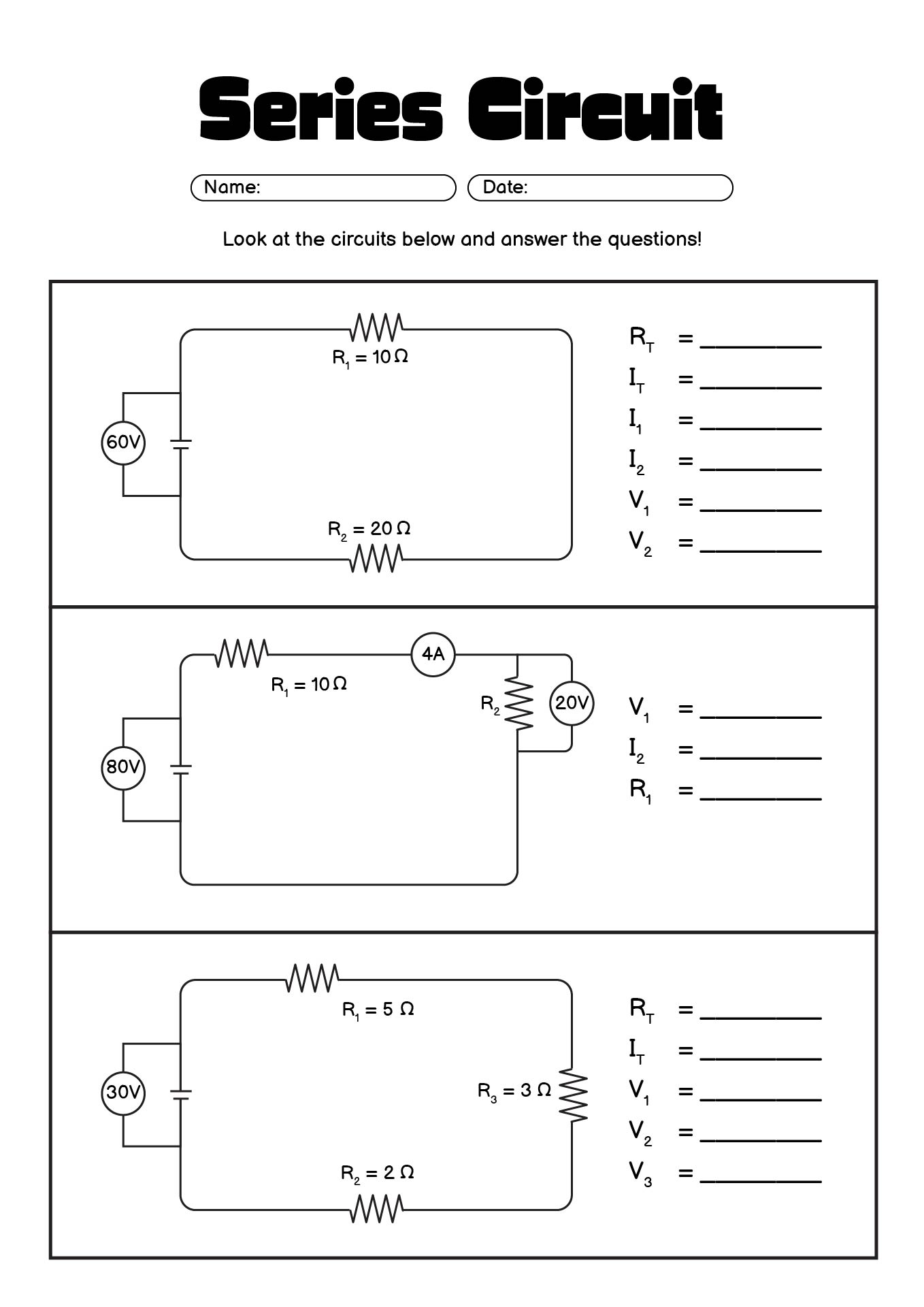
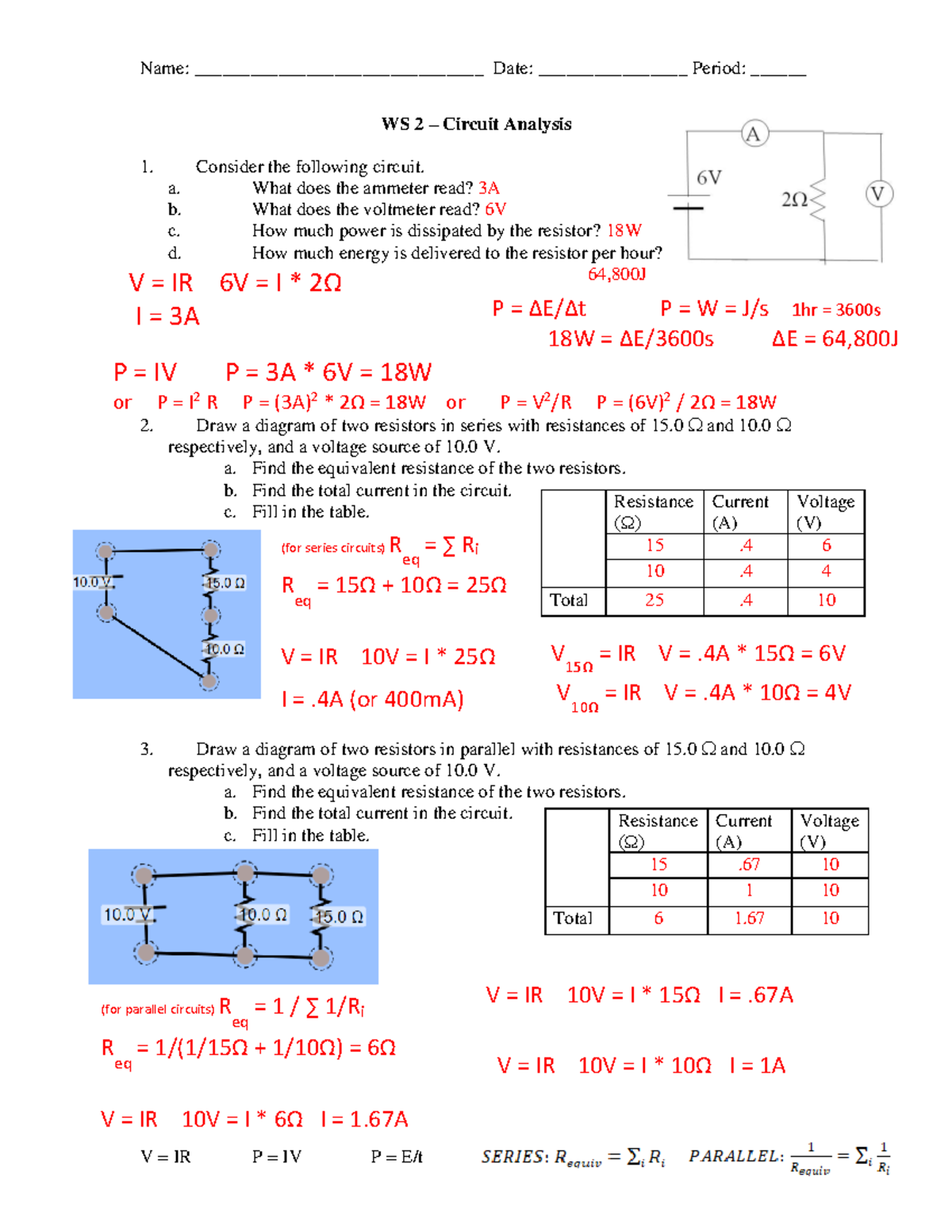
These include straightforward, single‑loop problems that emphasize fundamental principles. Example: “A circuit contains a 3 Ω resistor and a 6 Ω resistor in series. Find the total resistance.” Such tasks help students practice adding resistances and applying Ohm’s Law.
Mixed‑Scenario Worksheets
Mixed circuits combine series and parallel elements within a single diagram. These are more realistic and test a student’s ability to identify sub‑circuits, isolate them, and then combine results. An example might involve three resistors where two are in parallel and that pair is in series with a third resistor.
Advanced Problem Sets
Advanced worksheets introduce voltage sources, multiple batteries, and even inductors or capacitors. They push learners to apply Kirchhoff’s Voltage Law (KVL) and Kirchhoff’s Current Law (KCL) in addition to Ohm’s Law. The problems often require setting up simultaneous equations and solving for unknown currents.
Interactive Digital Worksheets
Online platforms allow drag‑and‑drop circuit assembly, instant feedback, and dynamic visualizations. Students can see how changing a resistor value instantly alters currents and voltages, reinforcing the cause‑effect relationship.
How to Use Worksheets Effectively
Step‑by‑Step Approach
1. Read the problem carefully. Identify given values and what is requested.
2. Draw a circuit diagram. Even if one is provided, redrawing helps internalize the layout.
3. Label all unknowns. Assign symbols like I₁, V₂, R₃.
4. Select the appropriate laws. Decide whether to use KVL, KCL, or simple series/parallel rules.
5. Set up equations. Write them out neatly.
6. Solve systematically. Use substitution or elimination as needed.
7. Check units and plausibility. Verify that results make sense (e.g., currents add correctly).
Common Mistakes to Avoid
• Assuming all components are in series or parallel.
• Mixing up voltage and current labels.
• Forgetting to convert units (e.g., milliampere to ampere).
• Misapplying Ohm’s Law by using incorrect values for R, V, or I.
Tracking Progress
Keep a worksheet log: note the date, worksheet title, difficulty level, and scores. Reviewing trends over time reveals strengths and gaps, enabling targeted practice.
Real‑World Applications
Household Electrical Systems
Every home’s wiring uses parallel circuits to supply lights, outlets, and appliances with the same voltage. Understanding how resistances and currents distribute informs safe circuit design and troubleshooting.
Electronics and Circuits
In electronic devices, resistors are arranged in series to achieve a desired total resistance, while parallel networks manage current distribution across components like LEDs and transistors.
Renewable Energy Systems
Solar panels connected in series raise voltage, whereas panels in parallel increase current capacity. Mastery of series/parallel concepts is crucial for designing efficient photovoltaic arrays.
Tips for Teachers and Parents
Selecting the Right Worksheet
Match the worksheet difficulty to the student’s grade level and prior exposure. For beginners, keep problems simple and include visual aids; for advanced learners, include multi‑loop circuits and non‑linear elements.
Customizing Difficulty
Adjust resistor values to increase complexity or introduce new variables like temperature‑dependent resistance. Adding optional “challenge” sections encourages deeper exploration.
Encouraging Collaboration
Pair students for peer‑review sessions. They can discuss alternative solution paths, fostering communication and reinforcing learning.
Common Mistakes in Series/Parallel Problems
Confusing Voltage and Current
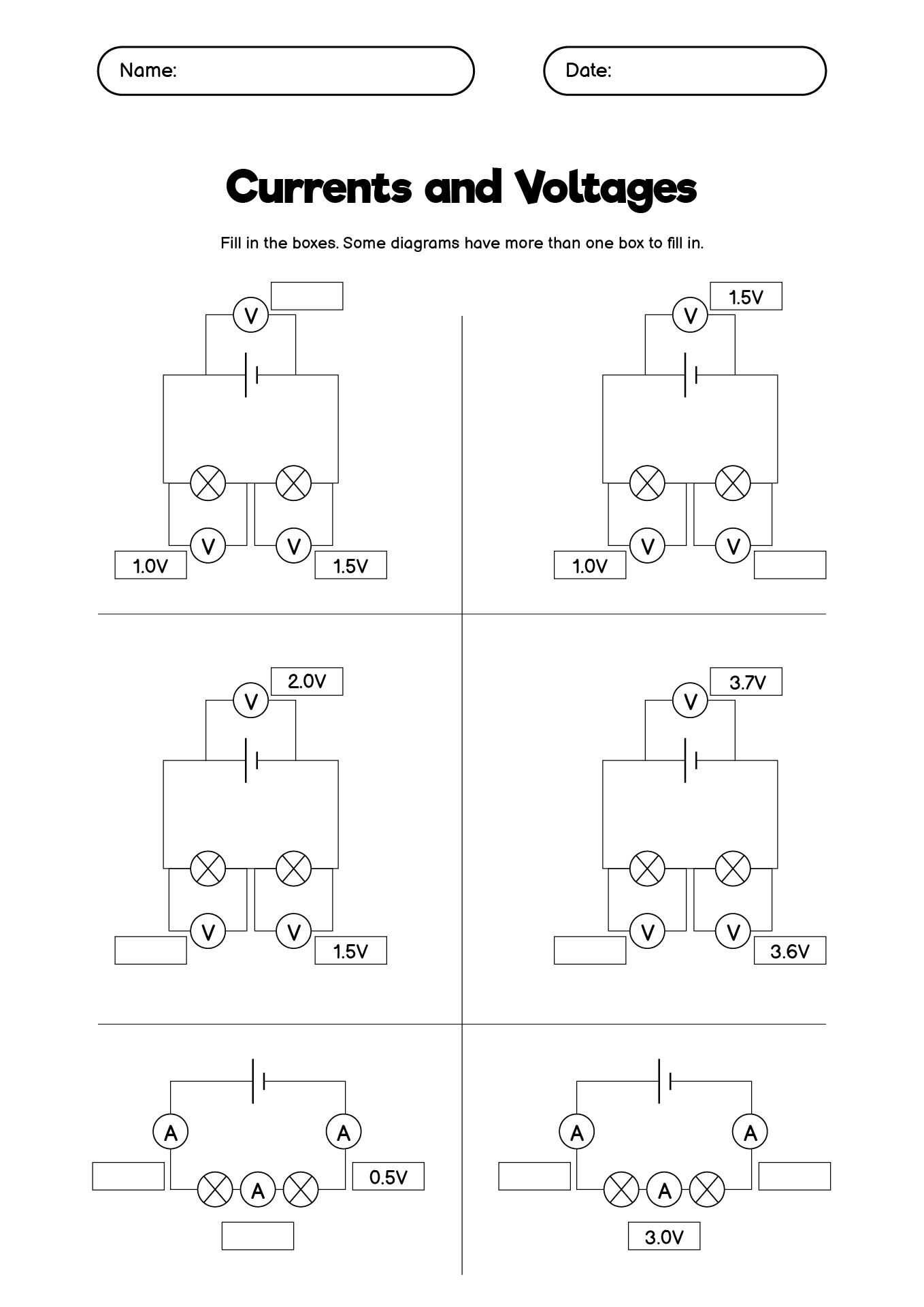
Students often treat voltage like current, forgetting that voltage drops across series resistors while current remains constant.
Misapplying Ohm’s Law
Using R = V/I when the known values are V and I is correct, but mixing up the formula when solving for I can lead to negative or nonsensical results.
Ignoring Resistance Values
Overlooking a small resistor’s influence in a parallel branch can distort current calculations. Always evaluate each branch individually before combining.
Sample Worksheet Example (Described)
Imagine a worksheet with five problems:
- Calculate total resistance for a series circuit with resistors 4 Ω, 7 Ω, and 9 Ω.
- Find the current through each branch in a parallel circuit with a 12 V supply and resistors 3 Ω, 6 Ω, and 12 Ω.
- Determine the voltage drop across a 5 Ω resistor in a circuit that also contains a 10 Ω resistor in series.
- Apply Kirchhoff’s laws to a loop containing a 9 V battery, a 3 Ω resistor, and a 2 Ω resistor, where a parallel branch has a 4 Ω resistor.
- Design a circuit that achieves exactly 15 Ω total resistance using only 4 Ω and 6 Ω resistors in series and parallel combinations.
Each problem progressively builds on the previous one, allowing students to apply foundational rules before tackling complex network analysis.
Conclusion
Mastering Series Or Parallel Worksheet challenges is more than an academic exercise; it equips learners with a practical framework for understanding how electrical energy flows through real systems. By systematically applying Ohm’s Law, Kirchhoff’s principles, and careful problem‑solving strategies, students gain confidence and skill that extend far beyond the classroom. Whether you are a teacher preparing lesson plans, a parent guiding homework, or a student aiming to excel, a well‑structured worksheet set is your roadmap to electrical literacy and success.






Related posts of "Series Or Parallel Worksheet"
