Section 754 Calculation Worksheet is the hidden engine that keeps partnership tax accounting from spiraling into chaos after a distribution, a sale, or a contribution, and mastering it can turn a potential nightmare into a precise, predictable outcome for every partner.
Why Section 754 Matters
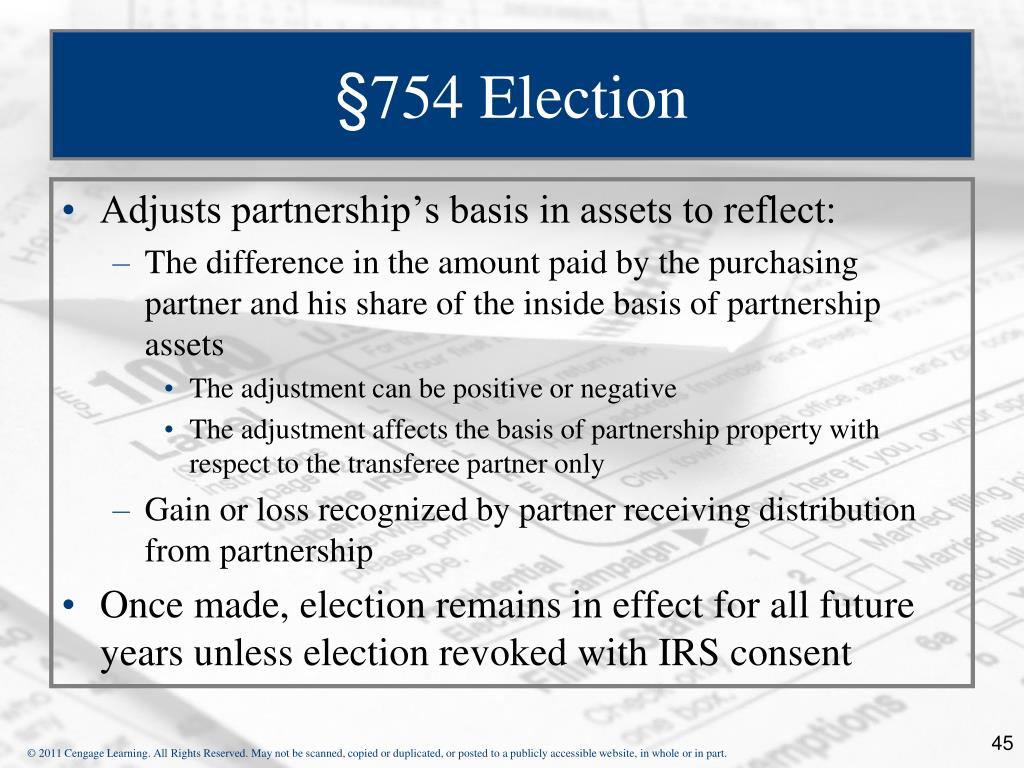
Section 754 of the Internal Revenue Code grants a partnership the right to adjust the basis of its assets when a significant ownership change occurs. Without this election, partners could be stuck with distorted inside and outside bases, leading to incorrect gain or loss calculations, unfair tax burdens, and endless disputes during audits. The worksheet is the practical tool that translates the abstract election into concrete dollar amounts, ensuring every basis adjustment aligns with IRS rules.
When to Consider Making the Election
Triggering Events
Several events can justify a Section 754 election:
- Sale or exchange of a partnership interest
- Death of a partner
- Distribution of property to a partner
- Admission of a new partner that alters ownership percentages dramatically
Cost‑Benefit Analysis
Electing Section 754 isn’t free. The partnership must file Form 1065, Schedule K‑1, and maintain meticulous records. However, the benefits often outweigh the costs:
- Partners can claim depreciation or amortization based on the stepped‑up basis, reducing future taxable income.
- Gain or loss on subsequent sales of partnership assets reflects the true economic value rather than outdated historical cost.
- Estate planning becomes more efficient, as heirs inherit assets at a basis that mirrors market realities.
Understanding the Worksheet Structure
The worksheet is essentially a multi‑column ledger that captures three critical pieces of information: the original basis of the partnership’s assets, the adjustment amount required by the election, and the resulting new basis. Each column must be reconciled with the partnership’s balance sheet, the partners’ capital accounts, and the tax return figures.
Key Columns Explained
- Asset Description: Identify each asset, including real estate, equipment, intangible assets, and inventory.
- Original Inside Basis: The partnership’s tax basis before any adjustment.
- Adjustment Amount: The increase or decrease required to align the inside basis with the new outside basis of the affected partner(s).
- New Inside Basis: The resulting basis after applying the adjustment.
- Partner Allocation: How the adjustment is shared among remaining partners, typically proportionate to their ownership percentages.
Step‑By‑Step Guide to Completing the Worksheet
Step 1: Gather Baseline Data
Collect the partnership’s most recent balance sheet, the partners’ capital account statements, and any relevant transaction documents (sale agreements, distribution notices, death certificates, etc.). Verify that the outside basis of each partner matches the capital account totals; discrepancies here will signal errors later in the worksheet.
Step 2: Identify the Triggering Event
Pinpoint the exact transaction that prompts the adjustment. For a sale of an interest, note the purchase price, the selling partner’s adjusted basis, and the date of transfer. For a distribution, record the fair market value of the property given to the partner and the partnership’s inside basis in that property.
Step 3: Calculate the Outside Basis Change
The outside basis change is the difference between the partner’s pre‑transaction basis and post‑transaction basis. If a partner sells their interest for $500,000 and their original basis was $300,000, the outside basis change is $200,000. This figure drives the adjustment amount.
Step 4: Determine the Inside Basis Impact
Apply the Section 754 rules to translate the outside basis change into an inside basis adjustment. The core formula is:
Adjustment = (Partner’s Outside Basis Change) × (Asset’s Proportion of Total Partnership Assets)
For example, if the sold interest represented 25% of the partnership and the partnership’s total asset basis was $2,000,000, the inside basis adjustment for the assets attributable to that interest would be $200,000 × 25% = $50,000.
Step 5: Allocate the Adjustment Among Remaining Partners
Distribute the $50,000 adjustment based on each remaining partner’s ownership percentage. If two partners remain with 60% and 40% shares, the first receives $30,000 and the second $20,000. Enter these amounts in the “Partner Allocation” column.
Step 6: Update the Worksheet
Record the original inside basis, the calculated adjustment, and the new inside basis for every affected asset. Double‑check that the sum of all adjustments equals the total outside basis change, ensuring the worksheet balances.
Step 7: Reflect Changes on the Tax Return
Adjust the partnership’s Form 1065, Schedule K, and each partner’s Schedule K‑1 to reflect the new basis figures. The adjustments affect depreciation schedules, gain/loss calculations on future disposals, and the partners’ basis for deducting losses.
Real‑World Example: A Sale of Partnership Interest
Imagine a three‑partner real‑estate partnership, Alpha Partners, with the following ownership stakes: Partner A – 50%, Partner B – 30%, Partner C – 20%. The partnership holds a single commercial building with an inside basis of $1,200,000 and a fair market value of $2,000,000. Partner C decides to sell his 20% interest to an outside investor for $500,000.
Step‑by‑step analysis:
- Outside Basis of Partner C: Assume Partner C’s original outside basis is $150,000 (derived from his capital contributions and share of partnership liabilities).
- Outside Basis Change: $500,000 (sale price) – $150,000 (original basis) = $350,000.
- Proportion of Assets: Partner C owned 20% of the building, so the asset proportion is 20% of $1,200,000 = $240,000.
- Inside Basis Adjustment: $350,000 × 20% = $70,000 increase to the building’s inside basis.
- Allocation to Remaining Partners: Partner A (50% ownership) receives $70,000 × 50% = $35,000. Partner B (30% ownership) receives $70,000 × 30% = $21,000. The remaining $14,000 is retained as a residual adjustment that offsets any remaining basis differences.
- New Inside Basis: $1,200,000 + $70,000 = $1,270,000.
- Depreciation Impact: The increased basis accelerates depreciation deductions for the remaining partners, reducing taxable income over the building’s remaining useful life.
This example illustrates how the worksheet translates a simple cash transaction into a series of basis adjustments that ripple through future tax periods.
Common Pitfalls and How to Avoid Them
Neglecting Liability Adjustments
Partners’ outside basis includes both their capital contributions and their share of partnership liabilities. Overlooking liability shifts can produce an inaccurate outside basis change, leading to erroneous inside adjustments. Always recalculate each partner’s liability share after the triggering event.
Misclassifying Property Types
Different asset categories—depreciable property, Section 1231 assets, inventory—follow distinct adjustment rules. Applying a uniform adjustment to all assets can cause misstatements on depreciation schedules and capital gain calculations. Separate worksheets for each asset class if needed.
Failing to File the Election Timely
The Section 754 election must be attached to the partnership’s timely filed return for the year the triggering event occurs. Missing the deadline forces the partnership to revert to the default basis rules, potentially locking in an unfavorable tax position for years to come.
Inconsistent Record‑Keeping
Every adjustment must be documented with supporting evidence: purchase agreements, appraisal reports, distribution notices, and partner consent letters. Inadequate documentation invites audit risk and can invalidate the basis adjustments.
Impact on Individual Partners
For partners, the adjusted basis determines two critical tax outcomes: the ability to deduct partnership losses and the taxable gain on a future sale of their interest. A higher inside basis generally means lower taxable gain when the partnership disposes of assets, while a higher outside basis enhances loss deductibility. Consequently, partners often lobby for a Section 754 election when they anticipate significant future transactions.
Loss Deduction Example
Suppose Partner A has an outside basis of $300,000 after a Section 754 adjustment, but the partnership reports a $250,000 loss for the year. Partner A can deduct the full $250,000 loss, provided it does not exceed his adjusted basis. Without the adjustment, his outside basis might have been only $200,000, capping his deductible loss at $200,000 and leaving $50,000 of loss suspended.
Filing Considerations and Compliance Checklist
- Attach a statement to Form 1065 indicating the election of Section 754.
- Maintain a master worksheet that aggregates adjustments for all assets and partners.
- Update depreciation schedules (Form 4562) to reflect new asset bases.
- Issue revised Schedule K‑1s to partners reflecting their new outside basis.
- Retain all supporting documentation for at least seven years.
- Consult a tax professional to verify that the election complies with the “materially participates” rules and does not trigger unintended limitations under the passive activity loss rules.
Frequently Asked Questions
Can a partnership revoke a Section 754 election?
No. Once made, the election is irrevocable for the tax year in which it is filed and all subsequent years, unless the partnership terminates and reforms as a new entity.
Do all partners have to consent to the election?
Formal consent is not required by the Code, but practical considerations often demand unanimous agreement to avoid disputes, especially when the adjustment materially alters a partner’s tax position.
How does a Section 743(b) election differ?
Section 743(b) applies to the basis of a partner’s interest when a partner sells or transfers their interest, affecting the outgoing partner’s outside basis rather than the partnership’s inside basis. It often works hand‑in‑hand with Section 754 but targets a different side of the basis equation.
What happens if the partnership fails to adjust the basis properly?
The IRS may disallow the adjustments, leading to corrected returns, penalties, and interest. In worst‑case scenarios, the partnership could face an audit that uncovers deeper compliance failures.
Conclusion
Mastering the Section 754 Calculation Worksheet transforms a complex, often intimidating tax provision into a manageable, repeatable process that safeguards both the partnership’s fiscal health and each partner’s individual tax position. By recognizing the triggers, meticulously gathering data, following the step‑by‑step worksheet methodology, and avoiding common pitfalls, partnerships can leverage Section 754 to align inside and outside bases, optimize depreciation, and maximize loss deductions. The discipline required to maintain accurate worksheets pays dividends in audit resilience, clearer financial reporting, and, ultimately, a stronger bottom line for every stakeholder involved.










Related posts of "Section 754 Calculation Worksheet"
