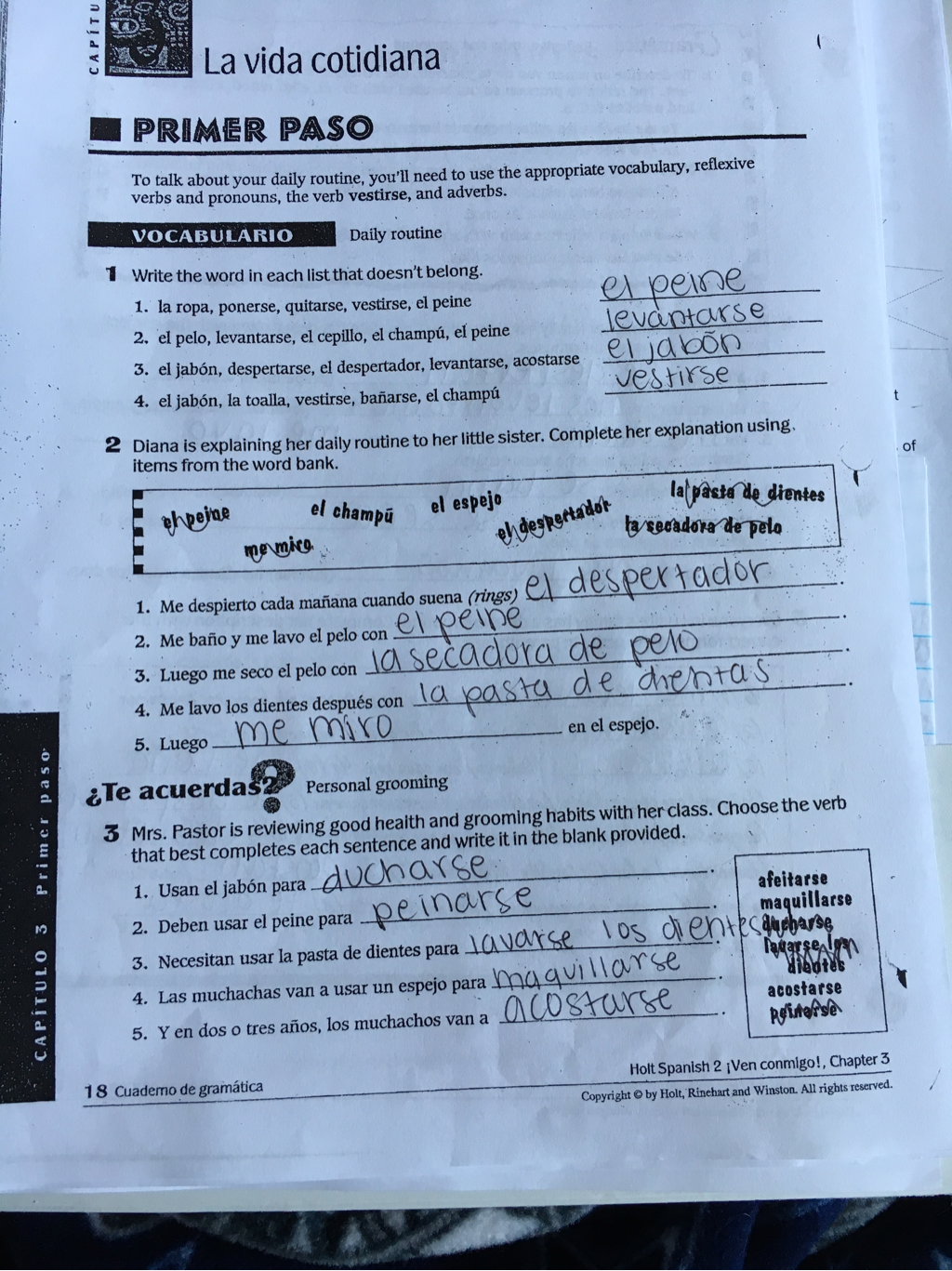
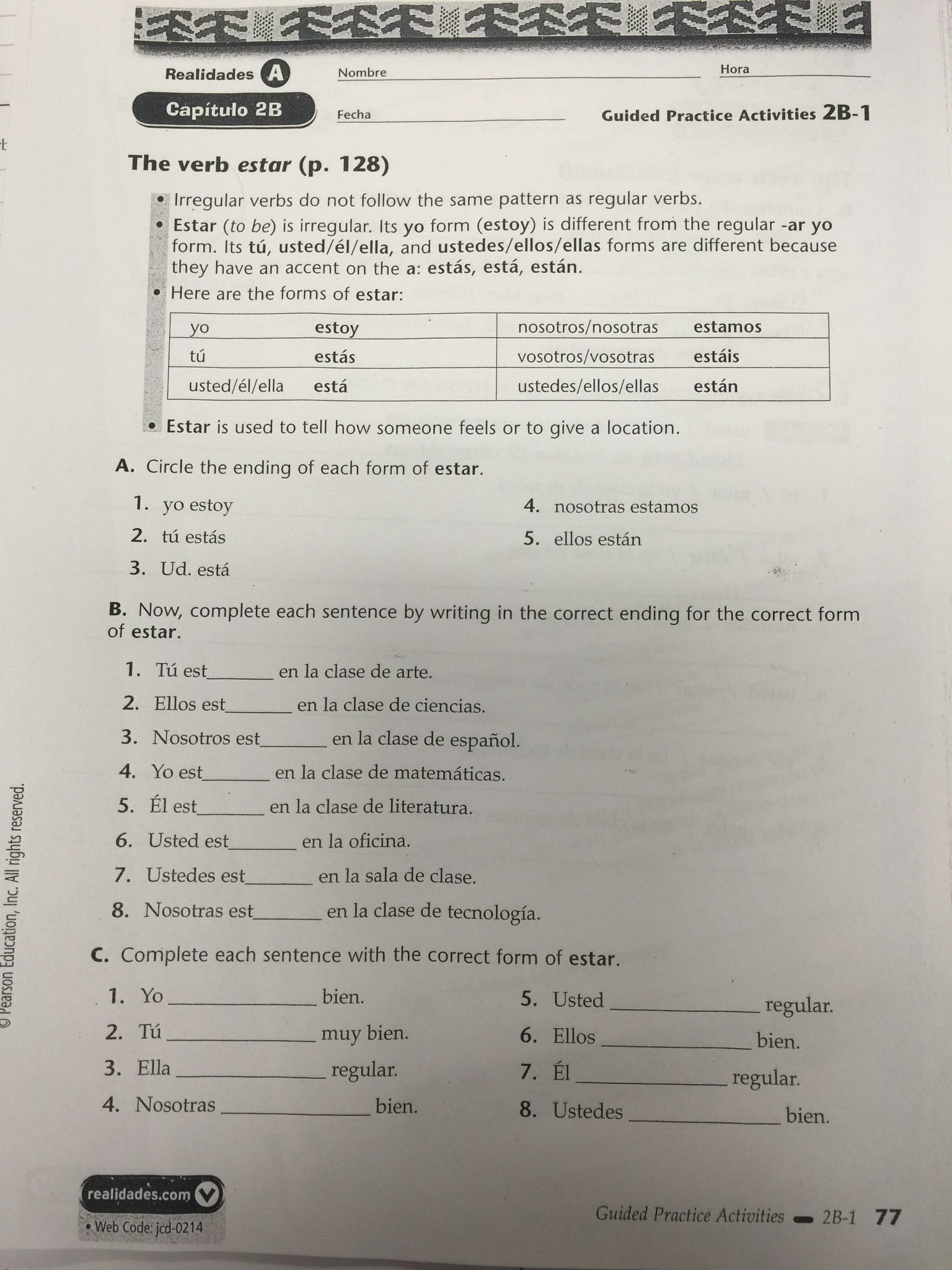
Paso Corto Worksheet Answers provide students and educators with a practical benchmark for evaluating understanding of short answer Spanish exercises, often used in intermediate and advanced language courses. By dissecting these answers, learners gain insight into correct grammar, nuanced vocabulary usage, and contextual interpretation, while teachers can identify common misconceptions and tailor future instruction accordingly.
What is a Paso Corto Worksheet?
A Paso Corto Worksheet is a targeted assessment tool that asks students to produce brief, precise responses—usually one to three sentences—to a variety of prompts. These prompts can range from completing sentence fragments, translating phrases, to offering concise explanations of cultural concepts. The “Paso Corto” format, meaning “short step,” encourages concise thinking and rapid recall, mirroring real-life conversational demands.
Common Types of Questions
- Fill‑in-the-blank: Students supply missing verbs or adjectives to complete a sentence.
- Translate short clauses: A single phrase is rendered into Spanish or English, testing lexical accuracy.
- Contextual interpretation: A scenario is presented, and students provide an appropriate short response.
- Grammar focus: Questions emphasize tense agreement, gender rules, or preposition usage.
Why Paso Corto Worksheet Answers Matter
Answering short prompts effectively requires mastery of key language components. When students produce accurate, well‑formed responses, they demonstrate:
- Grammatical precision: Proper verb conjugation and article agreement.
- Lexical breadth: A rich vocabulary that allows for nuanced expression.
- Contextual awareness: Ability to select the right register or formality level.
These skills are transferable to real-life conversations, academic writing, and professional communication, making Paso Corto worksheets a valuable tool for language proficiency testing.
Analyzing Typical Mistakes
To make the most of the answer key, educators should anticipate frequent errors. Below are common pitfalls and strategies to address them.
1. Verb Conjugation Errors
Spanish verb tense can be a minefield. Learners often confuse simple past forms with preterite or imperfect tense. A well‑crafted answer key shows the correct form and highlights why the chosen tense is appropriate.
2. Gender and Number Agreement
Adjective and article mismatches are frequent. For example, “El libro interesante” versus “La casa interesante.” Answer explanations that focus on gender rules help students internalize these patterns.
3. Preposition Confusion
English and Spanish prepositions don’t always align. A correct answer key will explain, for instance, why “en” is used with “en casa” but “a” with “a la escuela.”
4. Word Order and Syntax
Spanish sentence structure can differ from English. A good answer set will illustrate the correct order, such as placing adverbs before the main verb for emphasis.
5. Cultural Nuance
Some prompts require knowledge beyond grammar, such as idiomatic expressions or cultural references. Providing explanations for these adds depth to the learning process.
Step‑by‑Step Guide to Using Worksheet Answers Effectively
Below is a practical method to maximize learning from Paso Corto Worksheet Answers.
Step 1: Immediate Self‑Assessment
After completing the worksheet, students should check each answer against the key before any external feedback. This self‑scoring encourages ownership and quick error correction.
Step 2: Analyze Incorrect Responses
For every wrong answer, students must identify the root cause: was it a lexical gap, a grammatical slip, or a misunderstanding of the prompt? A structured reflection sheet can help record these insights.
Step 3: Consolidate Rules
Compile a personal rule‑book: write down the grammatical rule that led to each error. For instance, note that the preterite is used for completed actions that occurred at a specific time.
Step 4: Practice with Variation
Generate new prompts based on the same rule. If the mistake involved gender agreement, create sentences with different nouns and adjectives to reinforce the pattern.
Step 5: Peer Discussion
Encourage small groups to compare answers. Explaining the rationale behind the correct answer fosters deeper understanding and collective problem‑solving.
Step 6: Teacher Feedback Sessions
In a classroom setting, the instructor can review selected answers collectively, highlighting common themes and providing corrective feedback. Visual aids, such as a chart showing verb conjugation patterns, enhance clarity.
Real-World Application Scenarios
To motivate learners, connect Paso Corto answers to everyday contexts.
Business Email Drafting
Short, precise Spanish sentences are essential in professional correspondence. A worksheet focusing on polite requests can translate directly into crafting email openings like “Le agradecería si pudiera…”
Travel Planning
Questions that ask for concise directions or itineraries mirror real travel conversations. For example, “¿Cómo llego a la estación?” can be answered quickly with “Siga recto y gire a la derecha.”
Academic Reporting
Research summaries often require succinct explanations. Using Paso Corto formats helps students practice summarizing complex findings into a few impactful sentences.
Social Media Communication
Platforms such as Instagram or Twitter demand brevity. Exercises that involve crafting catchy captions in Spanish encourage students to convey meaning efficiently.
Integrating Technology with Worksheet Answers
Modern digital tools can enhance the learning experience.
Digital Flashcards
Convert incorrect answers into flashcards with the question on one side and the correct response on the other. Spaced repetition systems reinforce retention.
Online Quiz Platforms
Platforms like Quizlet or Google Forms allow teachers to create dynamic worksheets that auto‑grade, offering instant feedback. This immediate correction speeds up the learning cycle.
Language Learning Apps
Apps such as Duolingo or Babbel incorporate short-answer style questions. Students can use their Paso Corto worksheet answers to cross‑check and ensure consistency across resources.
Creating Your Own Paso Corto Worksheets
Teachers can customize worksheets to align with curriculum goals.
Determine Skill Focus
Choose whether the worksheet targets verb tenses, adjective agreement, or cultural references. Clear objectives improve relevance.
Develop Prompt Diversity
Mix sentence structures: declarative, interrogative, and imperative. This variety encourages adaptability.
Include Realistic Contexts
Embed scenarios students might encounter: ordering food, asking for directions, or expressing emotions. Contextual relevance increases engagement.
Provide Gradual Difficulty
Start with simple prompts and progress to complex sentences that require multiple grammatical rules. Scaffold learning to maintain confidence.
Answer Key Detailing
Beyond a single correct answer, include brief explanations: “El verbo ‘comer’ in the present tense for ‘yo’ is ‘como’ because it follows the regular -er pattern.” Such annotations deepen comprehension.
Assessing Progress Over Time
Regular use of Paso Corto Worksheet Answers allows for longitudinal tracking.
Baseline Testing
Administer an initial worksheet at the beginning of a course. Record performance to establish a starting point.
Midpoint Evaluation
After a few weeks, re‑test with a new worksheet covering similar concepts. Compare scores to identify growth or lingering gaps.
Final Assessment
Conclude with a comprehensive worksheet that integrates all targeted skills. A high score indicates readiness for more complex tasks.
Self‑Reflection Journals
Encourage students to write a short reflection after each worksheet, noting which errors they corrected and how their confidence changed. This metacognitive practice solidifies learning.
Common Myths Debunked
There are several misconceptions about short‑answer worksheets. Addressing them clears the path to effective study.
Myth 1: Short Answers Lack Depth
Contrary to this belief, concise answers demand precision and often reveal a deeper mastery of grammar.
Myth 2: Only Advanced Students Need These
Even beginners benefit by practicing quick retrieval of vocabulary and basic structures, building a strong foundation.
Myth 3: The Answer Key is the Final Destination
It should be a learning tool, not a final grade. Understanding *why* an answer is correct is vital.
Conclusion
Paso Corto Worksheet Answers serve as a powerful bridge between classroom practice and real‑world language proficiency. By carefully analyzing each answer, identifying common errors, and applying corrective strategies, both students and educators can accelerate learning. Incorporating real‑life scenarios, leveraging technology, and consistently assessing progress ensures that the short‑step format remains a dynamic, engaging, and highly effective component of any Spanish curriculum. With these tools and techniques, learners will not only master concise expressions but also gain confidence to navigate any Spanish‑speaking environment with clarity and precision.







Related posts of "Paso Corto Worksheet Answers"
