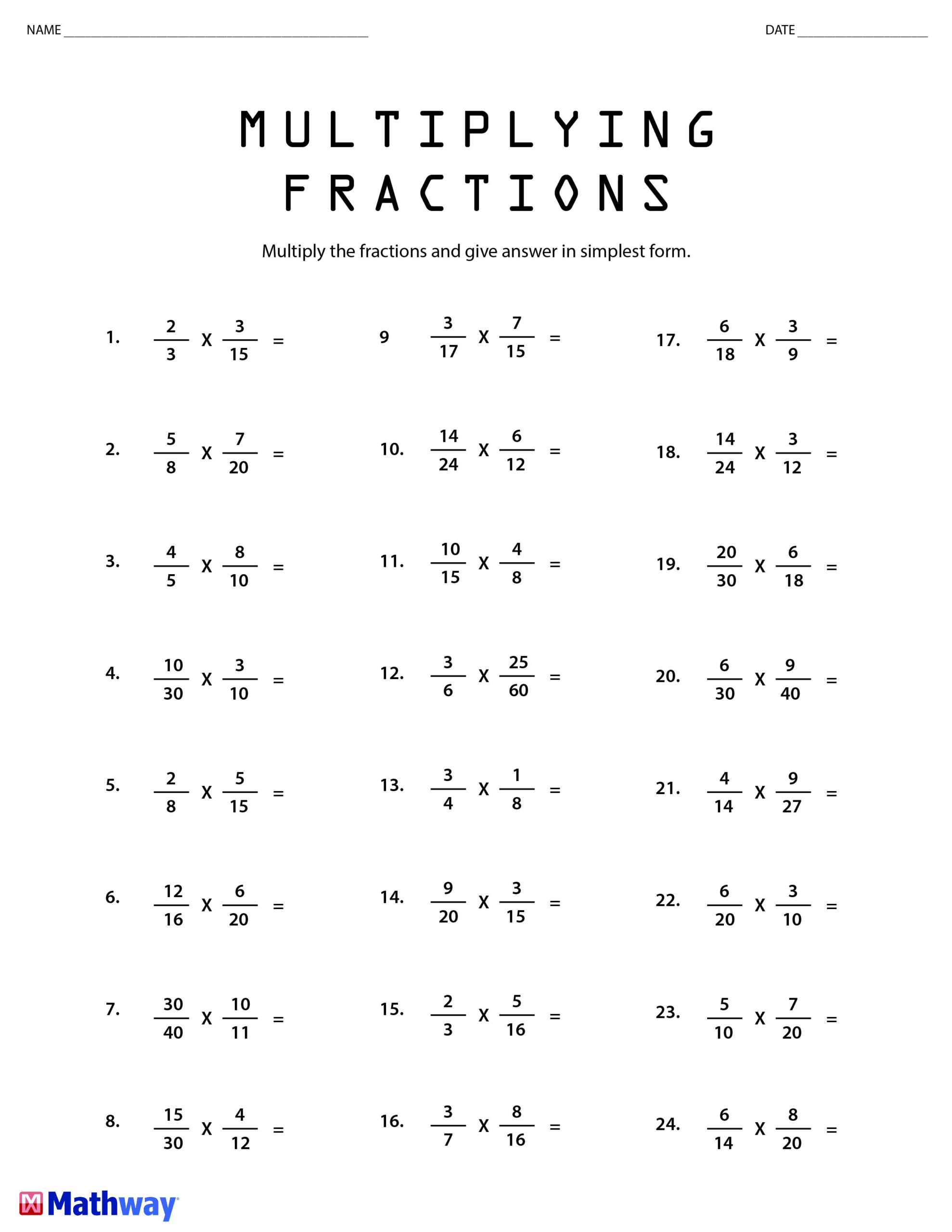
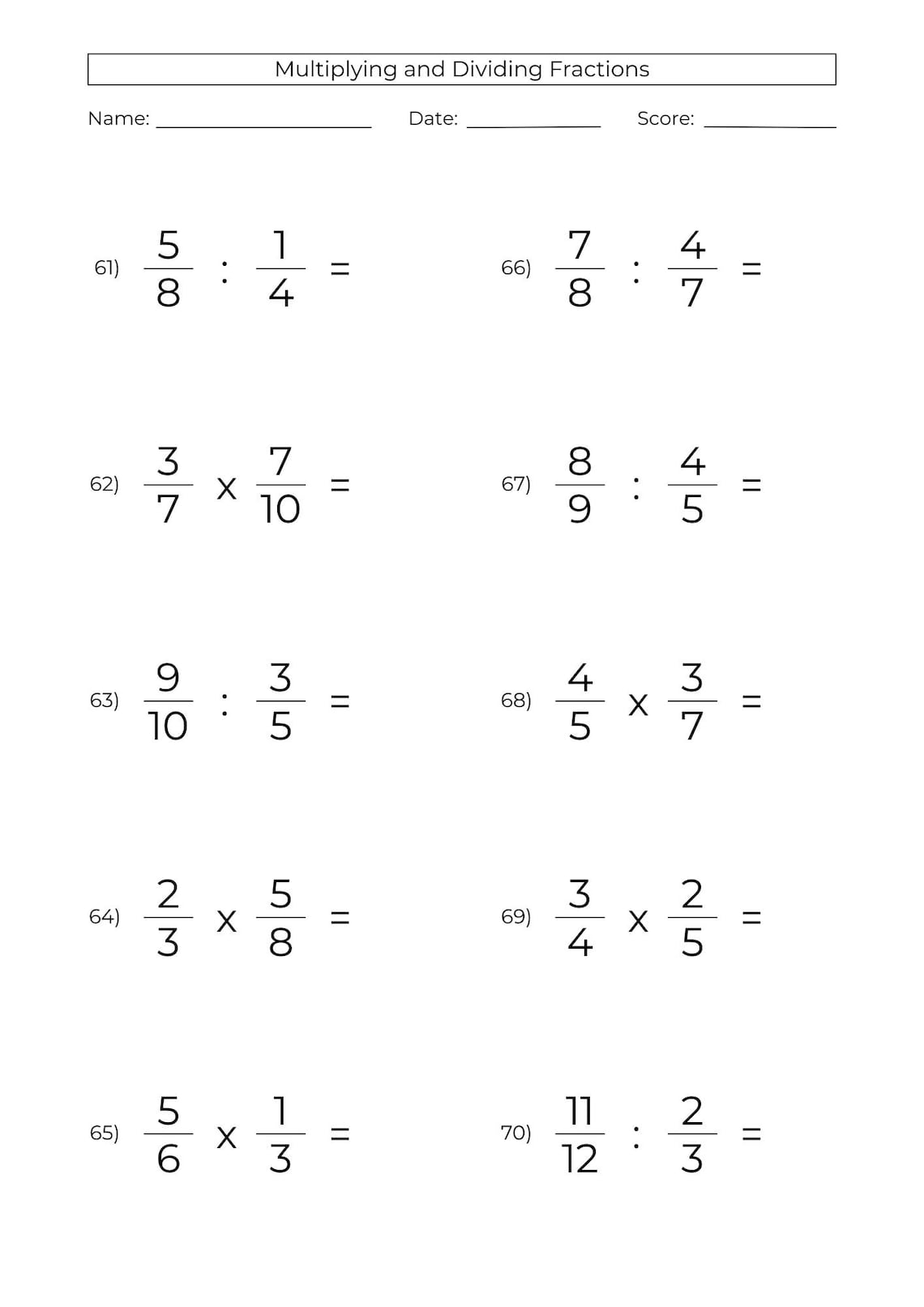
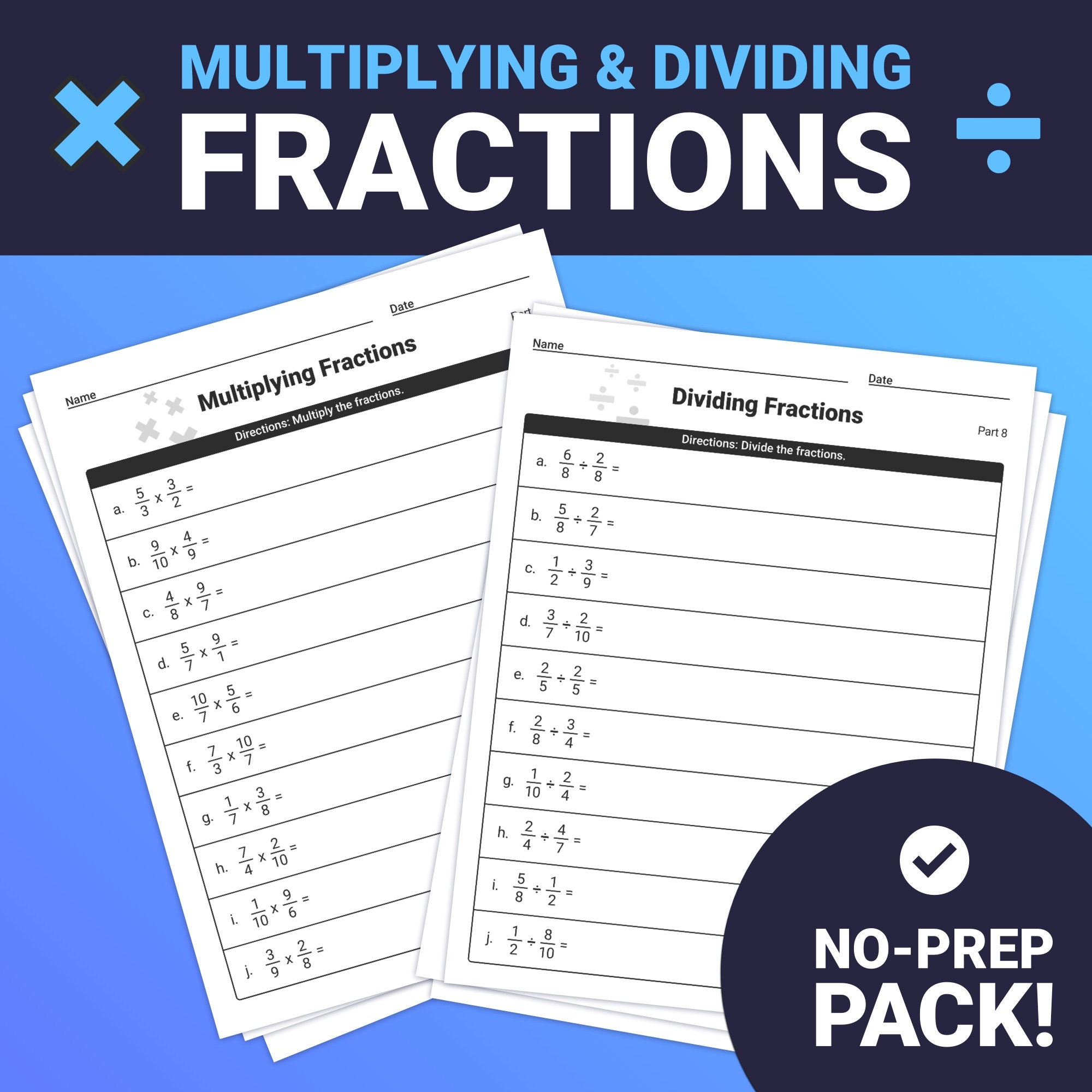
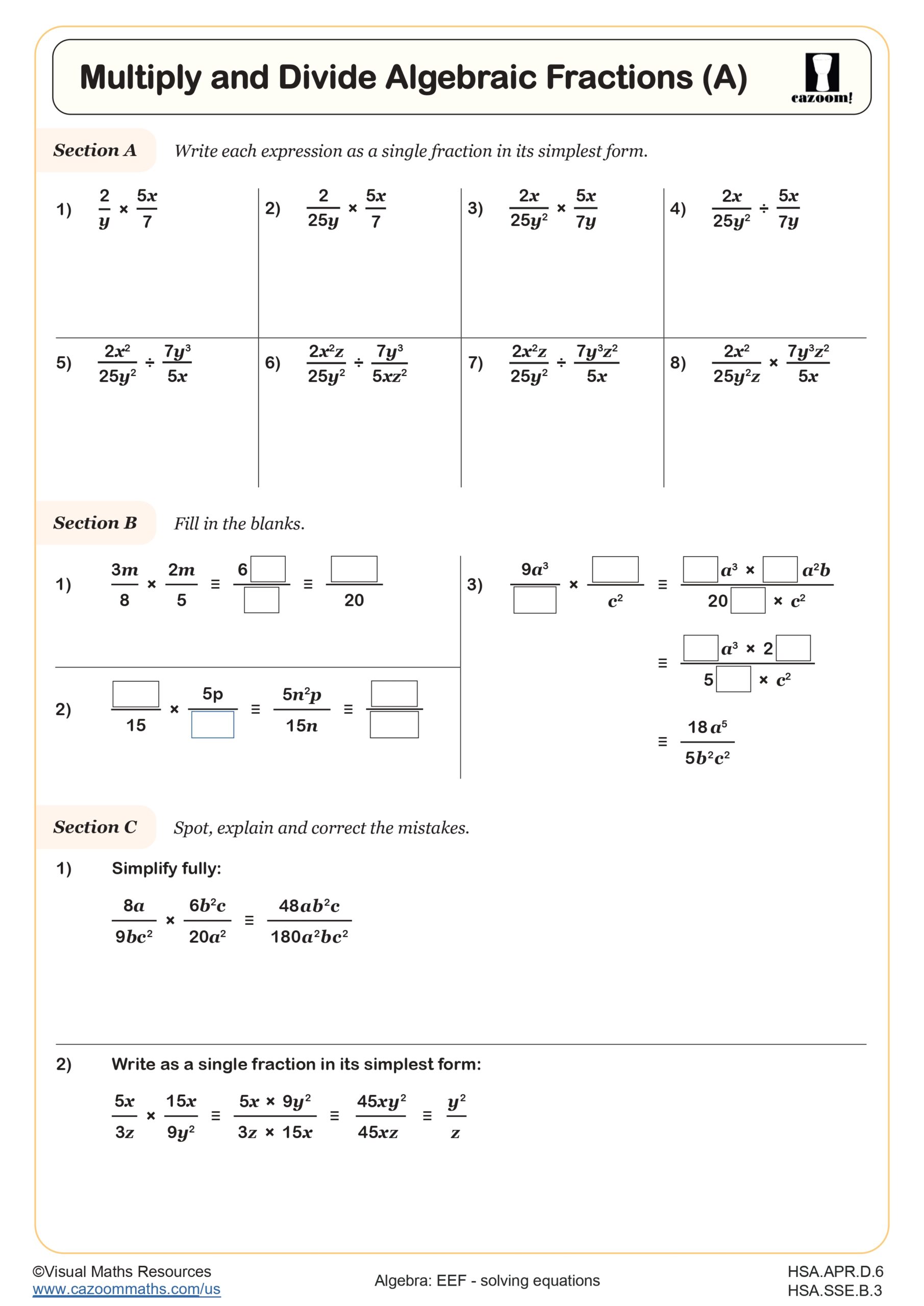
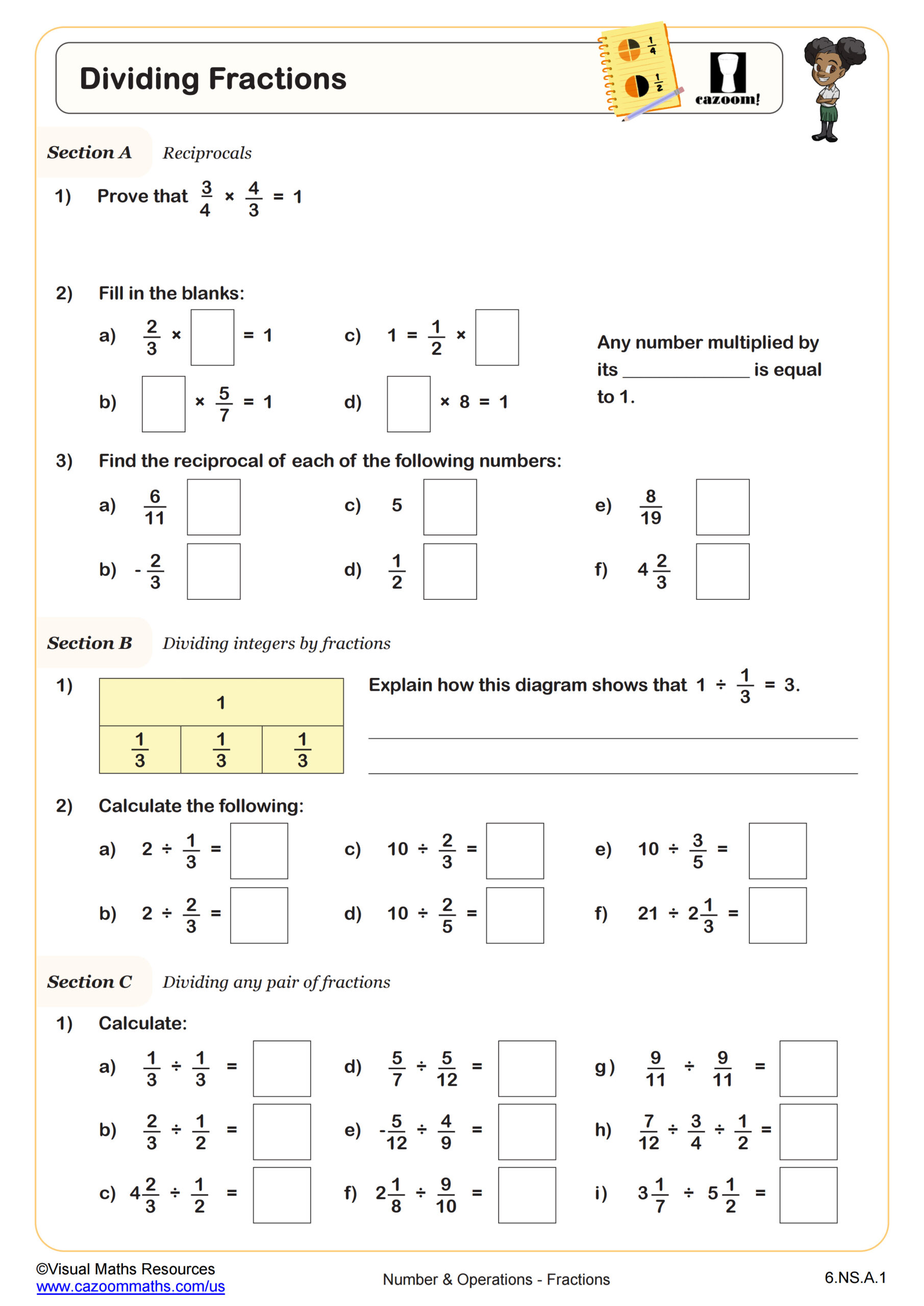
Multiplying And Dividing Fractions Worksheets are a cornerstone of elementary and middle‑school mathematics, offering students the hands‑on practice they need to transform abstract concepts into confident problem‑solving skills. Whether you are a teacher looking to reinforce curriculum standards, a parent seeking supplemental material, or a homeschooling parent crafting a personalized math plan, well‑designed worksheets can bridge the gap between theory and mastery. This guide explores why these worksheets matter, how to create effective ones, and the best instructional strategies to ensure learners not only complete the problems but truly understand the underlying principles of fraction operations.
Why Mastering Fractions Matters
Real‑World Applications
Fractions are far more than numbers on a worksheet; they appear in cooking, construction, budgeting, and even sports statistics. When a recipe calls for 3/4 cup of sugar or a carpenter measures 5/8 of a board, the ability to multiply or divide fractions determines success. By practicing with worksheets that mirror everyday scenarios, students develop the confidence to apply math in real life, turning classroom learning into a practical toolkit.
Building a Strong Math Foundation
Understanding how to manipulate fractions lays the groundwork for algebra, geometry, and higher‑level calculations involving ratios, proportions, and rates. Mastery of multiplying and dividing fractions reinforces concepts such as inverse operations, the distributive property, and the importance of simplifying results. This foundational fluency reduces anxiety when students encounter more complex topics and supports long‑term academic achievement.
What Makes a Good Fractions Worksheet
Clear Instructions and Layout
A top‑tier worksheet begins with concise, jargon‑free directions that guide students step by step. Visual cues like highlighted fractions, bolded verbs (“multiply,” “divide”), and ample spacing between problems prevent confusion and encourage neat work. Including a brief example at the top demonstrates the expected process and sets a tone of clarity.
Gradual Difficulty Progression
Effective worksheets sequence problems from simple to challenging. Starting with like denominators, moving to unlike denominators, and then introducing mixed numbers or word problems creates a scaffolded learning path. This progression respects cognitive load, allowing students to build confidence before tackling more demanding calculations.
Visual Aids and Manipulatives
Incorporating visual representations—such as fraction bars, area models, or circle diagrams—helps visual learners internalize the multiplication and division process. When a worksheet prompts students to shade a portion of a shape or to draw an equivalent fraction, it reinforces conceptual understanding beyond rote computation.
Key Strategies for Multiplying Fractions
Understanding the Concept
Multiplying fractions is essentially finding a part of a part. If you have 2/3 of a pizza and you want to know what 1/4 of that portion looks like, you multiply 2/3 by 1/4. This mental model—“fraction of a fraction”—guides students to see the operation as a logical extension of whole‑number multiplication.
Step‑by‑Step Process
1. Multiply the numerators. Take the top numbers of each fraction and multiply them together.
2. Multiply the denominators. Do the same with the bottom numbers.
3. Simplify the result. Reduce the product to its lowest terms by dividing numerator and denominator by their greatest common divisor.
4. Check your work. Verify that the answer makes sense in the context of the problem.
Common Pitfalls
Students often forget to simplify, leading to answers like 8/12 instead of the reduced 2/3. Another frequent error is treating multiplication as addition—adding numerators or denominators separately. Worksheets that include “simplify after you finish” prompts and “common mistake” sections can help learners self‑correct.
Effective Techniques for Dividing Fractions
Inverting and Multiplying
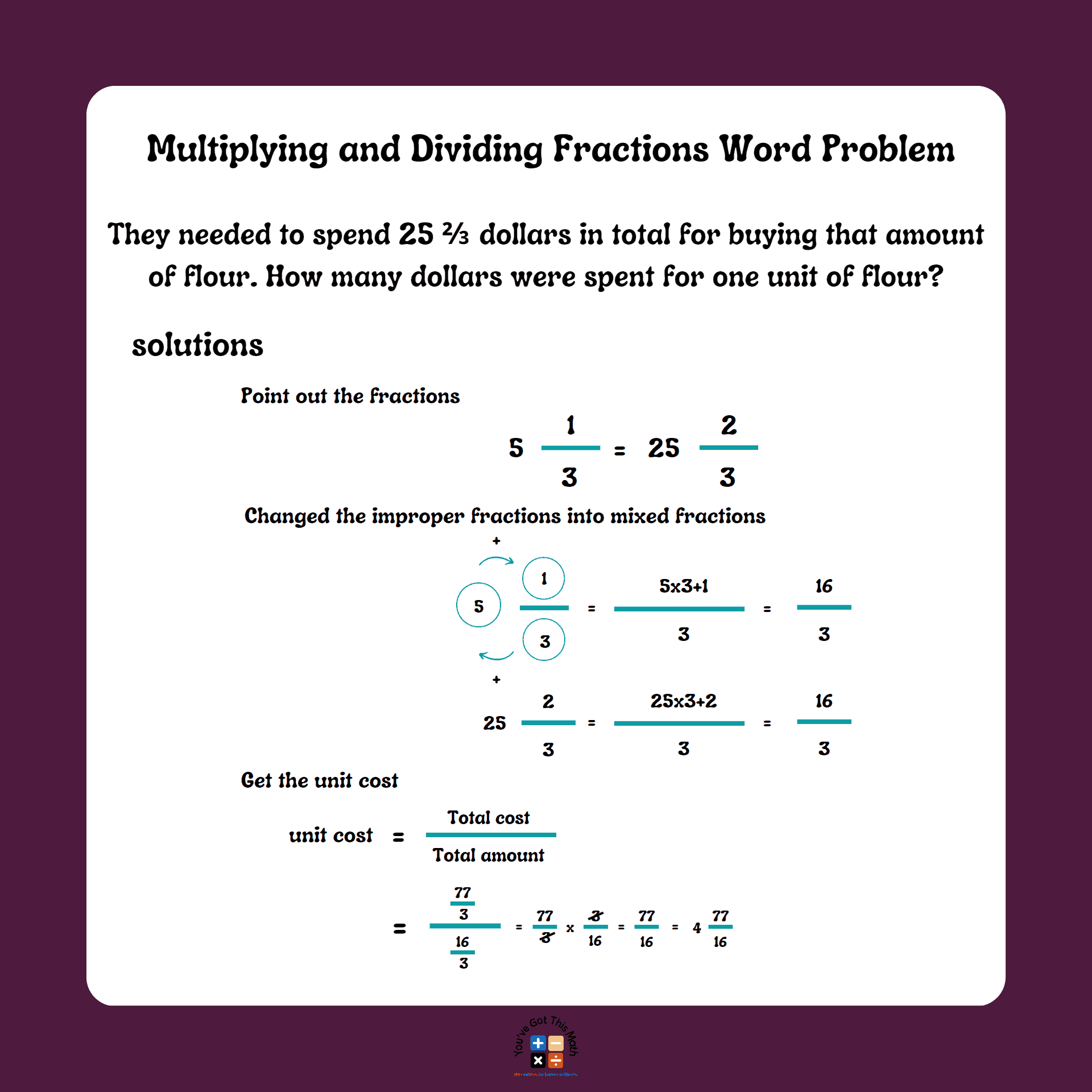
Dividing by a fraction is the same as multiplying by its reciprocal. When you divide 5/6 by 2/3, you flip the second fraction to 3/2 and then multiply: (5/6) × (3/2). This “invert and multiply” rule simplifies the division process and aligns it with the multiplication strategy already mastered.
Step‑by‑Step Walkthrough
1. Identify the divisor. The fraction you are dividing by.
2. Find its reciprocal. Swap the numerator and denominator.
3. Multiply the original fraction by the reciprocal. Follow the multiplication steps outlined earlier.
4. Simplify the final fraction. Reduce to lowest terms for a clean answer.
Mistake Prevention
A common mistake is to multiply the numerators and denominators without flipping the divisor. Including a reminder box—“Remember: Division = Multiply by the Reciprocal”—on each worksheet reduces this error. Additionally, providing a mix of whole numbers, proper fractions, and mixed numbers ensures students can apply the rule across varied contexts.
Designing Your Own Worksheets
Choosing Appropriate Problems
Select problems that align with the learner’s current level while nudging them toward the next challenge. For beginners, use fractions with denominators of 2, 4, and 8. For advanced learners, incorporate uncommon denominators, improper fractions, and multi‑step word problems that require both multiplication and division.
Incorporating Word Problems
Word problems contextualize abstract calculations. Example: “A garden plot is 3/5 of an acre. If a gardener plants vegetables on 2/3 of the plot, how many acres are used for vegetables?” This type of question forces students to translate language into mathematical expressions, reinforcing comprehension.
Using Technology and Printable Resources
Digital platforms allow for interactive worksheets where students can drag and drop fraction bars, receive instant feedback, and track progress. Printable PDFs, however, remain valuable for offline practice and for teachers who prefer tactile resources. Combining both formats maximizes accessibility and engagement.
Tips for Using Worksheets in the Classroom
Differentiation and Grouping
Assign worksheets at varying difficulty levels based on student assessment data. Small groups can work on tailored sheets, fostering peer support. Rotation stations—one for multiplication, another for division, and a third for mixed review—keep the classroom dynamic and cater to diverse learning styles.
Feedback and Assessment
Provide immediate, specific feedback. Highlight where a student correctly applied the “invert and multiply” rule, or note where simplification was missed. Use rubric‑based scoring that rewards process as well as final answer, encouraging students to focus on methodology.
Engaging Students with Games
Turn worksheet practice into a game by using timed challenges, “fraction bingo,” or collaborative board games where each correct answer moves a piece forward. Gamified elements increase motivation and make repetitive practice feel purposeful.
Frequently Asked Questions
How Often Should Students Practice?
Consistent, short practice sessions—10 to 15 minutes daily—are more effective than infrequent, lengthy drills. Regular exposure reinforces neural pathways, making fraction operations feel automatic over time.
Can Worksheets Replace Hands‑On Activities?
Worksheets complement, not replace, hands‑on learning. Manipulatives like fraction tiles and real‑world cooking projects deepen conceptual understanding, while worksheets solidify procedural fluency. A balanced approach yields the best results.
What Age Is Appropriate?
Students typically encounter multiplying and dividing fractions in 5th or 6th grade, but advanced learners may start earlier, and remediation can occur later. The key is to match worksheet complexity to the learner’s readiness, not strictly to age.
Conclusion
Well‑crafted Multiplying And Dividing Fractions Worksheets serve as powerful tools for turning abstract fraction concepts into concrete skills. By selecting clear, progressive problems, integrating visual aids, and employing proven instructional strategies—such as invert‑and‑multiply for division and step‑by‑step multiplication—educators can boost confidence and competence. Designing personalized worksheets, blending digital and printable formats, and embedding the practice within engaging classroom activities ensures that every learner, from novice to advanced, experiences meaningful growth. Consistent, thoughtful practice not only prepares students for upcoming algebraic challenges but also equips them with the mathematical confidence to navigate everyday situations that rely on fractions.








Related posts of "Multiplying And Dividing Fractions Worksheets"
