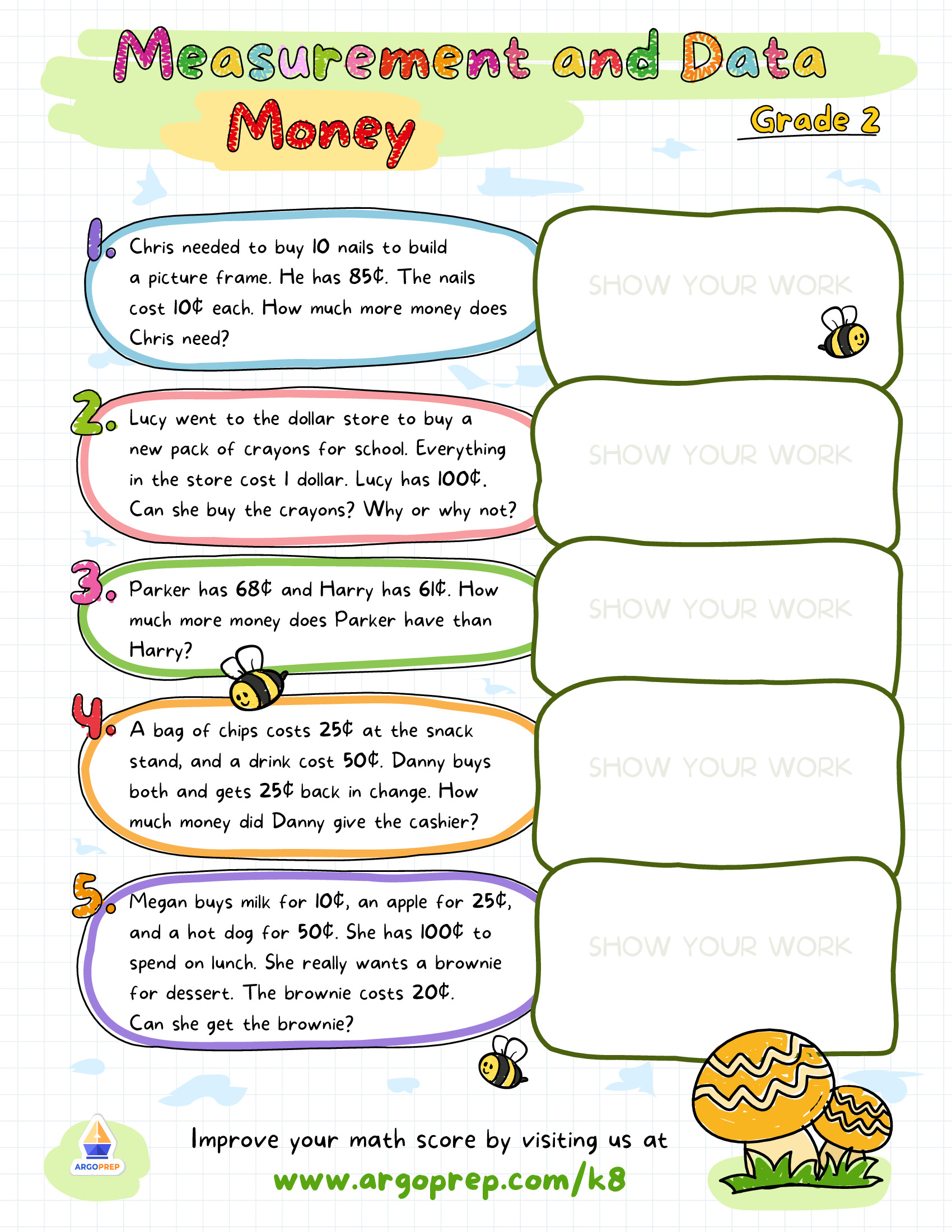
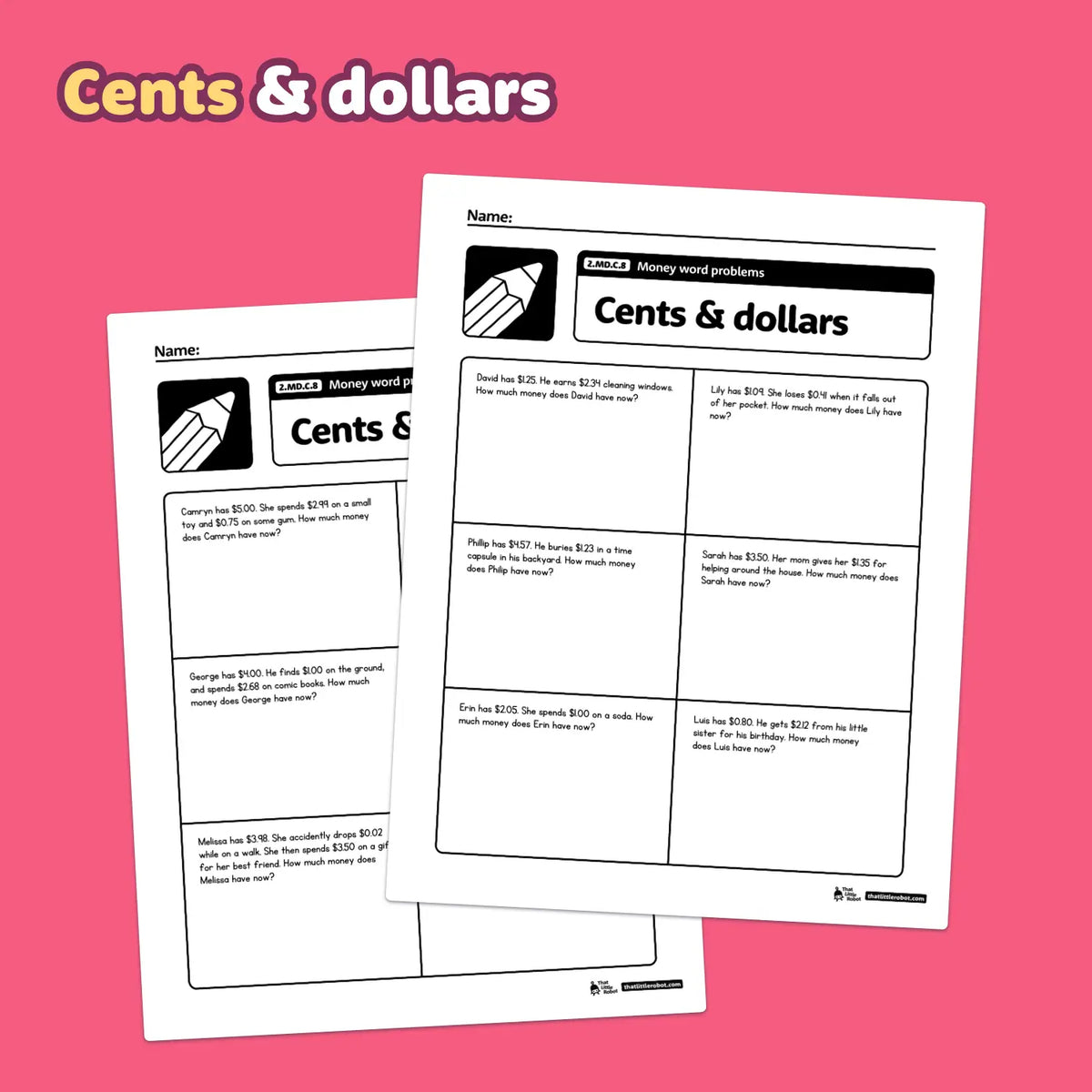
Money Word Problems Worksheets have become my secret weapon for turning everyday pennies into powerful learning moments, and I’m thrilled to share why they matter so much for second‑grade math mastery. When a child sees a picture of a lemonade stand or a grocery checkout, the abstract numbers on a page instantly become real‑world decisions, and that spark of relevance fuels both confidence and curiosity. In this post I’ll walk you through the why, what, and how of selecting, using, and extending these worksheets so that your child—or your classroom—can practice counting, addition, subtraction, and even simple budgeting with gusto.
Why Money Word Problems Matter
Money is one of the first concrete concepts kids encounter outside the classroom, and it naturally lends itself to problem‑solving. When children calculate change or compare prices, they are practicing mental math, place value, and estimation—all core standards for 2nd grade. Moreover, money problems develop critical life skills: budgeting, decision‑making, and the ability to interpret financial information. By embedding these skills in engaging stories, worksheets transform rote computation into purposeful practice, which research shows improves retention and transfer to new situations.
Beyond the academic benefits, money word problems also nurture social‑emotional growth. When a student successfully solves a scenario about buying a treat for a friend, they experience a sense of accomplishment and empathy. The narrative format encourages discussion, allowing kids to explain their reasoning, negotiate alternatives, and learn from peers. This collaborative dialogue reinforces mathematical language and builds confidence that extends far beyond the worksheet.
Key Features of Effective Worksheets
An outstanding money word problem worksheet balances clarity, visual appeal, and progressive difficulty. Here are the hallmarks I look for before I hand a sheet to a learner:
- Clear Instructions: Simple, step‑by‑step prompts that tell the student exactly what to do without overwhelming them.
- Relevant Contexts: Scenarios that reflect everyday experiences—shopping, saving for a toy, or planning a party—so the math feels purposeful.
- Visual Supports: Pictures of coins, bills, price tags, and simple charts that help visual learners map numbers to objects.
- Varied Operations: A mix of addition, subtraction, and simple multiplication (e.g., “2 packs of stickers cost $1 each”) to reinforce multiple skills.
- Scaffolded Difficulty: Problems that start with single‑digit sums and gradually introduce two‑digit totals and simple word‑problem structures.
- Answer Keys: Separate, teacher‑friendly solutions that allow for quick checking and targeted feedback.
How to Choose the Right Worksheet for Your Child
Every learner is unique, so matching a worksheet to a child’s current abilities and interests is essential. Consider these factors before you dive in:
Assess Skill Level
Review recent classroom assessments or observe your child’s comfort with basic addition and subtraction. If they can handle sums up to 20 with ease, look for worksheets that introduce two‑digit totals and simple change‑making. If they’re still mastering single‑digit addition, start with problems that involve counting coins only.
Interest Alignment
Kids are more motivated when the storyline resonates with them. A budding chef may love a worksheet about buying groceries, while a budding astronomer might enjoy a space‑theme store. Choose images and contexts that reflect your child’s hobbies to keep engagement high.
Format Preference
Some children thrive with printable PDFs they can color and annotate, while others prefer digital interactive versions that provide instant feedback. Assess whether a static worksheet or an interactive platform fits your teaching style and the child’s learning preferences.
Step‑By‑Step Guide to Using Money Word Problems Worksheets
Even the best worksheet can fall flat without a thoughtful approach. Follow this routine to maximize learning outcomes:
1. Preview the Worksheet
Before handing it over, skim the problems yourself. Identify any vocabulary—like “total,” “change,” or “cost per item”—that might need explicit explanation. Highlight the visual cues that will help your child map numbers to objects.
2. Set the Scene
Read the problem aloud together, using expressive tone to bring the story to life. Ask open‑ended questions such as, “What do you think the character needs to buy?” or “How much money do they start with?” This primes the child to think critically before they start calculating.
3. Model the Process
Demonstrate one example on a separate sheet. Show how to write down the known values, draw a simple diagram (like a coin bank), and perform the arithmetic step‑by‑step. Emphasize the reasoning: “We subtract the cost from the total to find the change.”
4. Guided Practice
Work through the next problem together, prompting the child to verbalize each step. Use manipulatives—actual coins or paper cut‑outs—to make the abstract numbers tangible. Celebrate correct reasoning, even if the final answer needs adjustment.
5. Independent Attempt
Allow the child to tackle the remaining problems solo, reminding them to refer back to the model if they get stuck. Encourage them to write a brief sentence explaining their answer, reinforcing mathematical language.
6. Review and Reflect
After completion, compare answers using the answer key. Discuss any errors calmly: “I see we subtracted 7 instead of 5—where did that happen?” This reflective conversation turns mistakes into learning moments.
Creative Extensions and Real‑World Connections
To keep the momentum alive, extend the worksheet experience beyond the page. Here are a few ideas I’ve successfully tried with my own students:
- Classroom Market: Set up a mini‑store with price tags and play money. Have students use the same worksheet problems to purchase items, reinforcing the math in a hands‑on way.
- Saving Goals Chart: After solving a problem about earning $10 for a toy, let the child create a visual savings chart. Track progress over weeks, integrating addition and subtraction in a personal context.
- Family Budget Night: Involve parents by assigning a simple family budgeting task—like planning a grocery list within a $20 limit—and have the child use worksheet strategies to stay within budget.
- Digital Simulations: Use free online games that mimic shopping experiences, allowing children to apply the same problem‑solving steps in a virtual environment.
Common Mistakes and How to Fix Them
Even seasoned learners stumble, and recognizing patterns helps you intervene quickly. Below are frequent errors and corrective strategies:
Miscalculating Change
Kids often subtract the wrong amount or forget to account for coins. Reinforce the concept of “what’s left over” by using a two‑column chart: one for “Total Money” and one for “Cost.” Subtract row by row, checking each coin denomination.
Skipping the Story
When children jump straight to the numbers, they miss contextual clues. Prompt them to underline key details—like “each candy costs $2” or “she has three quarters”—before writing equations.
Ignoring Units
Confusion between dollars and cents can lead to inaccurate answers. Emphasize the placement of the decimal point and practice converting cents to dollars with simple examples.
Over‑reliance on Guesswork
If a child guesses an answer, they miss the learning opportunity. Encourage them to check their work using an alternative method, such as counting up from the cost to the total to verify change.
Tips for Parents and Teachers
Here are my top recommendations to make money word problem worksheets a seamless part of everyday learning:
- Integrate Daily Talk: Mention money concepts in regular conversations—“We have $5 left after buying milk”—to reinforce the math naturally.
- Use Real Coins: Even a few pennies, nickels, dimes, and quarters can turn abstract numbers into tactile experiences.
- Celebrate Effort: Praise the process—“You figured out how many quarters you needed”—rather than just the correct answer.
- Keep Sessions Short: Fifteen‑minute focused practice keeps attention high and prevents fatigue.
- Document Progress: Keep a simple log of completed worksheets and observed skill growth to celebrate milestones and plan next steps.
Conclusion
Money word problem worksheets are more than a set of printable pages; they are gateways to real‑world math, confidence building, and essential life skills. By choosing age‑appropriate, visually engaging worksheets, guiding students through a clear problem‑solving routine, and extending learning into everyday experiences, you empower children to see numbers as tools they can use daily. Embrace the personal stories, celebrate each small victory, and watch as your second‑grader transforms from hesitant calculator to savvy young spender—ready to tackle any monetary challenge that comes their way.






Related posts of "Money Word Problems Worksheets"
