Mole Worksheet provides a structured way for students and professionals alike to master one of the most essential concepts in chemistry: the mole. By working through carefully designed practice problems, learners can translate between atoms, molecules, and macroscopic amounts, unlocking the ability to conduct experiments, synthesize new materials, and solve real‑world chemical problems.
Understanding Moles in Chemistry
What Is a Mole?
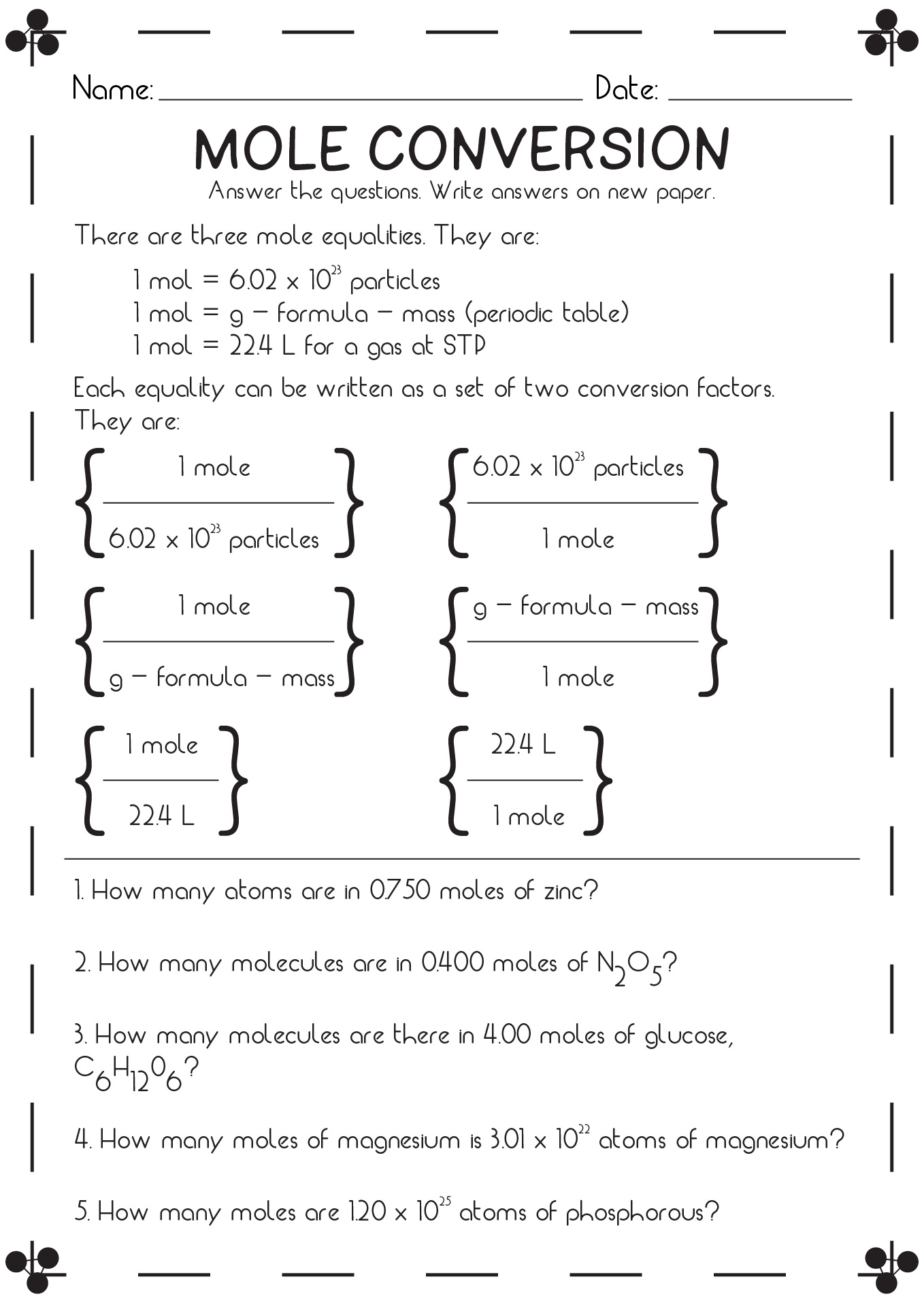
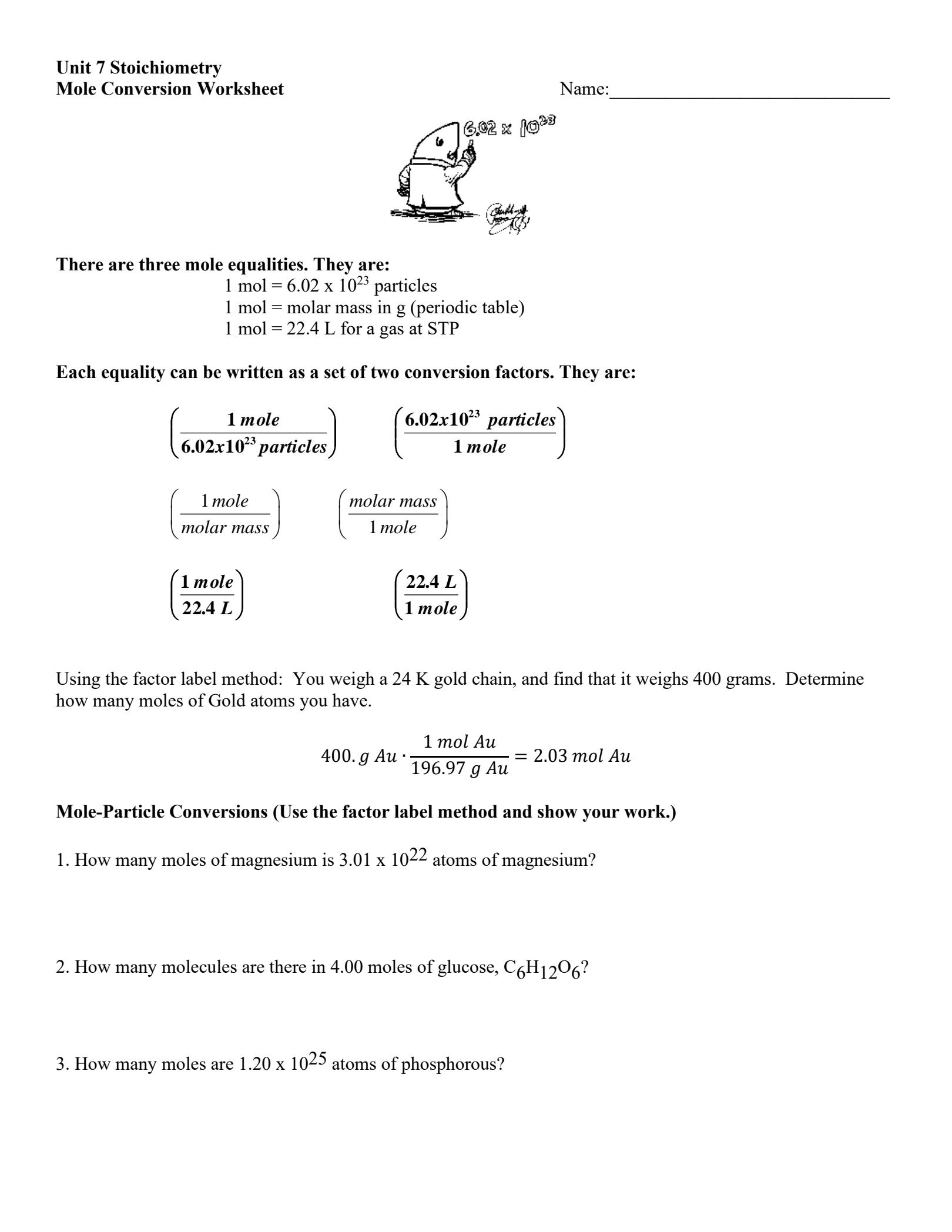
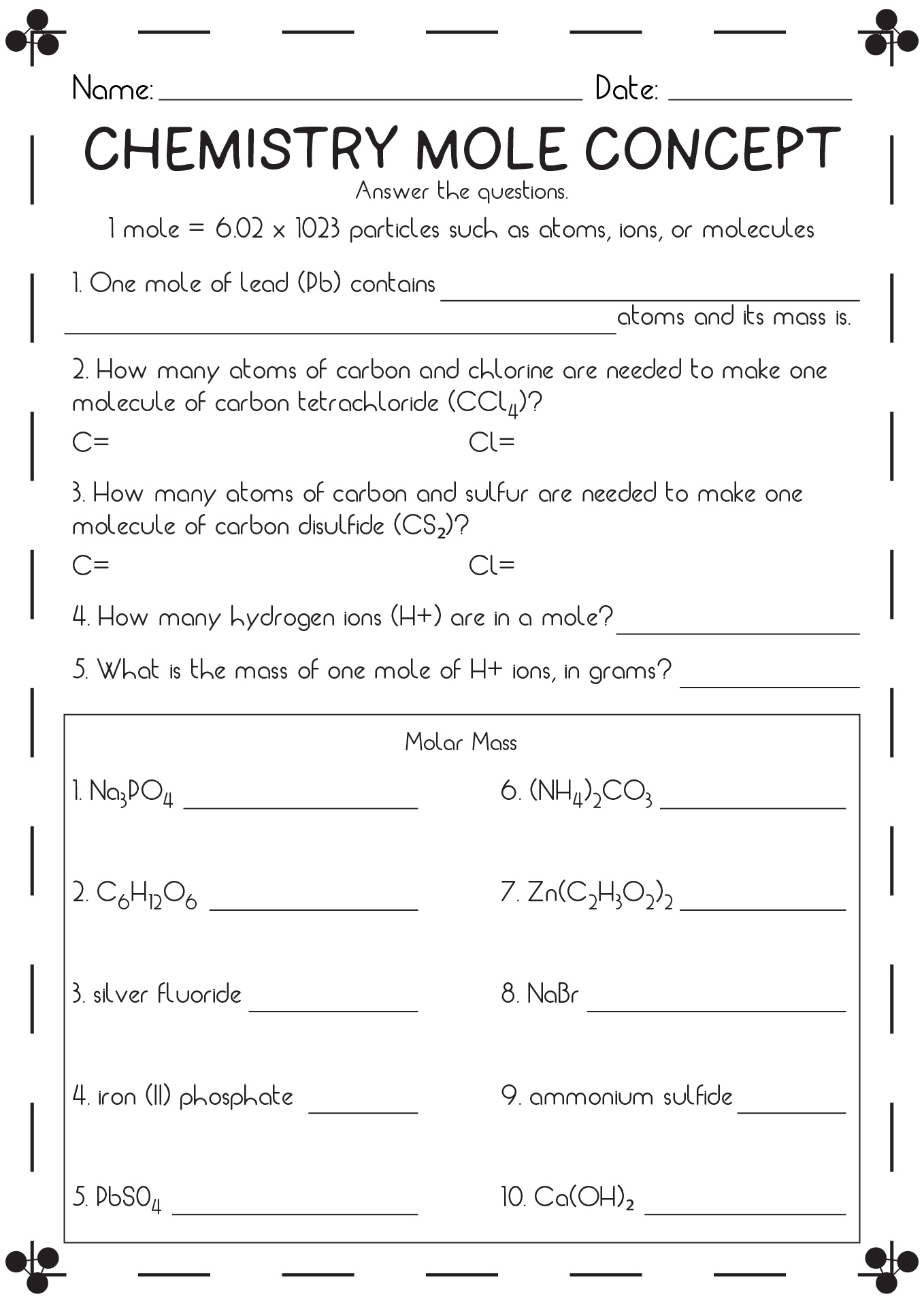
In chemistry, a mole is a counting unit that bridges the microscopic world of atoms with the macroscopic world we can measure in the lab. One mole equals exactly 6.022 × 10²³ elementary entities—whether they are atoms, ions, molecules, or electrons. This number, known as Avogadro’s number, allows chemists to relate mass to quantity in a way that is both precise and intuitive.
Why Moles Matter
Without the mole, it would be nearly impossible to determine how much of a substance is required for a reaction, how much product to expect, or how many moles of gas are produced under given conditions. Moles also enable the use of stoichiometry, the practice of calculating the relative amounts of reactants and products in a chemical reaction.
Key Relationships Involving Moles
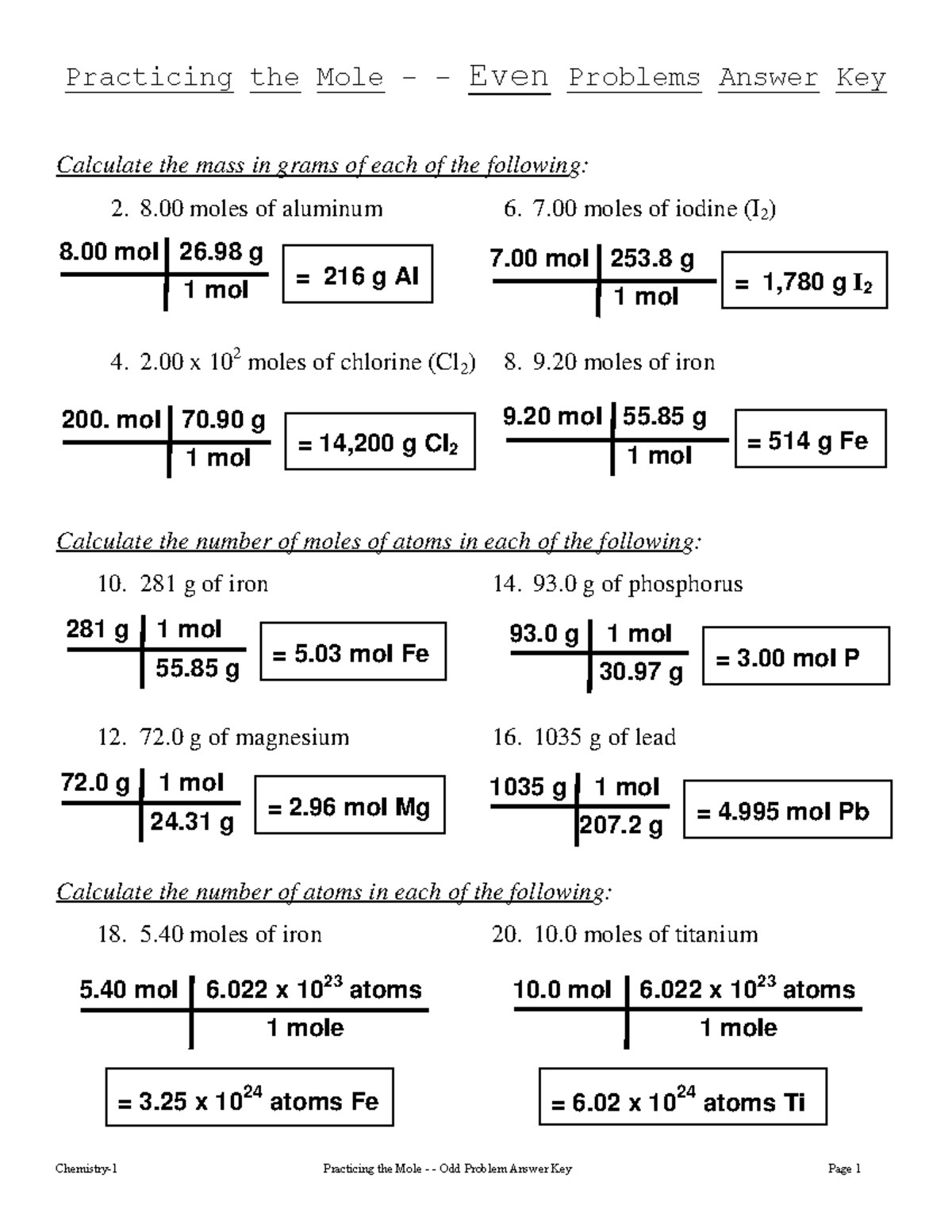
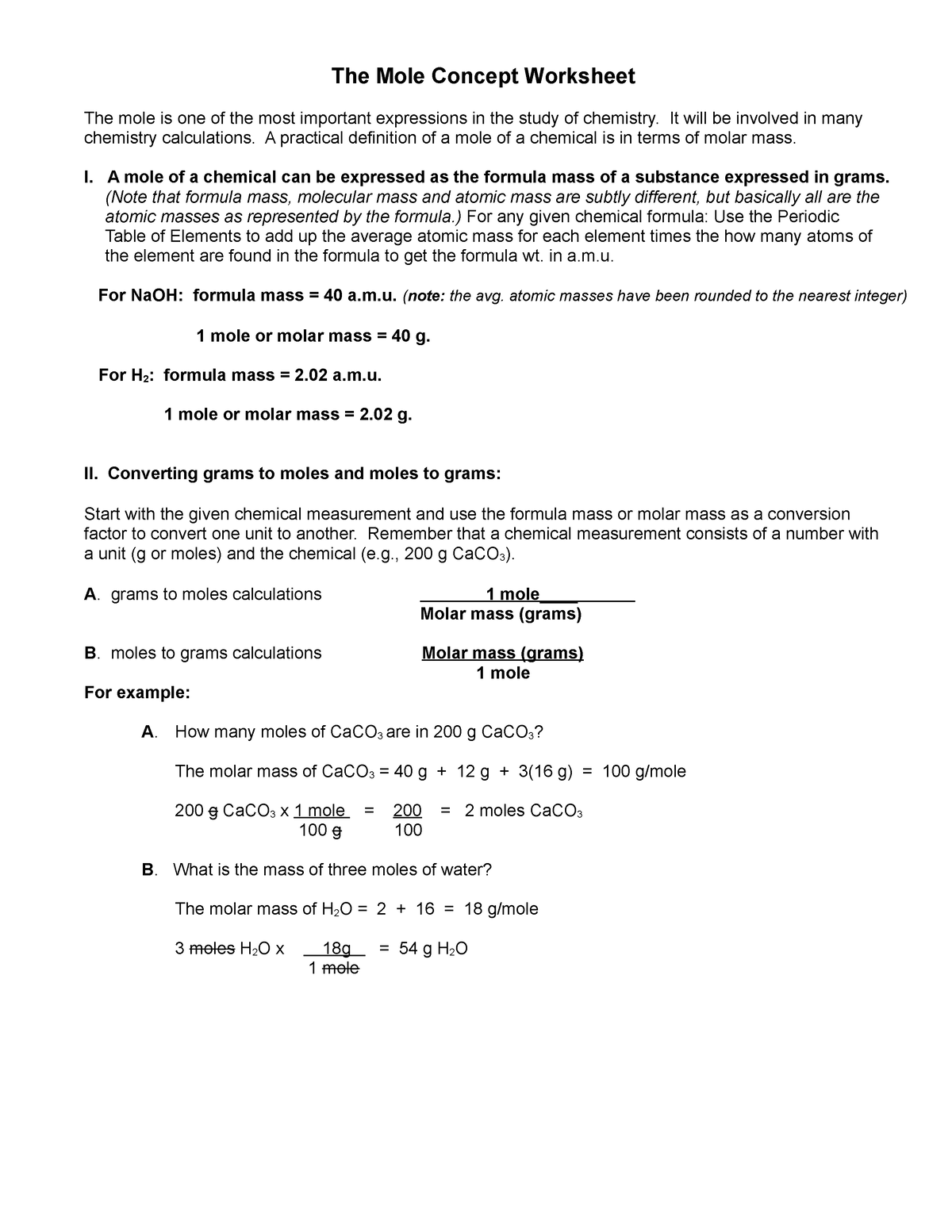
- Mass (g) = Number of Moles × Molar Mass (g mol⁻¹)
- Number of Moles = Mass (g) ÷ Molar Mass (g mol⁻¹)
- Number of Molecules = Number of Moles × Avogadro’s Number (6.022 × 10²³)
- Volume of Ideal Gas (L) = Number of Moles × 0.0821 L·atm mol⁻¹ K⁻¹ × Temperature (K) ÷ Pressure (atm)
Designing an Effective Mole Worksheet
Identify Core Objectives
A well‑crafted worksheet should target specific learning goals. For a mole worksheet, the primary objectives are:
- Converting between mass and moles.
- Using molar mass to find the amount of a substance.
- Applying stoichiometric relationships to solve reaction problems.
- Calculating gas volumes under various temperature and pressure conditions.
Progressive Difficulty Levels
To keep students engaged, arrange problems from simple calculations to more complex scenarios. Begin with straightforward mass‑to‑mole conversions, then introduce multi‑step stoichiometry, and finally present real‑world case studies such as pharmaceuticals or environmental analysis.
Real‑World Contexts
Embedding context helps learners see the relevance of mole calculations. Consider these examples:
- Calculating the amount of acetaminophen needed to produce a certain dose for a child.
- Determining how much hydrogen gas is produced when magnesium reacts with acid.
- Estimating the mass of copper required to deposit a thin film in microfabrication.
Incorporating Visual Aids
Graphs, tables, and chemical equations enhance comprehension. A sample worksheet might include:
- A table of common compounds with their molar masses.
- An equation of a balanced chemical reaction.
- A bar chart comparing theoretical vs. experimental yields.
Sample Mole Worksheet Problems
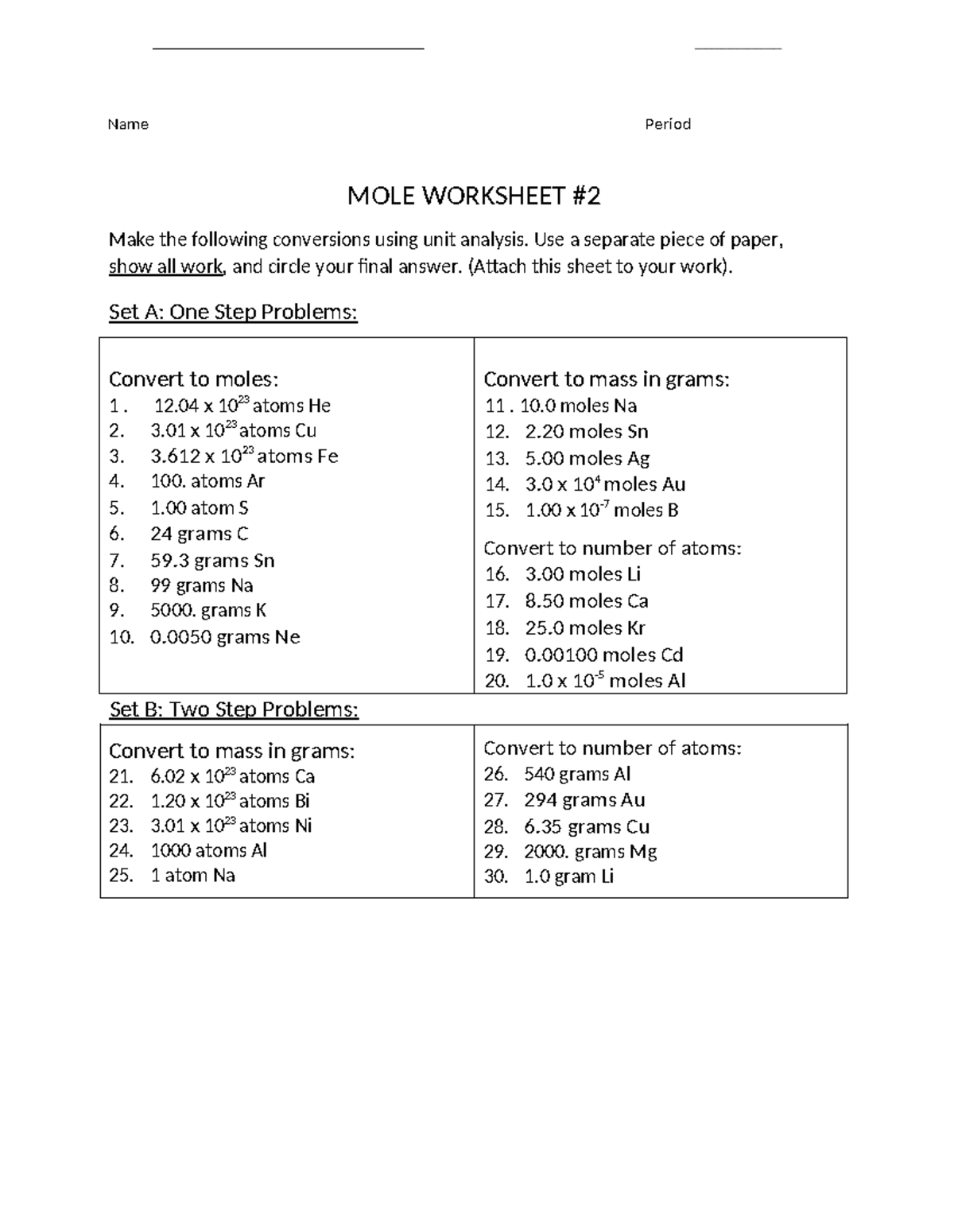
Problem Set 1: Mass‑to‑Moles Calculations
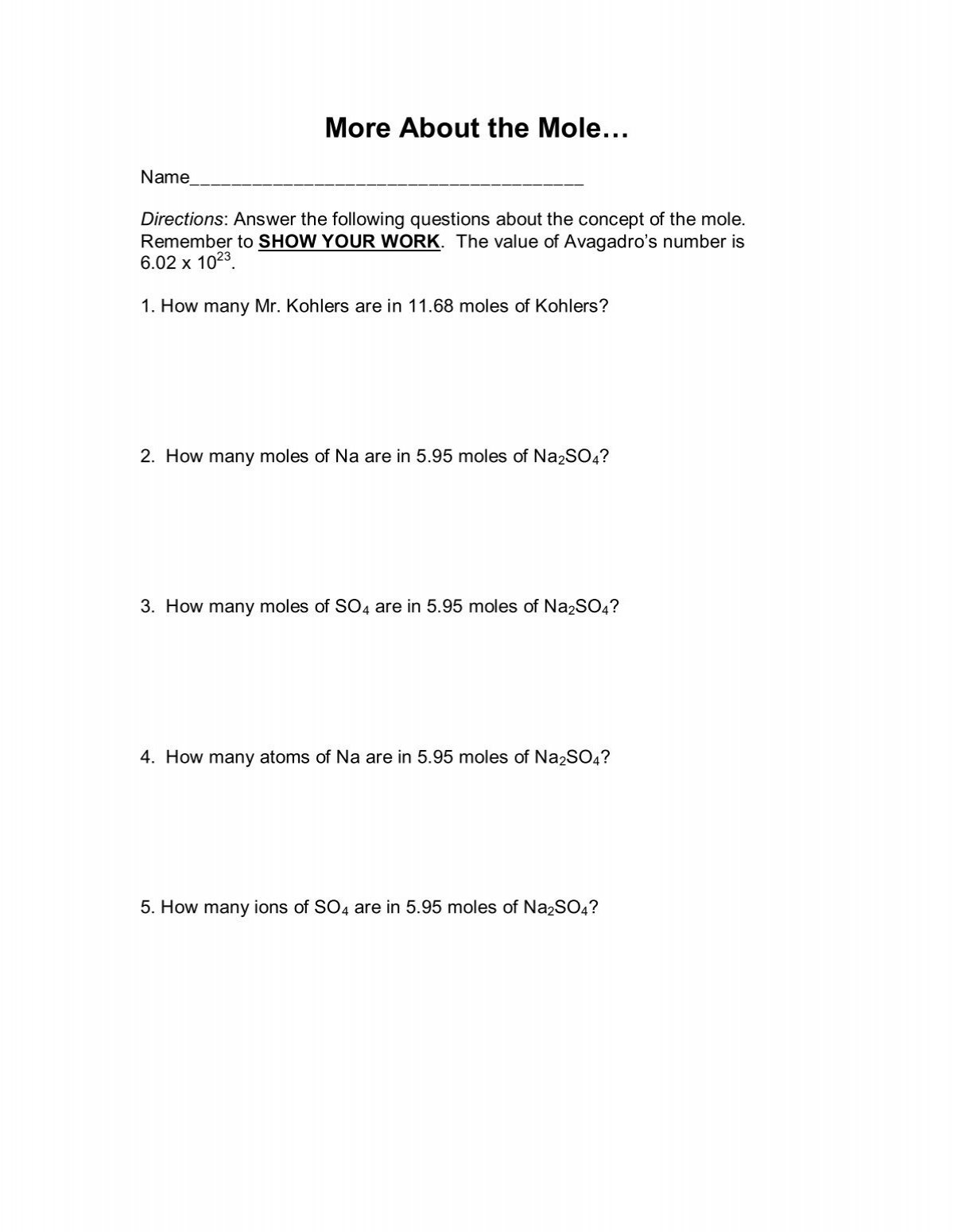
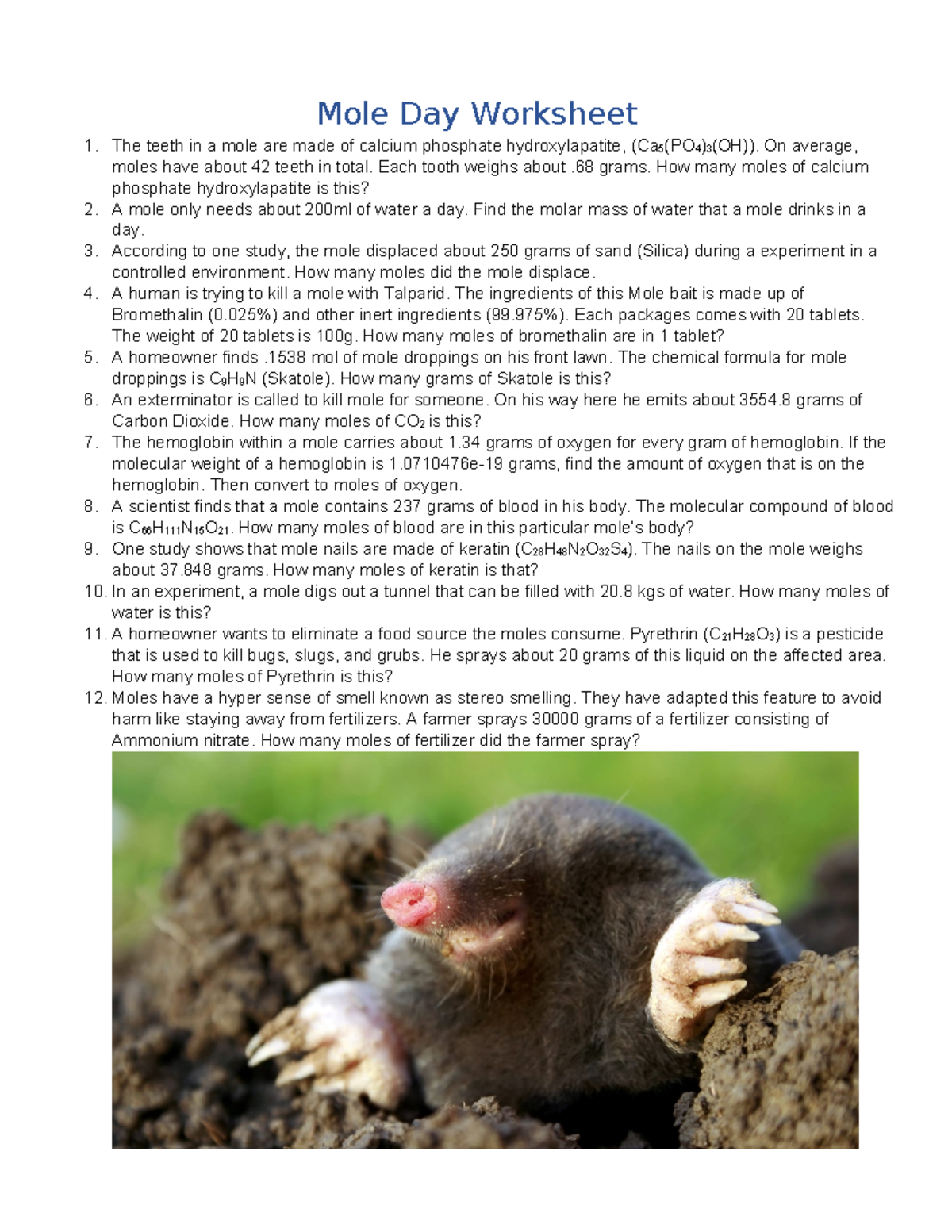
- Calculate the number of moles in 45.0 g of sodium chloride (NaCl).
- A 12.0 g sample of glucose (C₆H₁₂O₆) is weighed. How many moles of glucose are present?
- Determine the mass of 0.250 mol of potassium hydroxide (KOH).
Problem Set 2: Stoichiometric Applications
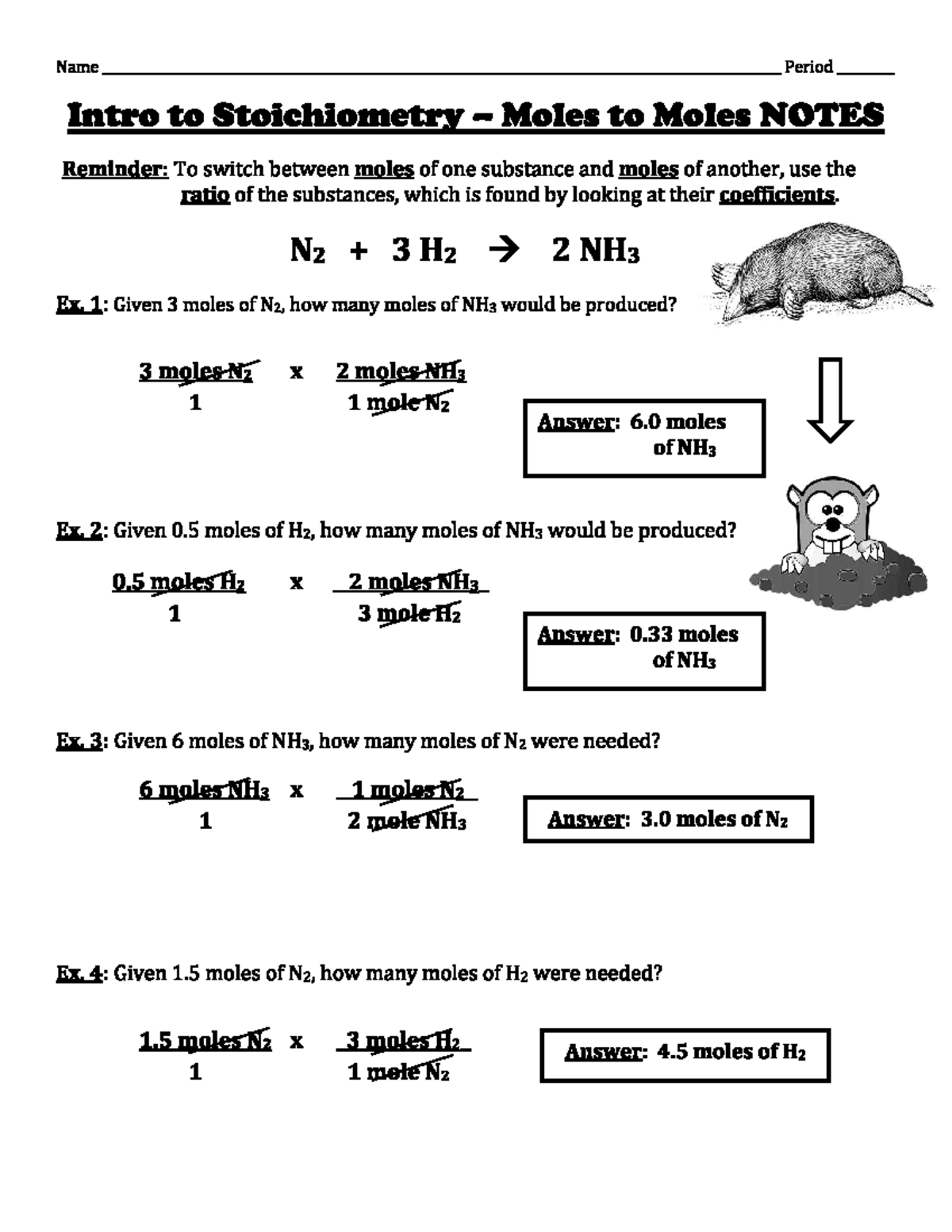
- Given the balanced reaction: 2 H₂ + O₂ → 2 H₂O, how many liters of water (at 25 °C and 1 atm) will be produced from 10 L of hydrogen gas?
- The combustion of methane is represented by: CH₄ + 2 O₂ → CO₂ + 2 H₂O. If 5 g of methane are burned, what mass of CO₂ is formed?
- During a laboratory experiment, 0.500 mol of iron reacts with excess sulfuric acid to produce iron(III) sulfate and hydrogen gas. Write the balanced equation and calculate the theoretical yield of hydrogen gas in liters.
Problem Set 3: Real‑World Applications
- A pharmaceutical company needs to produce 2,000 mg of a drug with a molecular weight of 350 g mol⁻¹. How many moles of the drug are required?
- In environmental science, a water sample contains 0.002 g of nitrate per liter. Calculate the concentration in moles per liter.
- During the synthesis of a polymer, 1.20 mol of monomer units are polymerized. If each monomer has a molar mass of 100 g mol⁻¹, what is the total mass of the polymer produced?
Step‑by‑Step Guide for Solving Mole Worksheet Problems
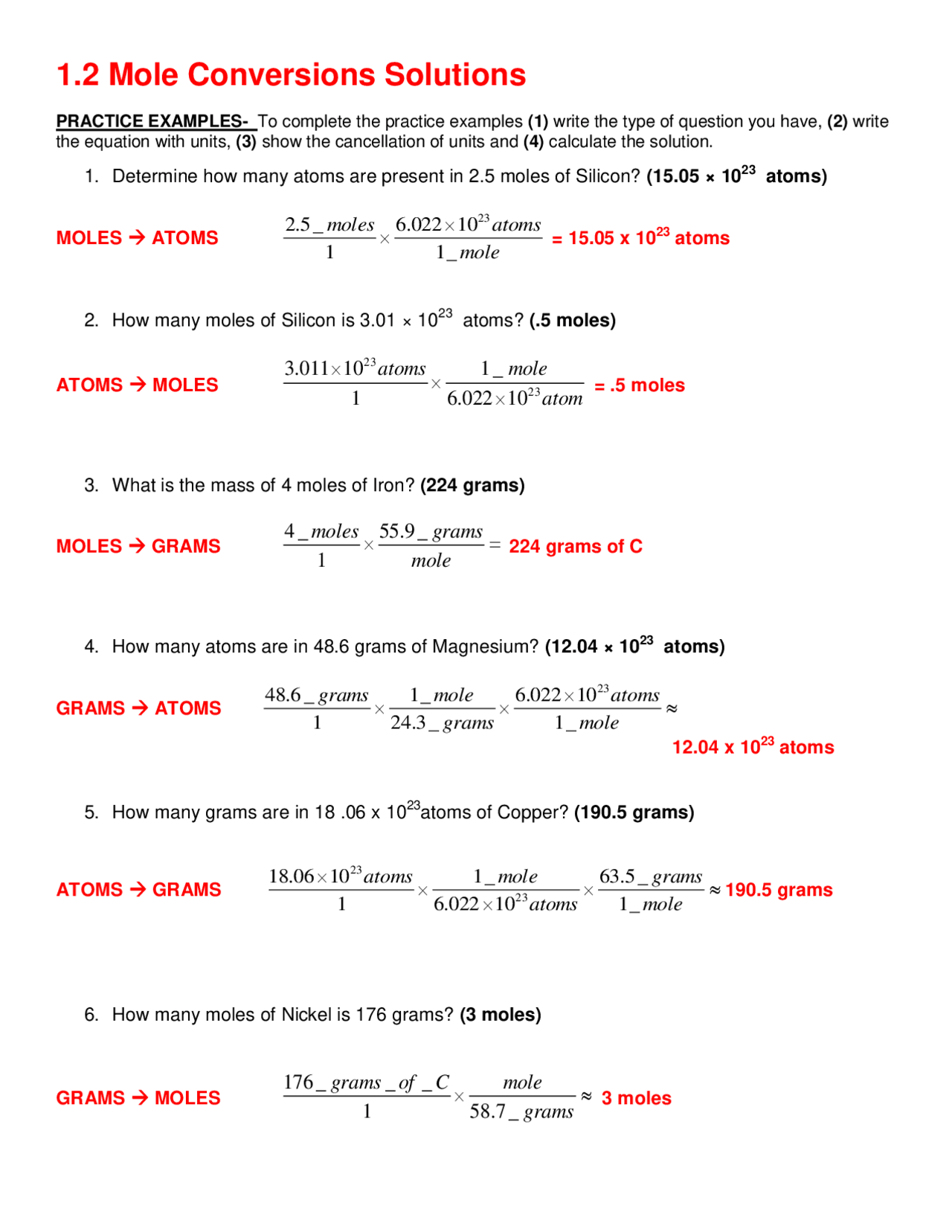
1. Identify Known Quantities and Units
Always convert all given values to consistent units—grams for mass, moles for quantities, and Kelvin for temperature.
2. Apply the Relevant Formula
Use the appropriate equation based on the problem type. For simple mass‑to‑mole problems, use:
Number of Moles = Mass (g) ÷ Molar Mass (g mol⁻¹)
For ideal gas calculations, use the Ideal Gas Law:
PV = nRT, where n = Number of Moles
3. Perform Calculations Carefully
Carry out calculations with sufficient decimal places to maintain precision. Round only at the final step to avoid cumulative errors.
4. Verify Units and Answer Validity
Check that the units cancel correctly and the final answer has the expected unit (e.g., moles, grams, liters).
5. Cross‑Check with Real‑World Context
Assess whether the answer makes sense in context. If you calculate a yield that is impossibly high or low, reconsider the stoichiometry or initial data.
Common Mistakes and How to Avoid Them
Using the Wrong Molar Mass
Always double‑check the chemical formula and ensure the molar mass includes all elements, including isotopic variations if specified.
Neglecting Significant Figures
In chemistry, the number of significant figures reflects the precision of measurements. Keep track of them throughout calculations to provide a realistic answer.
Forgetting Unit Conversions
Temperature in the Ideal Gas Law must be in Kelvin, not Celsius. Likewise, pressure should be in atmospheres or another consistent unit.
Incorrectly Balancing Equations
Stoichiometric calculations depend on the correct coefficients in a balanced equation. Always balance before performing any mole ratio work.
Benefits of Mastering Mole Worksheet Problems
Enhanced Analytical Thinking
Working through mole calculations trains students to translate between different representations of matter, fostering deeper chemical literacy.
Practical Laboratory Skills
Accurate mole calculations are essential for preparing solutions, measuring reagents, and interpreting analytical data in research and industry.
Preparation for Advanced Chemistry
Understanding moles is foundational for topics such as thermodynamics, kinetics, and quantum chemistry, where quantitative analysis is paramount.
Creating Your Own Mole Worksheet
Select a Theme
Choose a theme that resonates with your audience—industrial chemistry, biochemistry, environmental science, or everyday kitchen experiments.
Curate a List of Common Compounds
Include a table with chemical formulas and molar masses for quick reference. For example:
| Compound | Formula | Molar Mass (g mol⁻¹) |
|---|---|---|
| Sodium chloride | NaCl | 58.44 |
| Glucose | C₆H₁₂O₆ | 180.16 |
| Hydrogen peroxide | H₂O₂ | 34.01 |
Introduce Balanced Equations
Provide balanced reactions relevant to the worksheet’s theme. Use a consistent notation and highlight coefficients for clarity.
Offer a Variety of Problem Types
Include direct calculations, multi‑step stoichiometry, and conceptual questions that ask students to explain why a particular approach works.
Include a Solutions Section
After students attempt the problems, supply detailed solutions. This encourages self‑assessment and reinforces learning.
Conclusion
Mastering mole worksheet problems equips learners with a versatile skill set that spans academic, industrial, and everyday contexts. By systematically converting between mass, moles, and quantities, students build a strong foundation in stoichiometry and quantitative chemistry. Whether you are a high‑school student tackling introductory courses or a professional refining analytical techniques, a focused mole worksheet practice can sharpen precision, deepen understanding, and unlock new opportunities in the chemical sciences.










Related posts of "Mole Worksheet"
