Hands On Equations Worksheets are a dynamic tool that transforms abstract algebra into tangible learning experiences for students. By engaging multiple senses and incorporating real-life contexts, these worksheets move beyond rote practice and foster deep conceptual understanding, preparing learners for higher math and everyday problem solving.
Why Hands On Equations Worksheets Matter
Traditional algebra drills often leave students feeling disconnected from the material. Hands on activities counter this by embedding equations within visual and physical frameworks, making the steps to solve a problem feel like a story rather than a sequence of symbols. Studies in educational psychology show that kinesthetic and visual learning strategies increase retention by up to 30%. When students manipulate shapes, use interactive apps, or trace graph lines, they create neural pathways that support long‑term mastery.
In a classroom where attention spans can be as short as five minutes, turning a worksheet into a mini‑lab or a puzzle keeps learners actively involved. This engagement reduces math anxiety, encourages persistence, and builds confidence—especially for students who struggle with abstract notation.
Core Features of Hands On Equations Worksheets
Integrated Visuals and Symbols
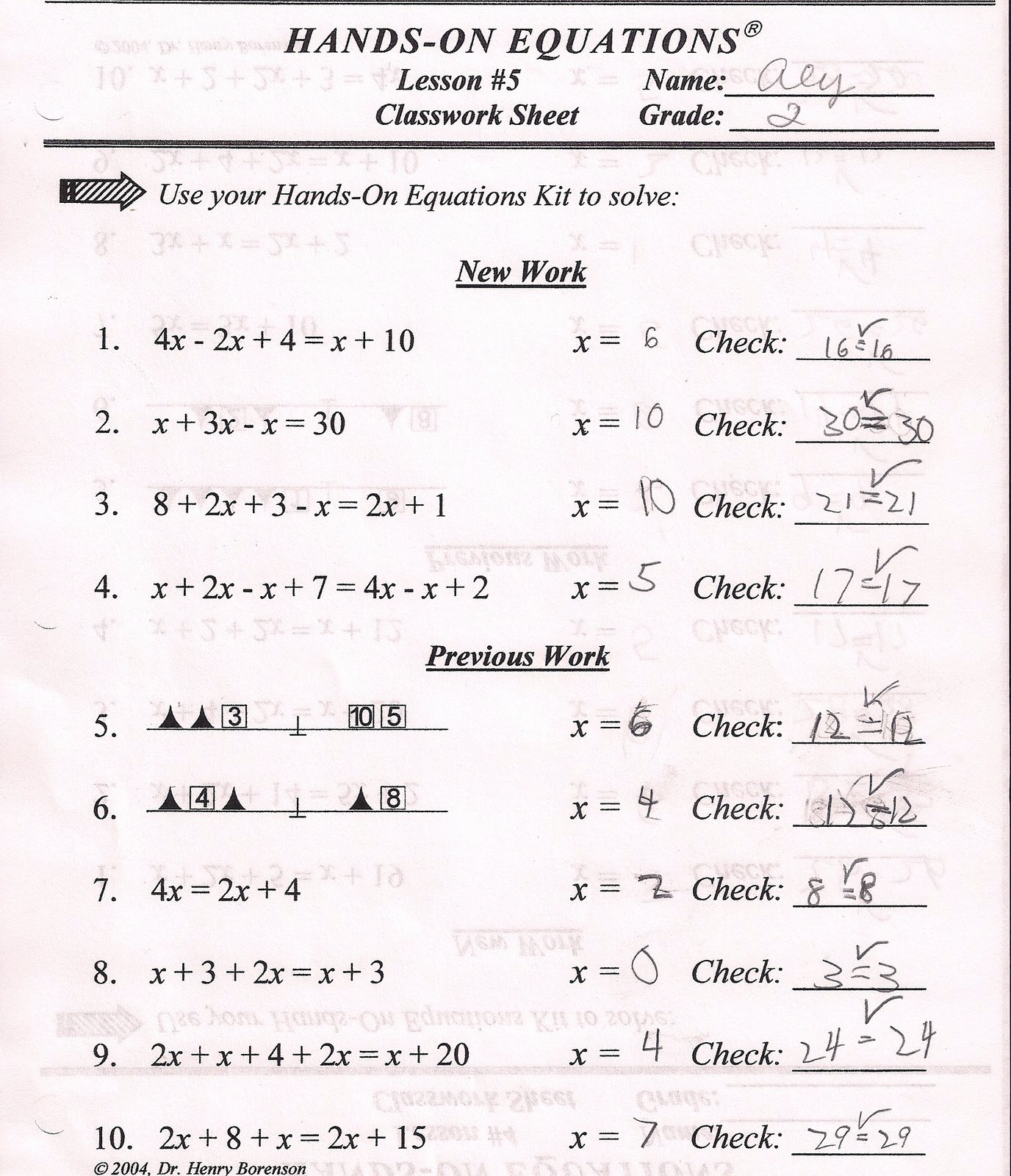
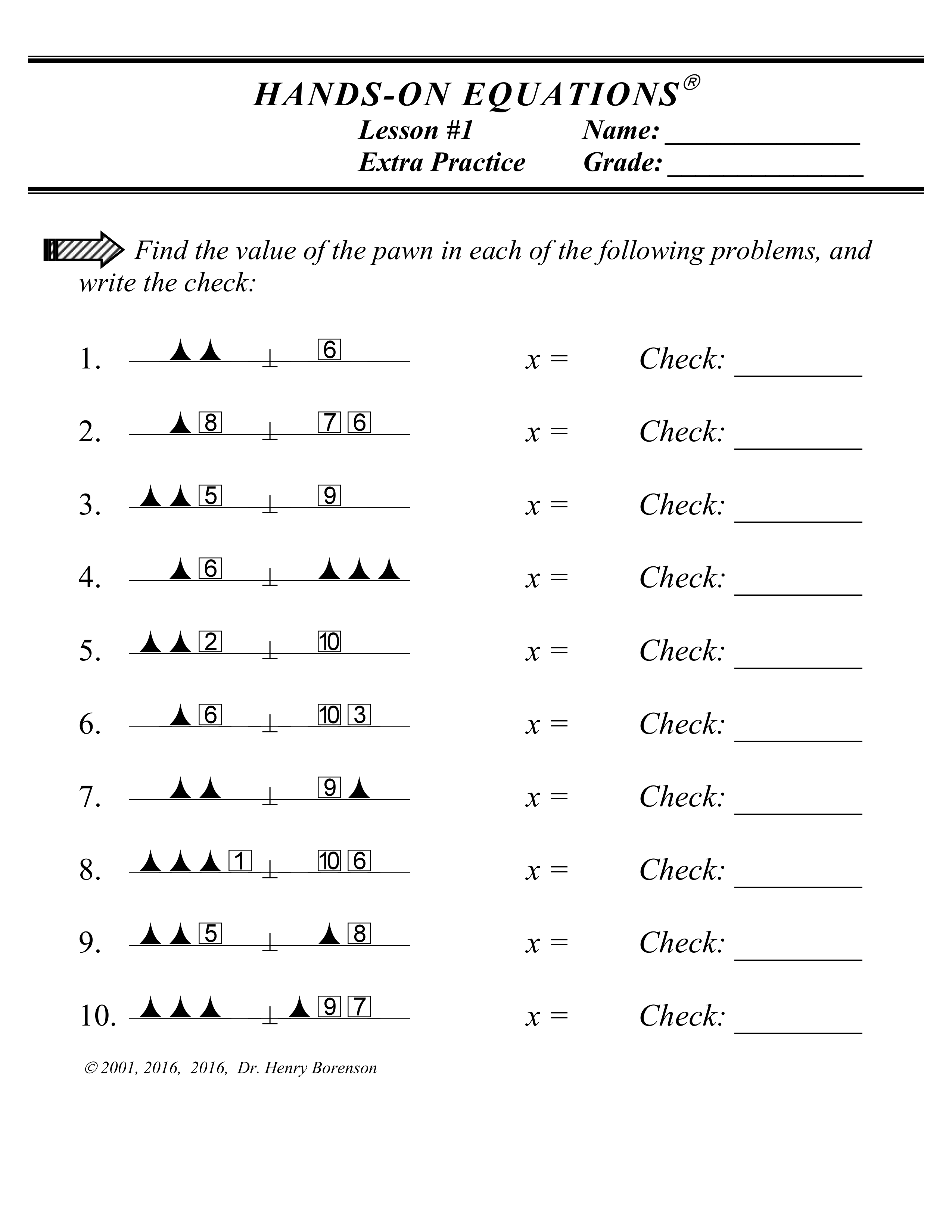
Each worksheet pairs algebraic expressions with clear, high‑contrast graphics. For example, a two‑step equation might be illustrated with a number line that visually represents the movement of terms. Students can see how adding or subtracting on both sides shifts the solution point, reinforcing the concept of balance.
Real‑World Contexts
Contextual problems such as calculating the cost of a party, determining a travel distance, or budgeting for a school project anchor equations in everyday life. By solving equations that mirror real situations, students recognize the practical value of algebra and see its relevance beyond the classroom.
Progressive Difficulty Levels
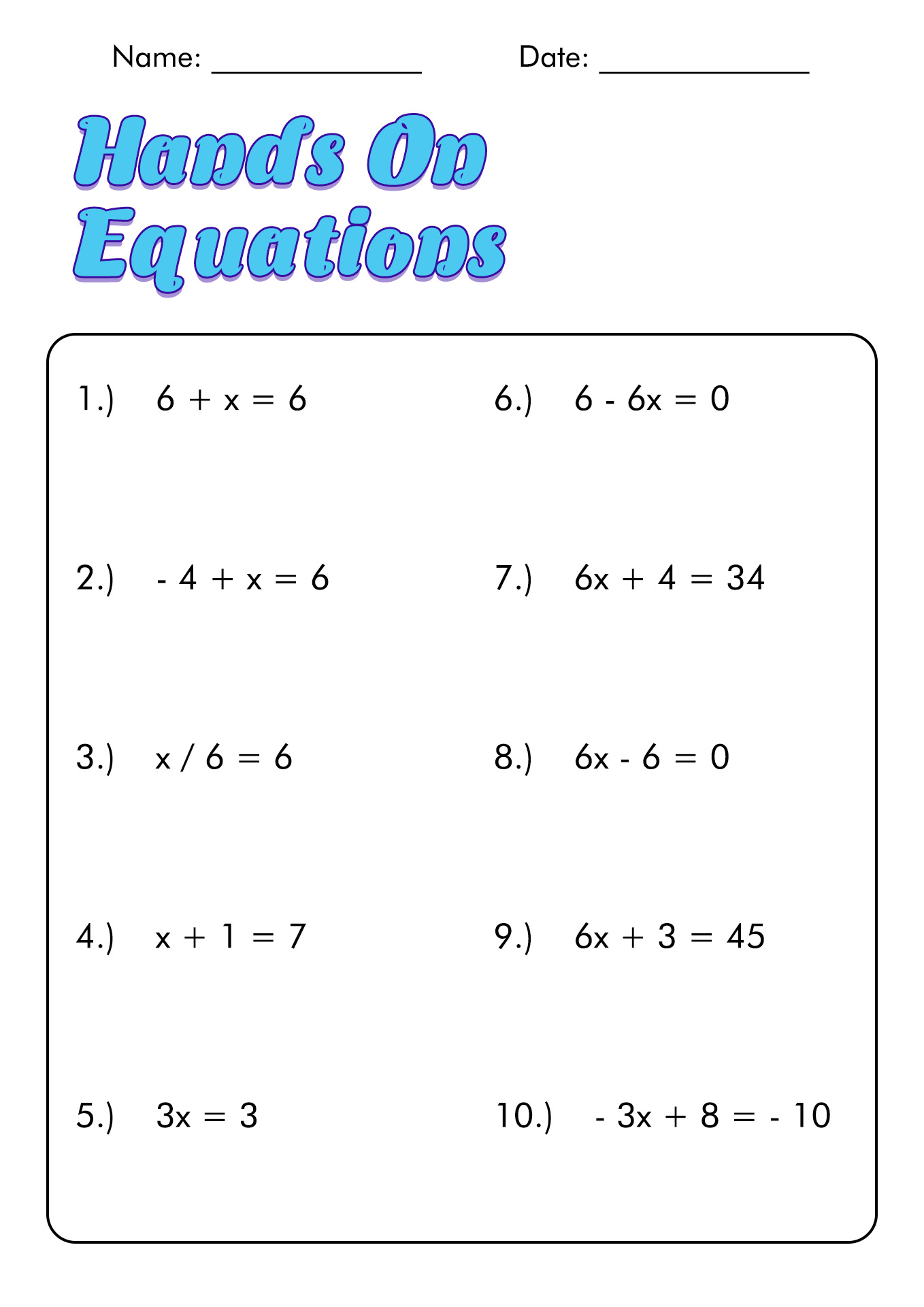
Worksheets are organized into tiers, from foundational one‑step equations to more complex multi‑variable problems. This scaffolded approach allows teachers to match content with student readiness, ensuring that each learner encounters challenges that are achievable yet growth‑oriented.
Immediate Feedback Opportunities
Embedded answer keys and guided solution steps enable self‑check and peer review. When students receive instant feedback, misconceptions are addressed before they cement, promoting a growth mindset.
How to Use the Worksheets Effectively
Step 1: Pre‑Teach the Key Concept
Begin with a brief conceptual explanation—perhaps using a live demonstration or a short video clip—before handing out the worksheet. Highlight the core idea: keeping equations balanced and manipulating terms with equal operations.
Step 2: Conduct a Guided Walkthrough
Select a few sample problems and solve them together on the board, verbalizing each operation. Encourage students to explain why each step is necessary, turning the activity into a collaborative reasoning session.
Step 3: Independent Practice with Peer Support
Distribute the worksheets and allow students to work individually for 10–15 minutes. Afterward, pair them to compare solutions and discuss strategies. This peer interaction reinforces learning and builds communication skills.
Step 4: Reflect and Consolidate
End the lesson with a class discussion that connects the equations solved to the real‑world scenarios they modeled. Ask students what they would change in the problem if the parameters were different, promoting critical thinking and application.
Integrating Hands On Equations into Everyday Teaching
Incorporating Technology
Use interactive graphing tools to allow students to see the effect of changing variables in real time. When the equation’s graph shifts, the visual correlation between algebraic manipulation and spatial movement becomes instantly clear.
Gamifying Problem Solving
Turn worksheets into a competitive board game. Each correct equation moves a player forward, while incorrect answers prompt a brief review. This playful approach keeps motivation high and fosters a sense of progress.
Connecting with Other Subjects
Integrate equations into science units by modeling chemical reactions or physics experiments. For instance, use a linear equation to calculate the rate of a chemical reaction or the velocity of an object under constant acceleration.
Providing Differentiated Options
Offer alternative versions of the same problem—some with visual aids for visual learners, others with step‑by‑step prompts for students needing more guidance. This ensures inclusivity and supports varied learning styles.
Common Challenges and Solutions
Overwhelm with Symbolic Language
Students may feel lost when confronted with unfamiliar symbols. Address this by having them identify each component of an equation (variables, coefficients, constants) before attempting to solve. Use colored pens to differentiate terms visually.
Misconception About the Order of Operations
Clarify that operations on one side of the equation must mirror operations on the opposite side. Provide practice problems that explicitly require balancing before simplifying.
Limited Time for Practice
When class time is scarce, integrate a short “Equation Challenge” in the last five minutes of a lesson. This rapid-fire approach reinforces learning while keeping the activity light and engaging.
Success Stories
High School Algebra I
A mid‑size public high school teacher reported a 20% increase in students achieving proficiency after introducing hands‑on worksheets. The teacher noted that students who previously avoided algebra began asking questions about real‑world applications, indicating deeper engagement.
Middle School STEM Club
During a summer STEM club, participants used hands‑on worksheets to model budget allocations for a mock science fair. The activity not only taught equations but also fostered teamwork and decision‑making.
Online Tutoring Program
An online tutoring platform integrated interactive worksheets into virtual lessons, resulting in a 15% improvement in homework completion rates. Students appreciated the immediate visual feedback and the ability to manipulate variables on a digital canvas.
Getting Started with Hands On Equations Worksheets
Select the Right Resource
Choose worksheets that align with your curriculum goals, whether they focus on foundational skills or advanced applications. Look for materials that provide clear instructions, step‑by‑step solutions, and optional extensions.
Plan the Implementation
Decide whether to use worksheets as the primary activity or as a supplemental resource. Incorporate them into a weekly lesson plan that includes pre‑instruction, guided practice, independent work, and review.
Train Your Students
Teach students how to approach each problem: identify the goal, isolate the variable, balance both sides, and check their solution. By mastering a systematic process, learners become self‑sufficient problem solvers.
Assess and Adapt
Collect data on student performance, and use it to adjust the difficulty level or presentation style. If students struggle with visual aids, try adding more textual explanations or vice versa.
In conclusion, Hands On Equations Worksheets are more than just practice sheets—they are a bridge that connects abstract algebraic concepts with real‑world experiences and tactile learning. By leveraging visual cues, contextual problems, and progressive challenges, teachers can transform routine math drills into engaging, memorable lessons. Incorporate these worksheets thoughtfully, and watch as students not only solve equations more confidently but also begin to see the power of mathematics in everyday life.






Related posts of "Hands On Equations Worksheets"
