Factorization Of Quadratic Equations Worksheet is the perfect gateway for students who want to master the art of breaking down quadratic expressions into simple, manageable pieces, and it does so with a touch of the meticulous, step‑by‑step teaching style often found in Asian classrooms. By turning abstract algebraic concepts into concrete, repeatable patterns, this worksheet not only reinforces fundamental skills but also builds confidence for tackling higher‑level math challenges such as calculus, physics, and engineering. In this guide we will explore why factorization matters, how to use the worksheet effectively, and offer practical tips, real‑world examples, and cultural insights that keep learners engaged while sharpening their problem‑solving instincts.
Why Factorization Is a Cornerstone of Mathematics
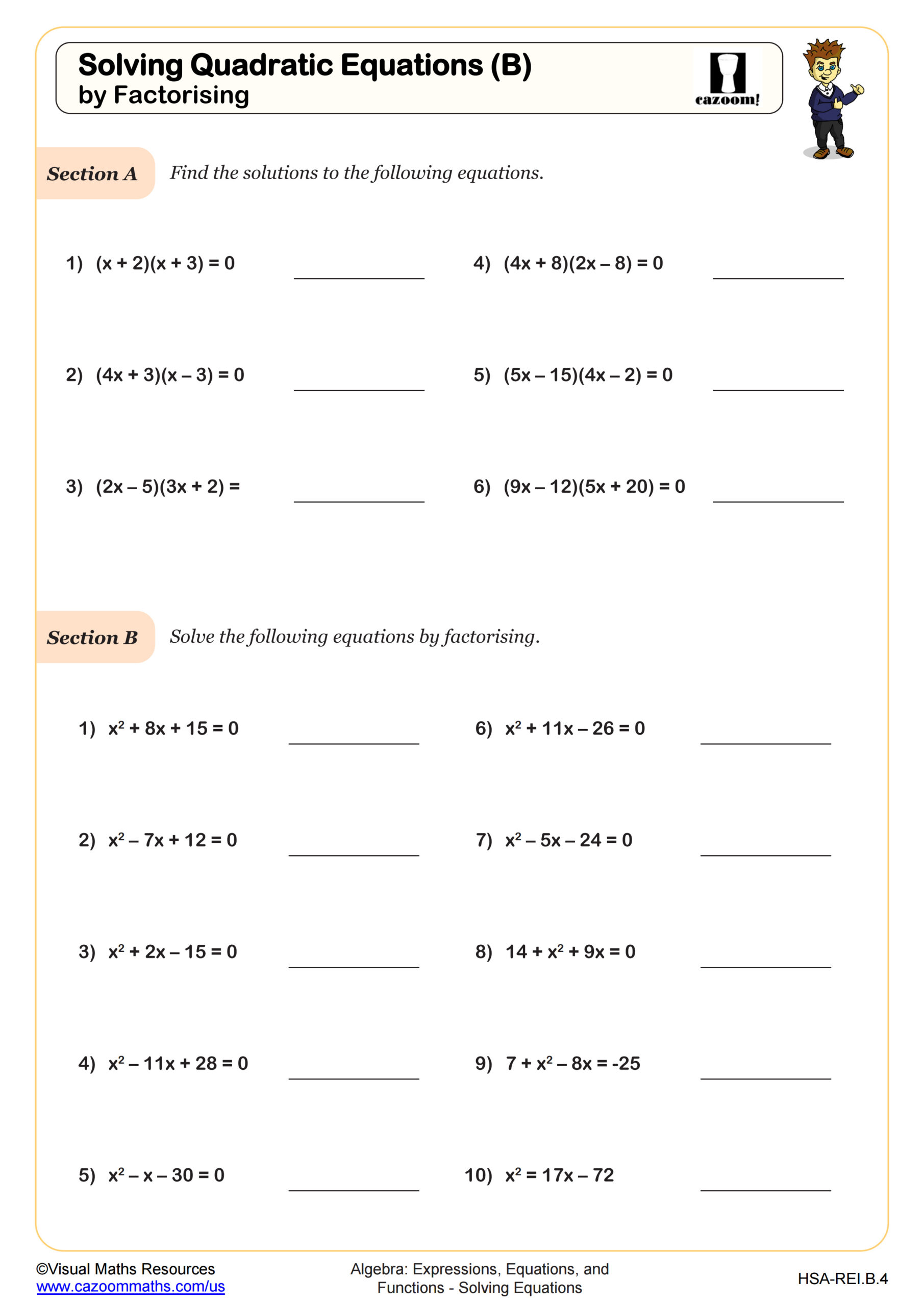
Factorization transforms a quadratic equation of the form ax² + bx + c = 0 into a product of two linear factors, usually written as (px + q)(rx + s) = 0. This process reveals the hidden roots of the equation, making it easier to solve for x and to understand the shape of the corresponding parabola. In many Asian education systems, students are taught to view every algebraic expression as a puzzle waiting to be decoded, and factorization is the key that unlocks that puzzle. Mastery of this skill leads to faster computation, deeper insight into function behavior, and a solid foundation for topics like the quadratic formula, completing the square, and polynomial division.
Structure of the Factorization Worksheet
The worksheet is thoughtfully organized into three progressive sections, each designed to scaffold learning and encourage independent thinking.
Section One: Recognizing Simple Patterns
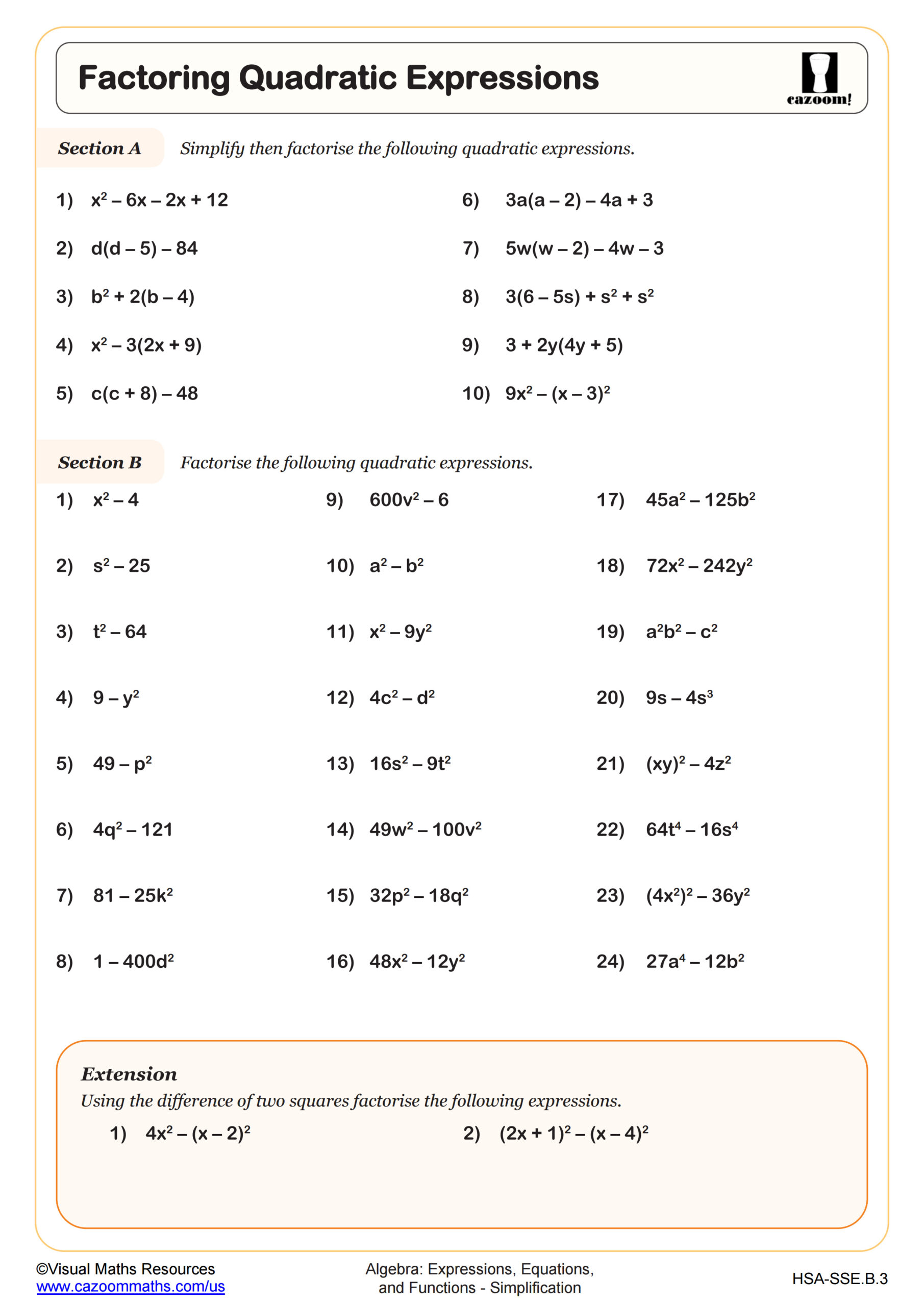
This part presents basic quadratics such as x² + 5x + 6 and 2y² – 8y. Students practice identifying common factors, applying the difference of squares, and using the “ac method” for trinomials where the leading coefficient is not one. The exercises often include visual cues like color‑coded terms, echoing the visual learning techniques popular in many Asian classrooms.
Section Two: Applying the “AC” Method Systematically
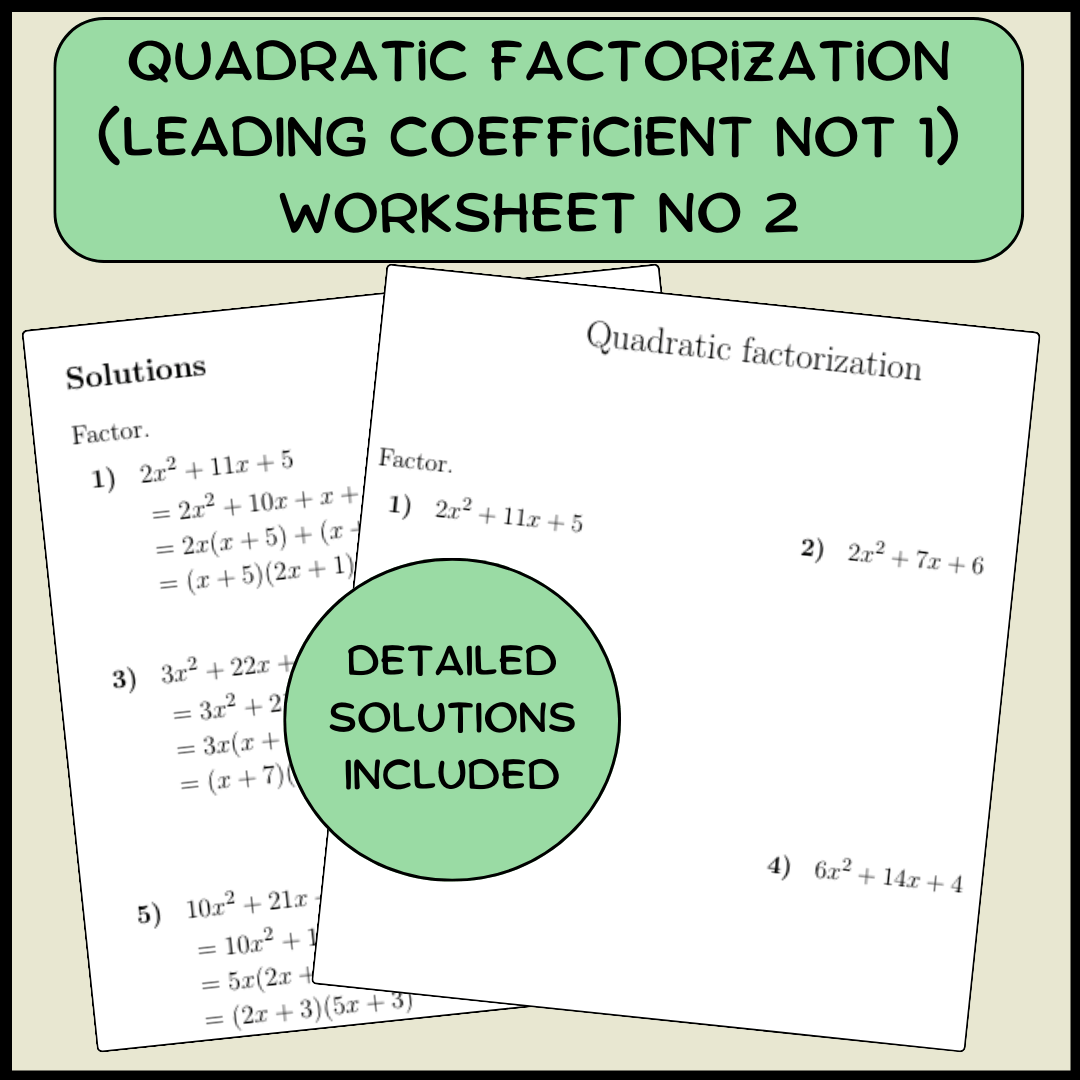
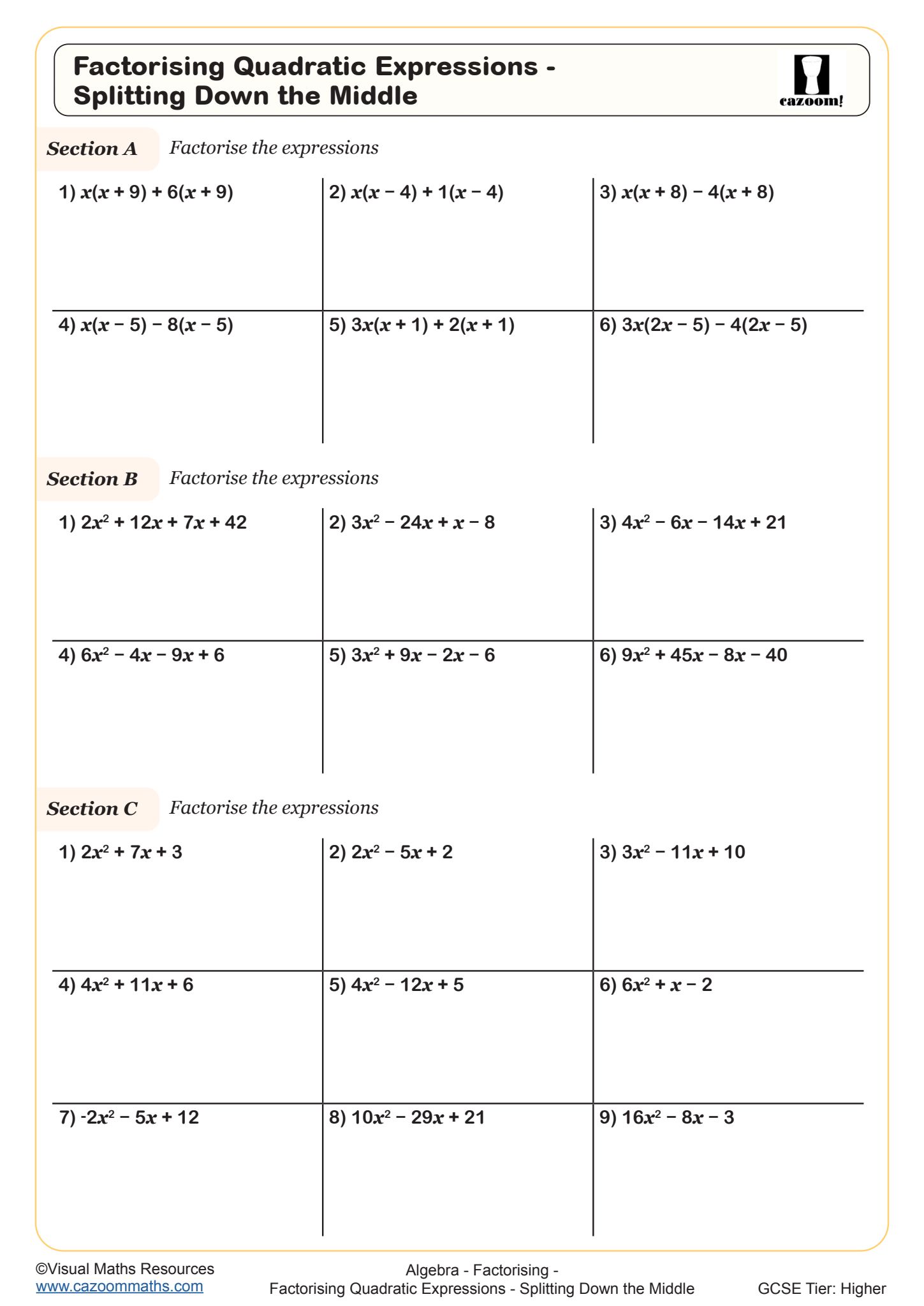
Here, the worksheet introduces more challenging expressions like 3x² + 14x + 8. Learners multiply the leading coefficient (a) by the constant term (c) to get a product, then search for two numbers that both multiply to that product and add to the middle coefficient (b). The step‑by‑step layout mirrors the disciplined, incremental approach favored in exam preparation across Asia, helping students internalize the method until it becomes second nature.
Section Three: Real‑World Word Problems
The final segment shifts focus from pure algebra to application. Scenarios such as calculating the dimensions of a garden bed, optimizing profit in a small business, or determining the trajectory of a thrown object require students to translate a story into a quadratic equation, factor it, and interpret the roots in context. This not only reinforces the mechanical process but also demonstrates the practical value of factorization, a teaching philosophy that resonates strongly with the “learning by doing” ethos prevalent in many Asian cultures.
Step‑by‑Step Guide to Solving a Worksheet Problem
Let’s walk through a typical problem from the worksheet to illustrate the thinking process.
Problem Statement
Factor the quadratic expression 6x² – 7x – 3.
Step 1: Identify Coefficients
Recognize a = 6, b = –7, and c = –3. Write them down clearly; the habit of documenting each coefficient is a hallmark of the meticulous note‑taking style encouraged in many Asian tutoring centers.
Step 2: Compute the Product “ac”
Multiply a and c: 6 × (–3) = –18. This product will guide the search for a pair of numbers that satisfy the next condition.
Step 3: Find Two Numbers That Multiply to –18 and Add to –7
List factor pairs of –18: (1, –18), (–1, 18), (2, –9), (–2, 9), (3, –6), (–3, 6). The pair that adds to –7 is (–9, 2) because –9 + 2 = –7.
Step 4: Rewrite the Middle Term
Replace –7x with the sum of the two numbers multiplied by x: 6x² – 9x + 2x – 3. This split transforms the trinomial into a four‑term polynomial ready for grouping.
Step 5: Factor by Grouping
Group the terms: (6x² – 9x) + (2x – 3). Factor out the greatest common factor (GCF) from each group: 3x(2x – 3) + 1(2x – 3). Notice the common binomial (2x – 3).
Step 6: Extract the Common Binomial
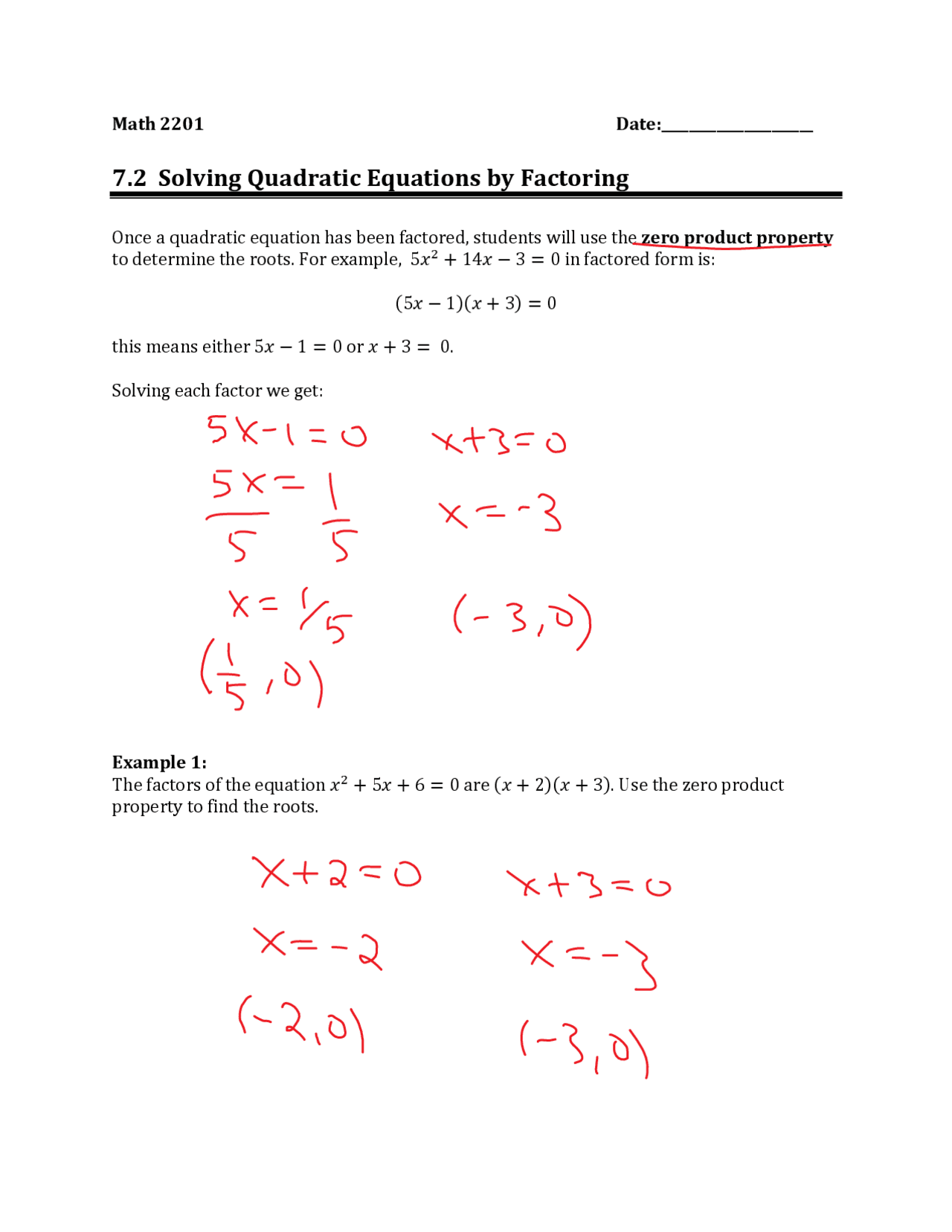
Factor (2x – 3) out of the entire expression: (2x – 3)(3x + 1). The factorization is complete, and the roots are found by setting each factor to zero: 2x – 3 = 0 ⇒ x = 3/2 and 3x + 1 = 0 ⇒ x = –1/3.
This systematic approach mirrors the disciplined practice routines found in top‑ranking schools across Japan, South Korea, and Singapore, where repetition and precision are prized.
Tips for Getting the Most Out of the Worksheet
- Practice with Purpose: Instead of rushing through each problem, pause after every step to ask why that step works. This reflective habit aligns with the “metacognitive” strategies promoted in many Asian curricula.
- Use a Two‑Column Format: Write the original equation in the left column and the step‑by‑step transformation in the right column. The clear visual separation helps prevent errors and mimics the structured worksheets used in elementary and secondary schools throughout Asia.
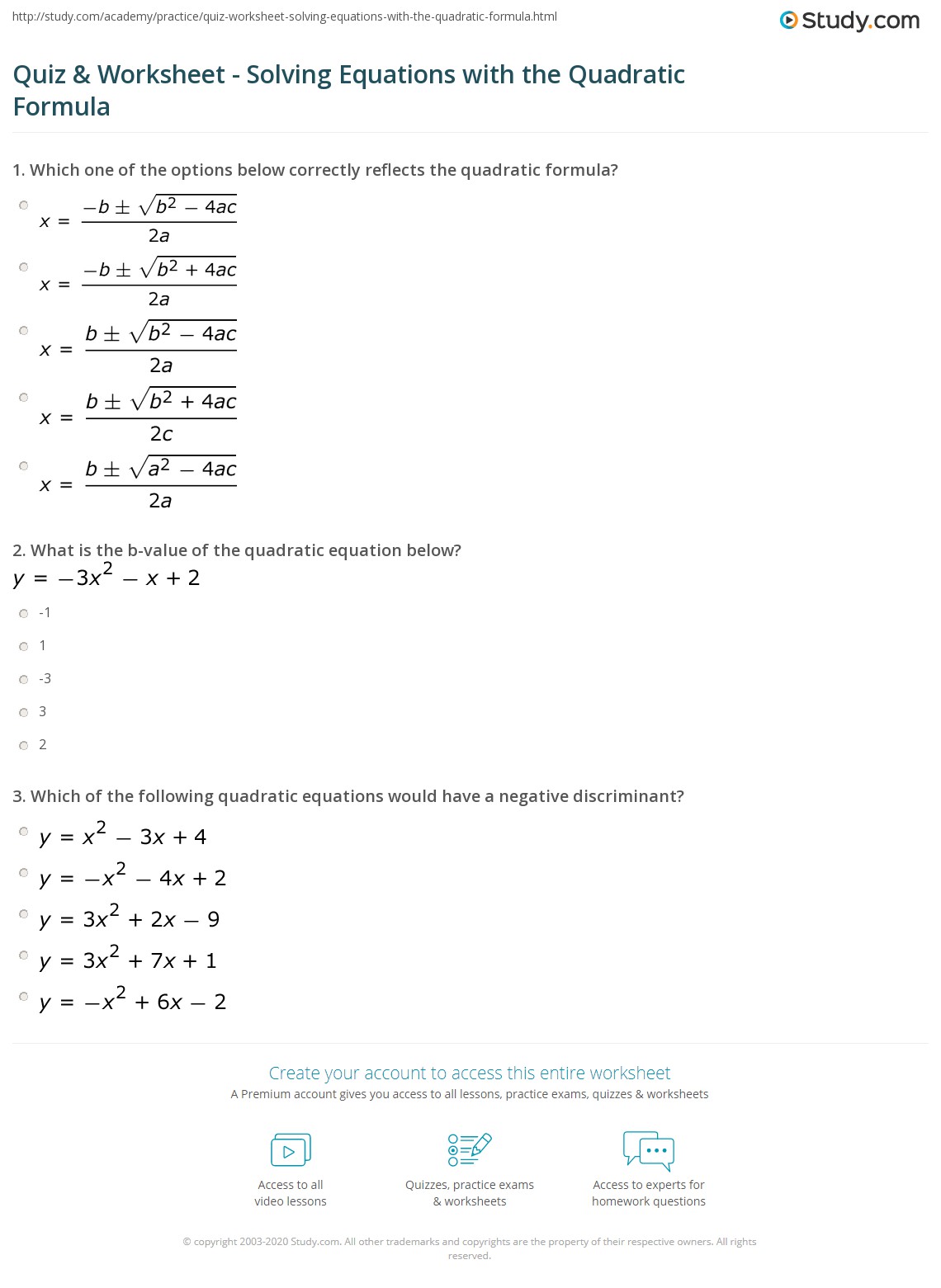
- Check Your Work with the Quadratic Formula: After factoring, plug the roots back into the original equation or verify them using x = [-b ± √(b² – 4ac)]/(2a). This cross‑checking reinforces the connection between different solution methods.
- Leverage Peer Review: Form a small study group, exchange worksheets, and critique each other’s factorization steps. Collaborative learning is a cornerstone of many Asian classroom cultures and deepens understanding.
- Connect to Real Life: When possible, rewrite a word problem in terms of a real object you encounter daily—a garden plot, a sports field, or a budgeting scenario. The tangible connection makes the abstract algebra feel relevant and memorable.
Common Mistakes and How to Avoid Them
Even diligent students can stumble on a few recurring pitfalls. Recognizing these errors early saves time and builds confidence.
Skipping the “ac” Product Step
Some learners jump straight to guessing factor pairs for the quadratic without first calculating ac. This often leads to missed pairs or incorrect signs. Always write down ac before searching for the numbers that sum to b.
Ignoring Sign Conventions
When c is negative, the product ac will be negative, guaranteeing that the two numbers you find will have opposite signs. Forgetting this rule can cause confusion, especially with trinomials like 4x² – 5x – 6. Remember: opposite signs mean the larger absolute value carries the sign of b.
Misidentifying the Greatest Common Factor
During the grouping stage, failing to factor out the correct GCF leads to a mismatched binomial and stalls the process. Double‑check each group for the highest common factor before proceeding.
Overlooking the Need for Complete Factorization
Sometimes a factor still contains a common factor that can be extracted further, such as 2(3x² – 4x + 1). Ensure that the final answer is fully factored, especially if the worksheet asks for “complete factorization.”
Integrating Cultural Elements for a More Engaging Experience
To keep learners motivated, the worksheet can be flavored with cultural references that resonate with an Asian‑inspired teaching style while still appealing to a broad U.S. audience.
Storytelling with Traditional Themes
Imagine a scenario where a farmer needs to fence a rectangular plot of land to maximize the area for rice paddies. The dimensions lead to a quadratic equation that students must factor to find the optimal lengths. This narrative not only ties math to agriculture—a staple of many Asian economies—but also encourages visual imagination.
Incorporating Calligraphy‑Style Practice
Encourage students to write each step of the factorization on a grid paper that mimics calligraphic brush strokes. The deliberate, rhythmic motion of writing mirrors the disciplined practice of kanji or hanzi, reinforcing memory through muscle movement.
Gamified Competition
Organize a “Factorization Sprint” where participants solve as many worksheet problems as possible within a set time, similar to the timed drills used in Chinese “Zhuangyuan” preparation sessions. Reward accuracy and speed to spark friendly rivalry.
Extending Learning Beyond the Worksheet
Once students have mastered the standard problems, they can explore more advanced topics that build on factorization.
Completing the Square
Transform a quadratic into the form (x – h)² = k. Understanding factorization makes this conversion smoother, as students already recognize how terms combine to form perfect squares.
Graphical Interpretation
Plot the factored form on a coordinate plane. Each root corresponds to an x‑intercept, and the leading coefficient determines the parabola’s opening direction. Visual learners benefit from seeing the algebraic result manifest as a shape.
Polynomial Division
Factorization prepares students for dividing polynomials, an essential skill for calculus and higher‑level algebra. By breaking a quadratic into linear factors, the division process becomes a series of simple cancellations.
Conclusion
The Factorization Of Quadratic Equations Worksheet serves as a powerful bridge between foundational algebra and real‑world problem solving, blending the systematic rigor of Asian educational traditions with engaging, context‑rich examples for an American audience. By following the structured steps, practicing mindfully, and integrating cultural touches such as storytelling and disciplined writing, students can develop a deep, lasting mastery of factorization. This mastery not only unlocks the ability to solve quadratics quickly but also lays the groundwork for advanced mathematics, scientific reasoning, and everyday analytical thinking. Embrace the worksheet, apply the tips, and watch confidence soar as each quadratic yields its hidden roots with elegant simplicity.








Related posts of "Factorization Of Quadratic Equations Worksheet"
