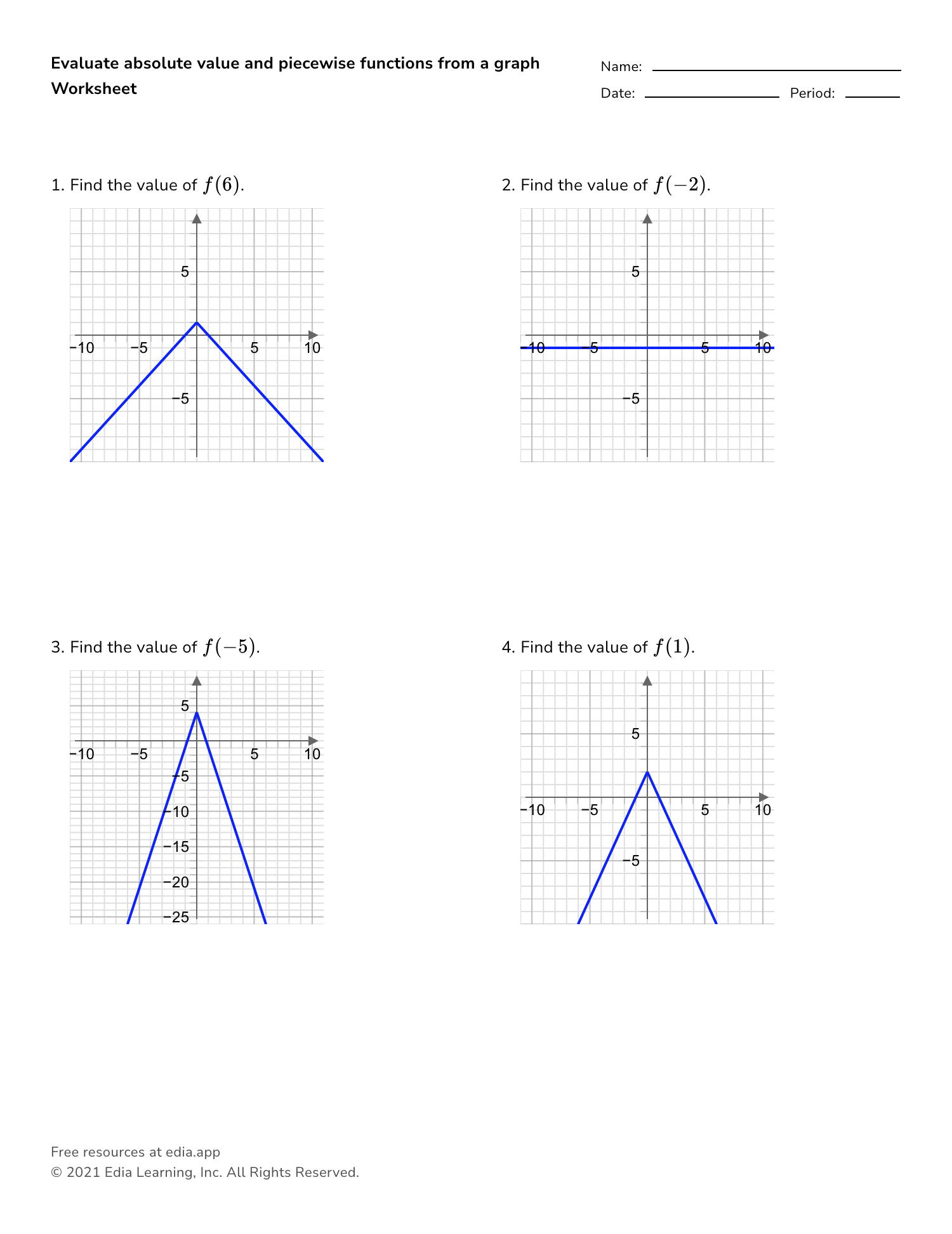
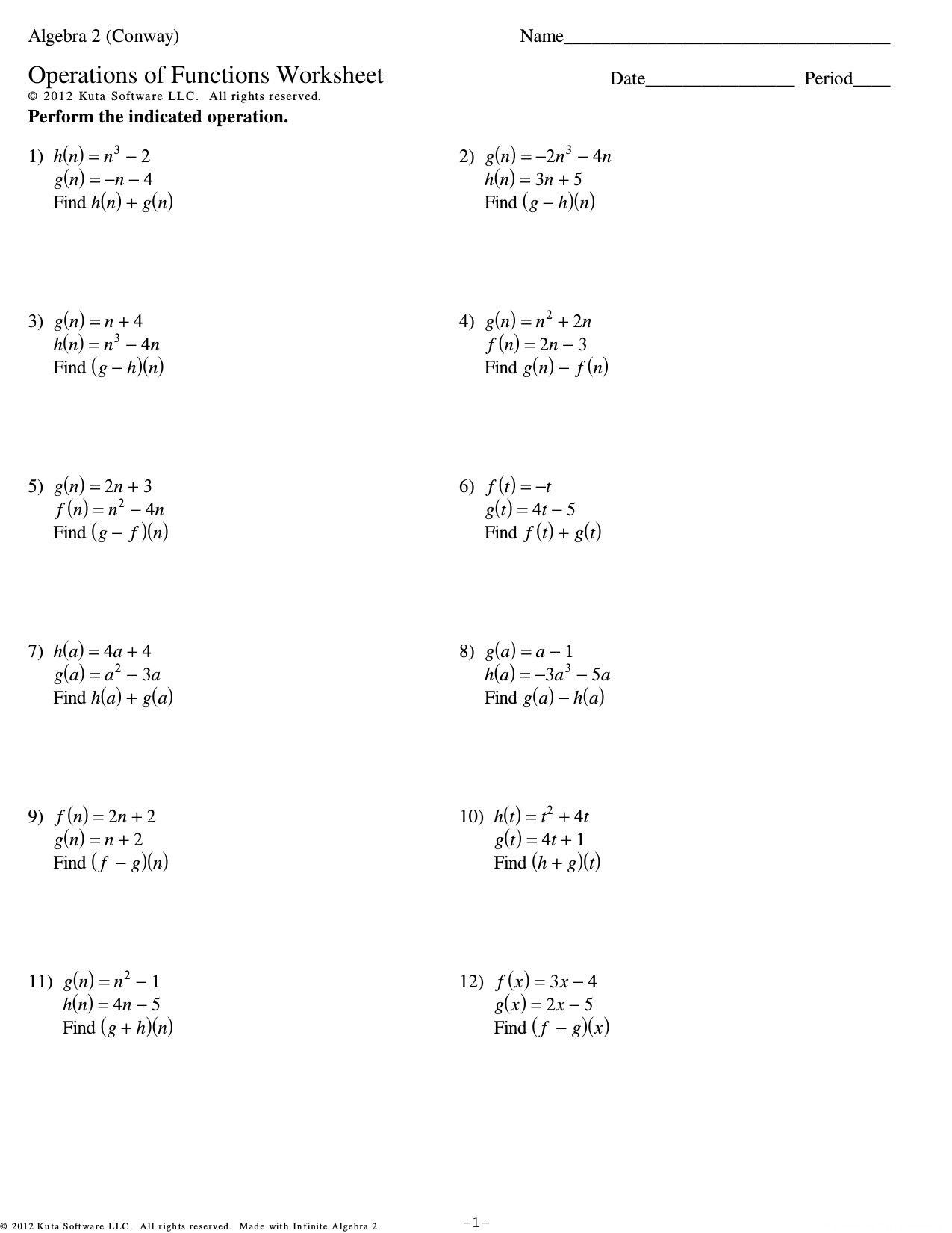
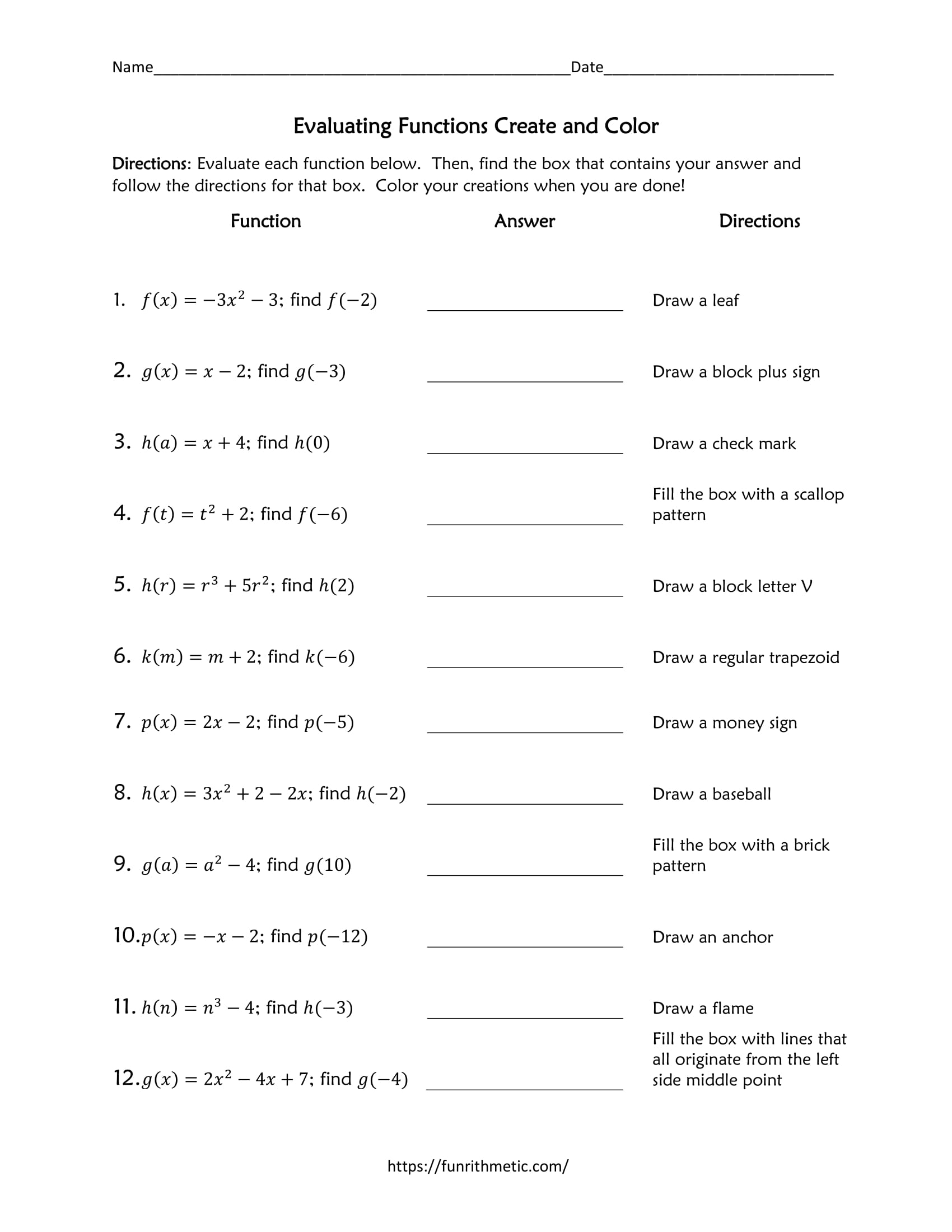
Evaluating Functions Worksheet Algebra is the secret sauce that turns a sleepy math class into a roller‑coaster of “aha!” moments, and this blog post is your backstage pass to that thrill ride. Buckle up, because we’re about to dive deep into the quirkiest, most practical ways to master function evaluation, sprinkle in a dash of humor, and emerge with worksheets that even your dog could (theoretically) solve—if dogs could do algebra, that is.
Why Evaluating Functions Matters
Function evaluation isn’t just a checkbox on a curriculum; it’s the mathematical equivalent of a Swiss Army knife—compact, versatile, and surprisingly handy when you’re trying to open a jar of canned beans (or a complex word problem). Understanding how to plug numbers into functions builds a mental muscle that powers everything from calculating interest rates to predicting the next viral meme’s trajectory. In short, it’s the foundation that lets students translate abstract symbols into real‑world answers without breaking a sweat—or at least without breaking too many pencils.
Real‑World Scenarios
Imagine you’re budgeting for a road trip. The cost of gas follows a linear function f(x) = 2.79x, where x is gallons. Evaluating the function tells you exactly how much you’ll spend if the tank holds 12 gallons. Or picture a video game where your character’s health regenerates according to h(t) = 50 + 10 sin(t). Plugging in the time t gives you the precise health bar at any moment. These scenarios illustrate that function evaluation is the bridge between theory and the everyday decisions we all make—whether we’re aware of it or not.
Classroom Benefits
When students become confident evaluators, they stop treating functions as mysterious monsters and start seeing them as obedient pets. This confidence ripples through other algebraic topics, such as solving equations, graphing, and even calculus. Teachers notice fewer frantic “I don’t get it” moments and more enthusiastic “Look, I did it!” celebrations, which in turn fuels a positive feedback loop of learning and humor.
Anatomy of a Good Worksheet
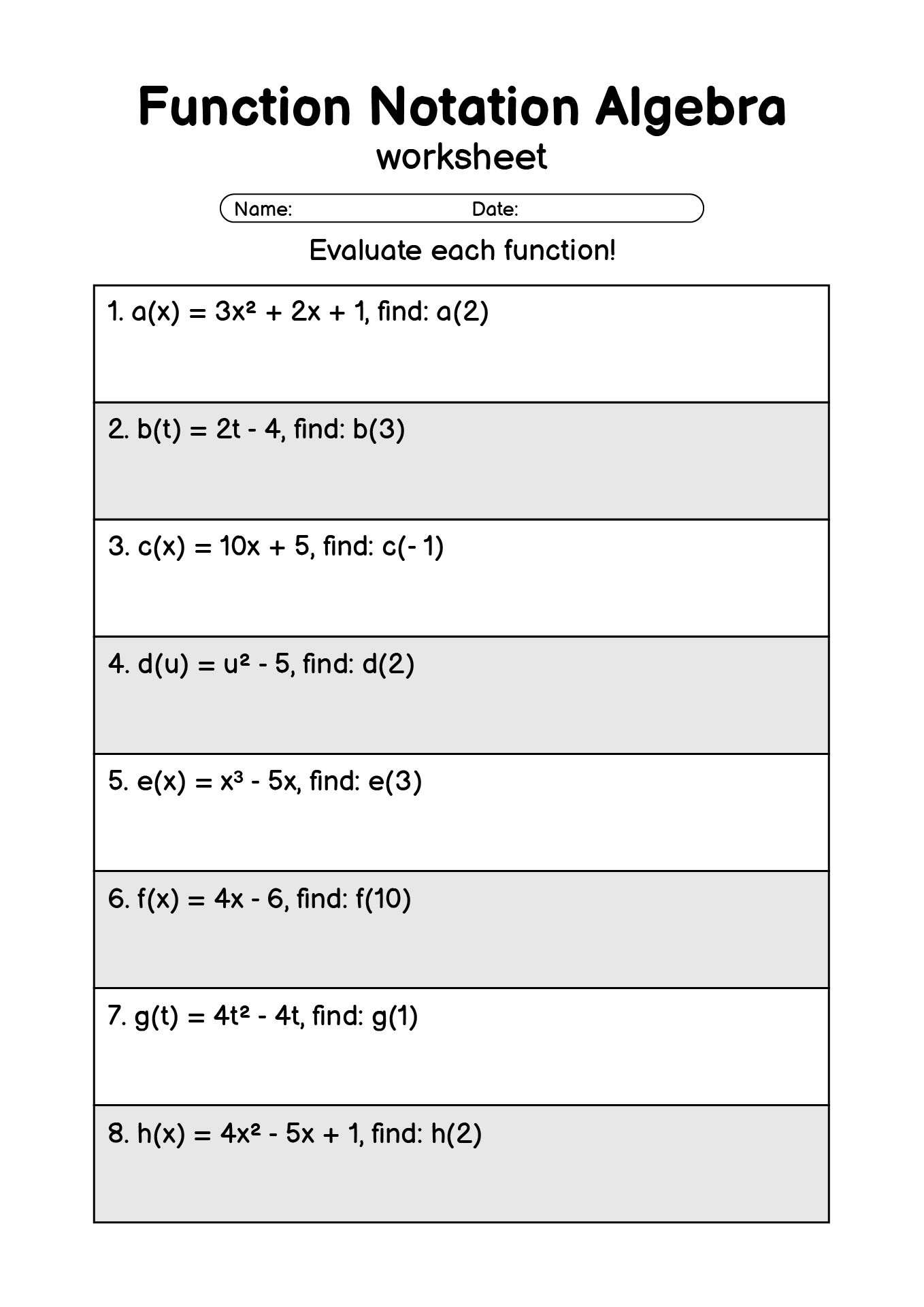
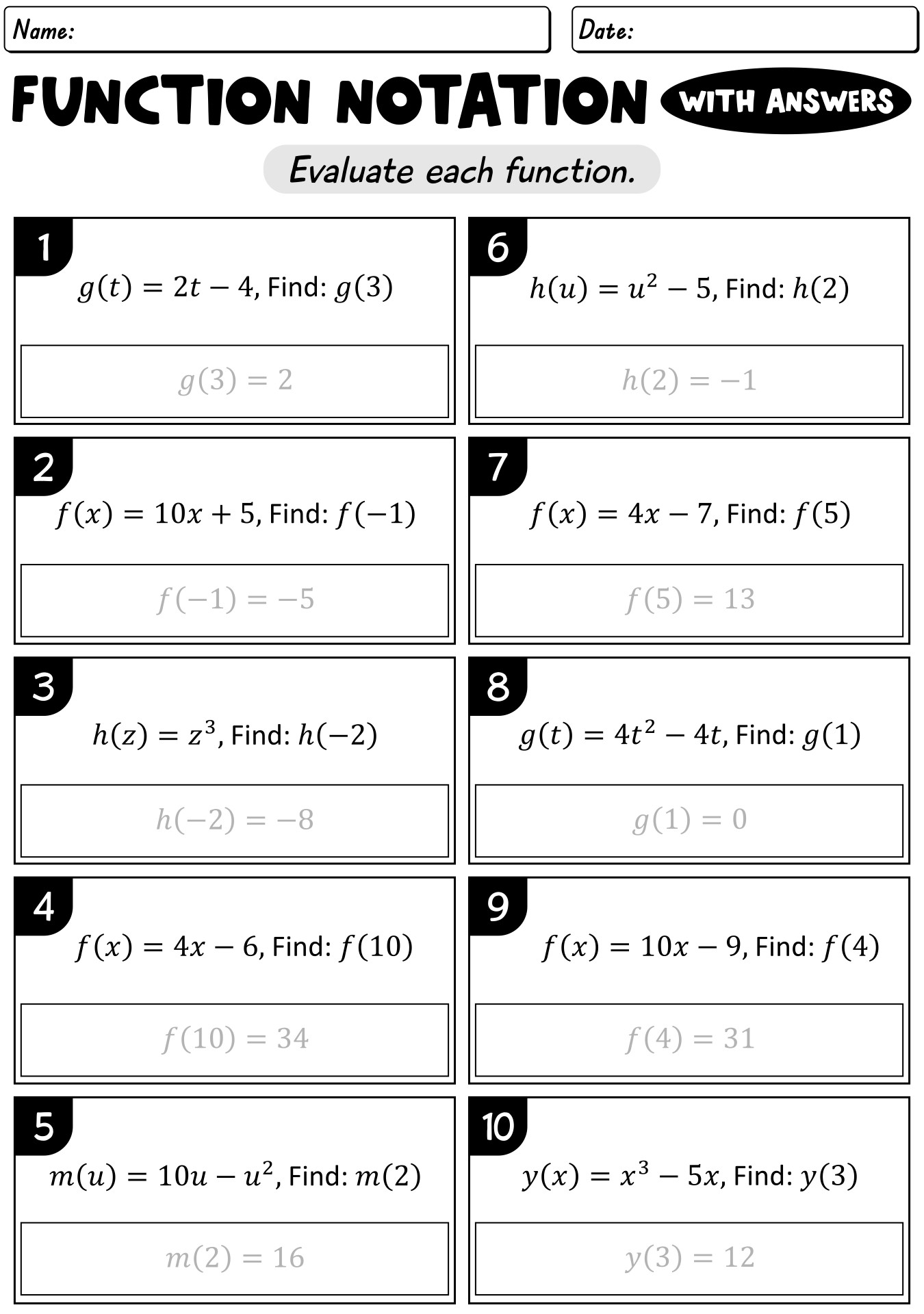
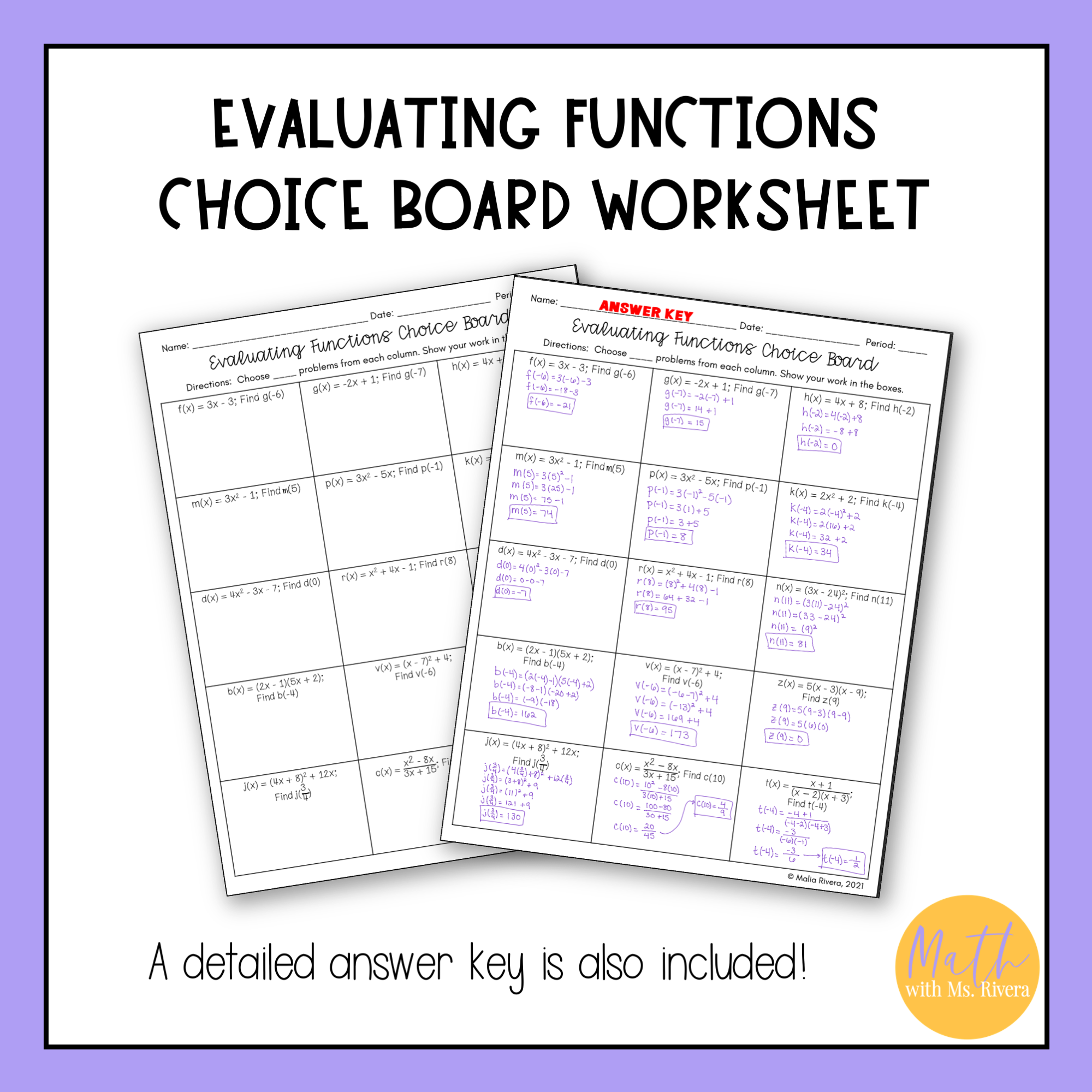
A stellar worksheet is more than a list of problems; it’s a well‑crafted narrative that guides learners from confusion to clarity while keeping them giggling along the way. Think of it as a comedy sketch where each joke lands perfectly, and the punchline is a correct answer.
Clear Function Notation
First, the notation must be crystal clear. Use familiar symbols, label variables, and avoid unnecessary subscripts that could make a student feel like they’re decoding an alien script. For example, write f(x) = 3x + 4 instead of ƒ₁₈(x₁) = 3x₁ + 4. Simplicity reduces cognitive load, letting students focus on the evaluation process rather than deciphering the problem itself.
Varied Difficulty Levels
A good worksheet should cater to a spectrum of abilities. Start with straightforward linear functions, then graduate to quadratics, piecewise definitions, and even a sprinkle of exponential or trigonometric functions for the brave. This scaffolding approach ensures that every student feels challenged but never overwhelmed, and it keeps the humor flowing as they graduate from “I think I got it” to “I actually got it!”
Visual Appeal
Humor can be embedded visually, too. Add goofy cartoons of calculators with speech bubbles, or use quirky fonts for headings (but keep body text readable). Highlight key numbers with bright colors, and include “fun fact” sidebars that relate the math to pop culture—like comparing exponential growth to the number of TikTok videos posted each day. A visually engaging worksheet invites curiosity and reduces the intimidation factor.
Step‑by‑Step Guide to Solving
Even the most seasoned algebraist benefits from a systematic approach. Below is a foolproof method that turns any function evaluation problem into a well‑orchestrated dance.
Identify the Function
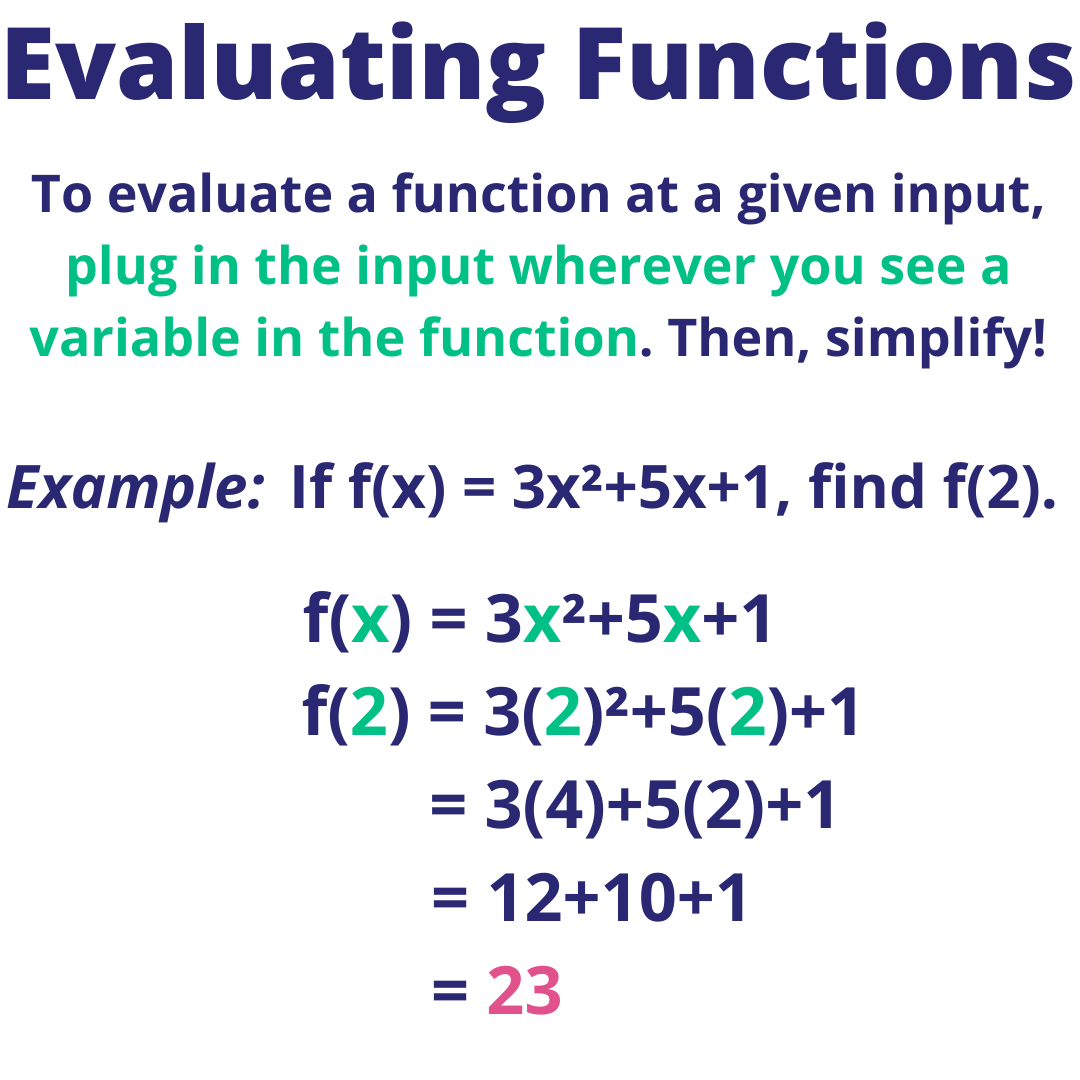
Read the problem carefully and write down the function in your own words. Is it linear, quadratic, or something exotic? For instance, if the worksheet says “Find f(5) for f(x) = 2x² – 3x + 7,” note that you’re dealing with a quadratic. This mental labeling primes your brain for the type of arithmetic you’ll need.
Plug in the Input
Replace the independent variable with the given number. Using the previous example, substitute x = 5 to get f(5) = 2·5² – 3·5 + 7. Write this step explicitly; it prevents the dreaded “I forgot to substitute” error that haunts many a homework session.
Simplify Carefully
Now perform the arithmetic in the correct order—exponents, multiplication/division, then addition/subtraction (the good old PEMDAS). So, 2·5² = 2·25 = 50, then 3·5 = 15. The expression becomes 50 – 15 + 7, which simplifies to 42. Highlight the final answer, perhaps with a celebratory emoji if the worksheet allows it.
Double‑Check Your Work
Never trust your first pass. Re‑evaluate the steps, or plug the answer back into the function if possible. In the example, you could quickly recompute: 2·25 = 50, 50 – 15 = 35, 35 + 7 = 42. A quick sanity check catches slip‑ups before they become permanent marks on the answer sheet.
Common Pitfalls and How to Dodge Them
Even the most diligent students stumble over the same traps. Knowing them ahead of time turns potential embarrassments into teachable moments.
Forgetting Parentheses
Parentheses dictate order. A classic blunder is evaluating f(x) = 3(x + 2) as 3x + 2 instead of 3x + 6. Encourage students to write out the substitution step with parentheses intact—e.g., f(4) = 3(4 + 2)—and then simplify.
Mixing Up Variables
Sometimes worksheets use f(t) or g(x), and students inadvertently substitute the wrong variable. A quick tip: underline the variable in the function definition and circle the input value. Visual cues reinforce the correct mapping.
Rushing Through Simplification
Speed is tempting, but haste makes waste. Skipping intermediate steps often leads to arithmetic errors. Teach students to write each intermediate result on a separate line; the extra space pays dividends in accuracy and confidence.
Creative Ways to Use Worksheets in Teaching
Static worksheets can be transformed into dynamic learning experiences that spark joy and deep understanding.
Gamify the Process
Turn evaluation drills into a game of “Function Bingo.” Provide a grid of target answers; as students compute values, they mark off matching squares. The first to complete a row shouts “Bingo!” and earns a goofy prize—like a gold‑plated pencil (or a sticker, whichever is more realistic).
Collaborative Challenges
Pair students up and give each pair a “mystery function” worksheet. They must solve the problems together, discuss strategies, and present the final answers in a short skit. The collaborative element builds communication skills while reinforcing the evaluation steps.
Real‑Life Data Integration
Pull data from current events—like average daily steps from a fitness tracker or temperature trends from a weather website—and ask students to model the data with a function. Then have them evaluate the function for future dates, turning abstract math into a predictive tool that feels relevant and exciting.
Tips for Creating Your Own Worksheet
Designing a worksheet that balances rigor, humor, and engagement is an art form. Follow these guidelines to become a worksheet wizard.
Choose Relevant Functions
Select functions that align with your curriculum and students’ interests. Linear functions for budgeting, quadratic functions for projectile motion, and exponential functions for population growth are all solid choices. Sprinkle in a “fun” function—like f(x) = 7x + π—to keep things light.
Balance the Challenge
Include a mix of easy, moderate, and challenging problems. Start with a warm‑up (e.g., evaluate f(2) for f(x) = x + 1), then move to a mid‑level problem (e.g., evaluate a quadratic), and finish with a “brain teaser” that requires multi‑step reasoning. This progression keeps motivation high.
Add Humor
Inject jokes related to the content. For instance, after a problem about pizza slices, add a footnote: “If you evaluate the function incorrectly, you might end up with a pizza that has negative slices—don’t try that at home!” Humor makes the worksheet memorable and reduces math anxiety.
Frequently Asked Questions
Below are answers to the most common queries teachers and students have about evaluating functions worksheets.
How many worksheets per week?
Quality beats quantity. One well‑designed worksheet every week, paired with interactive activities, often yields better retention than daily drudgery. Adjust frequency based on class size, pacing, and student feedback.
Can I use worksheets for remote learning?
Absolutely. Convert the worksheet to a digital PDF, embed it in a learning management system, and encourage students to annotate with a stylus or mouse. Add video walkthroughs for tricky problems to maintain engagement.
What age group is appropriate?
Function evaluation appears in middle school algebra (around grades 7‑8) and continues through high school. However, the humor and real‑world examples can be tailored for younger or older audiences, making the concept adaptable across a broad age spectrum.
Conclusion
Evaluating functions is the unsung hero of algebra, turning abstract symbols into actionable information. By crafting engaging, humor‑infused worksheets, educators can demystify this essential skill, boost student confidence, and perhaps even inspire the next generation of mathematically savvy meme creators. Remember to keep the notation clear, vary difficulty, add visual flair, and always double‑check your work—just as you’d advise your students. With these strategies in hand, you’re ready to turn every worksheet into a laugh‑filled learning adventure that sticks long after the last answer is graded.









Related posts of "Evaluating Functions Worksheet Algebra"
