Energy Potential And Kinetic Worksheets are the secret ingredients that turn a classroom into a lively laboratory where students feel the pulse of physics in their fingertips, just as the gentle rhythm of a bamboo wind chime awakens the senses on a quiet courtyard. In the vibrant spirit of Asian pedagogy—where curiosity, respect for nature, and collaborative learning blend seamlessly—these worksheets become more than printable pages; they are bridges that connect abstract concepts to everyday marvels, from the soaring kite to the humming train. This guide will walk you through why these worksheets matter, how to select the most effective ones, and practical strategies to embed them into your teaching repertoire, ensuring every learner experiences the wonder of potential and kinetic energy.
Why Energy Potential And Kinetic Worksheets Matter
Grounding Theory in Tangible Experience
In many Asian educational traditions, learning is anchored in concrete experience before moving to abstraction. Worksheets that pose real‑world scenarios—like a rolling mango on a sloping hill or a bamboo shoot springing upward—allow students to visualize energy transformation. When learners see that a mango’s stored potential energy converts into motion, they internalize the law of conservation without wrestling with dense formulas.
Building Confidence Through Step‑by‑Step Practice
Repetition is a hallmark of mastery. Well‑crafted worksheets break complex problems into manageable steps: identify the type of energy, calculate the magnitude, then predict the outcome. This scaffolding mirrors the disciplined practice of calligraphy, where each stroke is deliberate and builds confidence for the next.
Facilitating Collaborative Learning
Group worksheet activities echo the communal spirit of Asian classrooms, where students discuss, debate, and refine their thinking together. Pairing a high‑achiever with a learner who needs extra support creates a balanced dynamic, much like a seasoned chef guiding an apprentice through a delicate recipe.
Key Features of High‑Quality Worksheets
Clear Visuals and Illustrations
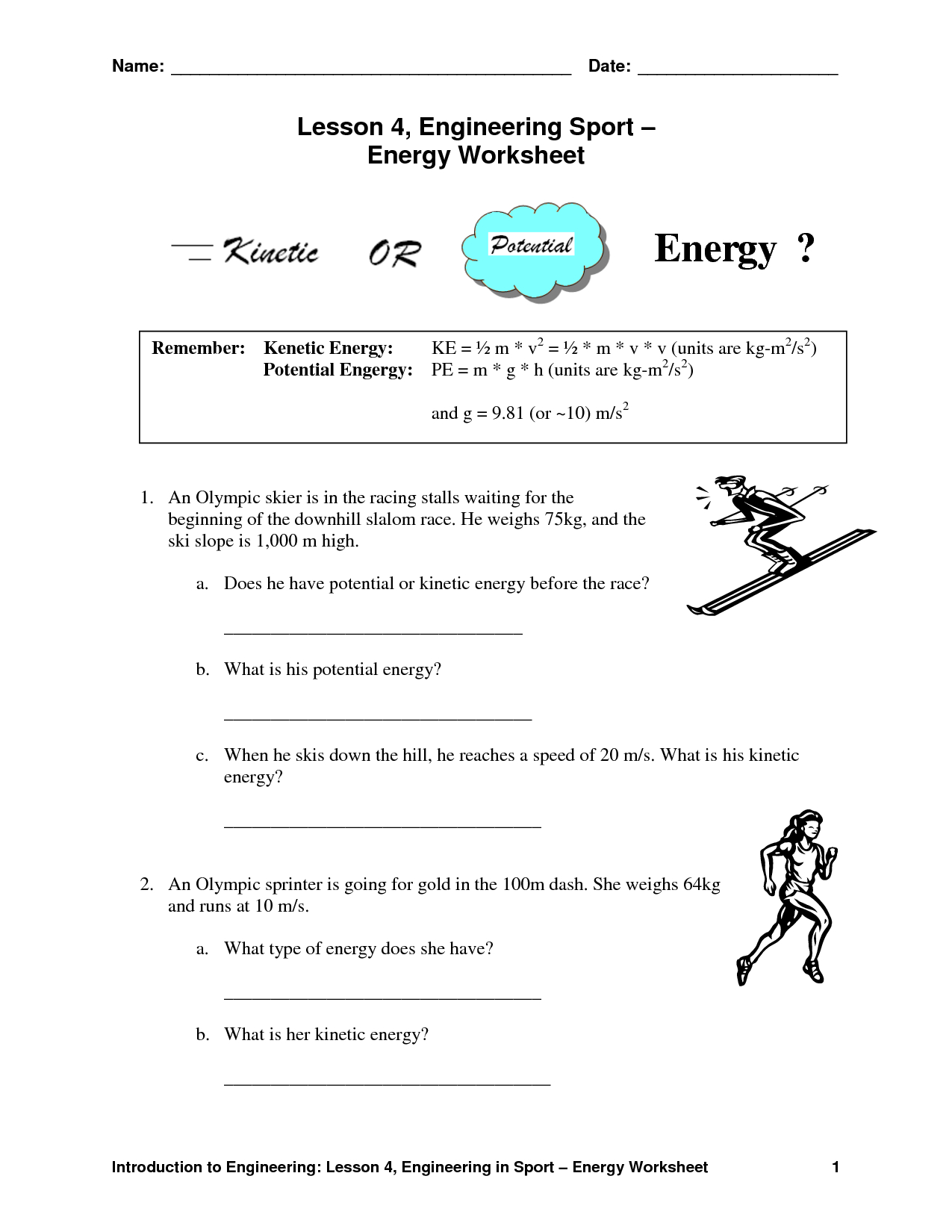
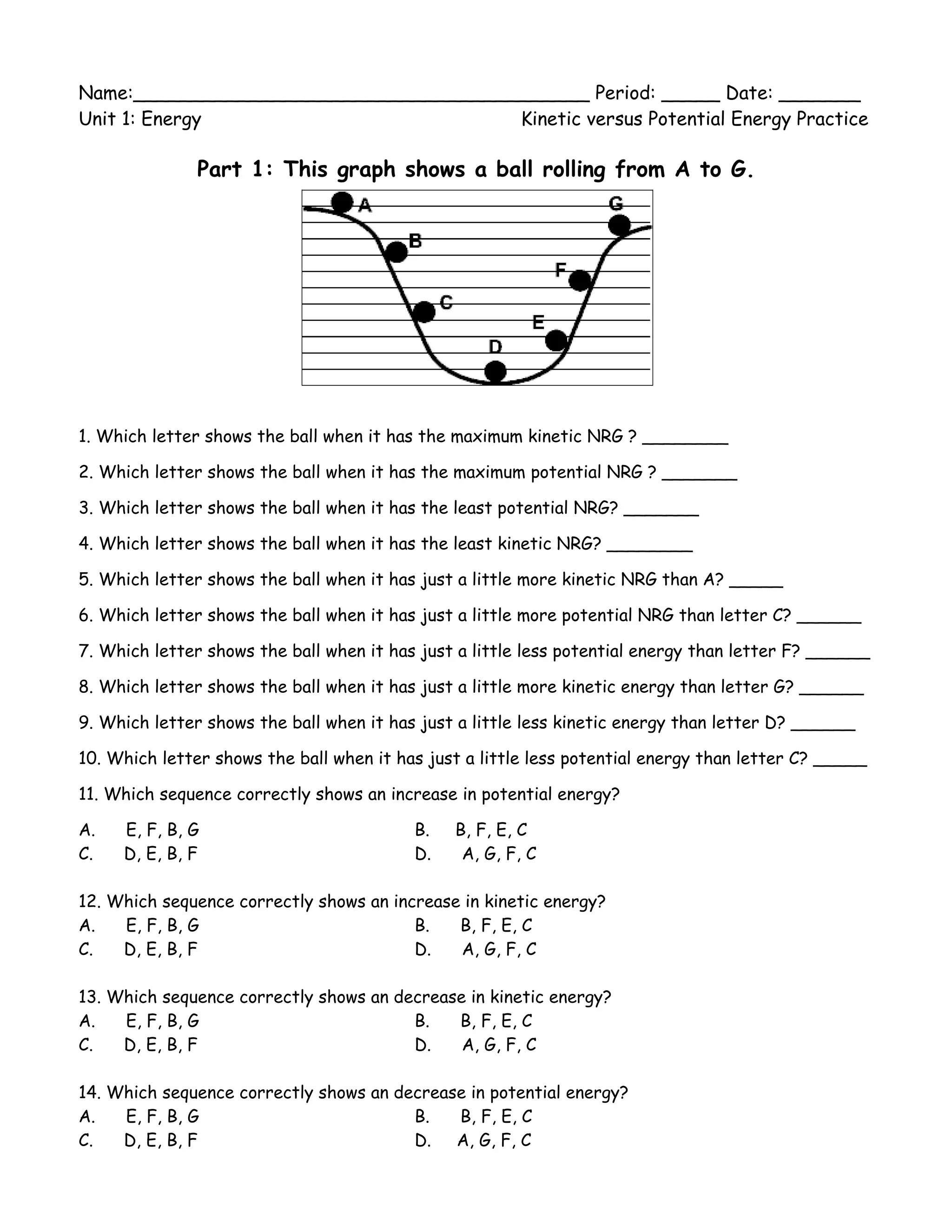
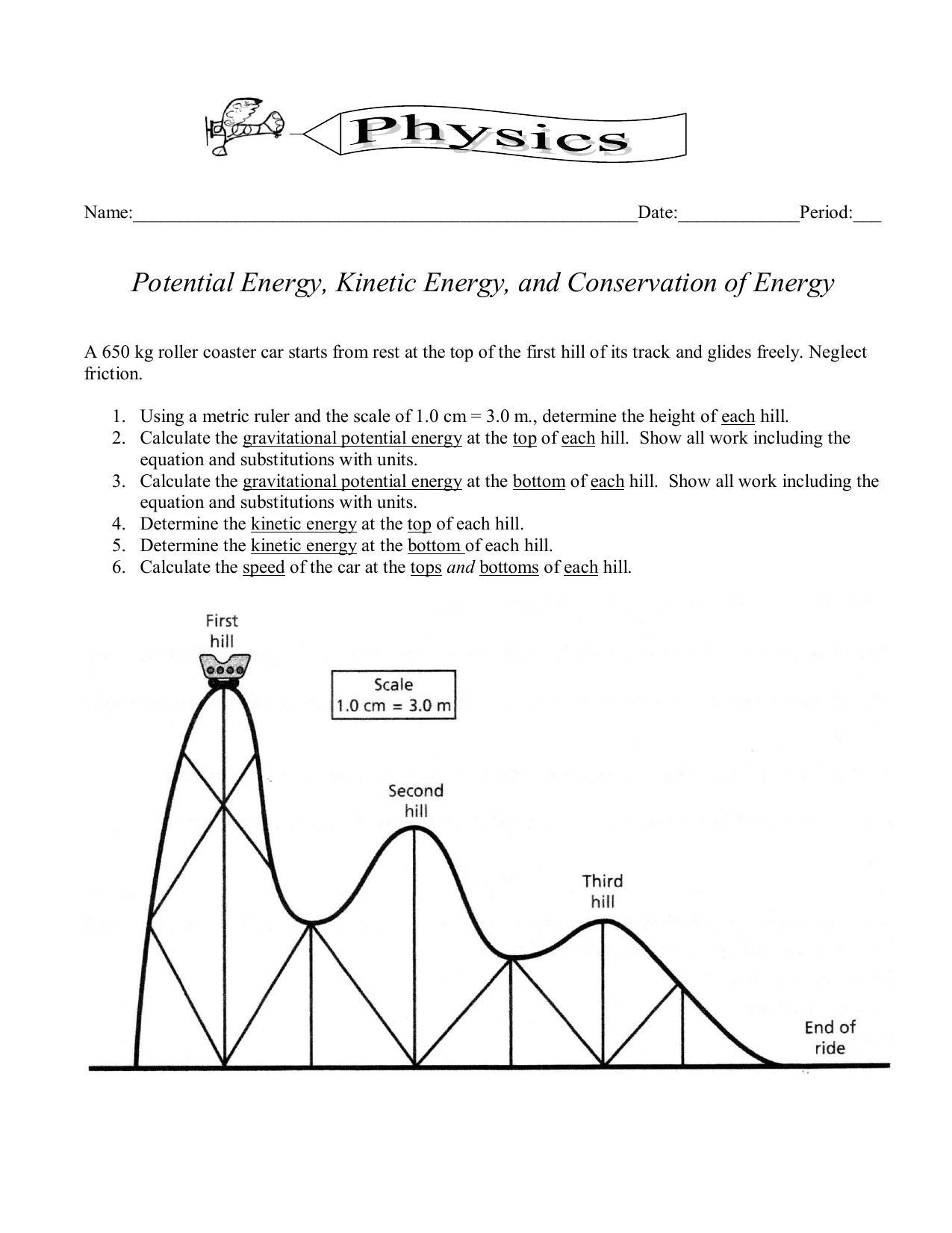
Images of rolling balls, swinging pendulums, or spring‑loaded toys act as visual cues that bridge language barriers and stimulate imagination. When a diagram shows a toy car at the top of a ramp, students instantly grasp the concept of gravitational potential energy.
Progressive Difficulty Levels
Start with simple identification tasks, then advance to calculations involving mass, height, velocity, and friction. This gradient mirrors the gradual ascent of a mountain trail, ensuring learners are never overwhelmed but always challenged.
Real‑World Contextual Questions
Questions that reference everyday life—such as the energy stored in a rice cooker’s heating element or the kinetic energy of a bustling subway—make the content relatable. Connecting physics to familiar experiences deepens retention.
Answer Keys with Detailed Explanations
Beyond giving the correct number, a thorough solution explains each step, just as a wise teacher would narrate the reasoning behind a traditional proverb. This helps students self‑correct and understand the underlying logic.
How to Integrate Worksheets Into Your Lesson Plan
Pre‑Lesson Warm‑Up
Begin with a quick discussion or demonstration. For example, roll a wooden dowel down a slanted board and ask, “What type of energy does it have at the top? At the bottom?” Follow this with a short worksheet that asks students to label each stage. This primes curiosity and sets a purpose for the activity.
Guided Practice
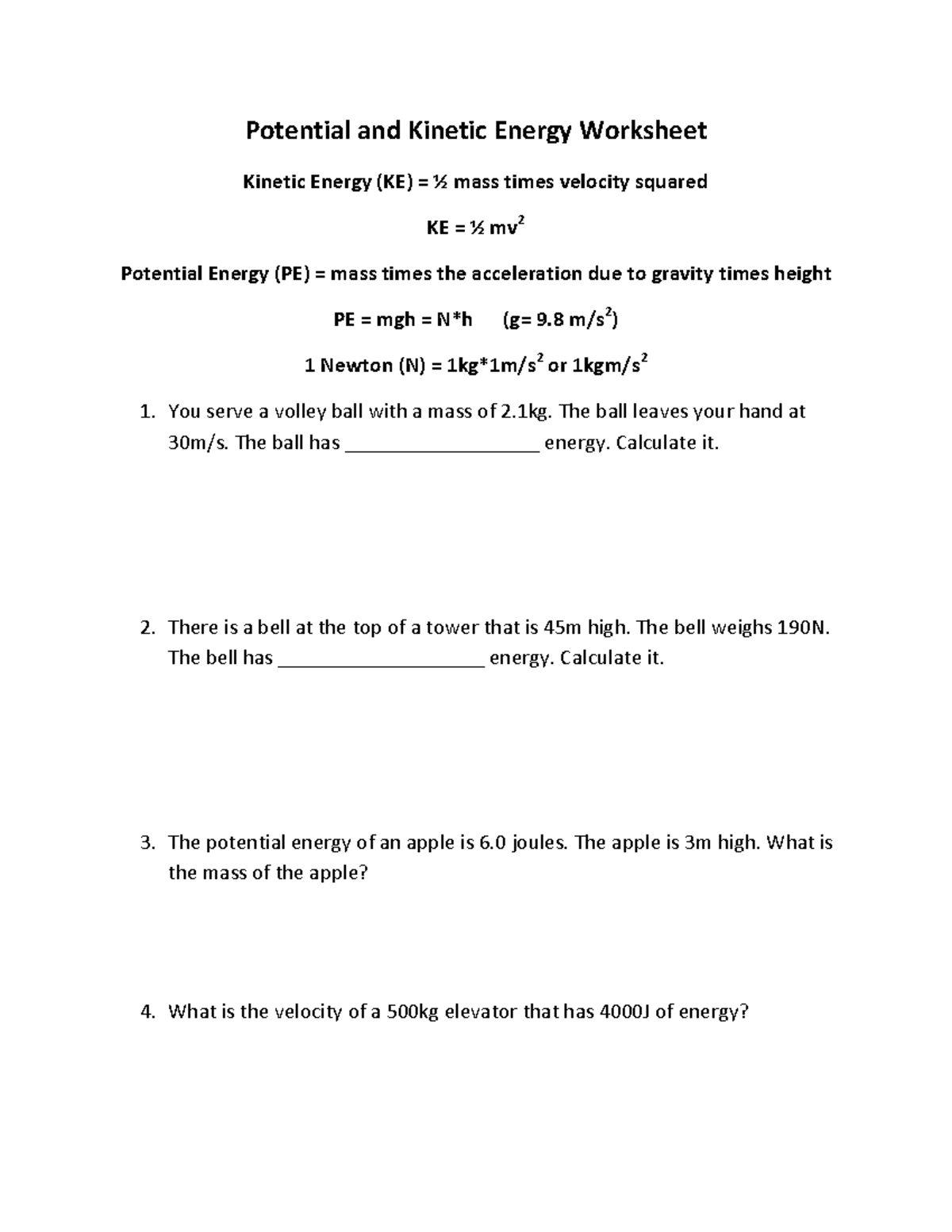
Distribute worksheets that contain partially completed examples. Walk through the first problem together, modeling the thought process: identify forces, write the relevant equation (e.g., PE = mgh), substitute values, and solve. Encourage students to echo each step aloud, reinforcing auditory learning.
Independent Exploration
After the guided portion, hand out a set of problems that require students to design their own scenarios. Prompt them to sketch a scene—perhaps a koi pond with a water wheel—and calculate the energy conversion. This nurtures creativity while cementing technical skills.
Collaborative Review
Organize a “gallery walk” where each group posts their worksheet solutions on the wall. Peers circulate, leave sticky‑note feedback, and discuss alternative approaches. This mirrors the communal critique found in traditional Asian art workshops, where artists learn from each other’s perspectives.
Assessment and Reflection
Conclude with a brief quiz or a reflective journal entry: “What surprised you about how energy changes form?” This invites metacognition, allowing students to articulate their learning journey.
Sample Worksheet Activities
1. The Rolling Bamboo Log
Objective: Calculate the kinetic energy of a log rolling down a hill.
- Given: Mass = 12 kg, height of hill = 3 m, angle of slope = 15°.
- Task: Determine the potential energy at the top, the speed at the bottom assuming negligible friction, and the kinetic energy.
- Extension: Discuss how adding a rough surface would alter the outcome.
2. Spring‑Powered Lantern
Objective: Explore elastic potential energy and its conversion to kinetic energy.
- Given: Spring constant k = 250 N/m, compression distance x = 0.2 m.
- Task: Compute the stored elastic energy, then calculate the velocity of a lantern released from the spring.
- Extension: Compare the result with a lantern powered by a small battery, highlighting efficiency differences.
3. Kinetic Energy of a Street Food Cart
Objective: Relate kinetic energy to everyday motion.
- Scenario: A street food cart (mass 80 kg) moves at 2 m/s.
- Task: Find the kinetic energy, then estimate the energy needed to bring the cart to a stop within 3 seconds using brakes.
- Extension: Discuss how the concept applies to safety features on public transportation.
4. Energy Chain Reaction
Objective: Visualize sequential energy transformations.
- Set up: A marble rolls down a ramp, hits a lever, which launches a paper airplane.
- Task: Identify each form of energy at every stage (potential → kinetic → elastic → kinetic) and calculate approximate values using provided dimensions.
- Extension: Encourage students to redesign the setup to maximize distance traveled by the airplane.
Adapting Worksheets for Diverse Learners
Language Support
Include bilingual glossaries—English terms alongside Chinese, Japanese, or Korean equivalents—to aid English Language Learners. Visual icons next to key vocabulary (e.g., a spring symbol for “elastic”) reinforce meaning.
Differentiated Difficulty
Offer tiered worksheets: basic identification for younger students, multi‑step calculations for advanced learners, and open‑ended design challenges for gifted students. This ensures every child works within their zone of proximal development.
Hands‑On Integration
Pair worksheets with simple experiments using household items: rubber bands, toy cars, or water bottles. When students can physically feel the energy shift, the abstract numbers become vivid sensations.
Tips for Creating Your Own Worksheets
Start With a Clear Learning Goal
Define whether the worksheet targets identification, calculation, or application. A focused objective keeps the content concise and purposeful.
Use Realistic Numbers
Choose values that are easy to compute mentally or with a basic calculator, avoiding overly large or fractional numbers that may distract from conceptual understanding.
Incorporate Storytelling
Frame problems as short narratives—perhaps a monk balancing a lantern on a temple roof. Stories engage the cultural imagination and make the physics memorable.
Provide Visual Layouts
Include tables for data, labeled diagrams, and ample whitespace. This mirrors the clean aesthetics of Asian design, reducing cognitive overload.
Test and Revise
Run a pilot with a small group of students. Observe where confusion arises, then refine wording or add hints. Iterative improvement reflects the continuous polishing of a bonsai tree.
Measuring Impact and Continuous Improvement
Formative Assessment Data
Collect worksheet scores, note common errors, and track progress over time. Use this data to adjust instruction, much like a master chef tweaks seasoning based on diners’ feedback.
Student Self‑Reflection
Ask learners to write a brief reflection: “What did I learn about how energy changes form?” Their insights reveal depth of understanding and highlight areas needing reinforcement.
Parent and Community Involvement
Share selected worksheet activities with families, encouraging at‑home experiments using everyday objects. Engaging the broader community reinforces learning, reminiscent of traditional village gatherings where knowledge is shared collectively.
Conclusion
By weaving Energy Potential And Kinetic Worksheets into the fabric of your classroom, you create a learning environment that honors the Asian values of harmony, perseverance, and experiential insight while resonating with an American audience eager for engaging, hands‑on science. Thoughtfully designed worksheets transform abstract equations into living stories, empower students to explore energy in the world around them, and cultivate a lifelong curiosity that extends far beyond the textbook. Embrace these tools, adapt them with cultural sensitivity, and watch your students illuminate the principles of physics with the same brilliance as lanterns lighting a moonlit night.







Related posts of "Energy Potential And Kinetic Worksheets"
