Dna And Rna Worksheet resources have become essential tools for teachers, tutors, and curious learners who want to explore the molecular foundations of life in an interactive, hands‑on way. By turning abstract concepts like nucleotides, transcription, and translation into printable activities, these worksheets bridge the gap between textbook theory and real‑world understanding. In this comprehensive guide we will unpack why DNA and RNA worksheets matter, highlight the most effective design elements, and provide step‑by‑step strategies for classroom implementation, home study, and creative extensions that keep students engaged from the first line to the final review question.
Why Worksheets Matter in DNA and RNA Education
Worksheets serve as a tactile anchor for complex scientific ideas. When students color, label, and match terms, they activate multiple learning pathways—visual, kinesthetic, and linguistic—simultaneously. This multimodal approach improves retention, especially for topics that involve intricate structures and processes. Moreover, worksheets offer a low‑stakes environment for formative assessment; teachers can quickly gauge comprehension and adjust instruction before moving onto more advanced content such as gene expression regulation or epigenetics.
Supporting Different Learning Styles
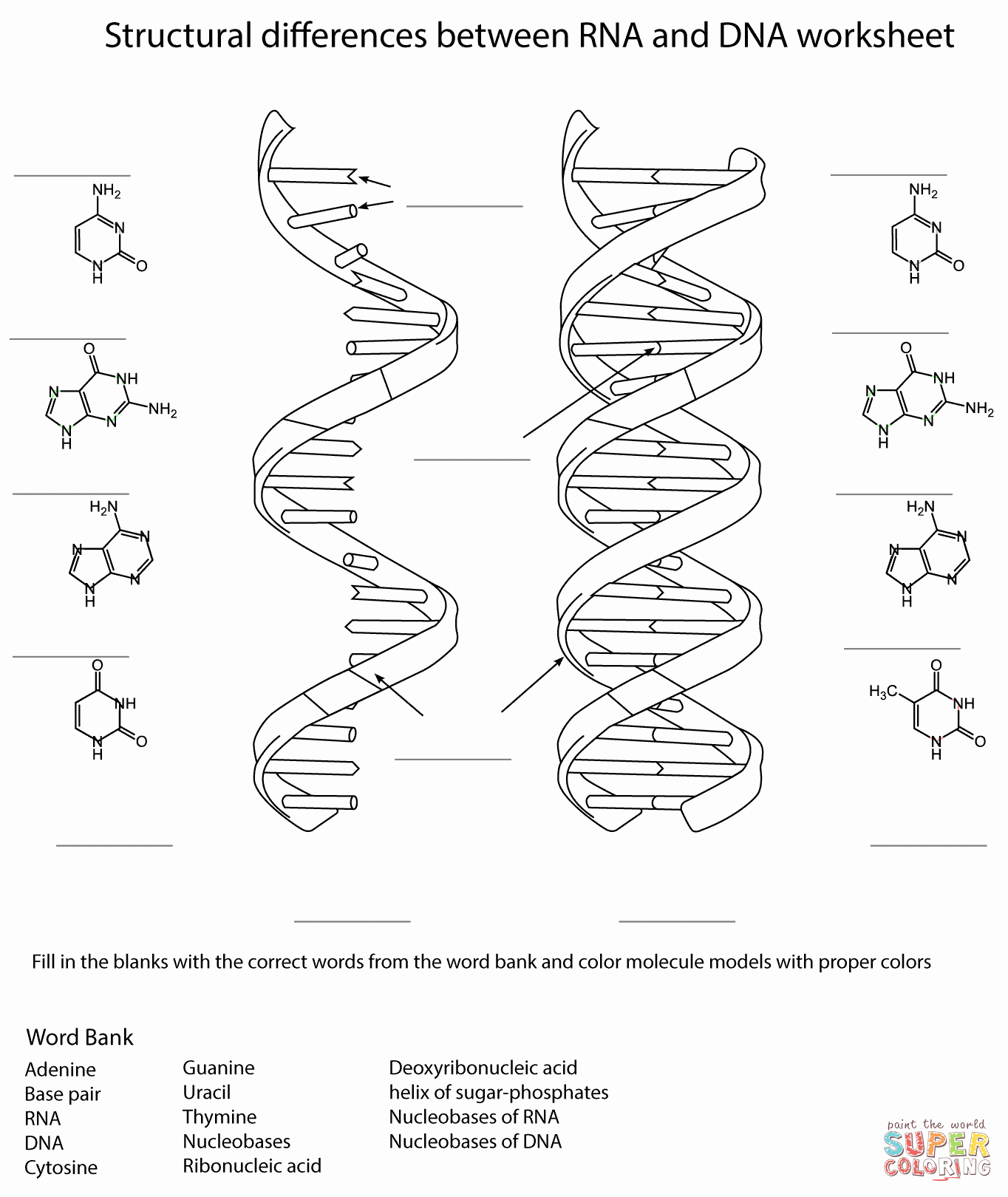
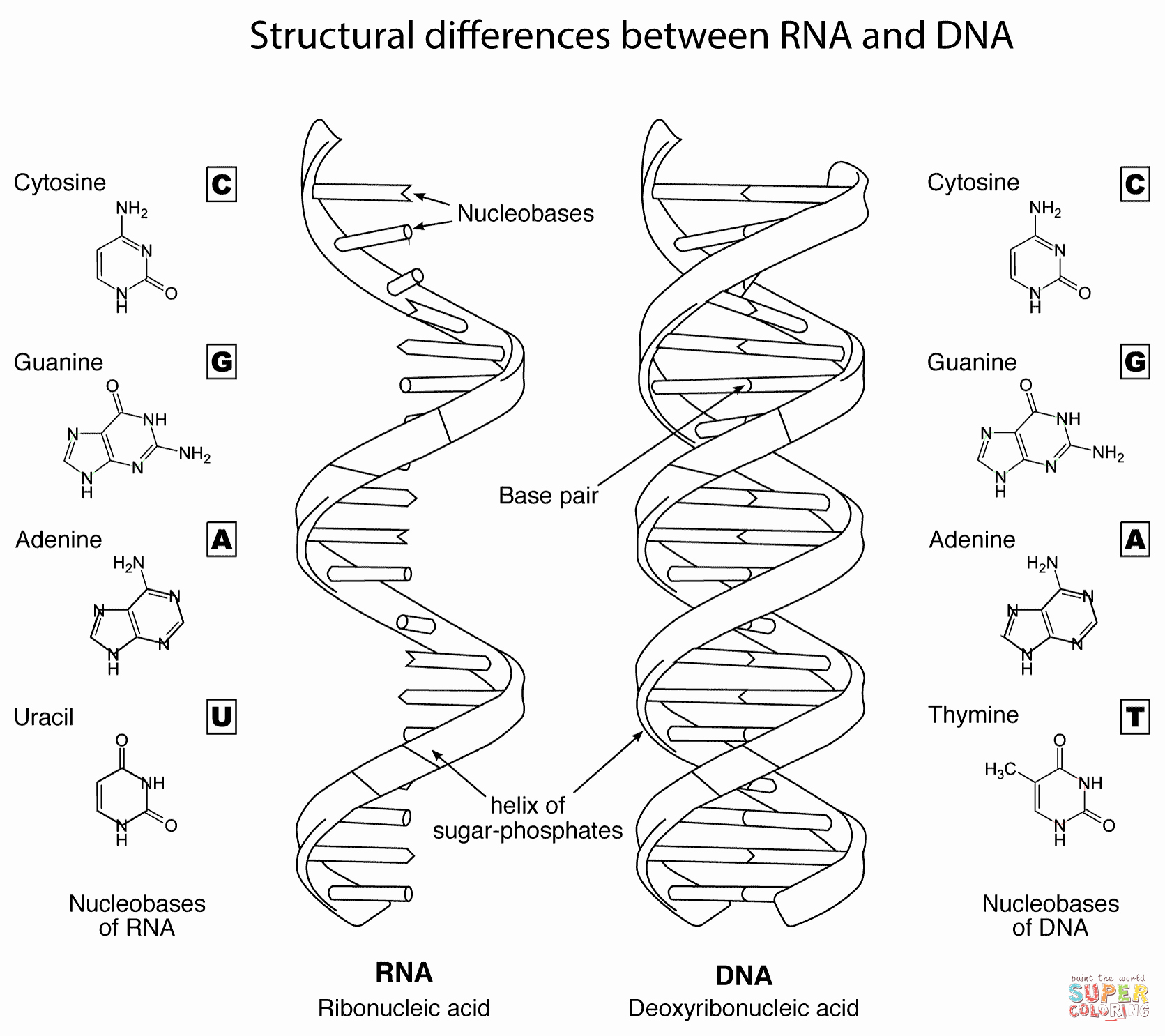
Visual learners benefit from diagrams that illustrate the double helix, complementary base pairing, and the distinct shapes of DNA versus RNA. Kinesthetic learners gain confidence by physically drawing or coloring the backbone and nucleotide components. Auditory learners can reinforce concepts by discussing the worksheet prompts aloud or pairing the activity with a short explanatory video. By catering to these diverse preferences, a well‑crafted worksheet maximizes classroom inclusivity.
Building Foundational Literacy
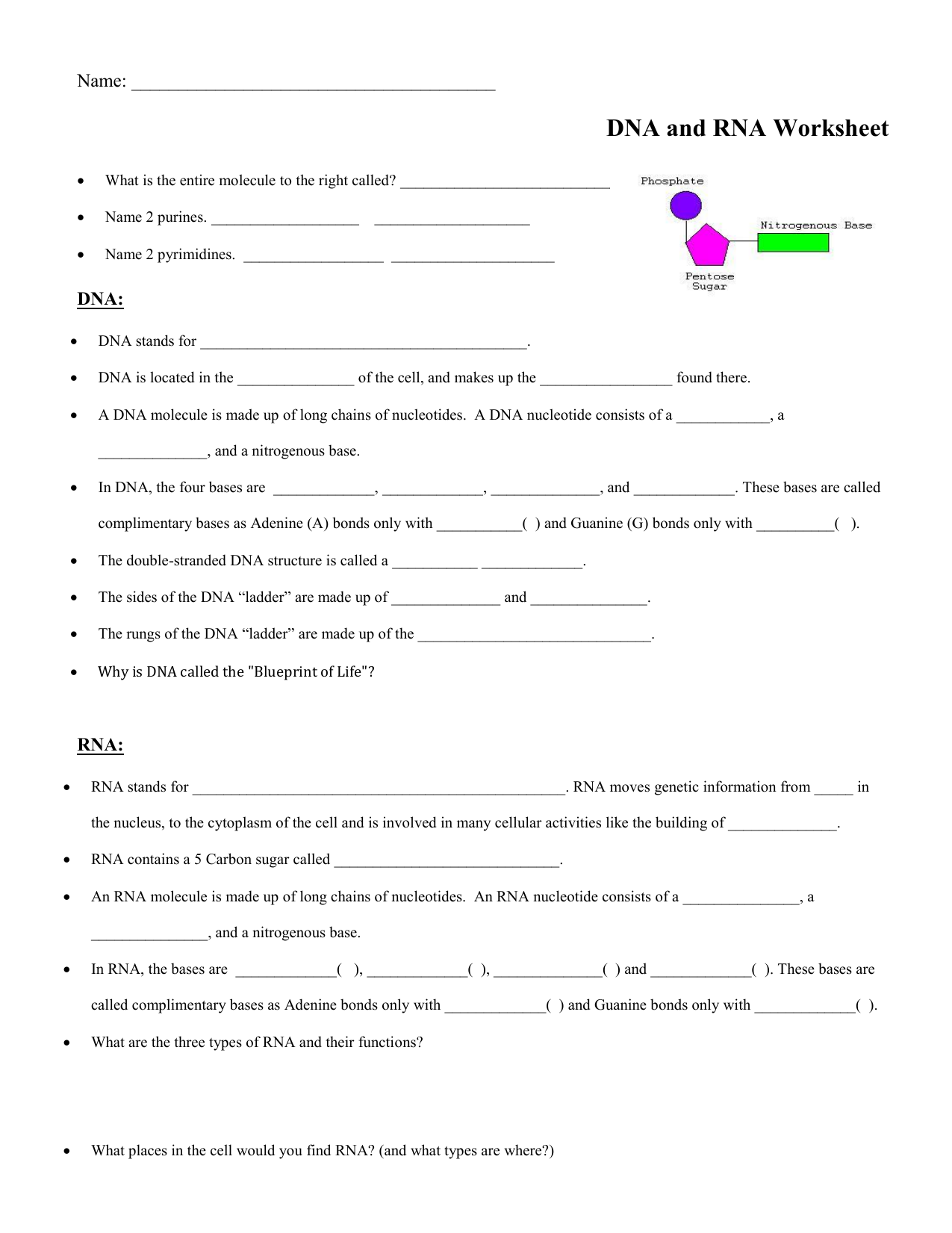
Scientific literacy begins with a solid grasp of vocabulary. Worksheets that require students to define terms such as “phosphate group,” “adenine,” or “ribosome” embed these words in context, making recall easier during quizzes or lab work. Repetition through varied worksheet activities—matching, fill‑in‑the‑blank, and short answer—helps transfer terminology from short‑term memory to long‑term mastery.
Key Features of an Effective DNA and RNA Worksheet
Not every worksheet delivers the same educational punch. The most impactful designs share several hallmark characteristics that promote engagement and deep learning.
Clear Learning Objectives
Each worksheet should begin with a concise statement of what students will know or be able to do by the end. For example, “Students will be able to differentiate between DNA and RNA structures and explain the role of each nucleotide in transcription.” This clarity guides both teacher instruction and student focus.
Accurate Scientific Content
Accuracy is non‑negotiable. Diagrams must reflect the correct number of strands, sugar types (deoxyribose vs. ribose), and base pairing rules (A‑T/U, C‑G). Errors not only confuse learners but also undermine trust in the educator. Peer review by a biology specialist or referencing a reputable curriculum standard can safeguard content quality.
Progressive Difficulty
A balanced worksheet moves from simple recall to higher‑order thinking. Begin with labeling the backbone, then progress to explaining why RNA contains uracil instead of thymine, and culminate with a scenario‑based question that asks students to predict the effect of a point mutation on protein synthesis.
Interactive Elements
Color‑by‑code sections, drag‑and‑drop templates (if digital), and fill‑in‑the‑blank tables encourage active participation. Interactive components also make the worksheet more memorable; a student who colors the phosphate group purple is more likely to recall that phosphate contributes to the molecule’s negative charge.
Real‑World Connections
Linking the worksheet to everyday examples—such as how DNA testing solves crime or how RNA vaccines work—demonstrates relevance. When learners see the direct impact of molecular biology on health, technology, and society, motivation spikes.
How to Use the Worksheet in the Classroom
Implementing a worksheet effectively requires thoughtful planning, clear instructions, and purposeful follow‑up activities. Below is a step‑by‑step framework that teachers can adapt to any grade level.
Preparation Phase
- Print copies on quality paper to allow coloring without bleed‑through.
- Gather colored pencils or markers that correspond to the worksheet’s key.
- Prepare a short introductory talk or slide deck that reviews essential vocabulary before handing out the worksheet.
Guided Practice
Begin with a collective walk‑through. Project the worksheet on a screen, highlight each section, and ask volunteers to label a portion aloud. This shared activity models the expected approach and reduces anxiety.
Independent Work
Allow students 15‑20 minutes to complete the worksheet independently. Encourage them to refer to their notes but not to copy from peers. Circulate the room, offering quick clarifications and positive reinforcement.
Peer Review
After the individual attempt, pair students for a peer‑check. Provide a checklist that includes items such as “All nucleotides labeled,” “Base‑pairing rules correctly applied,” and “Explanation of transcription steps present.” Peer review deepens comprehension by forcing learners to articulate reasoning.
Debrief and Assessment
Conclude with a whole‑class discussion that revisits the learning objectives. Use selected worksheet responses as springboards for further questions: “Why does RNA have a single strand?” or “What would happen if thymine replaced uracil in mRNA?” Finally, collect worksheets for a quick formative assessment; grade on accuracy, completeness, and creativity (color usage).
Creative Activities and Extensions
Beyond the core worksheet, educators can enrich the learning experience with projects that apply DNA and RNA concepts in novel contexts.
Build a 3‑D Model
Supply pipe cleaners, beads, and colored clay to let students construct physical models of DNA double helices and single‑strand RNA. This tactile activity reinforces spatial understanding of helical twists and base pairing.
Design a Mini‑Comic
Ask learners to create a short comic strip that personifies DNA, RNA polymerase, and ribosomes as characters navigating a “cell city.” Storytelling cements process knowledge and encourages artistic expression.
Simulate a Mutation Experiment
Provide a worksheet variant that includes a series of point mutations. Students predict how each change would alter the resulting protein, linking genotype to phenotype. This exercise introduces basic concepts of genetic disease and evolutionary biology.
Integrate Technology
For digital classrooms, convert the worksheet into an interactive Google Slides activity where students drag and drop labeled components onto a blank template. Real‑time feedback can be programmed to highlight correct placements.
Common Pitfalls and How to Avoid Them
Even the best worksheet can fall short if common mistakes go unchecked. Awareness of these pitfalls helps teachers preempt frustration and maintain momentum.
Overloading Information
Including too many details on a single page overwhelms students. Keep the worksheet focused on a handful of key concepts; supplementary handouts can cover additional depth.
Ambiguous Instructions
Vague prompts lead to varied interpretations and uneven grading. Use clear, action‑oriented verbs such as “label,” “explain,” or “compare.” Provide an example answer when possible.
Insufficient Visual Clarity
Low‑resolution images or cramped diagrams hinder comprehension. Ensure all graphics are high‑quality, labeled with legible font sizes, and spaced to allow coloring.
Neglecting Differentiation
One‑size‑fits‑all worksheets may not meet the needs of advanced learners or those requiring extra support. Offer extension tasks for gifted students and simplified versions or scaffolded hints for struggling learners.
Tips for Parents and Home Learning
DNA and RNA worksheets are not confined to the classroom; they can be powerful tools for at‑home enrichment. Parents can adopt the following strategies to maximize benefit.
Create a Mini‑Lab Space
Set up a quiet table with the worksheet, colored pencils, and a printed copy of the periodic table. A calm environment reduces distractions and encourages focus.
Incorporate Everyday Examples
Discuss how the concepts appear in daily life: “Your eye color is determined by DNA,” or “The flu vaccine uses RNA technology.” Relating the worksheet to personal experiences makes the science feel relevant.
Encourage Teaching Back
After completing the worksheet, ask the child to explain the process of transcription to a sibling or parent. Teaching reinforces mastery and reveals any lingering gaps.
Use Online Resources Wisely
Supplement the worksheet with reputable videos or interactive simulations that visualize the DNA replication fork or RNA polymerase movement. Ensure any digital content aligns with the worksheet’s objectives to avoid confusion.
Conclusion
Incorporating a Dna And Rna Worksheet into educational routines offers a proven pathway to deepen understanding of molecular biology while fostering engagement, critical thinking, and scientific literacy. By selecting worksheets that feature clear objectives, accurate content, progressive difficulty, and interactive elements, teachers and parents can create a rich learning environment that resonates beyond the classroom. Thoughtful implementation—starting with guided practice, moving through independent work, and ending with reflective discussion—ensures that students not only memorize facts but also grasp the underlying mechanisms that drive life at the molecular level. With creative extensions, awareness of common pitfalls, and supportive home strategies, the worksheet becomes more than a static handout; it transforms into a dynamic catalyst for curiosity, discovery, and lasting knowledge about DNA, RNA, and the wondrous processes they power.
Related posts of "Dna And Rna Worksheet"
