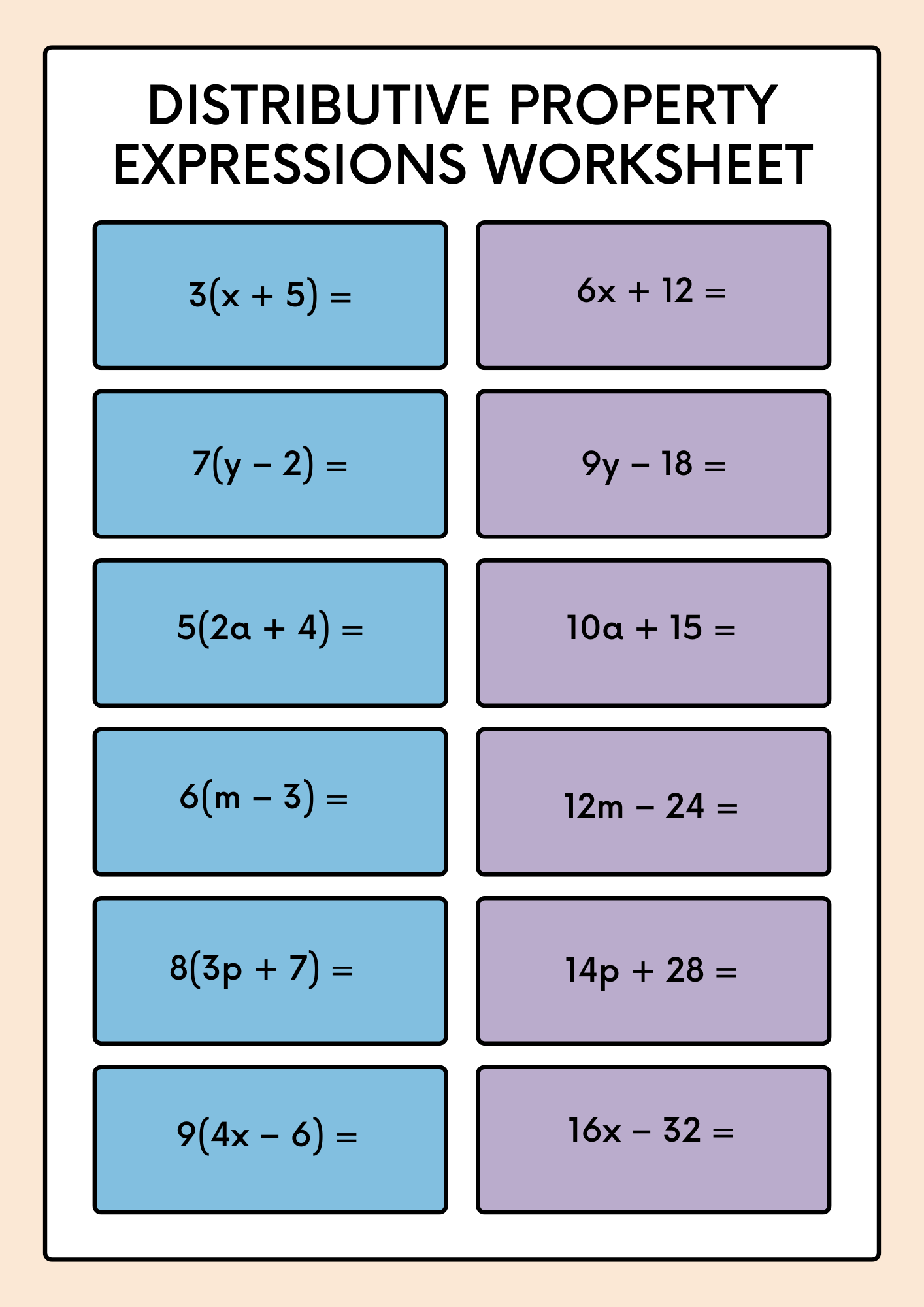
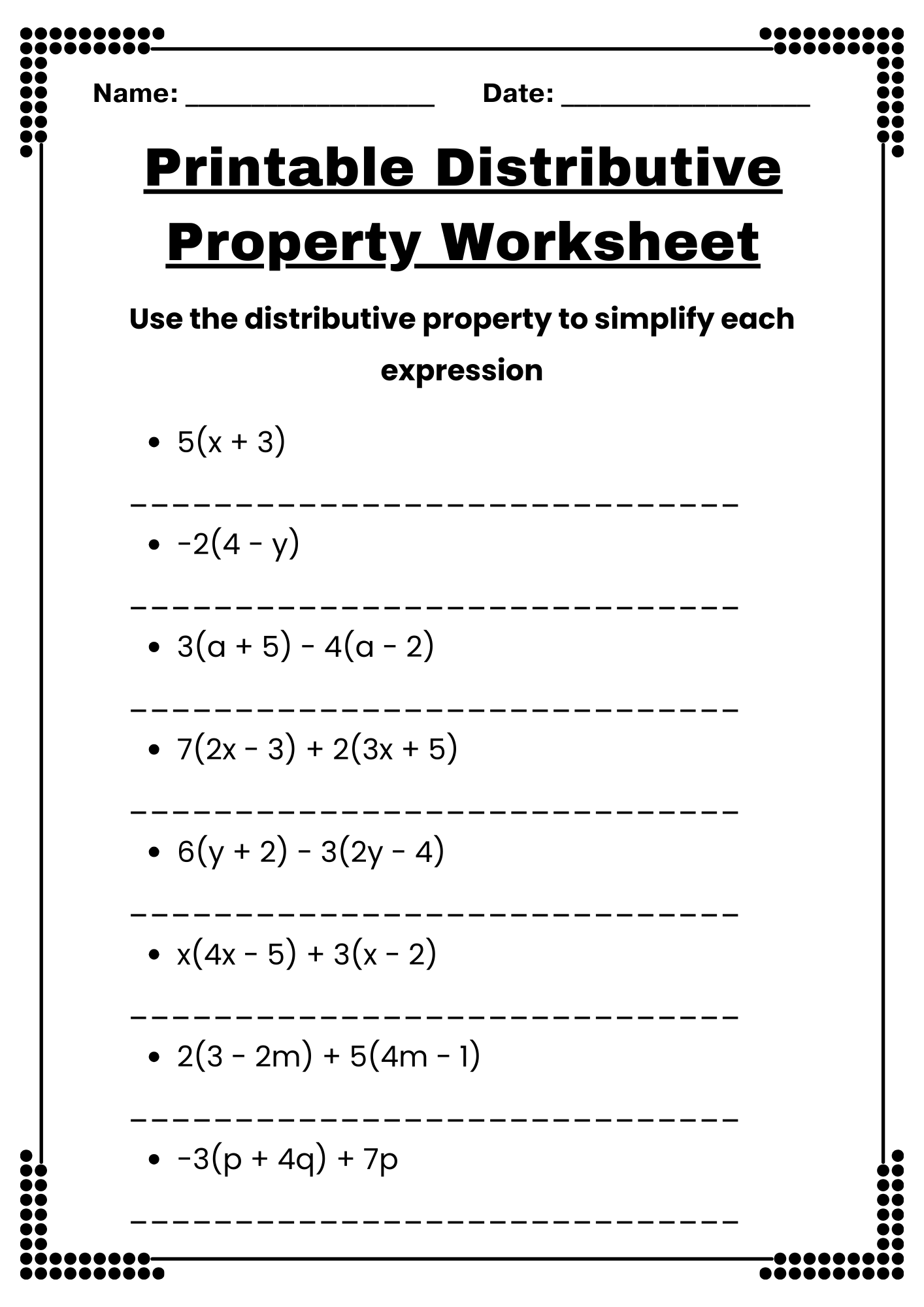
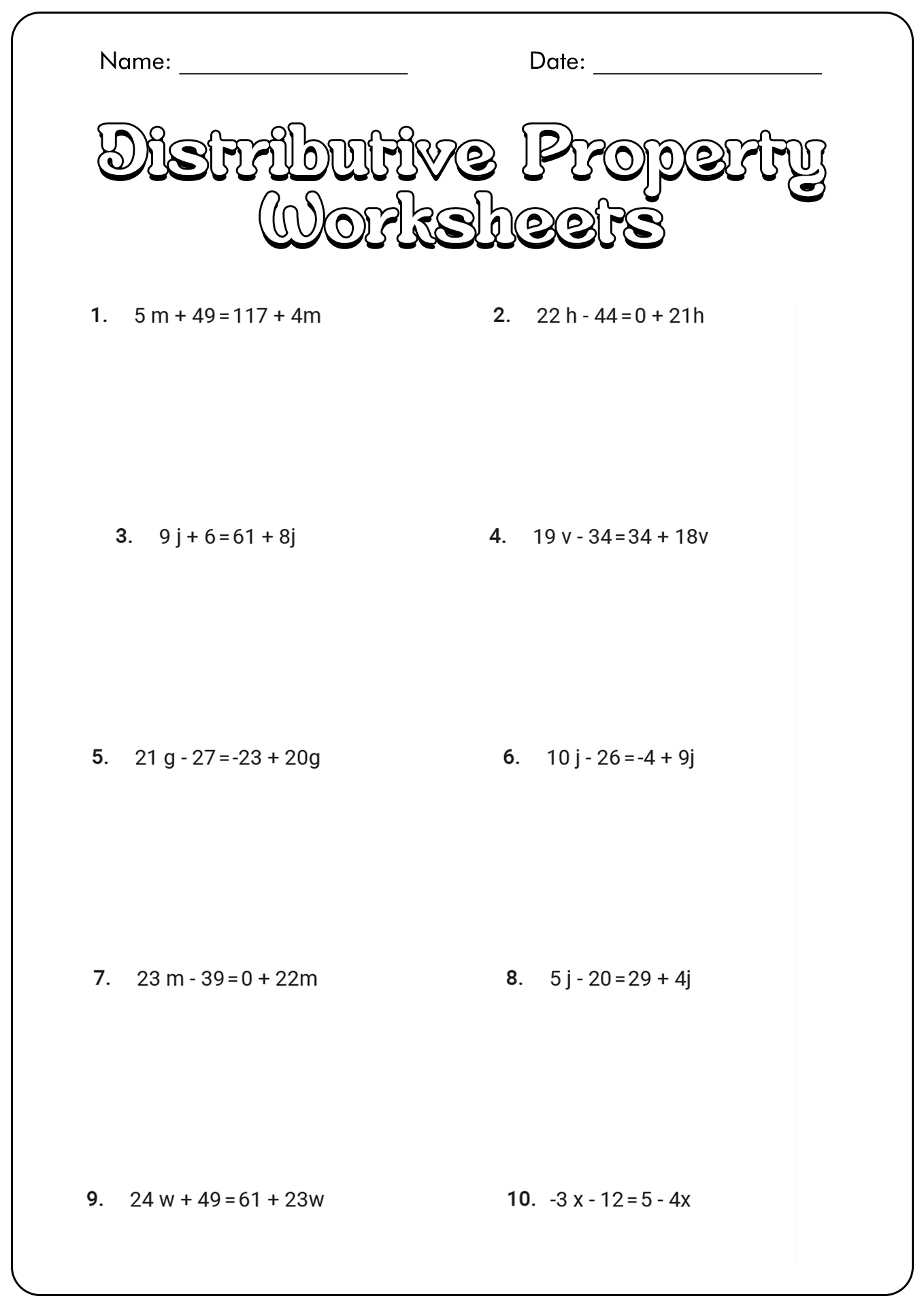
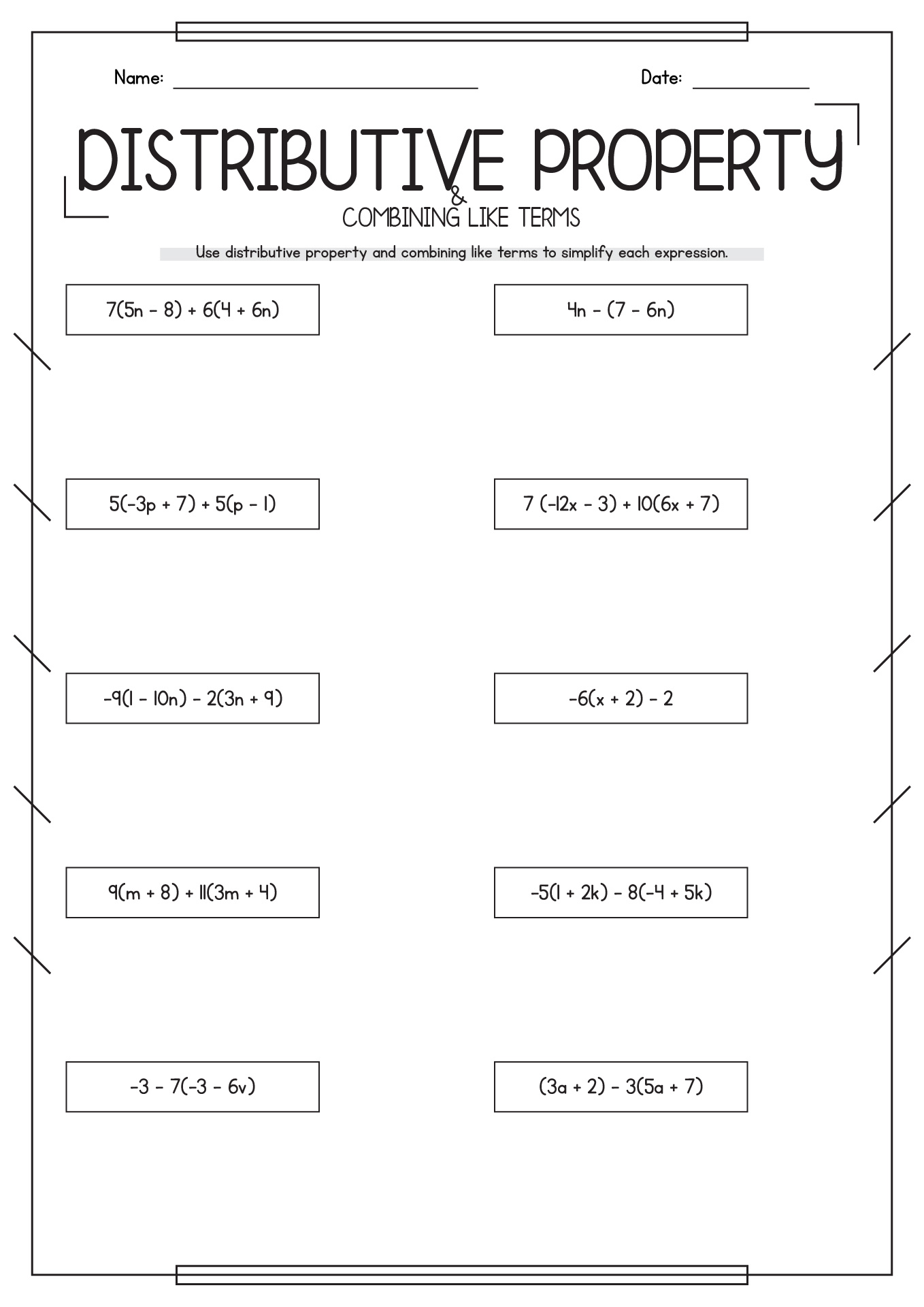
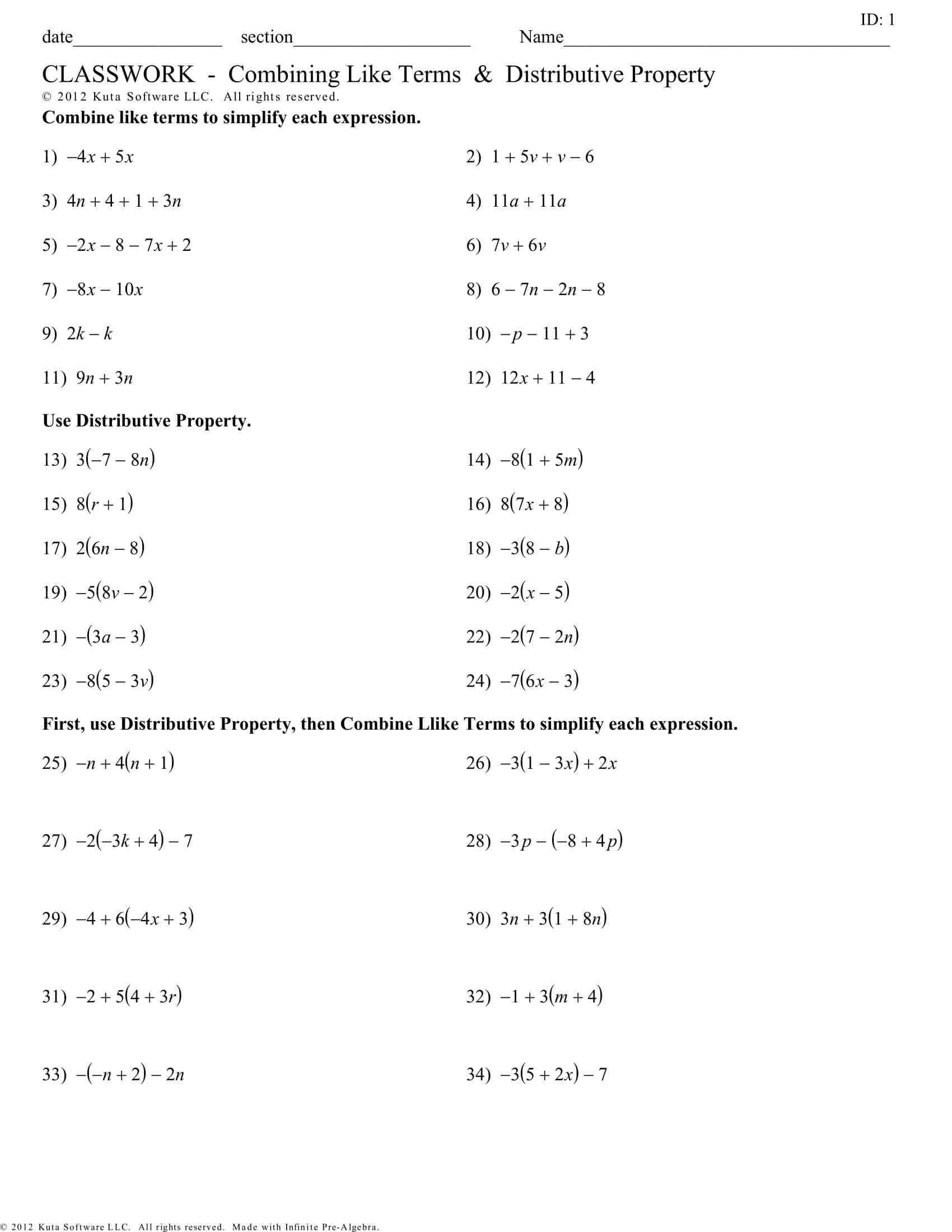
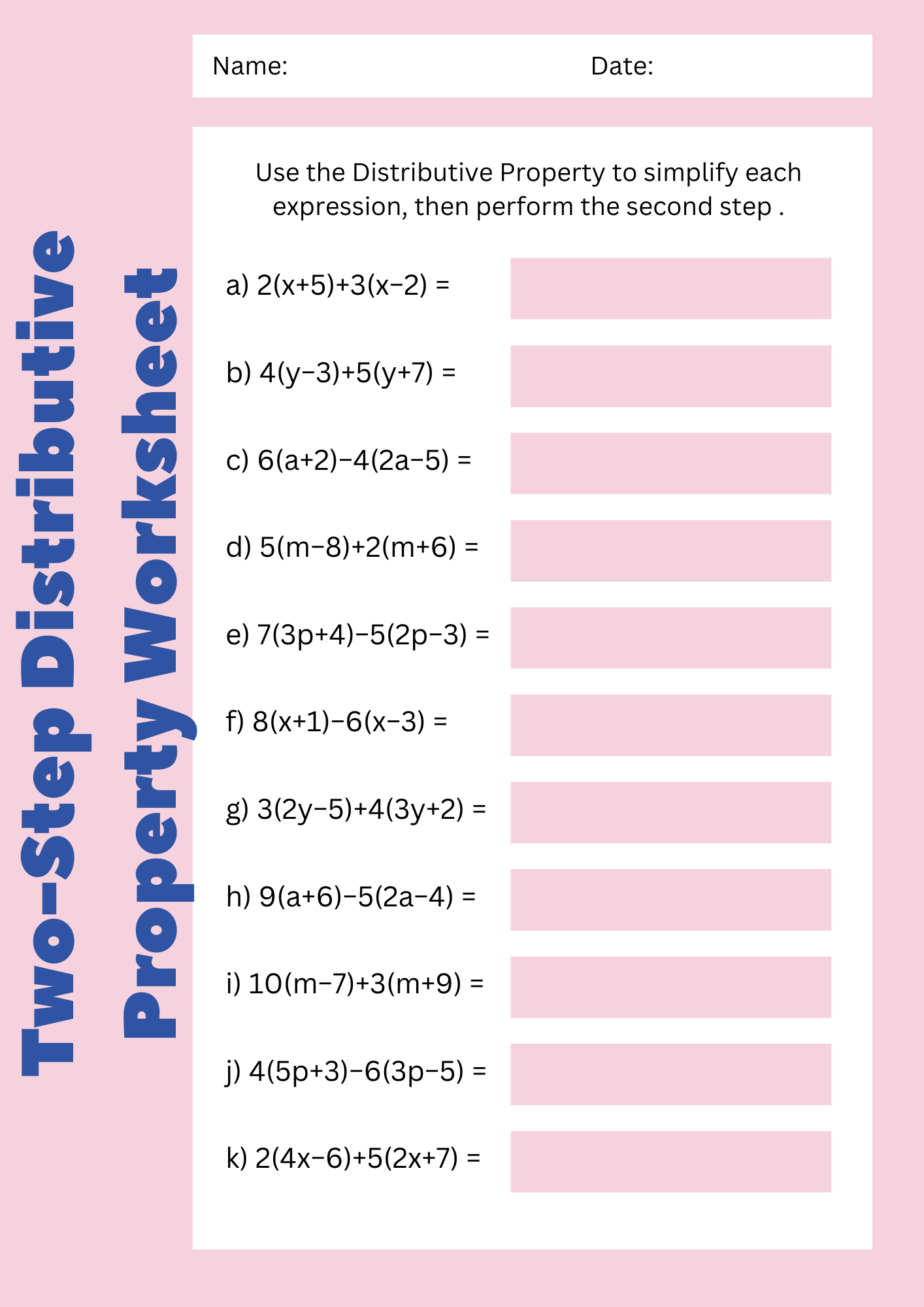
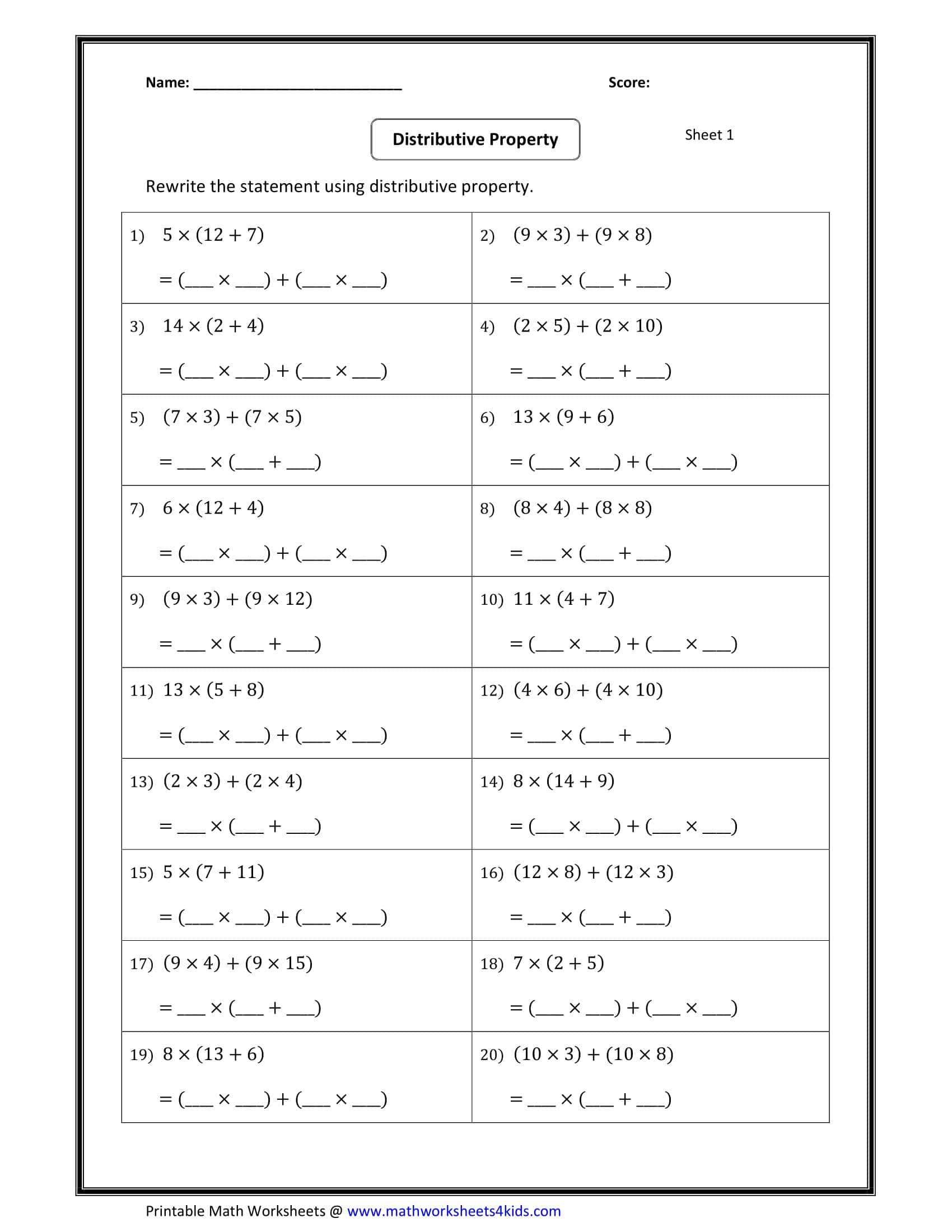
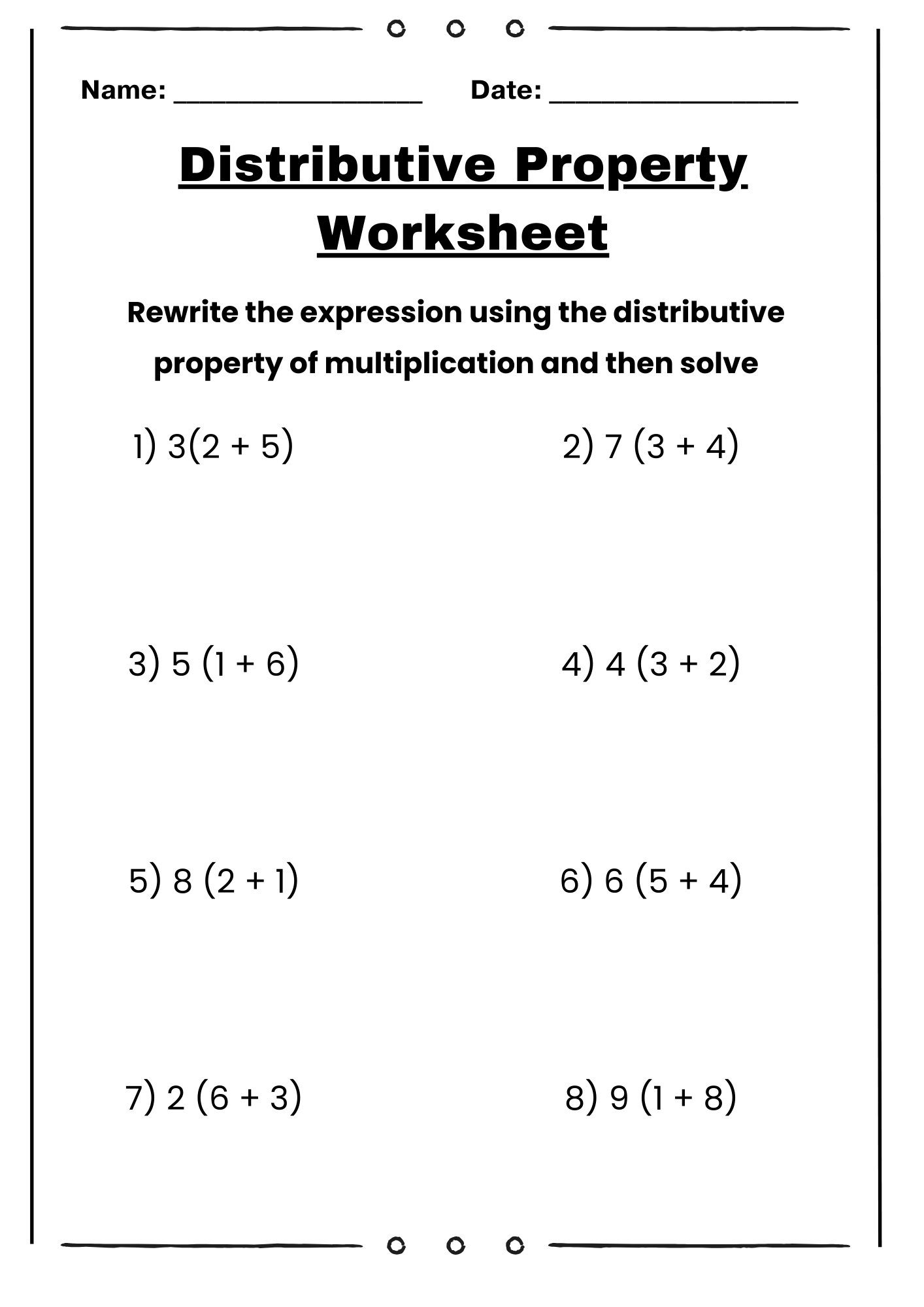
Distributive Property Expressions Worksheet Pdf offers a focused, hands‑on way for students to practice breaking down algebraic expressions, reinforcing a foundational skill that unlocks higher math concepts. By working through these printable pages, learners can see how the distributive property links addition and multiplication, making abstract ideas concrete and approachable.
Why the Distributive Property Is Essential
Connecting Basic Operations
Mathematics thrives on relationships between operations. The distributive property, expressed as a(b + c) = ab + ac, bridges multiplication and addition. Without it, students would struggle to simplify expressions like 3(x + 4) or to factor polynomials later on. Mastery of this property ensures smoother transitions to algebraic equations, quadratic formulas, and beyond.
Building Confidence in Problem Solving
Students who grasp the distributive property can tackle seemingly complex problems by breaking them into familiar parts. When they recognize that 5(2y + 3) equals 10y + 15, they gain confidence that multiplication can be “distributed” across addition, simplifying work and reducing errors.
Designing Effective Worksheets
Choosing the Right Difficulty Level
Begin with single‑variable expressions and simple coefficients. Once students demonstrate comfort, gradually introduce negative numbers, fractions, and multi‑term binomials. This progression mirrors natural learning curves and prevents frustration.
Clear Visual Layout
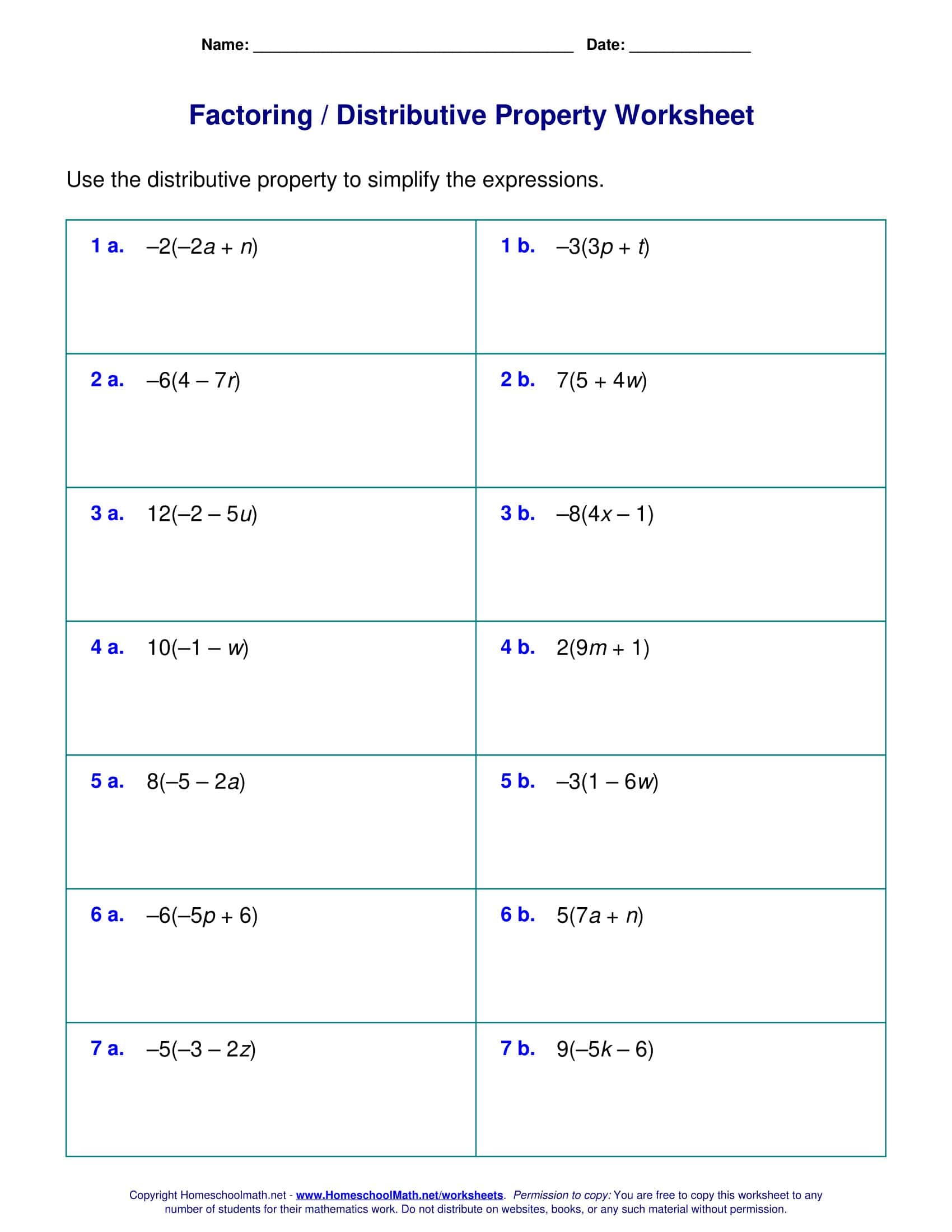
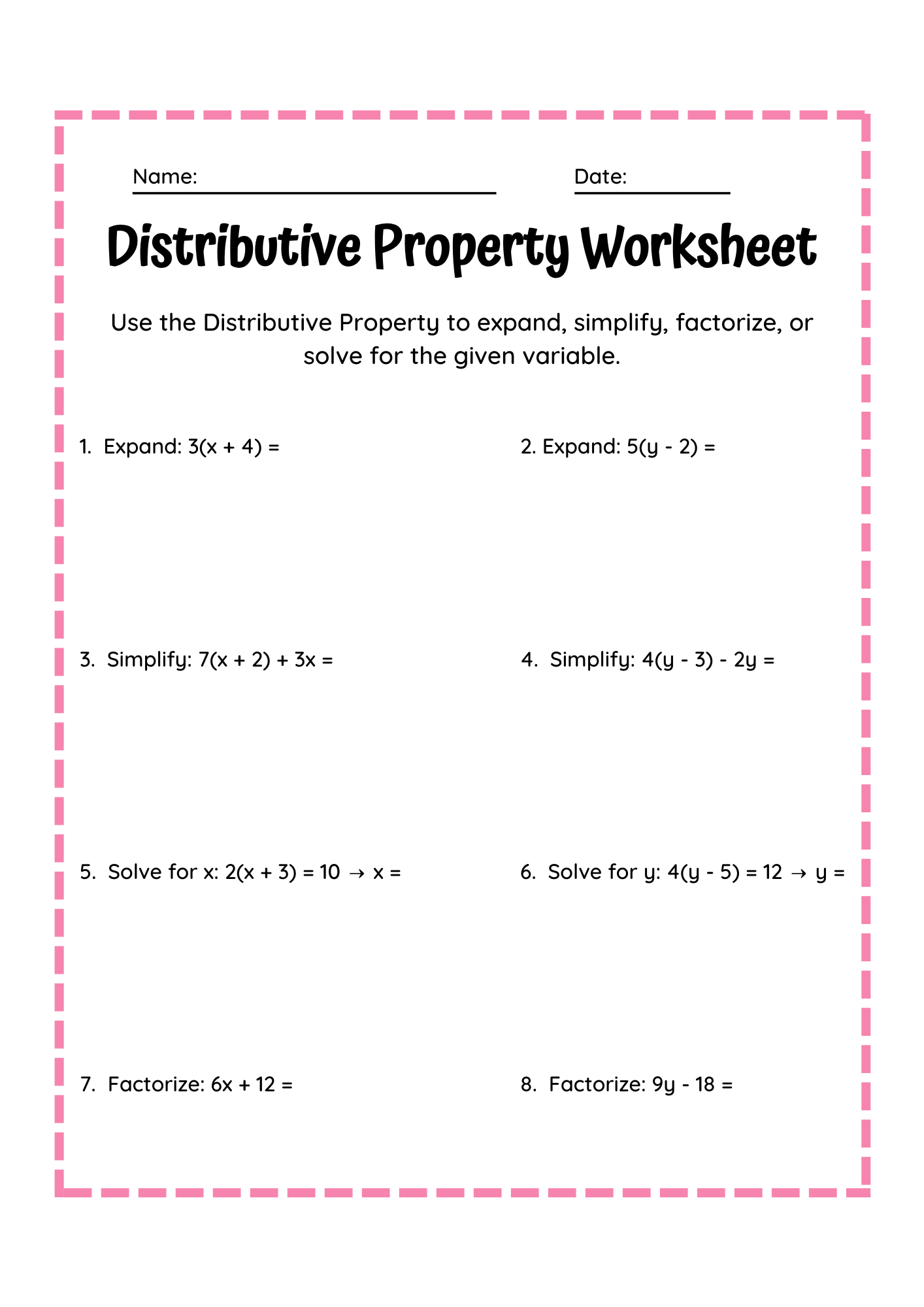
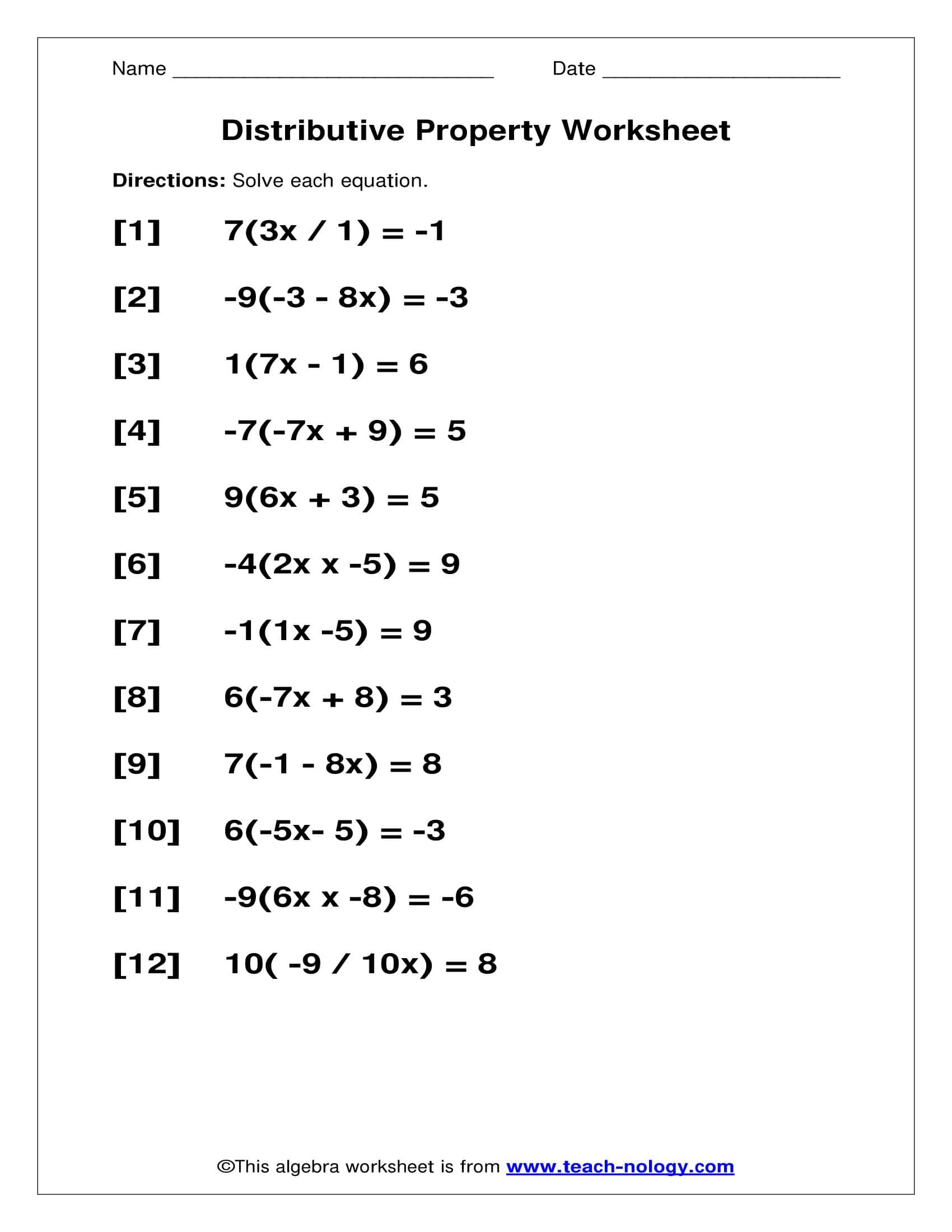
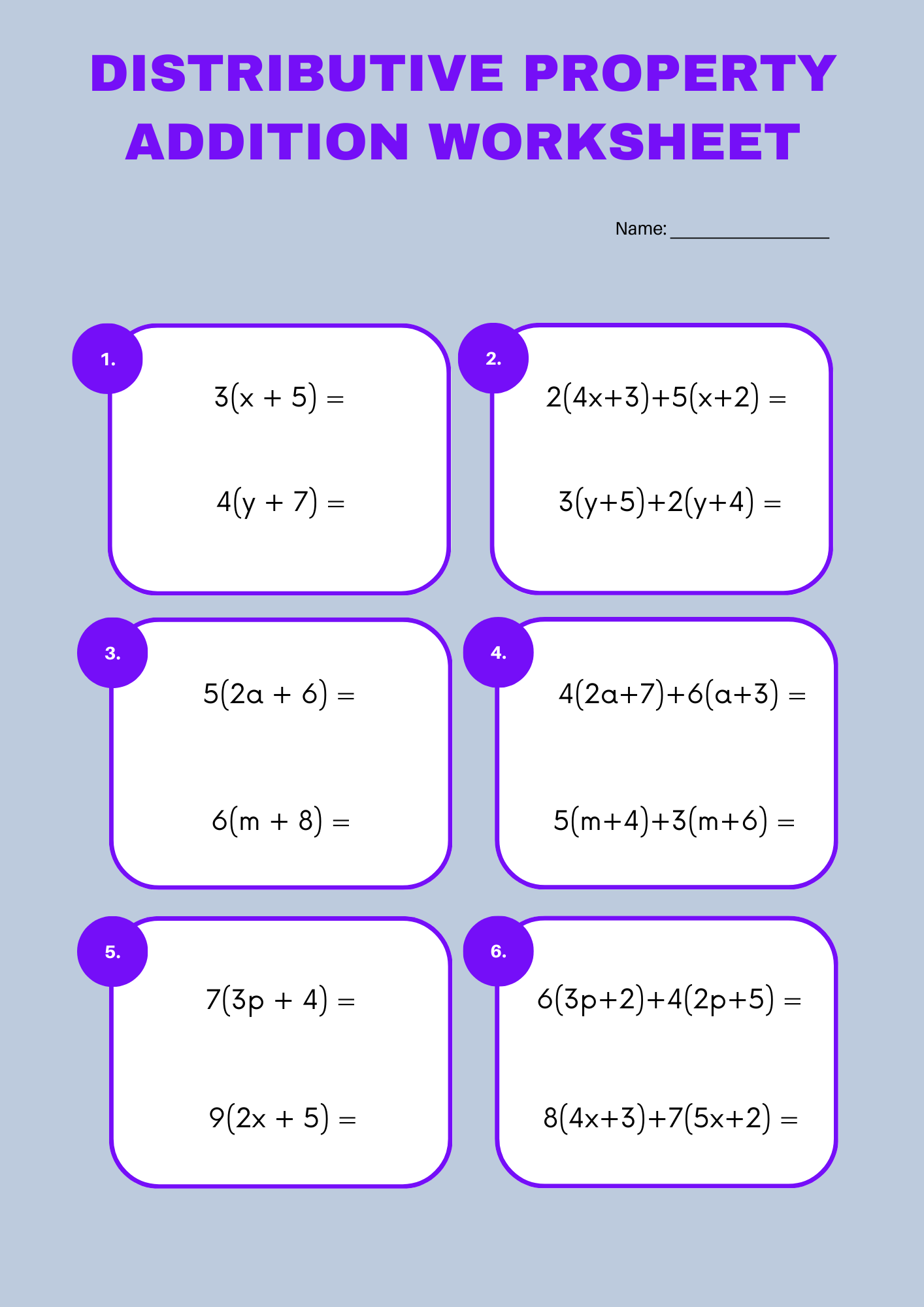
Use ample white space so students can focus on each expression. Separate questions with horizontal lines or colored boxes. Highlight the term to distribute in bold or underlined text so the focus stays on the core concept.
Incorporating Real‑World Contexts
Embed everyday scenarios: calculating total cost of items, measuring ingredients, or estimating travel distances. For instance: “If a pizza slice costs $2.50 and you buy 4 slices, how many dollars do you spend?” Translated into 2.50 × 4, which can then be expressed as 2.5(4) and expanded to reinforce the property.
Sample Worksheet Structure
Warm‑Up Section
- Simple expansions: 4(a + 5), 7(b + 2)
- Direct application: 2(3x + 4)
Practice Problems
- Expand: 5(2y + 3z)
- Factor: 9x + 12y → 3(3x + 4y)
- Multi‑step: 3(x + 2) + 4(2x − 1)
Challenge Questions
- Use distributive property in reverse: Factor 8x + 16
- Apply with negative numbers: −6(3z – 4)
- Mixed operations: 2(3m + 4) – 5(2m – 1)
Step‑by‑Step Solution Tips
Identify the Factor
Look for a common multiplier that is outside the parentheses. In 4(3a + 2), the factor is 4.
Apply Multiplication Inside the Bracket
Multiply the factor by each term inside: 4 × 3a = 12a, 4 × 2 = 8.
Recombine the Results
Write the expanded form: 12a + 8. Double‑check by re‑multiplying the simplified expression to ensure it equals the original.
Check for Sign Errors
Negative signs can flip results. For −3(2x – 5), distribute as −6x + 15. Remember that −3 × (–5) = +15.
Real‑World Applications of the Distributive Property
Finance and Budgeting
Calculating taxes or discounts often requires expanding expressions. For example, a 5% tax on $120 becomes 0.05(120), which expands to 6. Students can see how the distributive property translates directly to everyday money management.
Engineering and Design
When scaling designs, engineers use the distributive property to compute material needs: 3(2πr + 4h) for a cylindrical tank’s surface area. Expanding clarifies component contributions.
Cooking and Recipes
Adjusting a recipe for a larger group involves distributing the multiplier across ingredient quantities: 2(1 cup flour + ½ cup sugar) results in 2 cups flour + 1 cup sugar—a practical, relatable example for students.
Using PDFs for Classroom and Self‑Study
Printable Flexibility
PDF worksheets can be printed on demand, saved for offline work, or uploaded to learning management systems. They maintain consistent formatting across devices, ensuring students see the same layout as the teacher’s version.
Digital Annotation Options
With annotation tools, students can highlight steps, write in margins, or use color coding to track the distributive process. Teachers can review annotated PDFs for insight into student reasoning.
Accessibility Features
Ensure PDFs are tagged properly for screen readers. Use descriptive labels for equations and provide alternative text for any images to accommodate diverse learning needs.
Common Mistakes and How to Avoid Them
Forgetting to Distribute to All Terms
Students sometimes multiply only the first term, leaving others unchanged. Practice full expansion exercises to reinforce the rule that the factor applies to every term inside the parentheses.
Incorrect Sign Application
Negatives inside parentheses can trip students up. Emphasize the double‑negative rule: −(−5) = +5. Use visual aids to demonstrate sign flipping.
Overlooking Simplification Opportunities
After expanding, students might forget to combine like terms. Encourage a final “clean‑up” step: combine coefficients of identical variables to present the most simplified form.
Resources for Educators
Answer Keys
Provide downloadable answer keys to enable teachers to grade quickly or allow students to self‑check. Ensure keys include step‑by‑step explanations so learners understand the reasoning behind each answer.
Professional Development Workshops
Offer short workshops focusing on the distributive property, including strategies for differentiating instruction for advanced learners and those needing remediation.
Student Rubrics
Develop clear rubrics that assess accurate expansion, correct sign handling, and proper simplification. Rubrics help set expectations and give students concrete targets.
Strategies for Students to Master the Distributive Property
Practice with Flashcards
Create flashcards that display an expression on one side and the expanded form on the other. Repeated quick recall boosts muscle memory.
Use Visual Models
Draw bar models or number lines to represent multiplication as repeated addition. Visualizing 4(3a + 2) as four groups of “3a + 2” helps internalize distribution.
Teach the Reverse Process
Equally important is factoring. Practice turning a sum back into a product: from 12a + 8 to 4(3a + 2). This reinforces understanding of the property’s bidirectional nature.
Encourage Peer Teaching
Students explaining steps to classmates solidify their own comprehension. Pair up learners and have them critique each other’s solutions for clarity and accuracy.
Conclusion
Mastery of the distributive property transforms algebra from a series of daunting symbols into a coherent system of operations. Distributive Property Expressions Worksheet Pdf resources provide structured, repeatable practice that cements this key concept. By incorporating real‑world contexts, clear step‑by‑step guidance, and thoughtful assessment tools, educators can help students build confidence, reduce errors, and prepare for more advanced mathematical challenges. Consistent practice, coupled with reflective feedback, ensures that the distributive property becomes a reliable tool in every learner’s algebraic toolkit, unlocking the full potential of mathematical reasoning for years to come.








Related posts of "Distributive Property Expressions Worksheet Pdf"
