Converting Metric System Worksheet is more than a classroom drill; it’s a passport to scientific literacy that resonates across bustling kitchens, high‑tech labs, and everyday life in Asia and beyond. Imagine a student in Seoul measuring the exact amount of rice for a family dinner, or a junior engineer in Bangalore converting millimeters to meters while calibrating a prototype. A well‑crafted worksheet bridges those moments, turning abstract numbers into tangible confidence. In this guide we explore why metric conversion matters, how to design worksheets that spark curiosity, and practical strategies for mastering each step, all delivered in a warm, Asian‑inspired voice that feels both familiar and motivating for an English‑speaking audience.
Why Master Metric Conversions Matters
Metric literacy is the lingua franca of science, technology, engineering, and mathematics (STEM) worldwide. In Asian societies where rapid urbanization and digital innovation intersect, the ability to move seamlessly between millimeters, centimeters, meters, and kilometers fuels everything from construction projects in Shenzhen to culinary precision in Tokyo. For students, fluency with the metric system builds a solid foundation for later subjects such as physics, chemistry, and geography. For professionals, it reduces costly errors in product design, medical dosing, and international trade. Moreover, the metric system’s base‑10 structure aligns naturally with the way many Asian languages group numbers, making mental calculations smoother and reinforcing cultural numeracy traditions.
Essential Metric Units and Their Relationships
Understanding the hierarchy of metric units is the first step toward effortless conversion. The metric system is built on a simple principle: each larger unit is a power of ten times the smaller one. This decimal elegance eliminates the need for memorizing irregular conversion tables and encourages quick mental math.
Length
Length measures distance or size. The core units are millimeter (mm), centimeter (cm), meter (m), and kilometer (km). Their relationships are:
- 10 mm = 1 cm
- 100 cm = 1 m
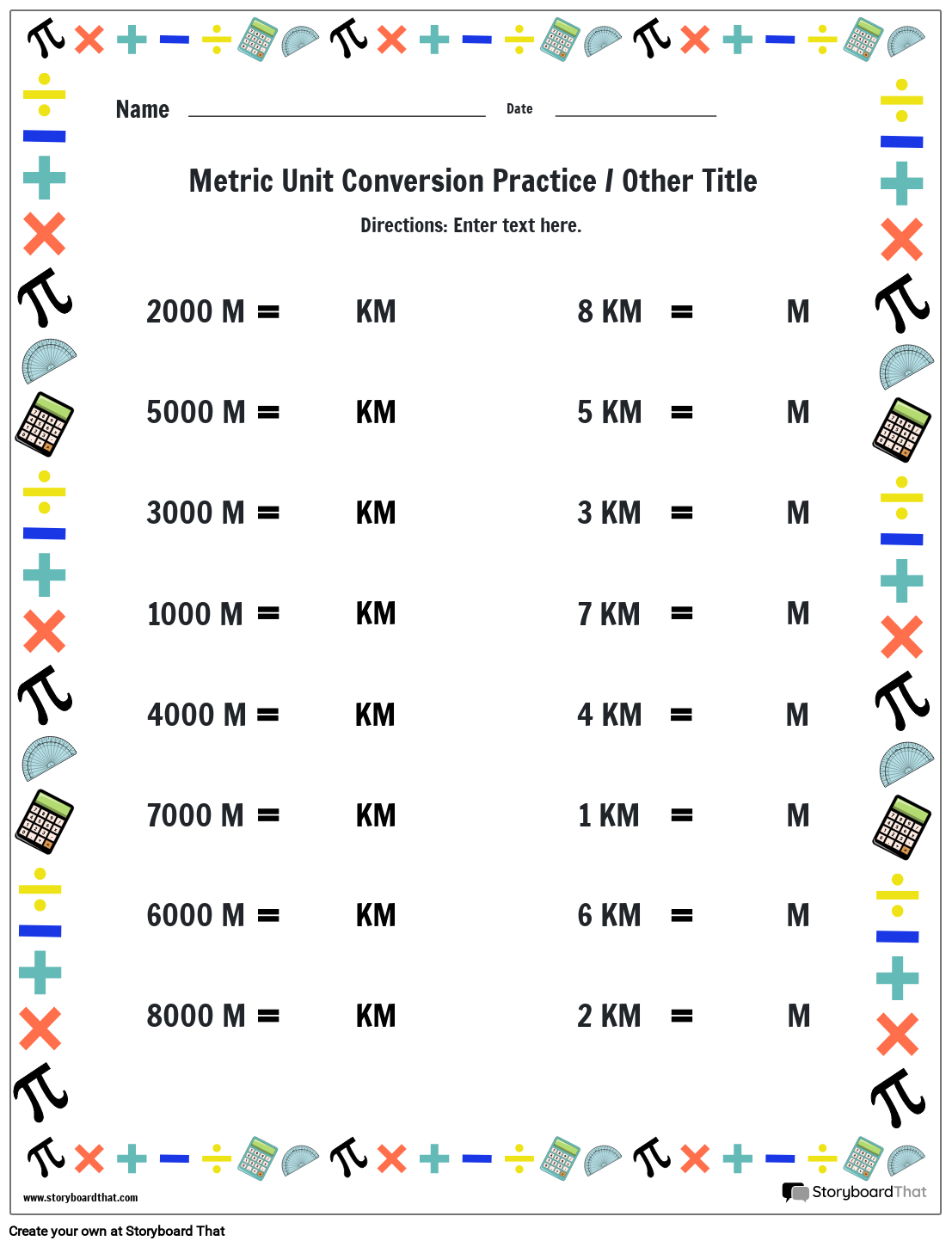
- 1,000 m = 1 km
For example, a traditional Chinese bamboo pole might be 2.5 m long. Converting to centimeters yields 250 cm (2.5 × 100), a handy figure when designing a garden layout.
Mass
Mass (or weight) uses gram (g), kilogram (kg), and milligram (mg). Relationships:
- 1,000 mg = 1 g
- 1,000 g = 1 kg
Think of a chef in Bangkok weighing 250 g of fresh herbs. To purchase the exact amount in a market that sells by the kilogram, the conversion to kg (0.250 kg) helps avoid waste.
Volume
Volume is measured in milliliter (mL), liter (L), and sometimes cubic centimeters (cm³), which are numerically identical to milliliters. Relationships:
- 1,000 mL = 1 L
- 1 cm³ = 1 mL
When a student in Manila prepares a science experiment requiring 0.75 L of water, converting to milliliters (750 mL) ensures precise measurement with a standard laboratory cylinder.
Designing an Effective Metric Worksheet
A worksheet should be a learning adventure, not a chore. By weaving cultural references, real‑world contexts, and progressive difficulty, you keep learners engaged while reinforcing core concepts.
Choosing the Right Difficulty Level
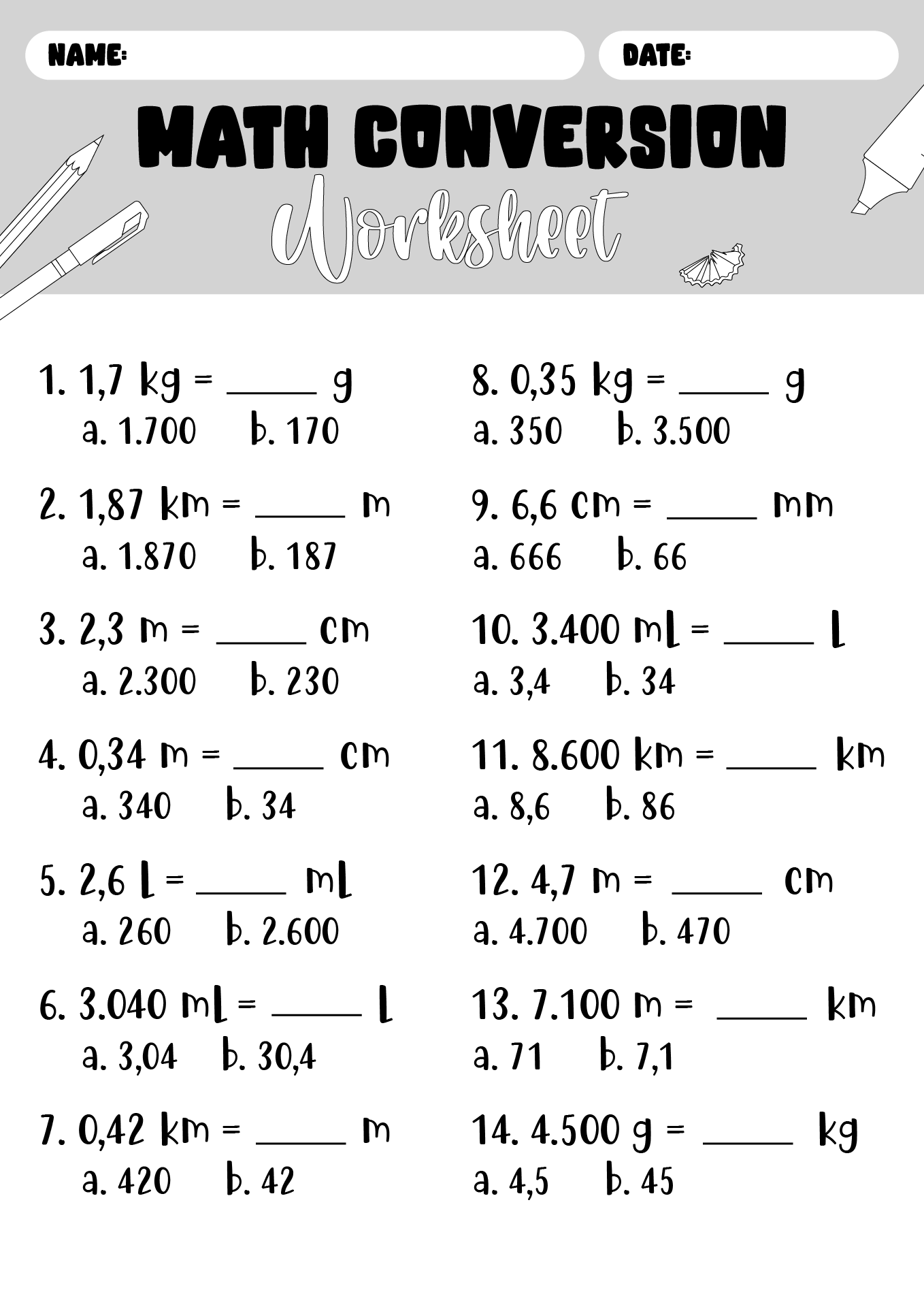
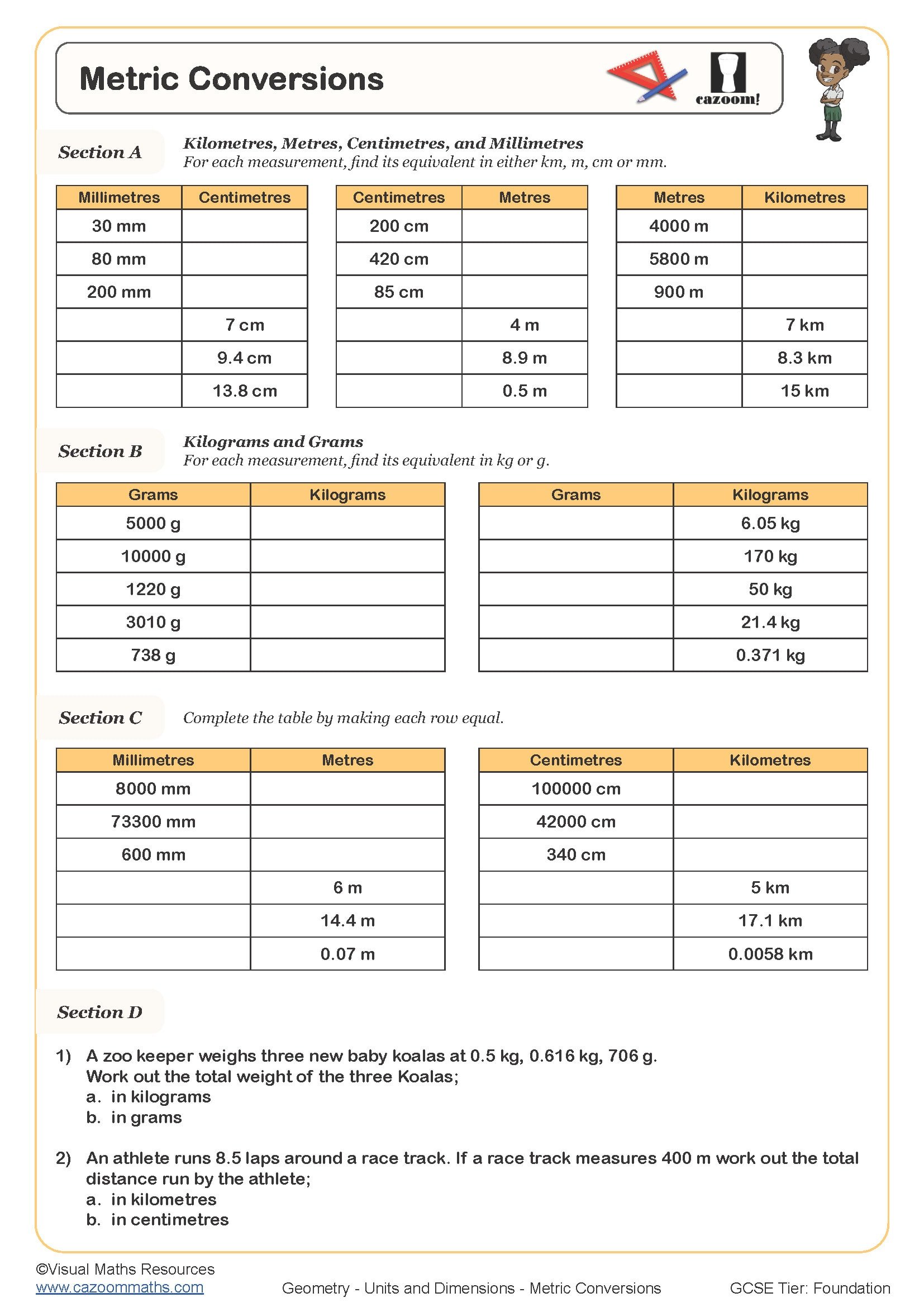
Begin with simple one‑step conversions, such as “Convert 45 cm to mm.” Once confidence builds, introduce multi‑step problems that require both scaling up and down, like “A marathon is 42.195 km. Express the distance in meters and then in centimeters.” This scaffolding mirrors the way students naturally acquire language: first words, then sentences, then paragraphs.
Incorporating Real‑World Scenarios
Embedding culturally relevant scenarios makes abstract numbers meaningful. For instance:
- Calculate the amount of fabric needed to sew a cheongsam that is 1.2 m long and 0.45 m wide.
- Determine the total weight of a shipment containing 15 boxes, each weighing 2.5 kg.
- Convert the capacity of a traditional tea kettle from 1.5 L to milliliters for precise brewing.
These examples connect classroom learning to everyday life, reinforcing why metric fluency matters.
Balancing Multiple‑Choice and Open‑Ended Items
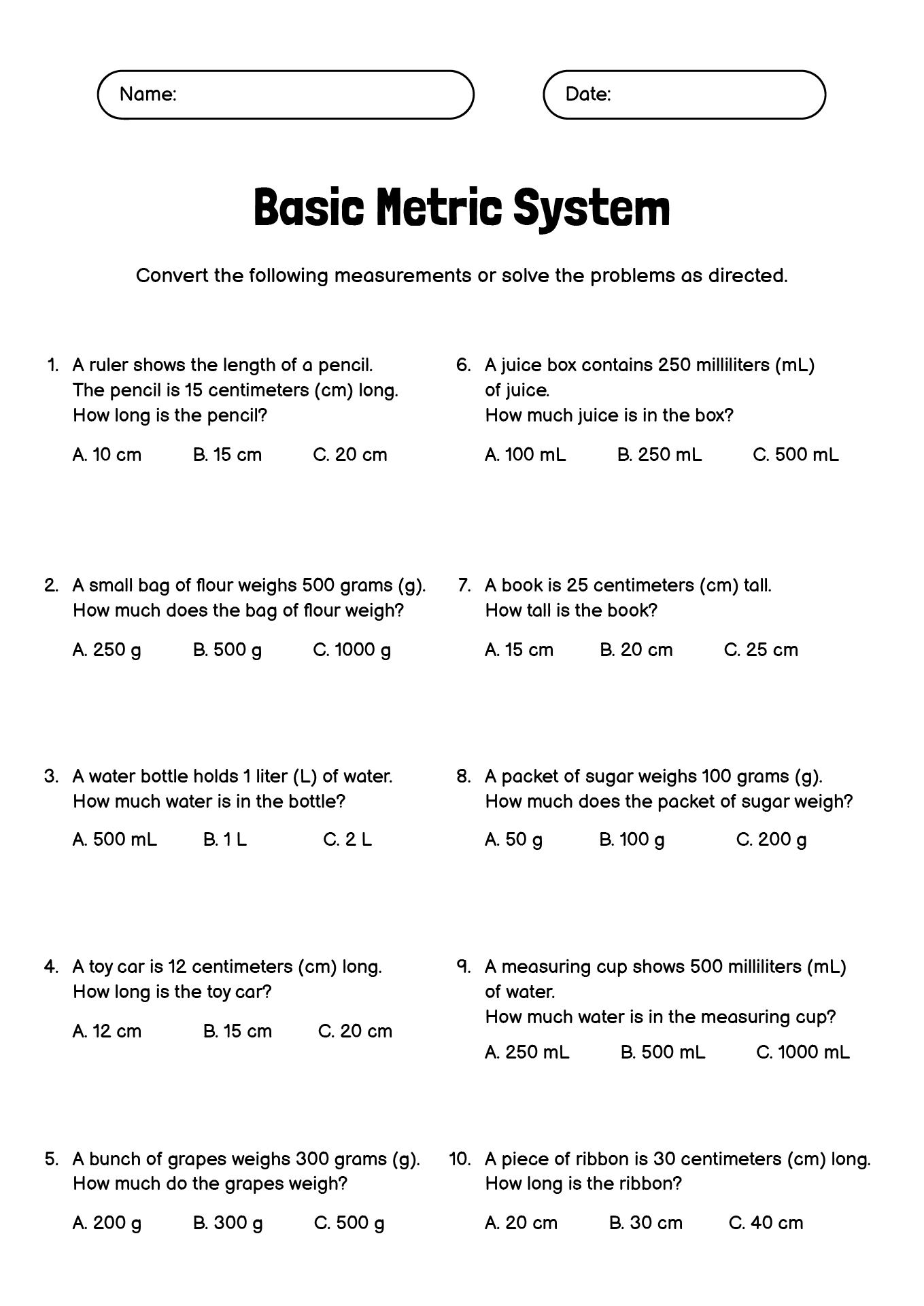
Multiple‑choice questions quickly diagnose misconceptions. For example, “Which of the following equals 3 km?” with options in meters, centimeters, and millimeters. Open‑ended items, however, encourage deeper reasoning: “Explain how you would convert 0.025 kg to grams and why the conversion factor works.” A balanced mix ensures both recognition and recall.
Step‑by‑Step Guide to Solving Worksheet Problems
Even seasoned students sometimes stumble on conversions. A clear, repeatable process eliminates guesswork and builds confidence.
Identify the Unit Category
First, ask: Are we dealing with length, mass, or volume? This determines the relevant conversion chart. Misidentifying the category is a common source of error.
Use the Power‑Of‑Ten Method
Think of the metric system as a ladder of powers of ten. To move up (to a larger unit), divide by 10, 100, or 1,000 as appropriate. To move down (to a smaller unit), multiply. For example, converting 0.004 km to meters: 0.004 km × 1,000 = 4 m. The same logic applies across all unit types.
Check Your Answer with Estimation
Before finalizing, estimate the magnitude. If you convert 250 cm to meters, you expect a number slightly larger than 2 m, not 0.025 m. This quick sanity check catches misplaced decimal points.
Tips for Teachers and Parents
Supporting learners outside the classroom amplifies retention. Here are practical strategies that fit busy Asian households and schools.
Gamify the Practice
Turn conversion drills into a friendly competition. Use flash cards with a timer, or create a “Metric Bingo” where each square contains a conversion challenge. The excitement of earning points mirrors the enjoyment of traditional games like mahjong, encouraging repeated practice.
Leverage Technology Wisely
Educational apps that visualize metric scaling—such as virtual rulers that stretch from millimeters to kilometers—provide interactive reinforcement. However, limit reliance on calculators; the goal is mental fluency, not just correct answers.
Provide Immediate Feedback
When a student corrects a mistake, explain why the error occurred. For instance, “You divided by 100 instead of multiplying when converting 5 L to milliliters, which inverted the relationship.” Prompt, specific feedback prevents the error from becoming a habit.
Common Mistakes and How to Avoid Them
Even diligent learners fall into predictable traps. Recognizing these pitfalls early accelerates mastery.
Skipping the Unit Label
Leaving out the final unit (e.g., writing “500” instead of “500 g”) creates ambiguity. Always write the unit alongside the number, especially on worksheets where peer review is common.
Miscalculating Powers of Ten
Confusing “multiply by 1,000” with “multiply by 100” is a frequent error. Use a simple mnemonic: “Kilo is three zeros, Hecto is two, Deka is one, Deci is one negative, Centi is two negative, Milli is three negative.” Visualizing the zeros helps keep the conversion straight.
Confusing Mass and Weight
Weight varies with gravity, while mass does not. In everyday worksheets, the term “weight” often refers to mass measured in grams or kilograms. Clarify the context: a science experiment on Earth uses mass, whereas a space‑flight scenario would require distinguishing the two.
Conclusion
Designing and mastering a Converting Metric System Worksheet is a rewarding journey that blends cultural relevance with universal scientific standards. By grounding lessons in familiar Asian contexts, employing the power‑of‑ten method, and offering clear, actionable feedback, educators and parents can nurture metric fluency that serves students for a lifetime. Whether a child is measuring rice for a family feast or an aspiring engineer is scaling a blueprint, the confidence gained from seamless metric conversion unlocks new possibilities. Embrace the simplicity of the decimal system, practice regularly, and watch the numbers transform from obstacles into tools of discovery.








Related posts of "Converting Metric System Worksheet"
