In the grand theater of grammar, Compound Subject And Predicate Worksheets take center stage, dazzling students with their quirky double act—like a troupe of acrobats juggling verbs and nouns while the crowd gasps, “What a sentence!”—and proving that learning can be as exhilarating as a roller‑coaster ride, if only the track were lined with commas and the brakes were firmly held by proper punctuation.
Why You Should Care About Compound Subjects and Predicates
Picture this: your class is a bustling kitchen, and sentences are recipes. A compound subject or predicate is like adding two dishes to the same plate—double the flavor, double the fun. When you master them, you give your students the power to express complex ideas without turning their prose into a tangled knot of words. They’ll learn to combine ideas gracefully, avoiding the dreaded “sentence fragment” that feels like a missing ingredient.
Boosted Engagement
Students who see how two subjects can dance together tend to stay awake. They can create witty, multi‑subject sentences that feel like a comic duo, making grammar lessons feel less like a lecture and more like a stand‑up routine. Think of the classic: “The cat and the dog chased the mailman.” Suddenly, your class can picture a furry cat and a canine partner in crime, and the sentence becomes a memorable story rather than a dry rule.
Sharper Writing Skills
When learners grasp the mechanics of compound subjects and predicates, they begin to recognize the building blocks of clear communication. This skill translates to essays, reports, and even social media posts, where they can combine ideas with precision. By mastering these worksheets, students reduce filler sentences and create punchy, engaging prose that keeps readers hooked.
Common Pitfalls and How to Avoid Them
Just like a bad joke, a poorly constructed compound sentence can fall flat. Below are the most common mistakes and the comedic fixes to keep your sentences on point.
Mismatched Verbs
When two subjects share a verb, the verb must agree with the plural nature of the subjects. If you write, “The dog and the cat is playing,” the verb “is” feels out of place—like a single drummer in a two‑drummer band. Correcting it to “is playing” or better yet “are playing” restores harmony. Think of “are” as the shared beat that lets both subjects groove together.
Comma Confusion
Commas are the punctuation equivalent of stage lights. Too many or too few can ruin the performance. A common error is placing a comma before the verb in a compound predicate, e.g., “She sang, and danced.” The comma unwarrantedly interrupts the action. The correct rhythm is “She sang and danced.” If you need a pause for dramatic effect, use a semicolon or a dash, not a comma.
Misplaced Modifiers
Modifiers are like props—they belong next to the words they describe. In a sentence such as “The teacher, who loves apples, read the book,” the modifier “who loves apples” awkwardly shifts focus to the teacher, but it also creates confusion. Replacing it with a clearer structure—“The teacher, an apple lover, read the book”—eliminates ambiguity and keeps the spotlight on the teacher.
Step‑by‑Step: Using Worksheets to Master the Skill
Effective worksheets are the secret sauce in turning grammar lessons from a snooze fest into a high‑energy workshop. Here’s a practical approach to design and implement worksheets that keep students engaged.
1. Start with Clear Objectives
Begin each worksheet with a simple, punchy statement: “Identify and correct the compound subject in each sentence.” The objective acts as the headline, guiding the learner’s focus. This clarity reduces confusion and boosts confidence.
2. Mix Easy and Challenging Examples
Kick off with straightforward sentences: “John and Mary went to the store.” Then ramp up the difficulty: “John, Mary, and the mysterious stranger who arrived unexpectedly went to the store.” The progression keeps learners motivated and ensures that no one gets stuck at the same level.
3. Encourage Self‑Correction
After students complete a worksheet, let them check their answers against a master key. Provide immediate feedback: “Great job spotting the verb agreement mistake!” This instant gratification reinforces learning and keeps the fun alive.
4. Incorporate Real‑World Contexts
Use sentences from popular culture, news headlines, or everyday conversations. For instance, “The president, the prime minister, and the governor met to discuss the budget.” This relevance helps students see the utility of compound subjects beyond the classroom.
5. Add a Creative Twist
Challenge students to write their own compound sentences using a list of random nouns and verbs. Provide a “grammar mashup” game: pick two nouns and a verb, then craft a sentence. This exercise turns rote practice into a creative storytelling session.
Sample Worksheet Outline
Below is a template you can adapt for any grade level. Feel free to tweak the difficulty or add more comedic flair.
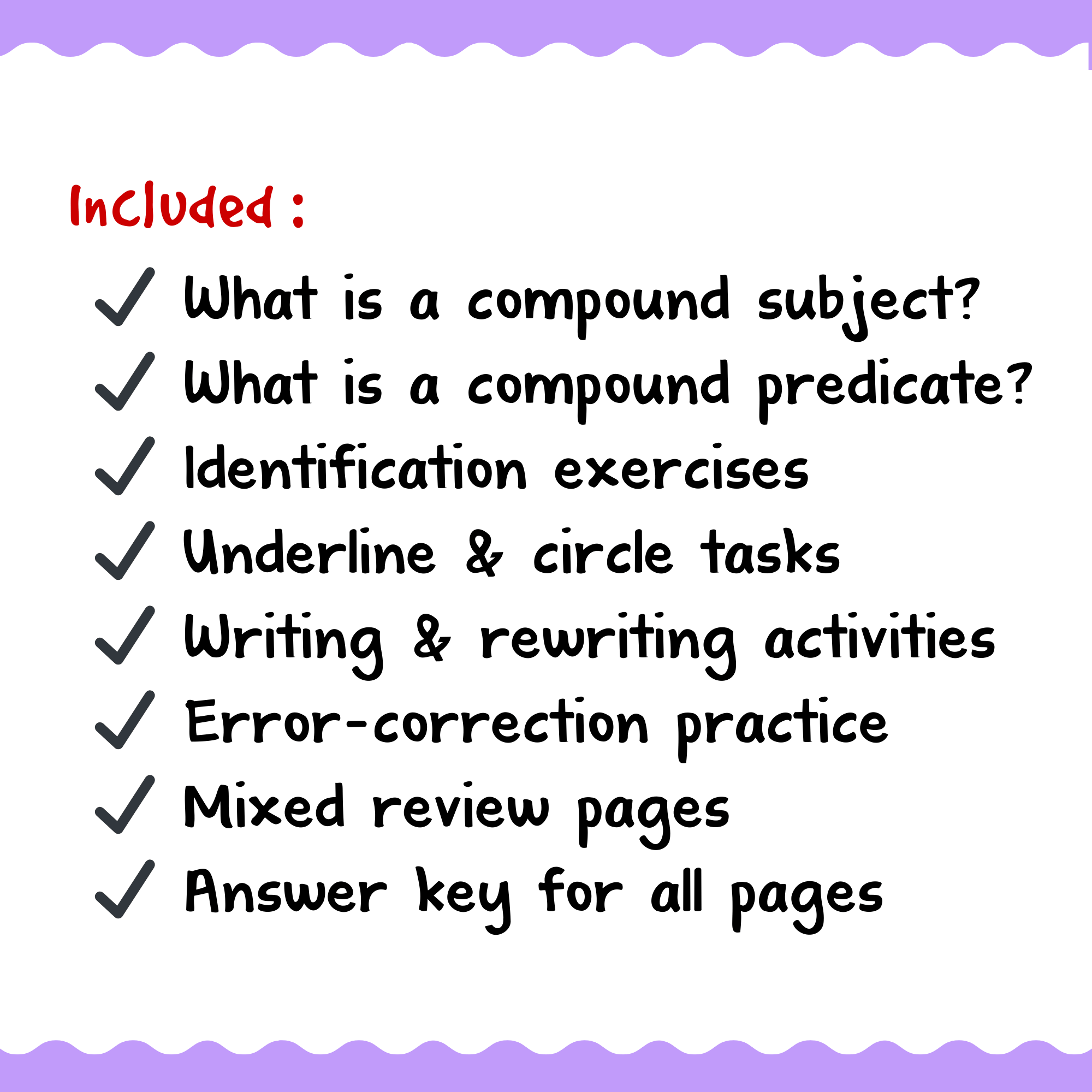
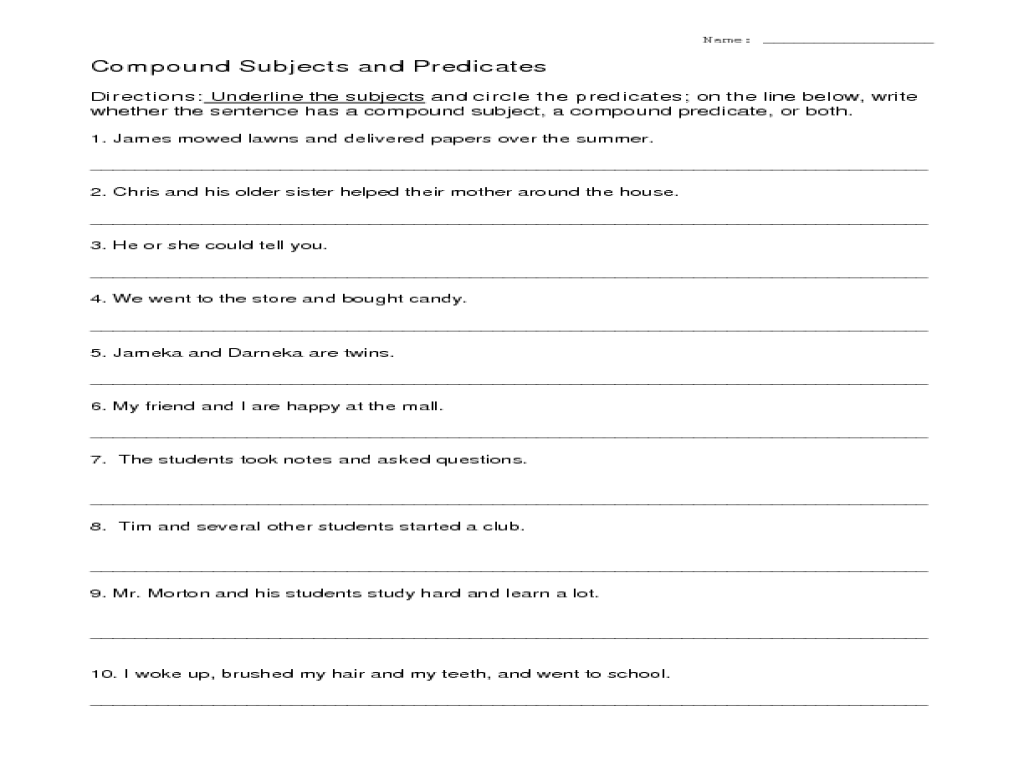
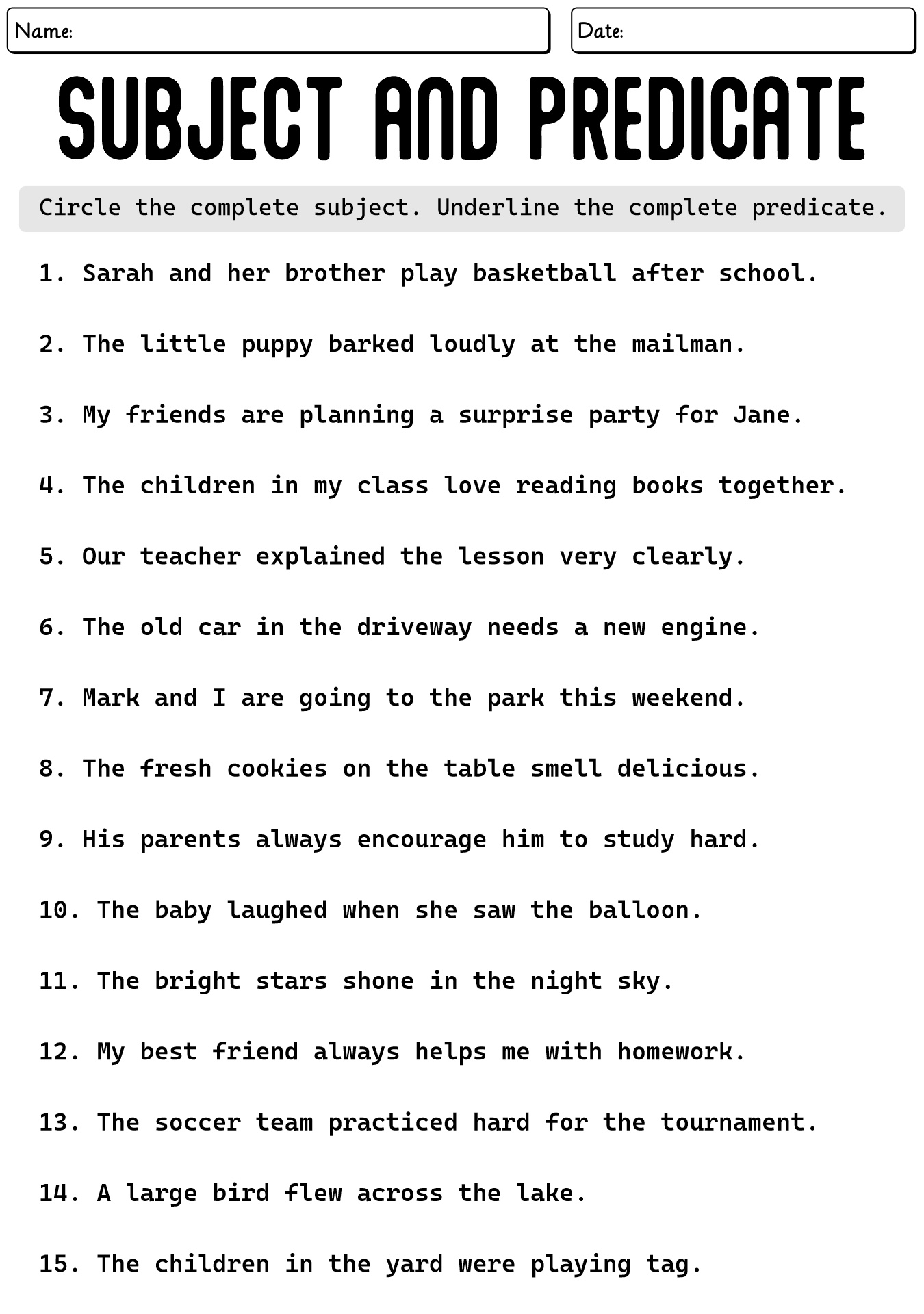
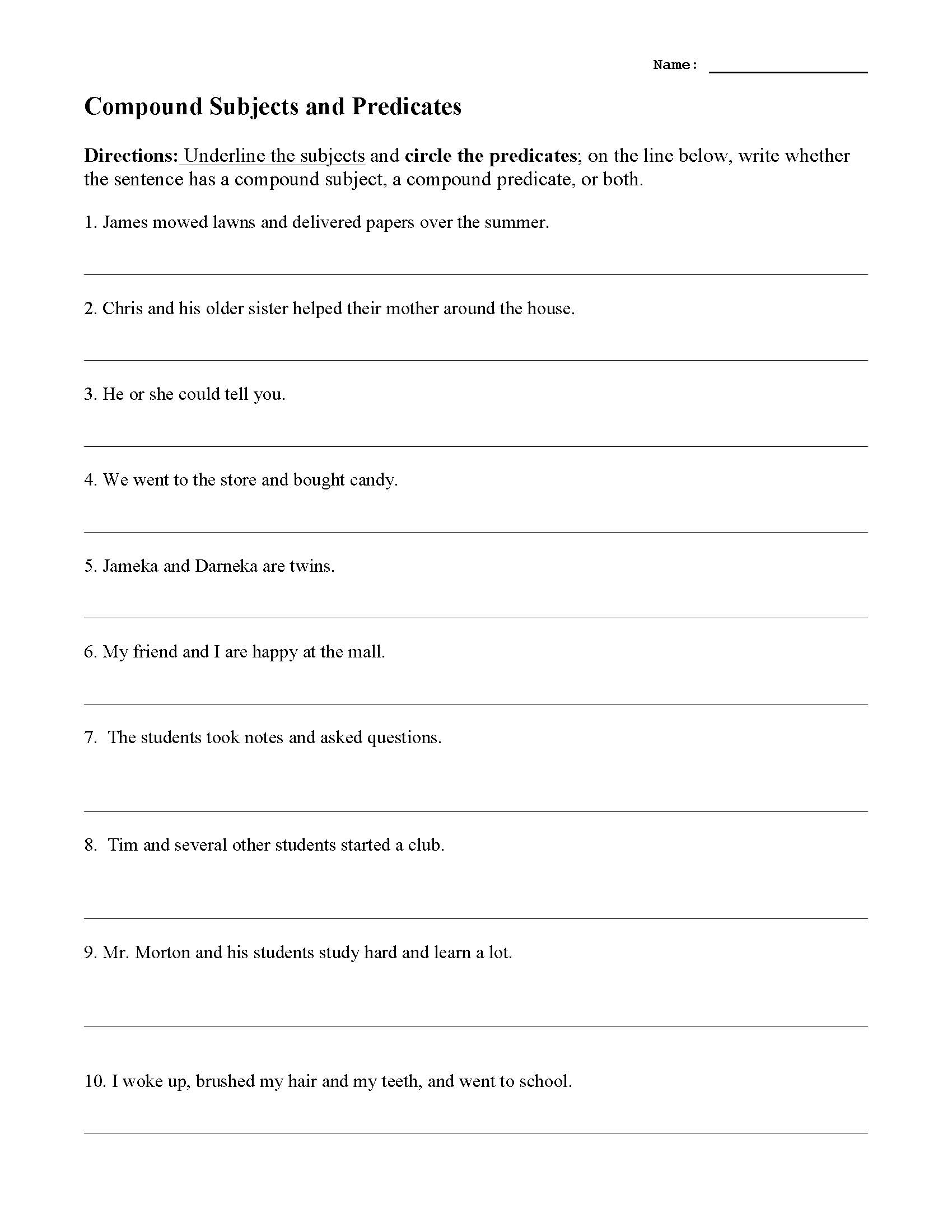
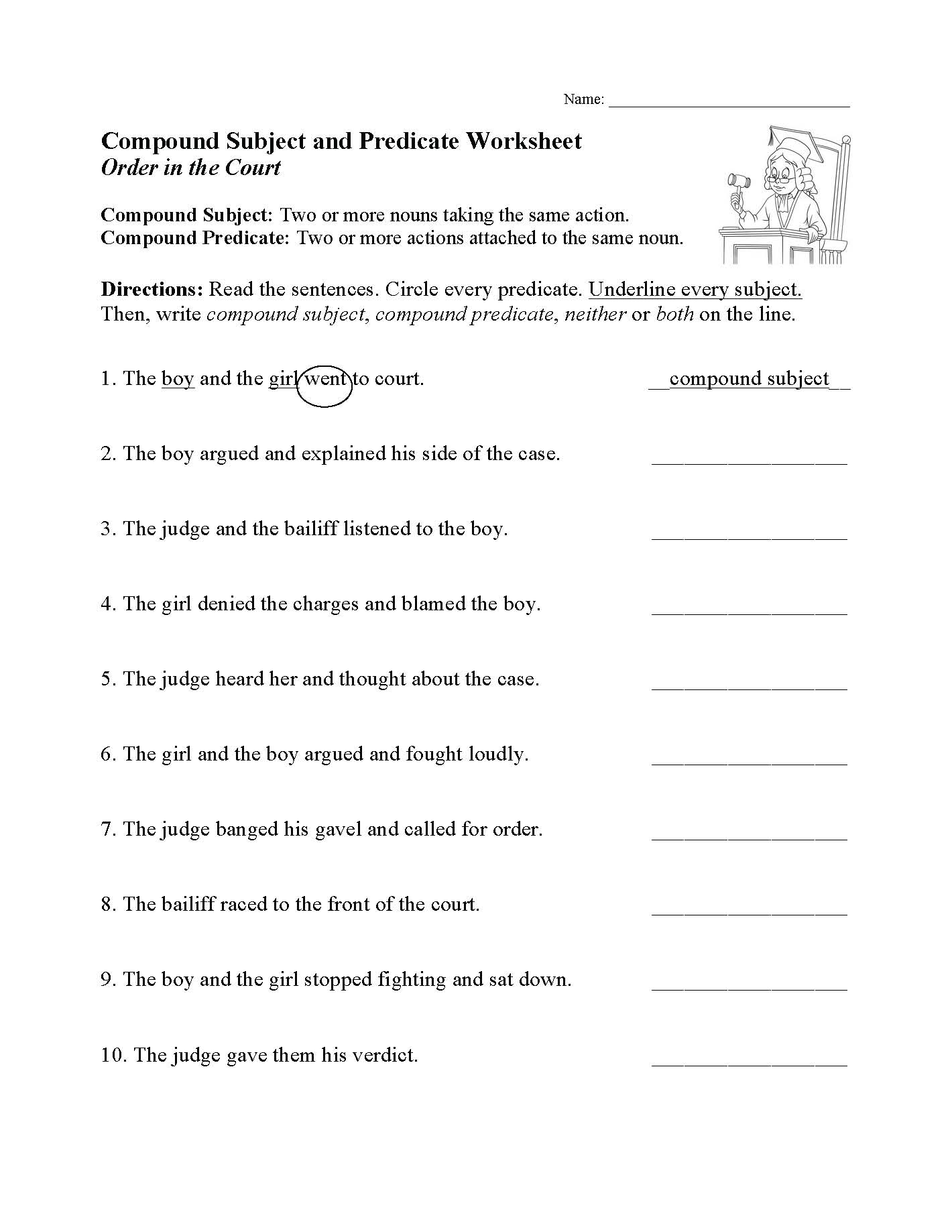
Part A: Identify the Compound Subject
- Write the sentence in the box and underline the compound subject.
- Explain why it is considered compound (hint: look for “and,” “or,” or a comma).
Part B: Correct the Verb Agreement
- Spot the verb that doesn’t agree with the subject.
- Rewrite the sentence with the correct verb.
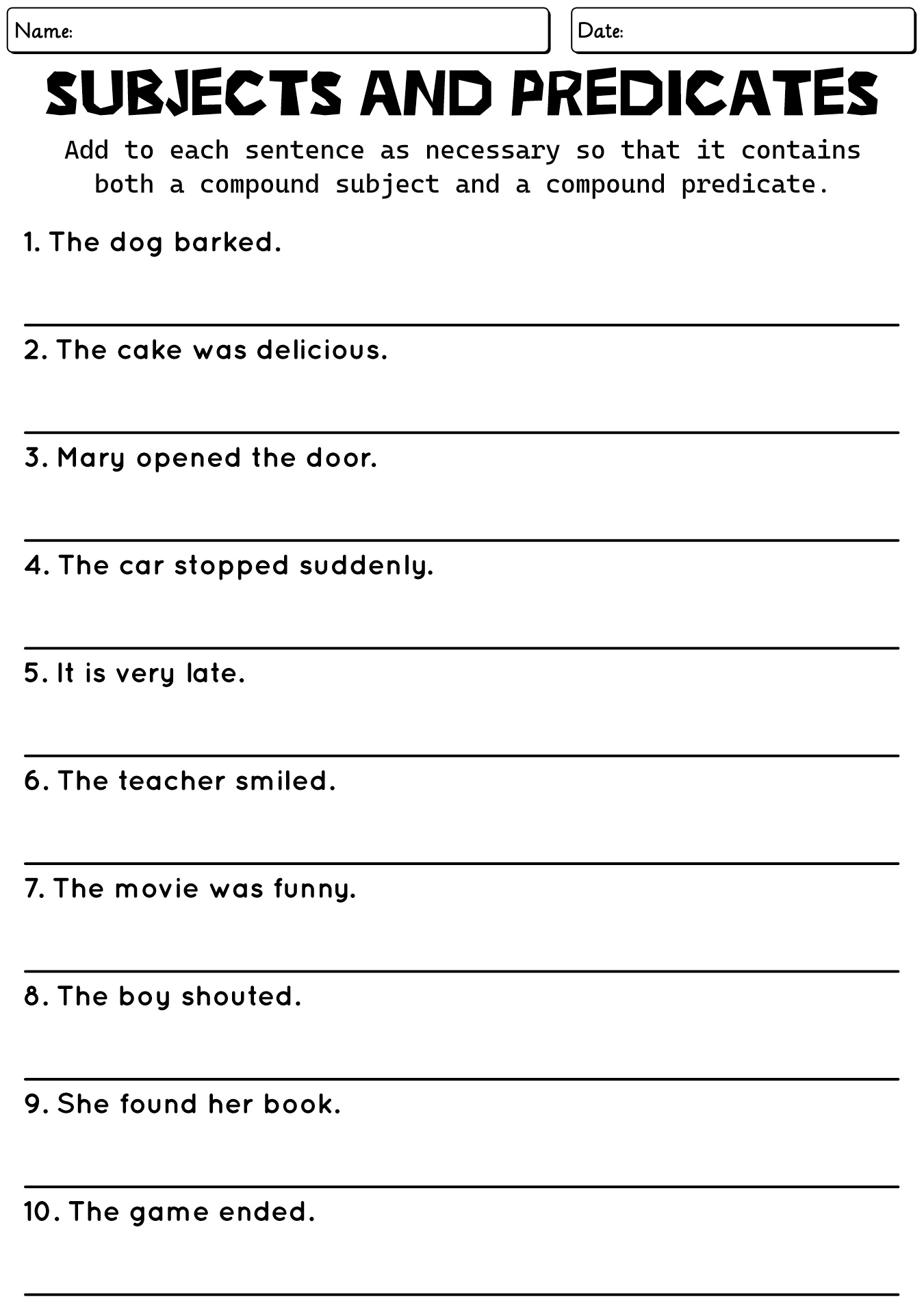
Part C: Rewrite for Clarity
- Rephrase a given sentence to eliminate confusion or ambiguity.
- Justify your changes in a brief sentence.
Real‑World Applications of Compound Subjects and Predicates
Once students master these worksheets, they can apply their newfound skills in countless contexts. Below are some everyday scenarios where compound subjects and predicates shine.
Writing Emails
Professional emails often require concise yet comprehensive statements: “The marketing team and the sales team will collaborate on the upcoming campaign.” A well‑crafted compound subject keeps the email clear and authoritative.
Blog Posts and Articles
When crafting engaging content, writers can use compound subjects to weave multiple ideas into a single sentence: “The sunrise and the ocean’s waves painted the horizon with golden hues.” This technique adds rhythm and interest to prose.
Social Media Updates
Short updates benefit from compound subjects for quick, punchy messages: “The coffee shop and the bookstore are hosting a community event tonight.” A single sentence delivers the key information efficiently.
Academic Essays
In argumentative writing, combining subjects can strengthen claims: “The study’s findings and the expert testimonies reinforce the need for policy reform.” This approach provides a cohesive flow and a stronger thesis.
Assessing Progress with Formative Feedback
Regular assessment ensures that students are not merely memorizing rules but applying them effectively. Use the following strategies to gauge comprehension and adjust instruction.
Peer Review Sessions
Have students swap worksheets and critique each other’s work. The peer perspective often highlights errors that teachers might overlook and encourages collaborative learning.
Quick Quizzes
Insert a 5‑minute quiz at the end of a lesson that asks students to identify compound subjects or correct verb agreements. Short, focused quizzes help cement concepts quickly.
Reflection Journals
Ask students to write a brief reflection: “What was the trickiest part of today’s worksheet?” This reflection promotes metacognition, helping them become self‑aware learners.
Final Takeaway
Compound Subject And Predicate Worksheets are more than just a set of exercises; they’re a gateway to confident, creative communication. By turning grammatical rules into playful, real‑world scenarios, you transform a potential classroom chore into an adventure. Remember, every sentence is a stage, every subject and predicate a performer. When you teach students to let them dance together, you give them a lifelong skill—an elegant way to tell stories, persuade arguments, and, most importantly, to keep readers hooked. So, lace up those verbal boots, sprinkle some punctuation, and let the compound sentences roll!







Related posts of "Compound Subject And Predicate Worksheets"
