Body Parts Worksheet Preschool serves as a foundational tool for introducing young learners to the fascinating world of anatomy. By blending visual cues, simple language, and interactive design, these worksheets transform abstract concepts into tangible learning experiences that resonate with preschoolers’ innate curiosity.
Choosing the Right Worksheet for Preschoolers
When selecting a worksheet, look for elements that align with developmental milestones typical of the preschool age group. Preschoolers thrive on bright colors, large, labeled illustrations, and repetitive patterns that reinforce memory. A well‑crafted worksheet will feature clear, bold outlines of body parts—arms, legs, head, and torso—paired with labeled words in an easy‑read typeface. Avoid overly complex diagrams or text that can overwhelm young minds; simplicity is the key to comprehension.
Visual Appeal and Color Contrast
Studies show that children’s attention is captured most effectively by high‑contrast color schemes. Use complementary colors to separate different body parts—blue for arms, yellow for legs, green for torso, and pink for head. This not only aids visual discrimination but also introduces basic color theory, giving your worksheet dual educational purposes.
Appropriate Complexity and Sequencing
Begin with broad categories such as “Head,” “Arm,” “Leg,” and “Torso.” Once the child is comfortable identifying these, introduce sub‑parts like “Hands,” “Feet,” or “Eyes.” This incremental approach ensures that learners are neither under‑challenged nor overwhelmed, fostering a sense of achievement as they progress.
Inclusion of Fun Facts
Integrate brief, age‑appropriate facts that capture imagination—e.g., “Your hands can hold 10,000 objects at once!” or “Your legs can stretch to touch the sky if you jump high enough.” Such snippets not only enrich the worksheet but also encourage conversational prompts between teacher and child.
Designing an Engaging Activity
A worksheet can be more than a passive coloring page. By weaving interactive elements into the design, you transform it into an active learning exercise that promotes fine motor skills, memory retention, and critical thinking.
Color‑Matching Challenges
Provide a separate palette of crayons or markers and ask the child to match each body part with its designated color. This simple task improves color recognition, hand‑eye coordination, and following instructions.
Tracing and Labeling Exercises
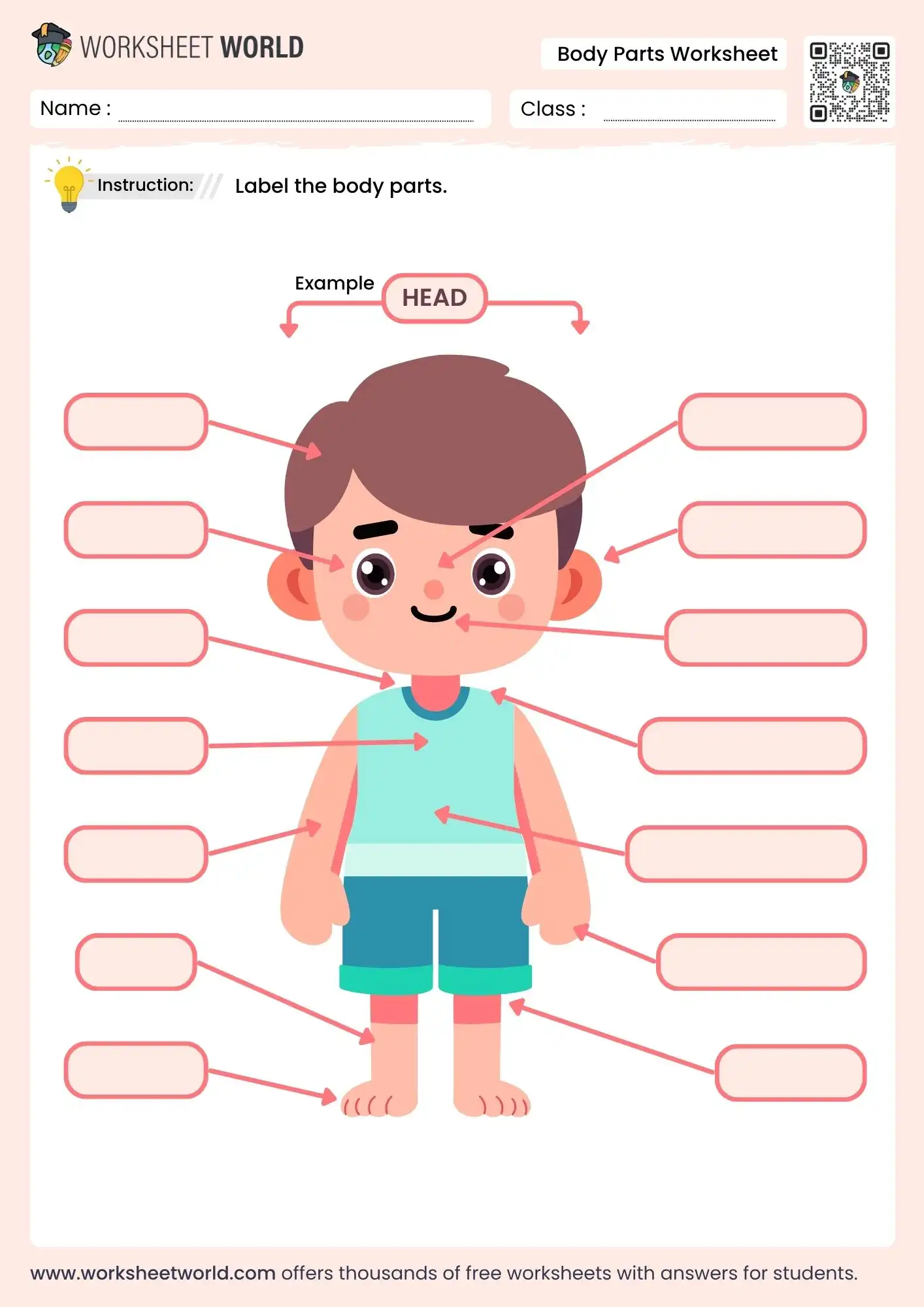
For children who enjoy drawing, incorporate a “Trace the Outline” section. Children trace the edges of a body part with a pencil, reinforcing shape recognition while practicing motor control. After tracing, they can label the part with a large, bold word—making the act of writing meaningful and purposeful.
Fill‑In‑The‑Blank and Match‑The‑Part
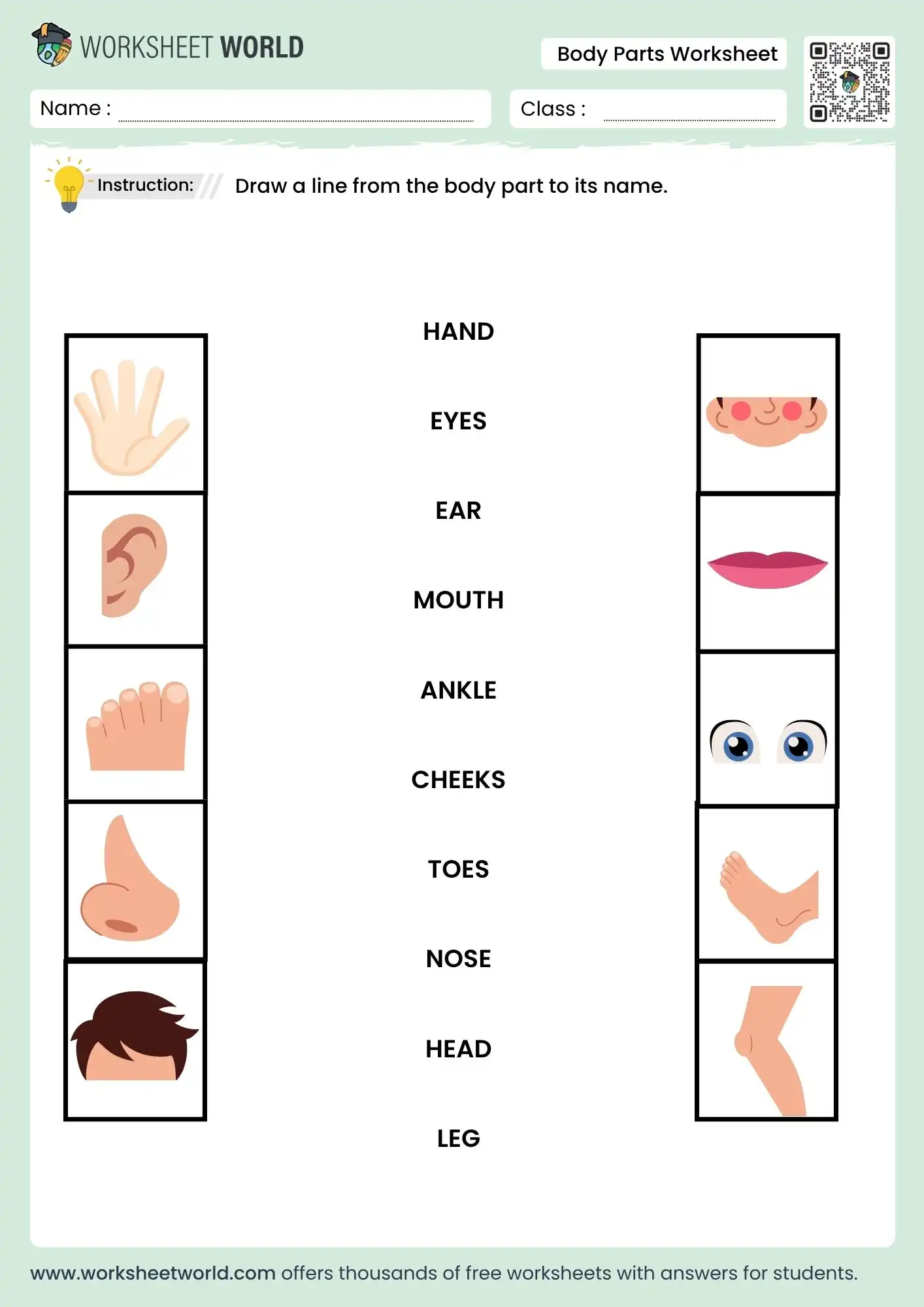
Include a section where the child draws a line from a body part label on the left to the corresponding illustration on the right. This matching exercise develops spatial awareness and reinforces the connection between word and image.
Story‑Based Prompts
Embed a simple narrative, such as “The brave bunny runs, jumps, and twirls.” Attach corresponding body part illustrations that the child can color or circle. Storytelling infuses context, turning a static worksheet into an engaging adventure that encourages imagination and retention.
Incorporating Interactive Elements
Beyond paper, consider augmenting your worksheets with digital or tactile components. These enhancements can make learning more dynamic, especially in blended learning environments.
Printable PDFs with Interactive Checkboxes
Design worksheets that allow kids to click or tap boxes to reveal color or label options. This not only engages the senses but also provides instant feedback, helping children self‑correct in real time.
Physical Manipulatives
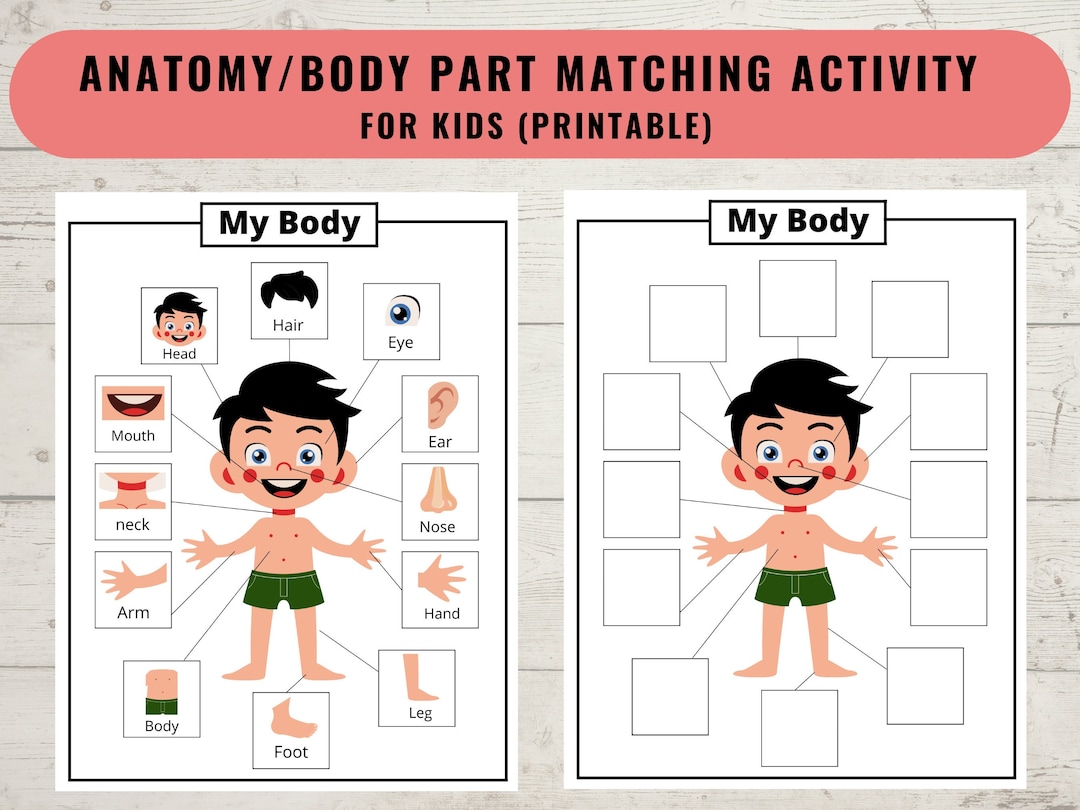
Use removable stickers of body parts that kids can place onto a base illustration. This hands‑on activity encourages exploration of positioning and spatial relationships. It also offers a tangible way for teachers to assess a child’s understanding of body part placement.
Audio Integration
Pair the worksheet with a short audio recording where a friendly narrator names each body part. This multimodal approach caters to auditory learners and reinforces auditory processing skills alongside visual learning.
Using Worksheets in the Classroom
Effective classroom implementation hinges on structure, differentiation, and reflection. A thoughtfully planned lesson plan ensures every child benefits from the worksheet, regardless of skill level.
Setting Clear Objectives
Begin each session by stating the learning goal: “Today, we will learn to identify and name the major body parts.” By articulating the objective, students have a clear target and can self‑monitor their progress.
Scaffolding and Grouping
Divide the class into small groups or pairs. Provide each pair with a worksheet and assign roles—one child colors while the other labels, then swap. This promotes collaboration and gives each child a chance to practice both motor and verbal skills.
Integrating Movement
After completing the worksheet, transition to a movement activity. Ask children to act out the body parts they identified—“Show me where your head is!” Such kinesthetic reinforcement solidifies the connection between name, location, and function.
Reflection and Discussion
Hold a brief circle time where children share what they learned. Encourage questions like, “What part of the body did you find most interesting?” or “Can you name three things your hands can do?” This dialogue nurtures higher‑order thinking and reinforces vocabulary.
Assessment and Feedback
Assessment is essential to gauge comprehension and guide future instruction. Use formative strategies that are both supportive and informative.
Checklists and Observation
While children work, observe their interaction with the worksheet. Note whether they correctly color each part, accurately label, or successfully match illustrations. Create a simple checklist: “Color matched,” “Label correct,” “Match correct.” This provides immediate feedback for both teacher and student.
Self‑Assessment Prompts
At the end of the activity, ask children to rate their confidence on a simple smiley face scale. This empowers learners to reflect on their own progress and encourages a growth mindset.
Parental Involvement in Assessment
Send home a copy of the worksheet with a brief guide for parents: “Today, we learned the names of body parts. Please help your child identify these on their own.” Parents can review and discuss, creating a continuity loop between school and home learning.
Parent‑Teacher Collaboration
When parents and teachers work in sync, preschoolers receive consistent reinforcement. Here are strategies to foster collaboration.
Regular Communication Channels
Use newsletters, class blogs, or messaging apps to share updates about upcoming topics. For example, “Next week we’ll explore the five senses.” This prepares parents for at‑home discussions.
Home Practice Worksheets
Offer simple, printable worksheets that complement the classroom version. Encourage parents to practice with their children—perhaps as a bedtime activity—to solidify learning.
Workshops and Training Sessions
Host short workshops where parents learn how to use worksheets effectively. Demonstrate how to guide a child in naming and labeling body parts, reinforcing the learning experience.
Conclusion
By thoughtfully selecting, designing, and implementing Body Parts Worksheet Preschool activities, educators can create a vibrant, interactive learning environment that nurtures early cognitive development. Through color matching, tracing, storytelling, and hands‑on manipulatives, children not only memorize body part names but also engage with the material in ways that promote fine motor skills, visual discrimination, and collaborative learning. Coupled with structured classroom instruction, formative assessment, and parent‑teacher partnership, these worksheets become powerful tools for holistic preschool education. Embrace the simplicity and creativity inherent in each design, and watch your young learners grow both in confidence and knowledge, one body part at a time.


Related posts of "Body Parts Worksheet Preschool"
