Antecedent Behavior Consequence Worksheet serves as a practical tool for educators, therapists, and caregivers to systematically record and analyze the sequence of events that influence behavior. By capturing antecedents, behaviors, and consequences in a structured format, users can identify patterns, devise targeted interventions, and ultimately promote positive behavioral change.
Understanding the Antecedent-Behavior-Consequence Framework
The ABC model is rooted in behavior analysis and provides a clear, evidence‑based lens for examining how environmental factors shape actions. In this framework:
- Antecedent – Any event that precedes and potentially triggers a behavior.
- Behavior – The observable action performed by the individual.
- Consequence – The outcome that follows the behavior, which can reinforce or discourage its recurrence.
When these three elements are accurately recorded, patterns emerge that can inform effective, individualized support strategies.
Common Antecedents in Classroom Settings
Antecedents can be intentional or unintentional and vary widely across environments. Typical classroom antecedents include:
- Transition cues – Signals that a new activity is beginning.
- Task demands – Instructions that require specific skills or effort.
- Social interactions – Peer invitations, comments, or requests.
- Physical surroundings – Noise level, lighting, or seating arrangements.
Recognizing these cues allows teachers to preemptively adjust the environment or provide scaffolding.
Behavior Types Frequently Documented
Behaviors are recorded in observable terms, avoiding interpretations or judgments. Common behaviors captured on worksheets include:
- Fidgeting or repetitive movements
- Verbal outbursts or refusals
- Physical aggression or self‑harm
- Task avoidance or incomplete work
- Social withdrawal or isolation
Each entry should specify the duration, intensity, and context of the behavior.
Consequences That Shape Future Actions
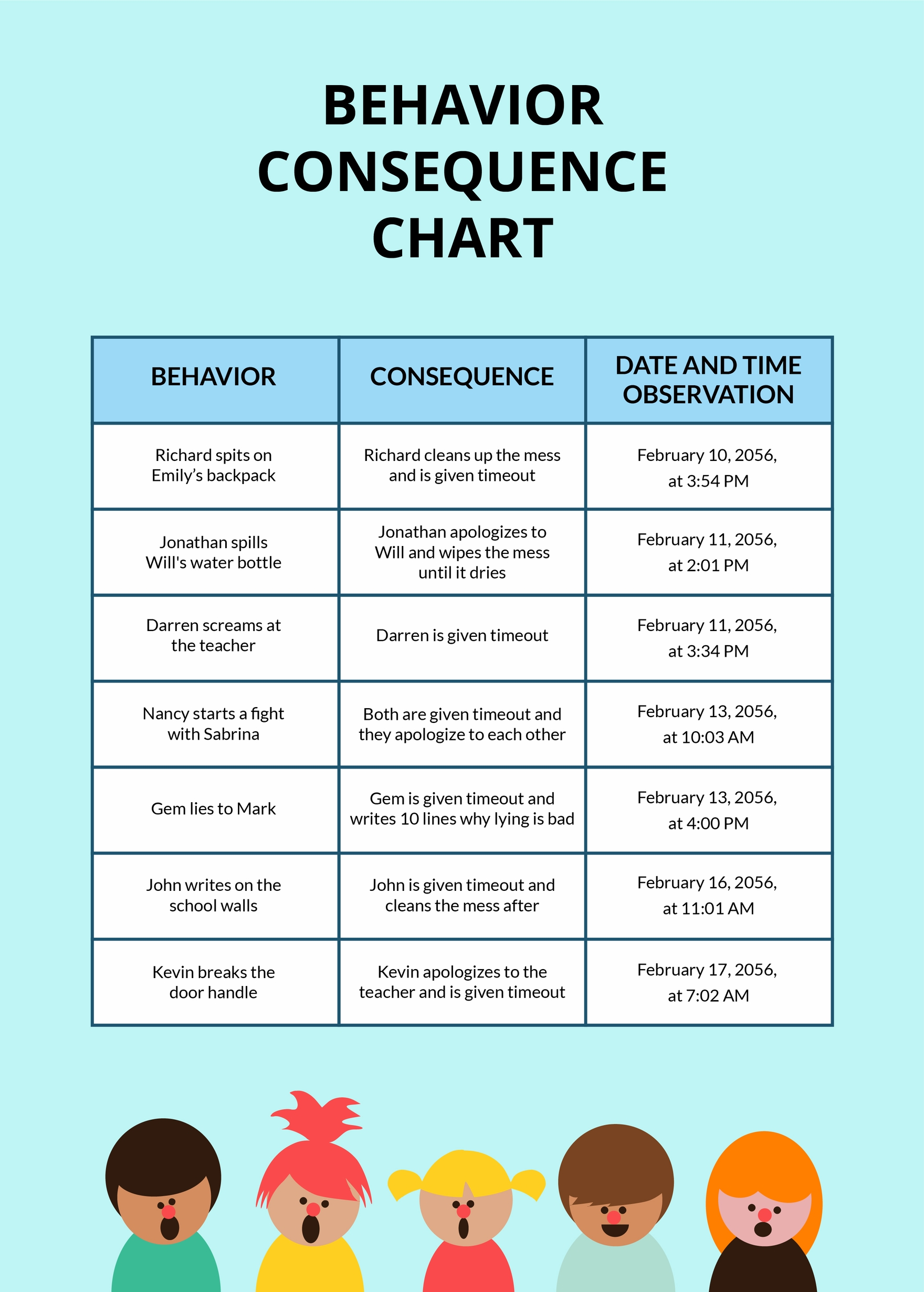
Consequences are noted as they occur, focusing on both immediate and longer‑term effects. Typical consequences encompass:
- Positive reinforcement – Praise, tokens, or preferred activities.
- Negative reinforcement – Removal of an aversive stimulus.
- Punishment – Loss of privileges or added demands.
- Social feedback – Peer reactions or teacher comments.
Documenting the specific consequence helps determine whether it effectively modifies the target behavior.
Designing an Effective Worksheet
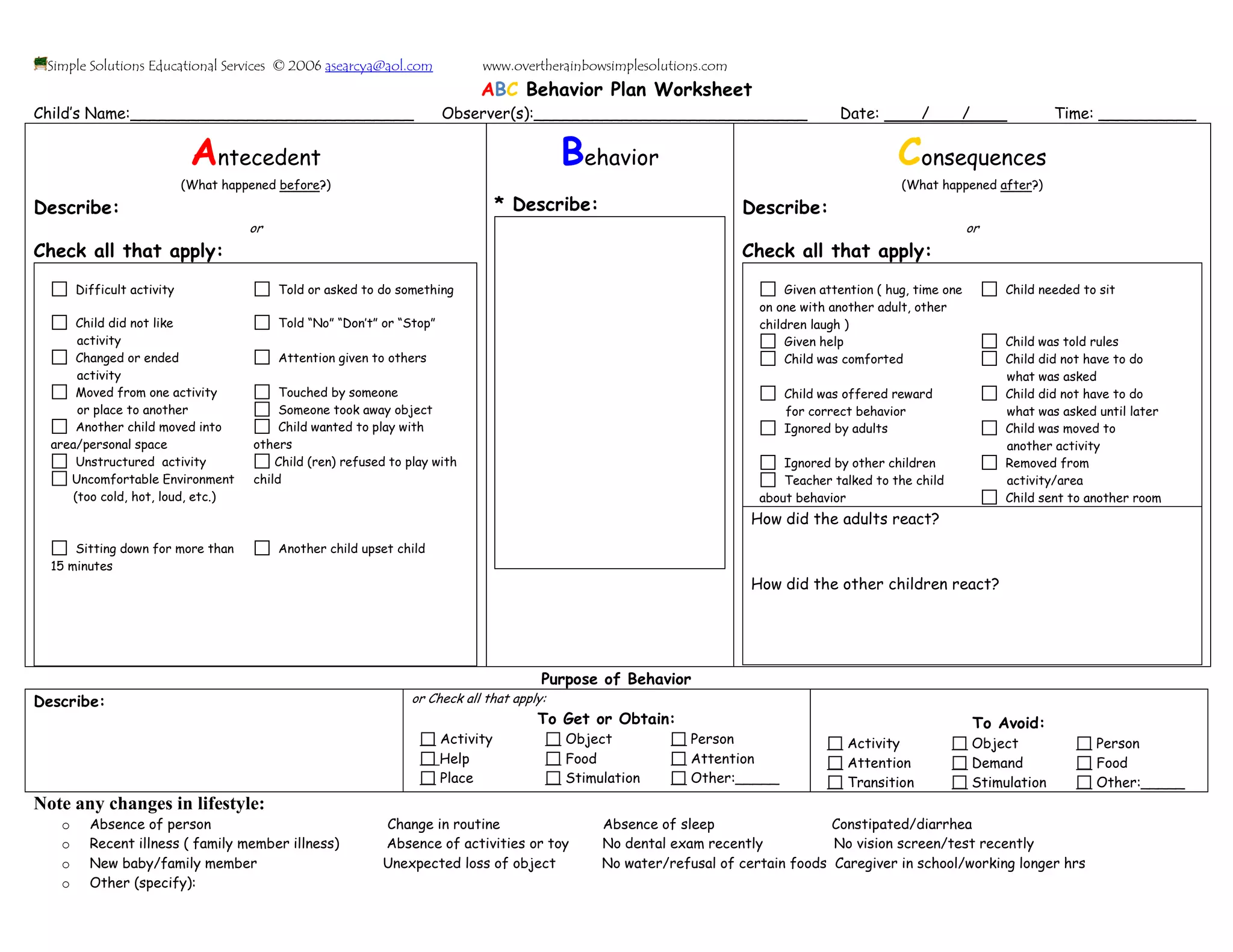
A well‑structured worksheet maximizes usability and data integrity. Key design elements include:
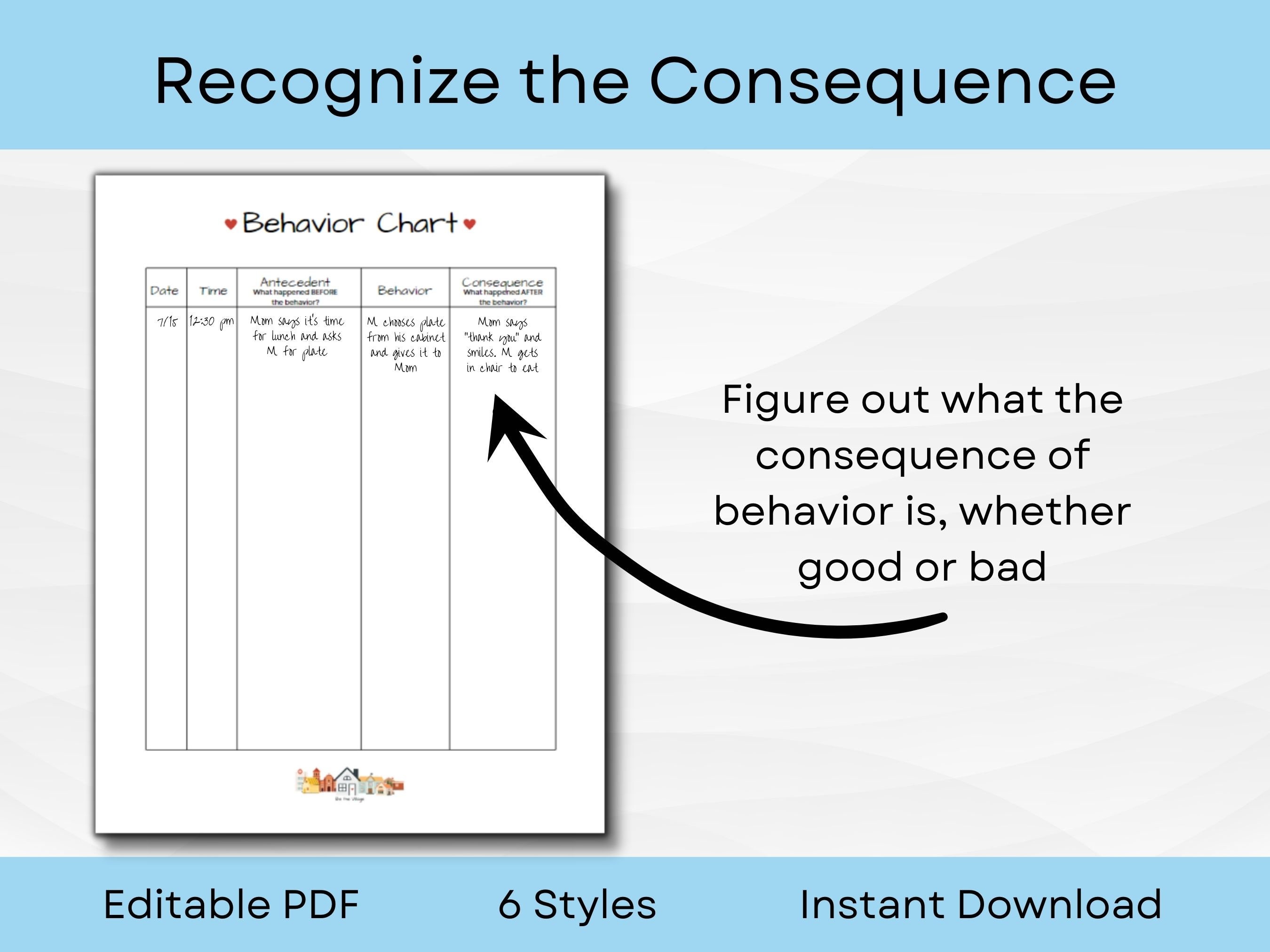
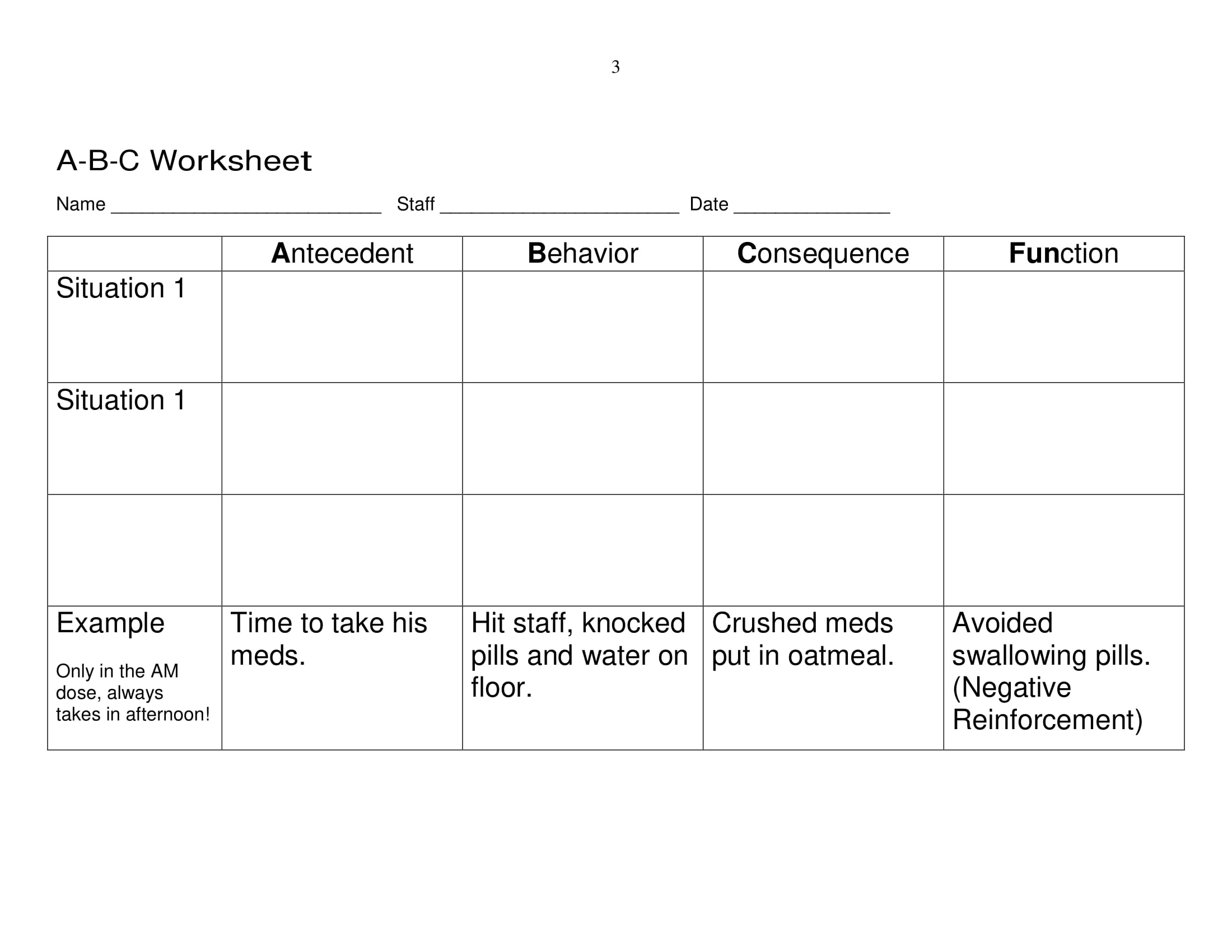
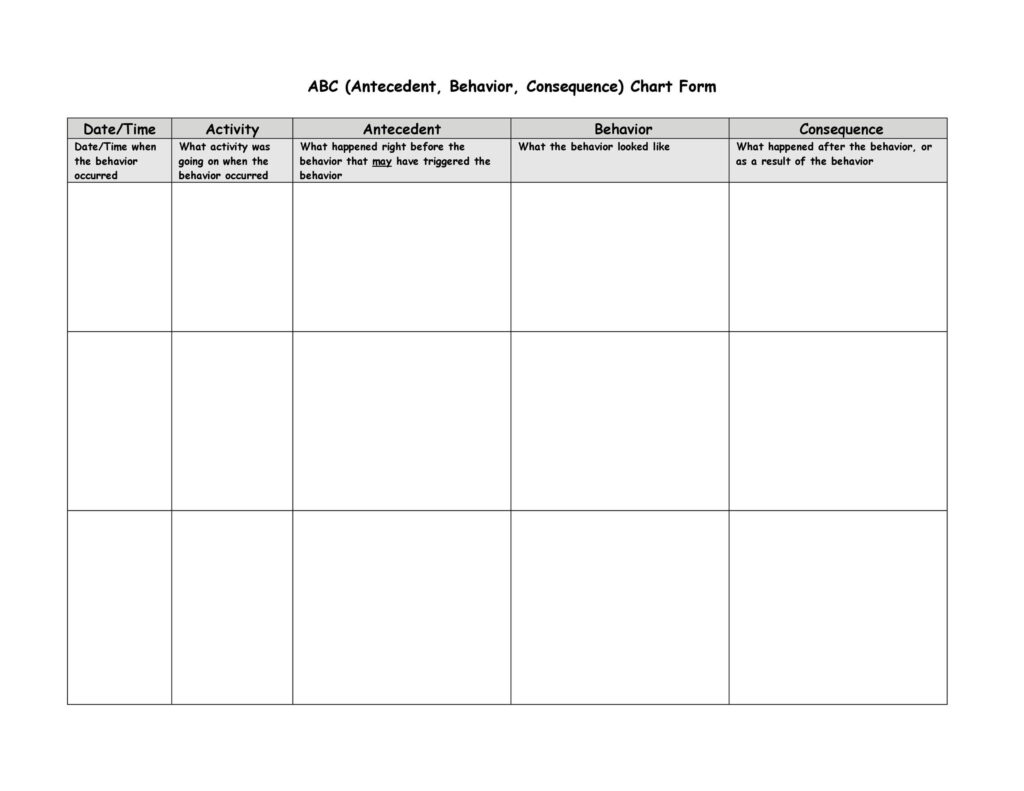
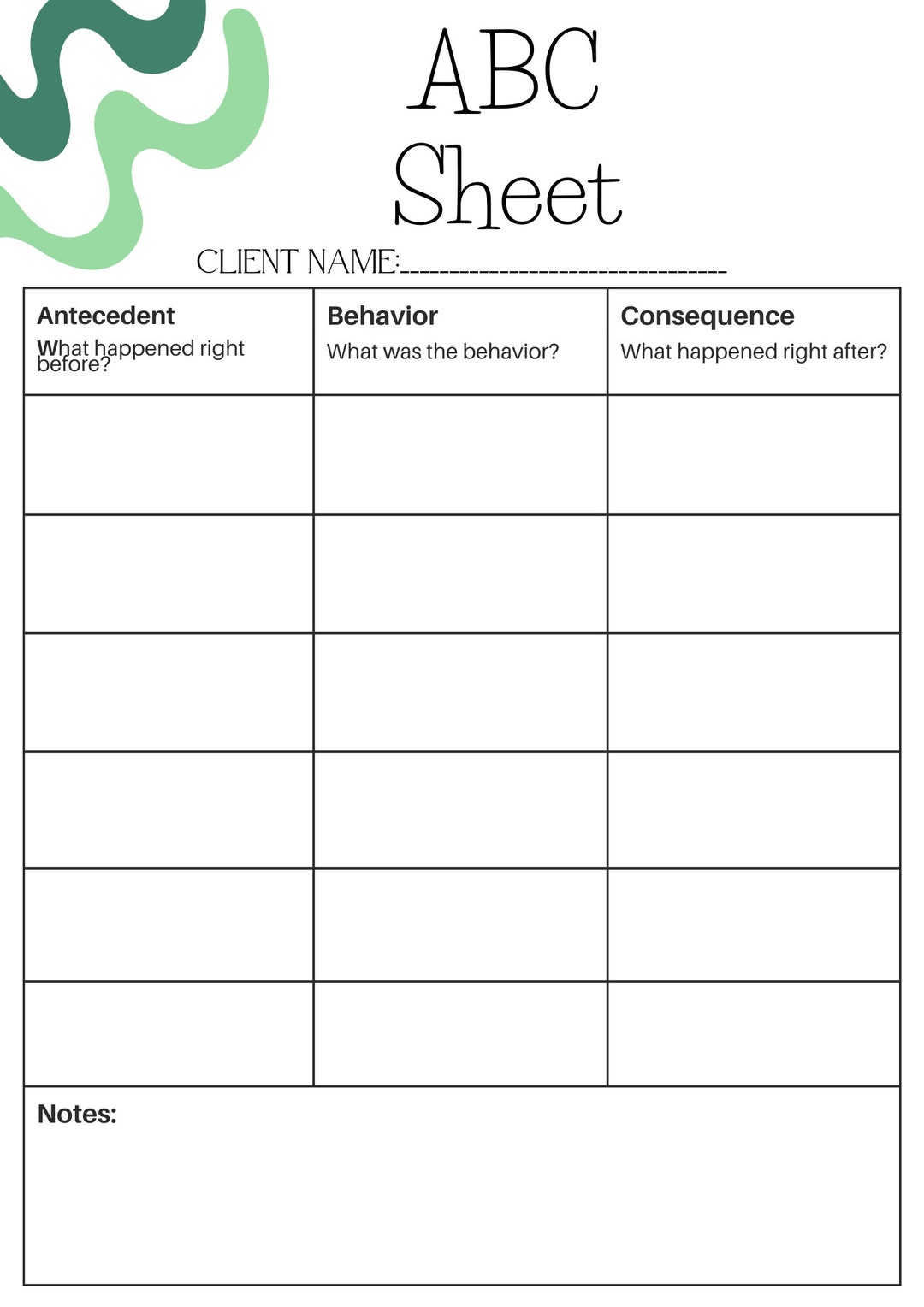
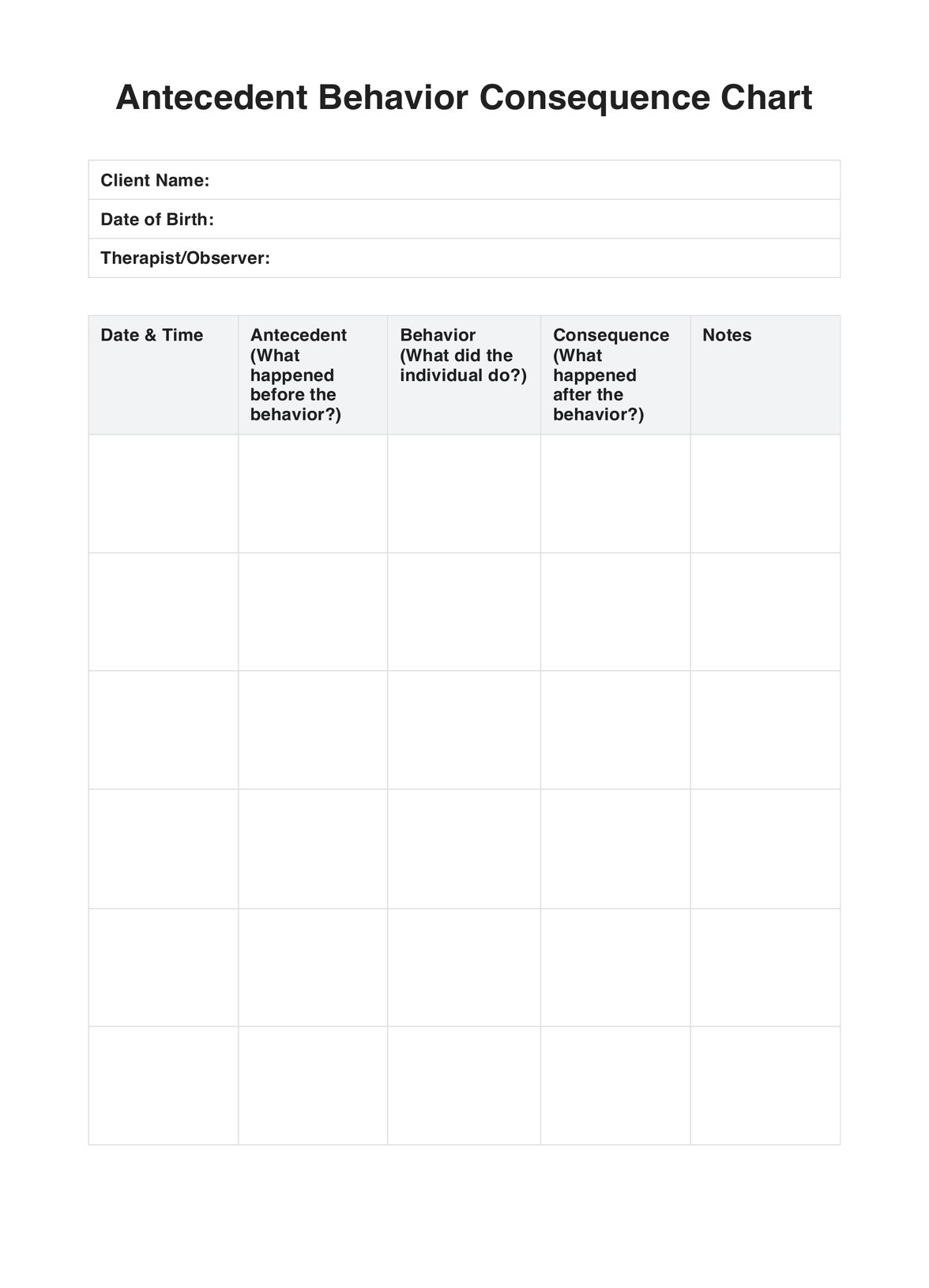
- Clear column headings: “Antecedent,” “Behavior,” “Consequence,” and optional columns for “Date/Time” and “Notes.”
- Consistent formatting: Use a grid or table layout to separate entries visually.
- Space for free‑form notes: Allows the recorder to add contextual details that may not fit into predefined categories.
- Color‑coding or symbols: Helps differentiate between positive and negative consequences at a glance.
- Accessibility: Large print and high‑contrast text for users with visual impairments.
Print versions can be supplemented with digital formats that auto‑populate timestamps and offer drop‑down menus for common antecedents or consequences.
Sample Worksheet Layout
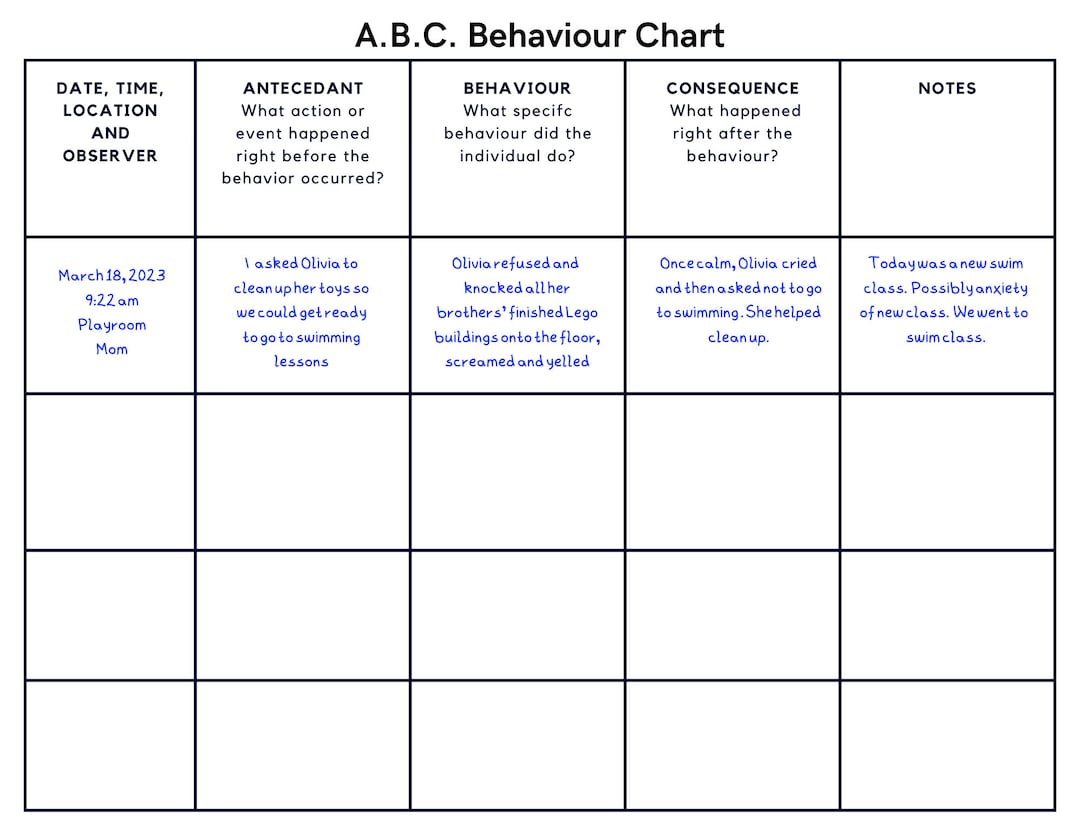
Below is a simplified textual representation of a worksheet that can be adapted to paper or digital forms:
Antecedent | Behavior | Consequence | Date/Time | Notes
• “Teacher asked for line‑up” | “Student ran to the corner” | “Teacher redirected to seat” | “8:15 AM” | “Student was visibly agitated.”
Maintaining uniformity across entries ensures data is comparable over time.
Implementing the Worksheet in Practice
Successful implementation involves training, consistent use, and ongoing review. The process typically follows these steps:
- Orientation – Introduce the worksheet to all stakeholders, explaining its purpose and how to complete each field accurately.
- Training Sessions – Conduct brief workshops to model data entry and discuss real‑time observation strategies.
- Daily Recording – Encourage immediate documentation to minimize recall bias.
- Weekly Review – Schedule meetings to analyze trends and adjust intervention plans.
- Feedback Loop – Share insights with students, parents, and support staff to reinforce transparency and collaboration.
By embedding the worksheet into routine practices, schools and therapy centers can create a culture of data‑driven behavior support.
Using Technology to Enhance Accuracy
Digital platforms can automate many aspects of worksheet management:
- Auto‑timestamping – Reduces manual entry errors and captures precise timing.
- Data analytics – Generates visual reports showing frequency and distribution of antecedents, behaviors, and consequences.
- Secure sharing – Enables secure transmission of data to parents or therapists while maintaining compliance with privacy regulations.
- Alerts and reminders – Prompt users to record observations during critical periods or after a significant behavioral incident.
When selecting a digital tool, prioritize user‑friendly interfaces and the ability to export data for academic or clinical purposes.
Case Study: Applying the Worksheet in a Preschool Classroom
Ms. Rivera teaches a mixed‑ability preschool class of 18 students. She introduced an Antecedent Behavior Consequence Worksheet to monitor and reduce disruptive chewing during storytime.
Step 1 – Identifying the Problem
She noticed that chewing increased when the class was in the “quiet reading” period. She hypothesized that the environment might be too stimulating.
Step 2 – Data Collection
Over a two‑week period, Ms. Rivera recorded each instance of chewing, noting antecedents such as “transition to reading,” “noise level,” or “teacher reading aloud.” She documented whether chewing was followed by a consequence like a brief “quiet reminder” or a “pause for a calming activity.”
Step 3 – Analyzing Patterns
The worksheet revealed that chewing most often occurred when the classroom light was dim and the teacher used a high‑pitch voice. Consequences were inconsistent, with some teachers ignoring the behavior and others giving a gentle reminder.
Step 4 – Intervention Design
Ms. Rivera adjusted the lighting to a warmer tone, slowed her speaking pace, and established a consistent consequence: a “calm corner” break for a fixed 30‑second duration. She recorded each instance on the worksheet.
Step 5 – Monitoring Outcomes
Within one week, the frequency of chewing dropped by 70%. The worksheet helped Ms. Rivera confirm that environmental changes and consistent consequences were effective. She shared the data with the school counselor, who suggested integrating the approach into the school’s behavior management protocol.
Common Challenges and How to Overcome Them
Even with a robust worksheet, users may encounter obstacles. Addressing these proactively increases the tool’s reliability.
Inconsistent Data Entry
Solutions:
- Set a fixed time for observation entries (e.g., every 10 minutes).
- Use mobile apps with push notifications to remind staff to record observations.
- Pair data collection with a brief reflection prompt to reinforce the habit.
Subjectivity in Identifying Consequences
Strategies:
- Create a glossary of acceptable consequence terms (e.g., “verbal praise,” “loss of token”).
- Train staff to differentiate between reinforcement and punishment clearly.
- Encourage double‑checking entries with a peer or supervisor after the day.
Difficulty Linking Antecedents to Behaviors
Tips:
- Use real‑time observation instead of retrospective notes.
- Incorporate video recordings (with consent) for critical incidents.
- Employ structured observation protocols that cue staff to consider antecedents explicitly.
Managing Data Volume
Recommendations:
- Filter data to focus on the most frequent antecedent–behavior pairs.
- Use dashboards that summarize data by week or month.
- Archive older records in a compressed format to keep the worksheet manageable.
Integrating the Worksheet with Positive Behavior Support Systems
The Antecedent Behavior Consequence Worksheet can be a cornerstone of a broader Positive Behavior Support (PBS) framework. Key integrations include:
- **Behavior Support Plans** – Use worksheet data to craft individualized plans that outline specific antecedent modifications and consequence strategies.
- **Data‑Driven Decision Making** – Combine worksheet trends with school‑wide metrics such as absenteeism or academic performance to gauge overall impact.
- **Parent Communication** – Share summarized data with parents during newsletters or meetings, fostering consistency between home and school.
- **Professional Development** – Include worksheet training in staff onboarding, ensuring every team member can contribute meaningfully.
When aligned with PBS principles—proactive anticipation, explicit instruction, and systematic reinforcement—the worksheet becomes a powerful catalyst for sustained behavioral improvement.
Measuring Success and Sustaining Momentum
Assessing the effectiveness of the worksheet involves both quantitative and qualitative metrics.
Quantitative Indicators
- Reduction in frequency of targeted behaviors (e.g., a 50% drop in chewing incidents).
- Increase in positive behaviors (e.g., more students engaging in quiet reading).
- Consistency of data entry (percentage of observation slots filled).
Qualitative Feedback
- Teacher reflections on environmental changes and student engagement.
- Student self‑reports of feeling understood or more comfortable.
- Parent comments about observable behavior shifts at home.
Continuous Improvement Loops
To maintain progress, schedule quarterly reviews that:
- Re‑evaluate antecedent triggers and adjust interventions.
- Update consequence strategies based on evolving student needs.
- Provide targeted training to address observed gaps.
Celebrating milestones—such as a month of consistent data entry or a noticeable behavior decline—reinforces staff motivation and acknowledges collective effort.
Conclusion
The Antecedent Behavior Consequence Worksheet is more than a simple tracking sheet; it is an analytical instrument that brings clarity to the complex interplay of environmental cues, observable actions, and resulting outcomes. By adopting a systematic approach to documentation, educators and therapists can uncover actionable insights, tailor interventions, and foster environments where positive behaviors flourish. When embedded within a data‑driven culture and supported by consistent training, technology, and collaborative feedback loops, this worksheet becomes a cornerstone of effective behavior management and, ultimately, a catalyst for lasting student success.









Related posts of "Antecedent Behavior Consequence Worksheet"
