Adjective Worksheet For Kg offers an engaging gateway for young learners to explore descriptive language, laying the groundwork for reading comprehension, writing fluency, and everyday communication. When kindergarten students can accurately identify and use adjectives, they begin to paint vivid mental pictures, enhance storytelling, and develop the confidence to express thoughts with clarity. This article delves into the pedagogical importance of adjectives, outlines how to design age‑appropriate worksheets, presents concrete activity examples, and provides assessment and implementation strategies that empower both teachers and parents to foster a love of language in the earliest classroom years.
Why Adjectives Matter in Kindergarten
Building Vocabulary Foundations
At the KG level, children transition from naming objects to describing them. Introducing adjectives expands their lexical repertoire beyond nouns and verbs, encouraging nuanced expression. For example, instead of saying “ball,” a child learns to say “big red ball,” which adds size, color, and texture cues. This richer vocabulary supports later reading comprehension, as students can decode adjectives embedded in texts and infer meaning from contextual clues.
Enhancing Cognitive Development
Identifying adjectives requires children to observe attributes, compare differences, and categorize items—a process that strengthens critical thinking and classification skills. Sorting games that ask learners to group “soft” versus “hard” objects engage the brain’s executive functions, laying a foundation for mathematical reasoning and scientific observation later on.
Supporting Social‑Emotional Growth
Descriptive language helps children articulate feelings and preferences, which is essential for social interaction. When a child says, “I feel happy because the sunny day is warm,” they connect an internal state with external descriptors, promoting self‑awareness and empathy. Worksheets that incorporate emotion‑related adjectives can therefore double as tools for SEL (Social‑Emotional Learning).
Designing Effective Adjective Worksheets for KG
Choosing Age‑Appropriate Content
The success of an adjective worksheet hinges on relevance to a child’s lived experience. Focus on tangible attributes—color, size, shape, texture, and temperature—that students can perceive directly. Avoid abstract descriptors such as “melancholy” or “intricate,” which may confuse learners still mastering concrete concepts. A well‑chosen word list might include:
- big, small
- red, blue, green
- soft, rough
- round, square
- warm, cold
Each term should be paired with clear visual cues to reinforce meaning.
Visual Appeal and Layout
Kindergarten worksheets thrive on bold colors, simple fonts, and ample white space. Use high‑contrast images that illustrate each adjective, and place text alongside pictures rather than beneath them. A typical page layout could feature a large picture on the left, the adjective word on the right, and a short instruction line centered at the top. Consistency in layout reduces cognitive load, allowing children to focus on the learning objective rather than decoding the page format.
Incorporating Multi‑Sensory Activities
Young learners benefit from activities that engage more than one sense. Incorporate tactile elements—such as attaching felt pieces for “soft” versus “rough”—or auditory cues like a sound clip of a “loud” bell versus a “quiet” whisper. When worksheets include a “touch‑and‑feel” component, children form stronger neural connections, making adjective recall more durable.
Sample Worksheet Activities and How to Implement Them
Picture‑Word Matching
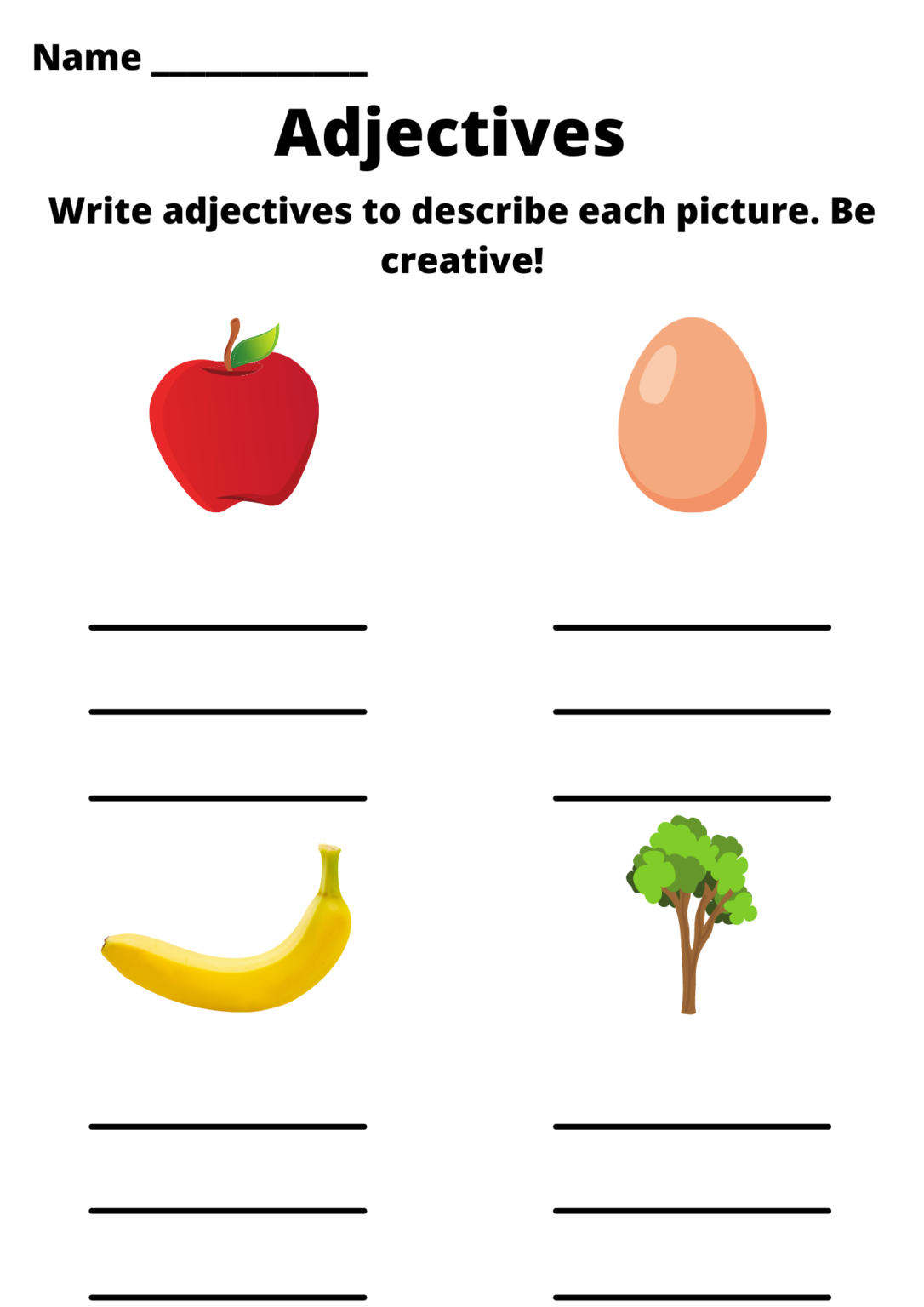
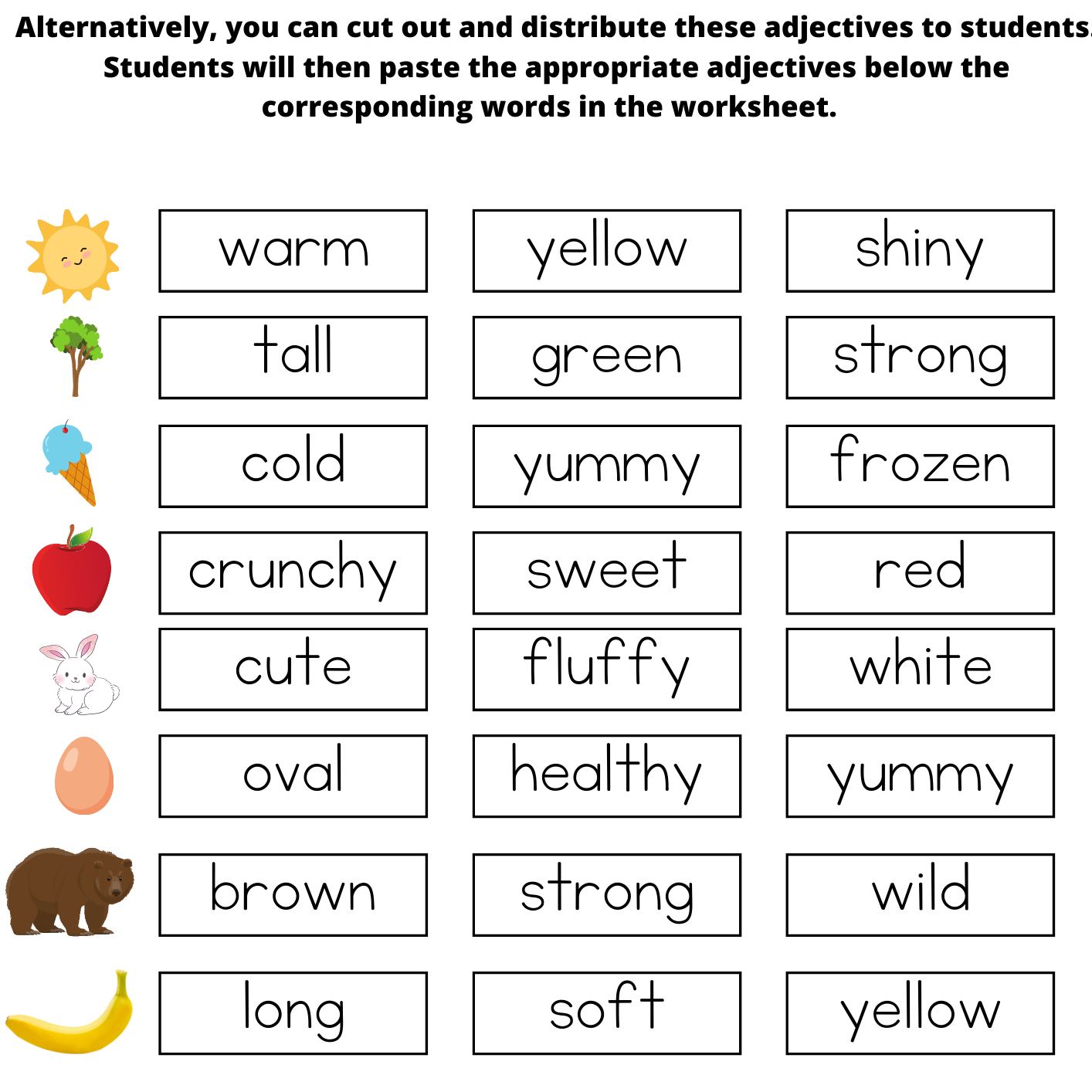
Provide a series of pictures (e.g., a big apple, a small cat, a red truck) and a mixed list of adjectives. Ask students to draw a line from each adjective to the picture it describes. This activity reinforces visual discrimination and strengthens the link between word and concept. Teachers can scaffold by first modeling one example, then gradually releasing responsibility to the whole class.
Fill‑in‑the‑Blank Sentences
Construct simple sentences with a missing adjective slot, such as “The ___ dog is sleeping.” Supply a word bank beneath the sentences that includes appropriate options (big, tiny, fluffy). Children select the correct adjective to complete each sentence, reinforcing grammar structure while practicing vocabulary. For added challenge, encourage students to write their own sentences using a chosen adjective, fostering creative expression.
Adjective Sorting Games
Design a sorting worksheet with three columns labeled “Big,” “Small,” and “Medium.” Provide a collection of cut‑out pictures (e.g., a giant elephant, a tiny mouse, a medium‑sized ball). Children cut and paste each image into the correct column. This hands‑on activity promotes fine‑motor skills, categorization, and peer discussion as students justify their choices.
Interactive Story Completion
Present a short story template with blanks for adjectives: “Once upon a time, a ___ (color) princess lived in a ___ (size) castle.” Supply a palette of adjective cards. Students select cards to fill the blanks, then read the completed story aloud. This exercise blends reading, writing, and speaking, demonstrating how adjectives enrich narrative depth.
Assessing Student Progress with Worksheets
Formative Observation
While children work on worksheets, teachers should circulate, noting which adjectives cause hesitation and which are mastered effortlessly. Observational notes guide immediate instructional adjustments, such as offering additional visual examples for “smooth” or providing a brief review of “cold.” Recording these observations in a simple checklist ensures systematic tracking over time.
Rubrics for KG
A kindergarten‑appropriate rubric focuses on three criteria: accuracy, effort, and independence.
- Accuracy: Correctly matches or selects adjectives.
- Effort: Completes tasks with enthusiasm, attempts all items.
- Independence: Requires minimal prompts to finish the worksheet.
Assigning a three‑point scale (Emerging, Developing, Mastered) provides clear feedback for both students and parents.
Feedback Strategies
Feedback should be immediate, specific, and positive. Instead of a generic “Good job,” say, “You correctly matched the word ‘soft’ with the fluffy bunny—great observation of texture!” This reinforces the learning connection and encourages repeat performance. For errors, use a guiding question: “What makes this apple different from the green one?” prompting self‑correction.
Tips for Teachers and Parents
Integrating Worksheets into Daily Routine
Consistency is key. Allocate a short, 10‑minute “Adjective Corner” each morning where children rotate through a worksheet station. Pair the activity with a related read‑aloud book that highlights adjectives, creating a seamless language‑rich environment. For home use, parents can set a “Word of the Day” ritual, using the worksheet’s adjectives in everyday conversation.
Adapting for Diverse Learners
Every child brings a unique learning profile. For visual learners, increase the size and clarity of images. Auditory learners benefit from saying the adjective aloud while pointing to the picture. Children with fine‑motor challenges can use stickers instead of cutting and pasting. Providing multiple representation modes ensures equitable access to the content.
Extending Learning Beyond Worksheets
Encourage children to create their own adjective cards from household items—label a “soft blanket” or a “shiny spoon.” Display a classroom “Adjective Wall” where students add new words they discover during play. These extensions transform worksheet practice into a living language experience, reinforcing retention and encouraging lifelong curiosity.
Conclusion
Implementing a well‑crafted Adjective Worksheet For Kg can dramatically enhance early language development, cognitive growth, and social confidence. By selecting concrete descriptors, designing visually appealing and multi‑sensory pages, and embedding activities that promote active participation, educators and parents provide a solid foundation for descriptive communication. Ongoing assessment through observation, simple rubrics, and targeted feedback ensures that each child progresses at an appropriate pace. Finally, integrating worksheets into daily routines and adapting them for diverse learners creates an inclusive, engaging environment where adjectives become natural tools for expression. With thoughtful planning and consistent practice, kindergarteners will not only master adjectives but also discover the joy of painting vivid pictures with words—a skill that will serve them throughout their academic journey and beyond.








Related posts of "Adjective Worksheet For Kg"
