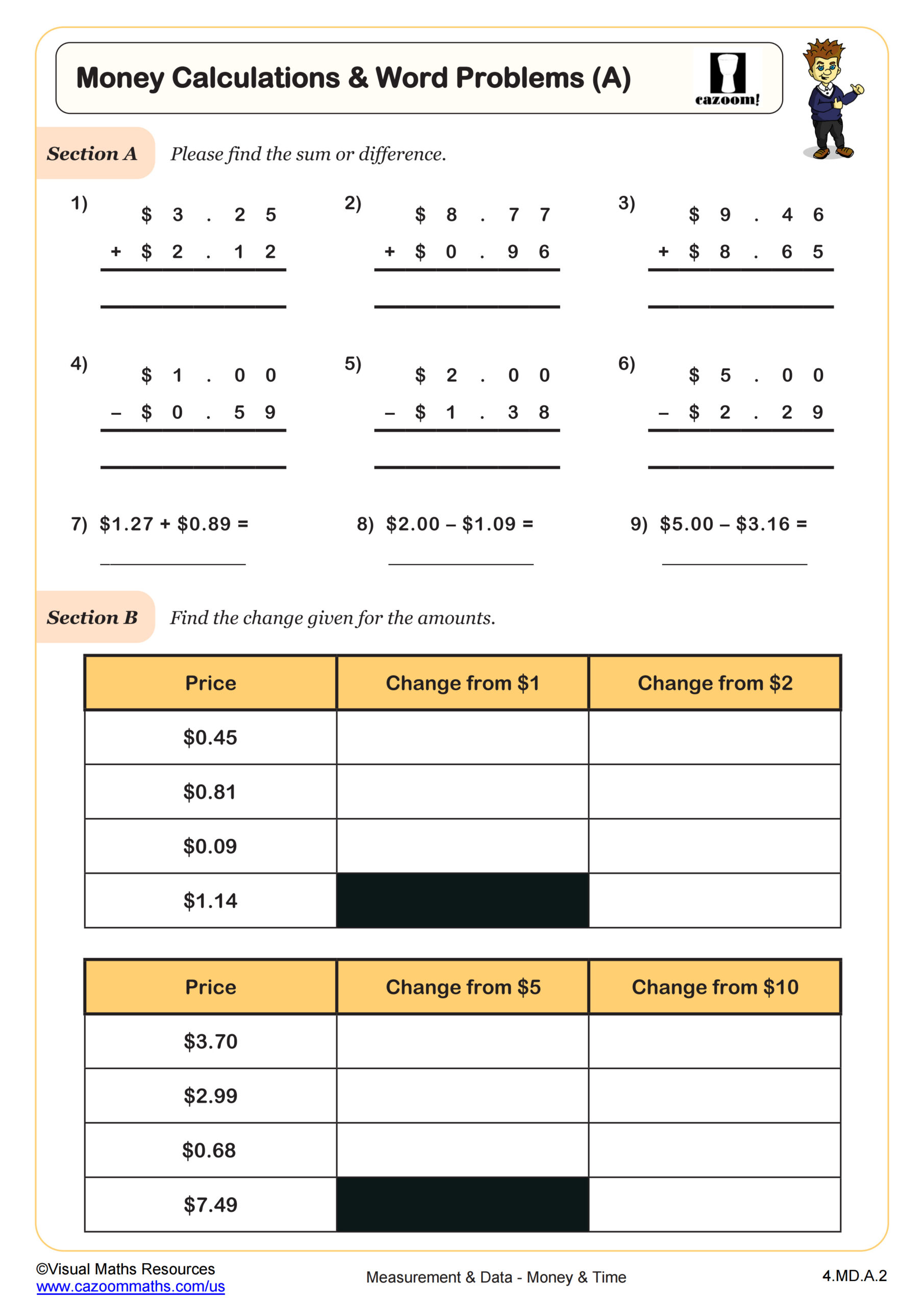
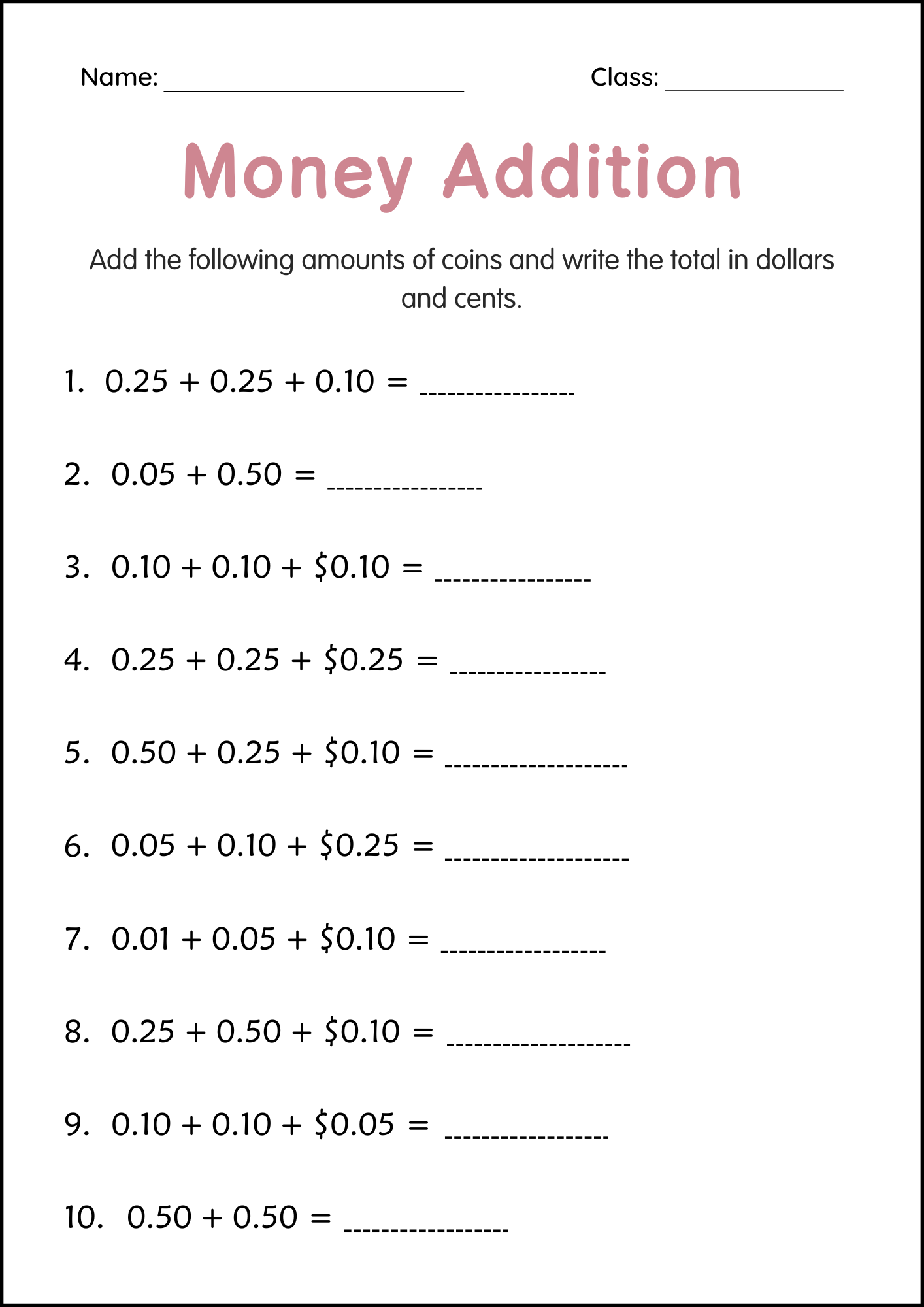
Adding Subtracting Money Worksheets are the secret sauce that transforms abstract numbers into real‑world cash confidence for elementary learners, and this opening line only scratches the surface of why these tools are indispensable in today’s classrooms and homes.
Why Money Worksheets Matter
Understanding pounds, dollars, or any currency is a foundational life skill, yet many students struggle to connect the symbols on a page with the coins and bills they handle daily. Money worksheets bridge that gap by providing concrete practice that mirrors everyday transactions. When children repeatedly add and subtract monetary amounts, they develop fluency in recognizing patterns, such as the fact that ten pence makes a tenth of a pound or that a dollar and fifty cents equals $1.50. This fluency reduces math anxiety and builds confidence, allowing students to approach more complex financial concepts—like budgeting or interest calculations—with a solid base.
Moreover, research shows that contextual learning—where math is embedded in meaningful scenarios—boosts retention by up to 40 %. Money worksheets naturally embed context: a story about buying a snack, making change at a store, or saving for a toy. The relevance of the task fuels motivation, turning a routine drill into an engaging problem‑solving adventure.
Key Benefits for Students and Teachers
Money worksheets deliver a multi‑layered set of advantages that extend beyond simple arithmetic.
- Real‑World Application: Each problem mimics a transaction students might encounter, reinforcing the idea that math is useful outside the textbook.
- Conceptual Clarity: By separating pounds from pence (or dollars from cents), worksheets clarify place value and the importance of aligning decimal points.
- Critical Thinking: Open‑ended questions—like “What would happen if you had two £2 coins and needed to pay £3.75?”—encourage students to devise strategies rather than rely on rote memorization.
- Assessment Ready: Teachers can quickly gauge proficiency, identify misconceptions, and tailor subsequent instruction.
- Parental Involvement: Printable worksheets enable families to reinforce school lessons at home without needing expensive software.
How to Choose Effective Money Worksheets
Not every worksheet will deliver the same impact. Selecting high‑quality resources involves evaluating several criteria.
Alignment with Curriculum Standards
Make sure the worksheet matches grade‑level expectations for adding and subtracting money. Look for clear learning objectives, such as “add amounts up to £10 with correct placement of decimal points” or “subtract amounts up to $20 while providing correct change.”
Progressive Difficulty
Effective worksheets start simple—adding two‑digit amounts—and gradually increase complexity by introducing multi‑step problems, mixed operations, and word problems that require reasoning. This scaffolding supports confidence building.
Visual Clarity
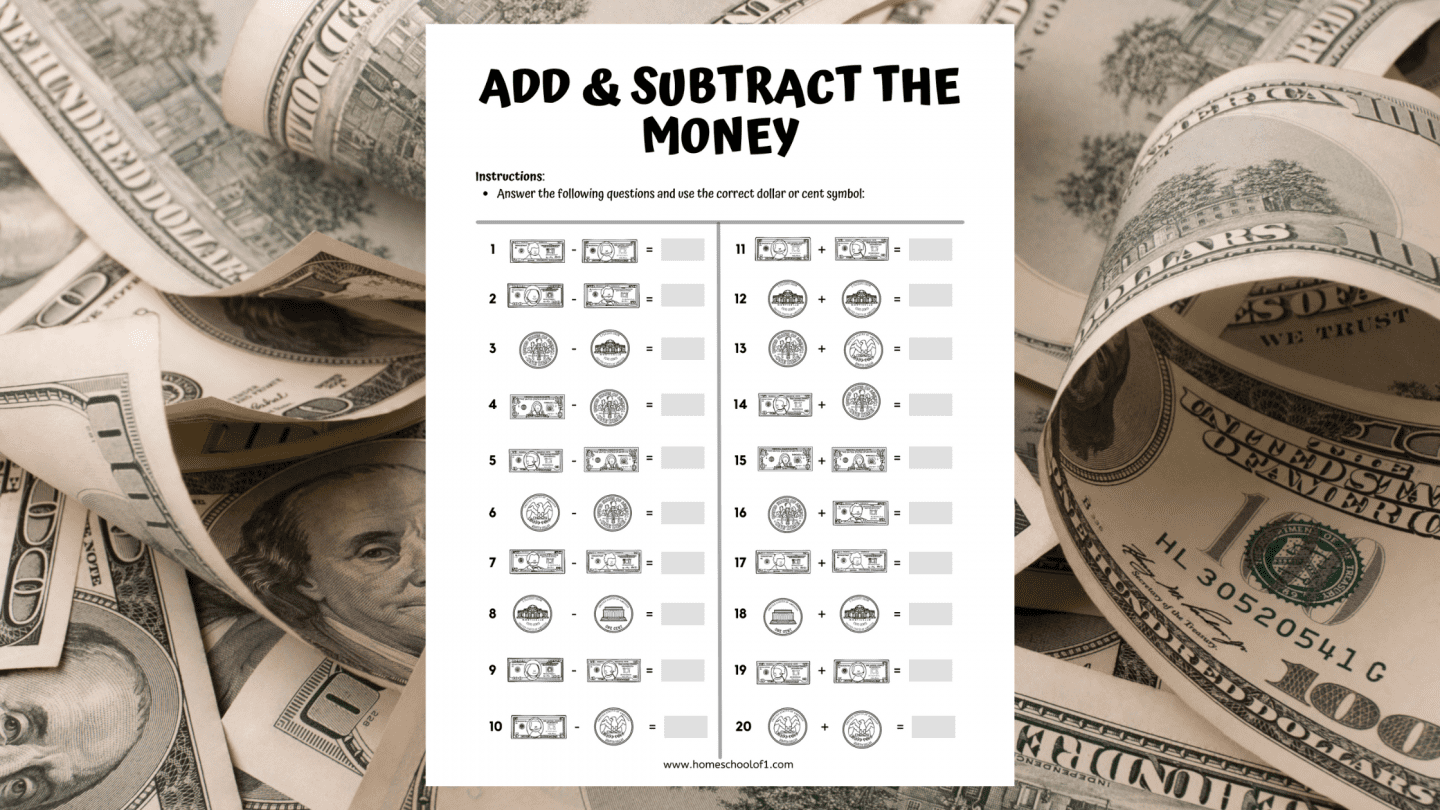
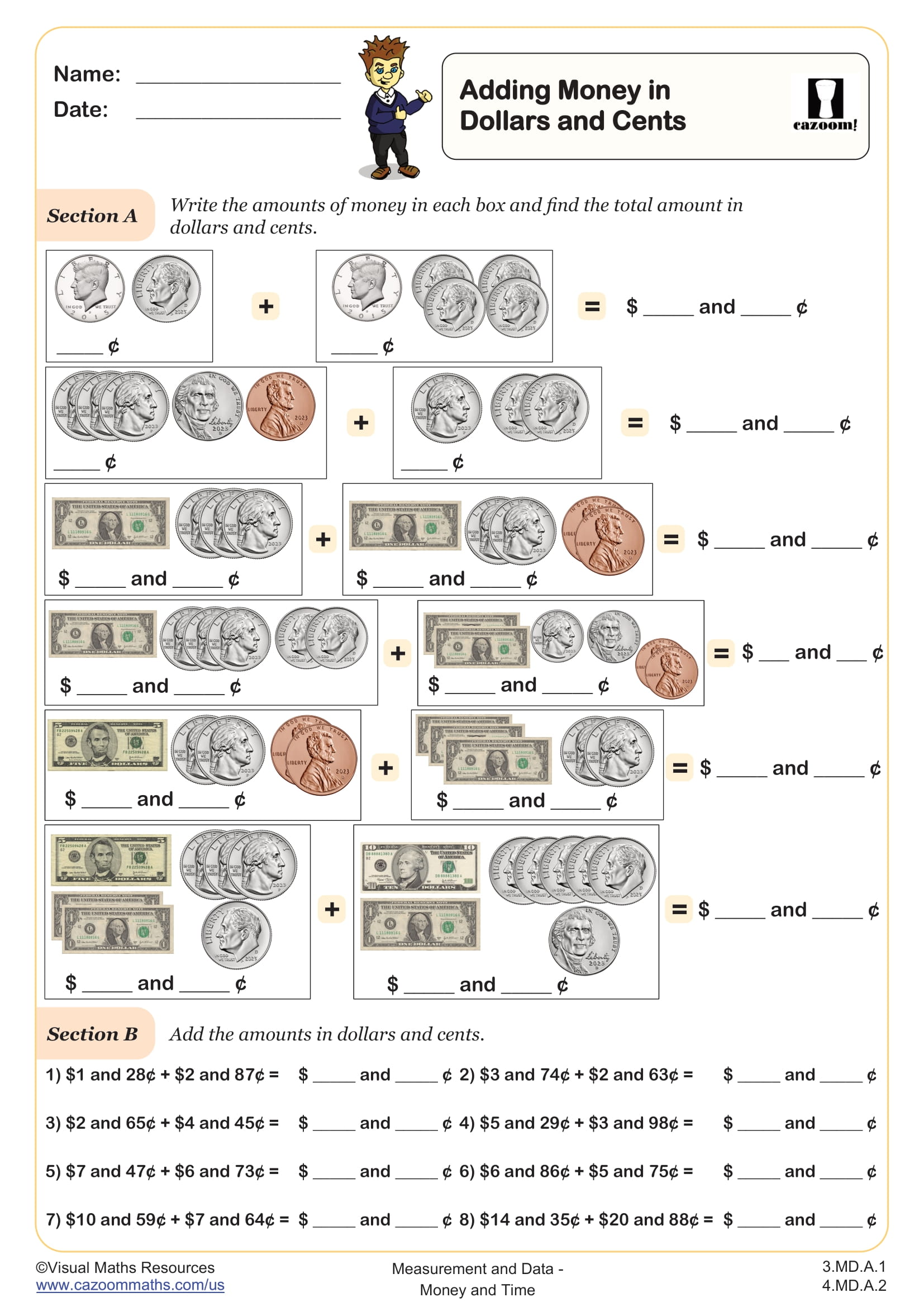
Children benefit from clean layouts, ample spacing, and visual cues like coin images or currency symbols. Avoid cluttered pages that distract from the core math task.
Answer Keys and Teacher Notes
An answer key at the back streamlines grading and allows teachers to model correct strategies. Teacher notes that suggest alternative approaches or common errors are a bonus for instructional planning.
Step‑by‑Step Guide to Using Worksheets in the Classroom
Implementing money worksheets effectively requires thoughtful preparation, execution, and reflection.
1. Warm‑Up Activity
Begin with a quick “show me a coin” game. Pass real or play money around the room and ask students to identify values. This activates prior knowledge and sets the stage for the worksheet.
2. Model the Process
Project the first worksheet problem on a screen and solve it aloud. Emphasize aligning decimal points, converting pence to pounds (or cents to dollars), and using a money line for visual support. Encourage students to verbalize each step.
3. Guided Practice
Distribute the worksheet and let students work in pairs. Circulate to answer questions, correct alignment errors, and prompt students to explain their reasoning to each other. Peer discussion reinforces concepts.
4. Independent Work
After the guided portion, ask students to complete the remaining problems silently. This phase assesses individual mastery.
5. Review and Reflect
Collect the worksheets, then reconvene for a class review. Highlight common mistakes—such as forgetting to carry over pence—and celebrate correct strategies. End with a reflective prompt: “What trick helped you the most today?”
Creative Activities to Reinforce Skills
Traditional worksheets are powerful, but adding variety keeps enthusiasm high.
- Money Market Role‑Play: Set up a mini‑store with price tags. Students use play money to purchase items, calculate totals, and give change. Record the transactions on a worksheet for later analysis.
- Digital Currency Simulations: Use free online platforms that let students drag and drop virtual coins into a “cash register” interface, then print a summary worksheet for offline practice.
- Saving Goal Charts: Have students design a savings chart for a desired item, then use addition worksheets to track progress toward the goal.
- Story Writing: Ask learners to write a short narrative that includes at least three monetary calculations, then solve those calculations on a worksheet.
Common Mistakes and How to Fix Them
Even seasoned teachers encounter recurring errors. Recognizing them early enables targeted intervention.
Miscalculating Decimal Placement
Students often add 0.75 + 1.20 and write 1.95 instead of 1.95—actually correct, but sometimes they forget the zero before the decimal, writing 195 instead of $1.95. Reinforce the habit of drawing a line under the decimal points before adding.
Confusing Pounds and Pence (or Dollars and Cents)
When a problem asks for “£3.45,” some learners add the numbers as whole units (3 + 45 = 48). Use visual separators: write £3 . 45 with a clear dot and remind students that the right side represents a fraction of the whole.
Skipping the Change‑Making Step
In subtraction problems like “You have £5.00, you buy a snack for £1.75. How much change do you receive?” Students sometimes subtract 5 – 1.75 and answer £3.25, forgetting to consider the remaining pence. Model the “money line” technique to visualize the subtraction.
Incorrect Carry‑Over
When adding 9 pence to £2.95, the sum is £3.04, not £3.94. Emphasize that 9 p + 95 p = 104 p, which converts to £1.04, and then add the pound portion.
Digital vs Printable Options
Both formats have unique strengths, and the best approach often blends them.
Printable Worksheets
Printed pages are tactile, allowing students to use physical manipulatives like coins and counters. They are ideal for low‑tech environments, home-school settings, and quick exit tickets.
Digital Worksheets
Online tools offer instant feedback, adaptive difficulty, and the ability to track progress over time. Features such as drag‑and‑drop money symbols and auto‑grading save teacher time and keep students engaged with interactive elements.
Hybrid Strategy
Start a lesson with a digital warm‑up to gauge baseline understanding, then transition to printable worksheets for hands‑on practice. Conclude with an online quiz that automatically records scores for data‑driven instruction.
Tips for Parents Supporting Money Skills at Home
Parents play a pivotal role in reinforcing classroom learning. Here are practical ways to integrate money worksheets into everyday life.
- Grocery Store Simulations: Give children a budget and a list of items with prices. Have them calculate the total and decide what they can afford.
- Allowance Accounting: If your child receives a weekly allowance, use a worksheet to record earnings, savings, and spending. Review the totals together each week.
- Bank Statement Activity: Print a simple “bank statement” showing deposits and withdrawals. Ask your child to reconcile the balance using addition and subtraction worksheets.
- Game Night Integration: Board games like Monopoly or The Game of Life involve money calculations. After playing, have your child complete a worksheet that mirrors the game’s transactions.
Adapting Worksheets for Diverse Learners
Every classroom includes a spectrum of abilities, language backgrounds, and learning styles. Thoughtful adaptation ensures equitable access.
For English Language Learners (ELL)
Provide visual word banks that pair key terms (“total,” “change,” “price”) with pictures. Use bilingual glossaries for currency terms, and allow oral responses before written ones.
For Students with Dyscalculia
Offer larger print worksheets, high‑contrast colors, and extra spacing. Incorporate manipulatives—real coins or digital click‑able tokens—to externalize the arithmetic process.
For Advanced Learners
Introduce multi‑step challenges that combine addition, subtraction, and multiplication, such as “If a toy costs £4.75 and you have three £5 notes, how much change will you receive after buying two toys?” This stretches critical thinking while staying within the money context.
Measuring Success and Next Steps
Effective use of money worksheets is only part of the journey; evaluating outcomes guides future instruction.
Formative Assessment
Collect worksheets weekly and create a simple rubric: accuracy, method explanation, and neatness. Use the data to identify trends—e.g., consistent errors with decimal alignment—and plan targeted mini‑lessons.
Summative Evaluation
At the end of a unit, administer a comprehensive worksheet that includes a mix of simple calculations, word problems, and real‑world scenarios. Compare results to baseline data to measure growth.
Continuous Improvement
Solicit student feedback: ask which worksheet formats they enjoyed and which felt confusing. Adjust future resources based on this input, ensuring that the worksheets remain both educational and engaging.
Conclusion
When thoughtfully selected and expertly implemented, Adding Subtracting Money Worksheets become powerful catalysts for numerical fluency, confidence, and real‑life preparedness. By aligning worksheets with curriculum standards, scaffolding difficulty, and blending printable with digital experiences, educators and parents can create a rich, supportive environment that turns the abstract concept of money into an intuitive, everyday skill. The strategies, adaptations, and assessment tips outlined above empower teachers to maximize impact, while the creative activities and home‑based ideas ensure that learning extends far beyond the classroom walls. Ultimately, mastering the art of adding and subtracting money equips young learners with the financial literacy foundation they’ll rely on for a lifetime of smart decisions.











Related posts of "Adding Subtracting Money Worksheets"
