Aa Step 1 Worksheet is more than a simple form—it’s a transformative tool that helps newcomers to Alcoholics Anonymous articulate their experience of powerlessness over alcohol and begin the journey toward lasting sobriety. By breaking down the intimidating concept of “admitting powerlessness” into manageable questions, the worksheet creates a safe space for honest self‑reflection, sparks meaningful conversation in meetings, and sets the groundwork for the twelve‑step program’s next phases. Whether you’re a fresh face at a AA gathering, a seasoned sponsor, or a therapist integrating AA principles into treatment, mastering the AA Step 1 Worksheet can dramatically improve engagement, accountability, and personal growth.
Why the AA Step 1 Worksheet Matters
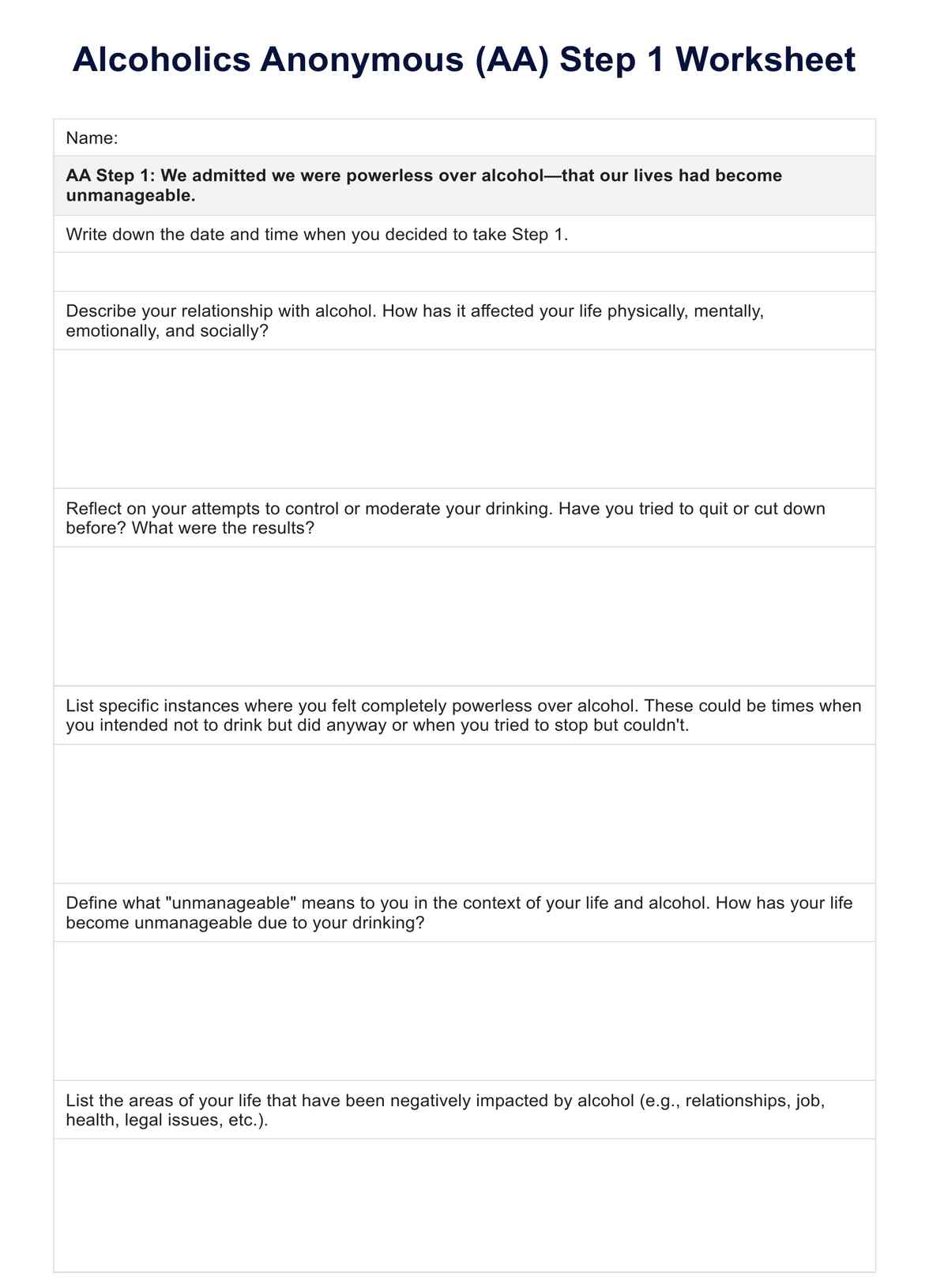
The first step in the AA program—“We admitted that we were powerless over alcohol—that our lives had become unmanageable”—is often described as the most daunting. The abstract nature of “powerlessness” can leave newcomers feeling confused, defensive, or even ashamed. The worksheet translates that abstract language into concrete prompts, encouraging participants to:
- Identify specific moments when alcohol controlled their choices.
- Recognize patterns of denial and rationalization.
- Explore emotional and relational fallout caused by drinking.
- Develop a clear, personal statement of unmanageability.
These outcomes are not merely academic; they create a tangible record that can be revisited throughout recovery, reinforcing the truth that change is possible when honesty is the foundation.
Core Components of an Effective AA Step 1 Worksheet
Although worksheets can vary, most successful versions share several essential sections. Each part serves a distinct therapeutic purpose and collectively guides the user from confusion to clarity.
Personal History Snapshot
Begin by capturing key dates, ages, and milestones related to drinking. Simple prompts such as “First drink,” “First time I felt I needed a drink to cope,” and “Age when drinking began to affect my work or relationships” provide context. This chronological map helps the individual see the growth of the problem over time, turning a vague feeling of loss of control into a concrete timeline.
Defining Powerlessness
Here, the worksheet asks direct questions like:
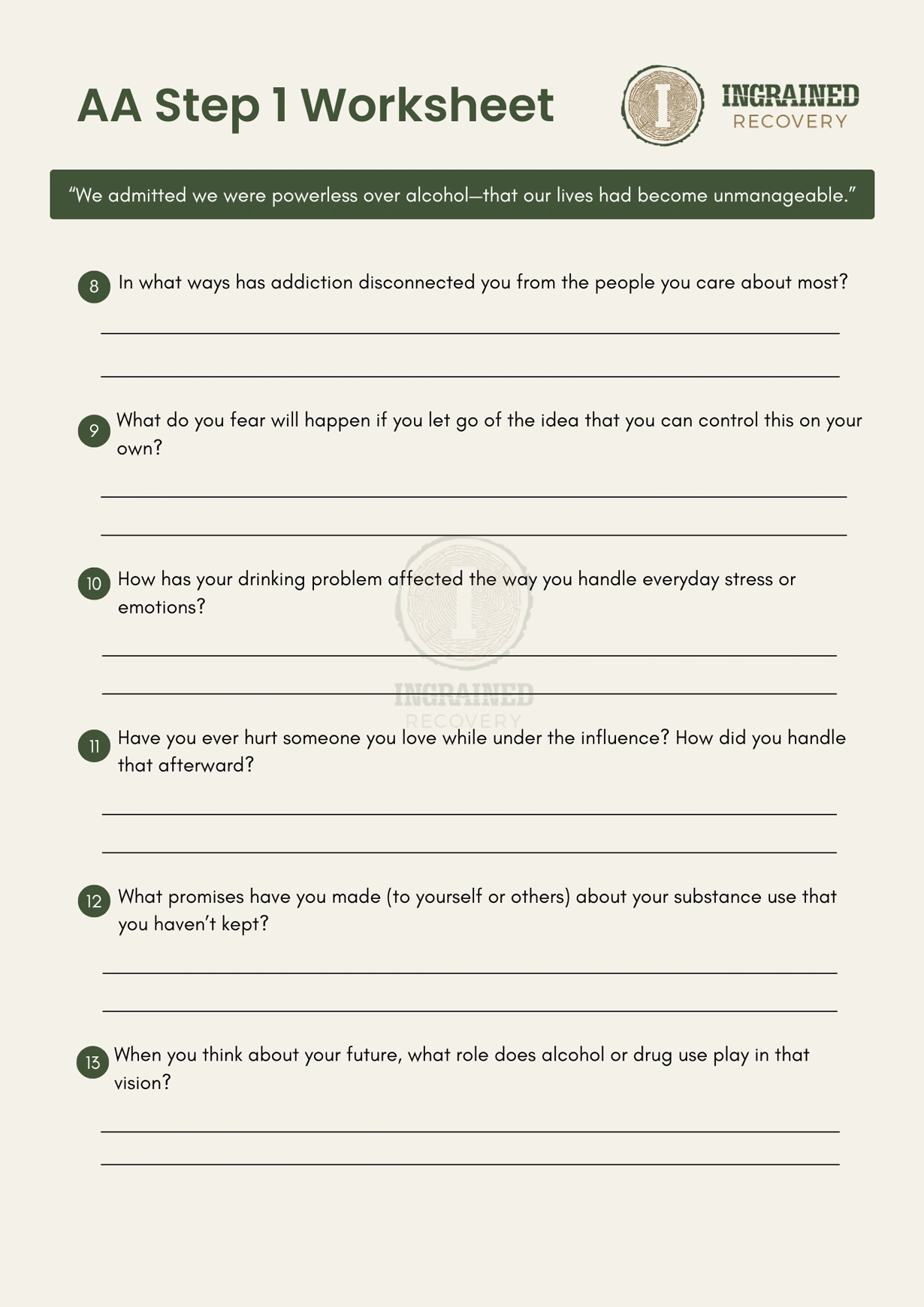
- When have I tried to stop drinking and failed?
- What physical or emotional cravings have I experienced that I could not resist?
- Which promises to “just have one” turned into a night of heavy drinking?
Answering these encourages the participant to own specific incidents rather than abstract concepts, making the admission of powerlessness both factual and personal.
Unmanageability Inventory
This section expands the focus beyond drinking itself to the ripple effects on life domains—work, finances, family, health, and legal matters. Sample prompts include:
- How has my drinking affected my job performance or employment status?
- What financial obligations have I neglected because of drinking?
- Describe the strain on my most important relationships.
Documenting these consequences provides undeniable evidence that life has become unmanageable, a crucial motivator for seeking help.
Emotional Reflection
Alcohol often masks deeper emotional pain. The worksheet should ask:
- What emotions do I feel when I think about my drinking?
- Which feelings have I tried to silence with alcohol?
- How does denial protect me from confronting these emotions?
Addressing emotions early reduces the risk of substituting one addiction for another and encourages a healthier emotional literacy.
Commitment Statement
After the reflective sections, the participant writes a concise, personal declaration of powerlessness and unmanageability. This statement becomes a reference point in meetings and personal journals, reinforcing the core truth of Step 1 and providing a mantra to return to during moments of doubt.
How to Use the Worksheet in Different Settings
The AA Step 1 Worksheet is versatile. Below are three common contexts—individual recovery, sponsor‑sponsee relationships, and professional counseling—each with tailored strategies for maximizing impact.
Solo Work and Personal Journaling
When working alone, the worksheet becomes a structured journal entry. Set aside a quiet space, gather a pen, and allocate at least 45 minutes to complete each section without interruption. The key is honesty; avoid the temptation to rationalize or gloss over painful truths. After completing the worksheet, read the commitment statement aloud, record it in a safe place, and revisit it weekly to track shifts in perspective.
Sponsor‑Sponsee Collaboration
Sponsors can use the worksheet as a roadmap for early conversations. A typical approach includes:
- Reviewing the personal history snapshot together, allowing the sponsee to narrate their story.
- Guiding the sponsee through the powerlessness questions, offering gentle probing when avoidance appears.
- Helping the sponsee identify patterns of unmanageability and linking them to specific life domains.
- Co‑creating a commitment statement that reflects both the sponsee’s voice and the sponsor’s insights.
- Setting a follow‑up meeting to discuss how the statement has guided the sponsee’s recovery decisions.
This collaborative process deepens trust, models accountability, and ensures the worksheet becomes a living document rather than a static form.
Integration into Clinical Therapy
Therapists who incorporate AA principles can introduce the worksheet during the first or second session. By framing it as a “self‑assessment tool,” clinicians reduce resistance and respect client autonomy. The therapist can then:
- Validate the client’s experiences without judgment.
- Explore the emotional reflections, linking them to underlying trauma or anxiety.
- Use the commitment statement as a therapeutic anchor, revisiting it during relapse prevention planning.
When combined with evidence‑based modalities like CBT or motivational interviewing, the worksheet amplifies insight and accelerates readiness for change.
Practical Tips for Getting the Most Out of Your Worksheet
Even the best‑designed worksheet can fall short if users don’t approach it with intention. Below are actionable strategies to ensure the AA Step 1 Worksheet serves its purpose effectively.
Create a Dedicated Environment
Choose a quiet room, a comfortable chair, and adequate lighting. Remove distractions such as phones, televisions, or noisy pets. A calm environment signals to the brain that it’s time for deep reflection, reducing the impulse to skim or rush through answers.
Use Pen and Paper, Not a Keyboard
Studies show that handwritten notes increase retention and emotional processing. The tactile act of writing slows down thought, allowing you to notice nuances you might otherwise miss when typing.
Set a Timer for Each Section
Allocate 10–15 minutes per worksheet component. A timer prevents over‑analysis of a single question, which can trigger avoidance. When the timer rings, move on to the next prompt, trusting that initial honesty will surface naturally.
Practice Self‑Compassion
It’s normal to feel shame or denial while completing the worksheet. Remind yourself that the purpose is not judgment but discovery. Use affirmations such as “I am worthy of help” or “My honesty is a strength” to counteract self‑criticism.
Review and Reflect Regularly
After the first completion, schedule a weekly or bi‑weekly review. Read the commitment statement aloud, note any new patterns that have emerged, and adjust the statement if it no longer captures your reality. This iterative process keeps the worksheet relevant and reinforces accountability.
Common Challenges and How to Overcome Them
Even with a well‑structured worksheet, many people encounter obstacles. Understanding these challenges ahead of time equips you to navigate them without derailing progress.
Denial and Minimization
Denial can manifest as vague answers (“I don’t think it’s that bad”) or outright omission of key incidents. Counter this by:
- Writing down specific dates or amounts of alcohol consumed, even if they feel embarrassing.
- Inviting a trusted friend or sponsor to review the worksheet and point out gaps.
- Remembering that honesty with yourself is the only way to break the cycle of denial.
Emotional Overwhelm
Deep reflection may trigger intense feelings of grief, guilt, or anger. If emotions become too strong:
- Pause the worksheet, take a five‑minute breathing exercise, and return when calmer.
- Contact a sponsor, therapist, or crisis line for immediate support.
- Consider breaking the worksheet into two sessions on separate days.
Fear of Stigma
Many worry about being judged for admitting powerlessness. Combat this by recognizing that the AA community is built on mutual respect for vulnerability. Sharing the completed worksheet in a meeting can inspire others and demonstrate that you’re ready for honest recovery.
Success Stories: Real‑World Impact of the AA Step 1 Worksheet
Below are anonymized examples that illustrate how the worksheet catalyzes transformation.
Emily’s Path from Denial to Commitment
Emily, a 34‑year‑old marketing manager, had attended three AA meetings but never felt truly “ready.” She completed the worksheet during a quiet Sunday afternoon. By documenting a pattern of “just one drink” turning into full‑night binges, she realized she had missed three work deadlines in the past six months. The unmanageability inventory highlighted a pending eviction notice, which terrified her. The resulting commitment statement—“I admit I cannot control my drinking, and my life has become chaotic”—became her daily mantra. Within two weeks, Emily disclosed her situation to her sponsor, who helped her enroll in a job‑assistance program. Six months later, Emily reports stable employment and sobriety, crediting the worksheet for breaking the denial barrier.
Marcus’s Recovery as a Sponsor
Marcus, a seasoned sponsor, struggled to help a new sponsee, Aaron, articulate his powerlessness. Marcus introduced the worksheet and walked Aaron through each prompt. Aaron initially resisted, claiming his “drinking was only social.” The structured questions forced Aaron to acknowledge that he had hidden a DUI record and that his marriage was on the brink. The worksheet’s clarity gave Marcus concrete evidence to discuss with the group, leading to a supportive intervention. Aaron’s subsequent commitment statement was read aloud at a meeting, fostering community support. Six months later, Aaron celebrates two years of sobriety and now uses the worksheet to mentor newcomers.
Digital vs. Printable Versions: Choosing the Right Format
Both printable and digital worksheets have merits. Printable versions encourage tactile engagement and are ideal for meetings where sharing paper copies fosters group discussion. Digital versions, often available as PDFs or interactive forms, allow easy editing, instant duplication, and the ability to store progress securely on a device.
When choosing, consider personal preferences, the setting (group vs. solo), and accessibility needs. For individuals with visual impairments, a digital version that supports screen readers is recommended. For those who find typing impersonal, the printed form remains the gold standard.
Integrating the Worksheet into Ongoing AA Practice
Completing the worksheet is not a one‑time event; it should be woven into the fabric of regular AA participation.
Monthly Review Sessions
Allocate time at the start of each month to revisit the worksheet. Update the unmanageability inventory with any new life events—positive or negative. Adjust the commitment statement if your perspective evolves, reinforcing that recovery is a dynamic process.
Sharing in Meetings
Many groups allocate a “sharing” segment where members can read a paragraph from their worksheet. This practice normalizes vulnerability and inspires collective accountability.
Using the Worksheet as a Relapse Prevention Tool
During moments of craving, pull out the worksheet and reread the specific incidents where you lost control. The concrete evidence serves as a reality check, reminding you why you chose sobriety.
Conclusion
The Aa Step 1 Worksheet transforms the abstract concept of powerlessness into an actionable, personalized roadmap that fuels honest self‑assessment, deepens sponsor‑sponsee bonds, and enhances therapeutic outcomes. By systematically documenting personal history, defining powerlessness, inventorying unmanageability, reflecting on emotions, and crafting a commitment statement, the worksheet equips individuals with a clear, repeatable reference point throughout their recovery journey. Whether you are a newcomer seeking clarity, a sponsor guiding another soul, or a professional integrating AA principles, embracing the worksheet’s structured approach can accelerate insight, strengthen community ties, and ultimately pave the way for lasting sobriety. Remember, the first step is not just an admission; it is the courageous decision to face reality head‑on, and the AA Step 1 Worksheet is the trusted companion that helps you do just that.







Related posts of "Aa Step 1 Worksheet"
